Category Archives: Diseases
#UNL South Central #Ag Lab Field Day
We have a great field day coming up on August 22 at South Central Ag Lab near Clay Center. Check out the flyer below for more details and hope to see you there!

Southern vs. Common Rust in #Corn
In early July, southern rust caused by the fungal pathogen Puccinia polysora was discovered in Hall, Adams, Clay, Fillmore, 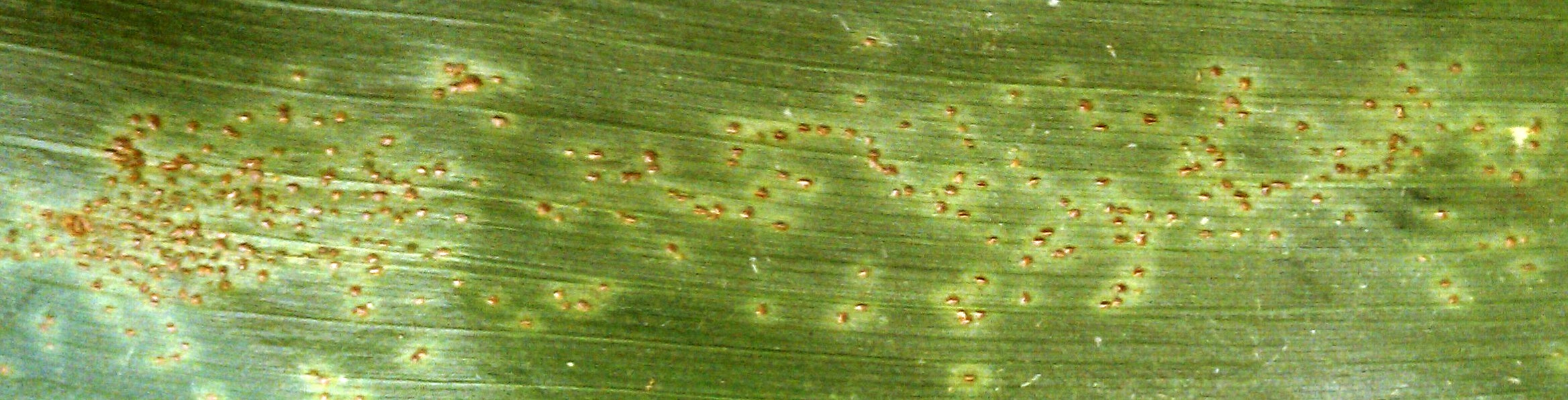 Thayer, and Burt counties in Nebraska. Most farmers in south-central Nebraska remember the corn season in 2006 walking out of fields orange and the slow harvest due to downed stalks. Since then, southern rust has been a disease of concern and fungicides are used to prevent and also treat it when it’s found in fields.
I promised when we were first discovering southern rust this year that I’d post pics, so while delayed, here they are! It is often confused with common rust which we see earlier every year. Common rust typically has pustules (raised fungal spores) that are brick red in color, larger, and on the upper and lower leaf  surfaces. The pustules tend to be more spread out.
Southern rust typically has very small pustules that are clustered on predominately the upper leaf surface and are tan to orange in color. This year, southern rust pustules tend to be more tan in color than orange but are still distinctively different with their smaller and clustered appearance. Both fungal rust pathogens arrive in Nebraska each year via wind from the south. Southern rust prefers warm, moist conditions which, in spite of our dry spell, is typical within our pivot and gravity-irrigated fields in the area. At this time we are recommending if you find southern rust in your field to consider treating with a fungicide. Please be sure to read and follow all label directions including paying attention to pre-harvest intervals. A list of corn fungicides and efficacy can be found here by scrolling down to the corn section.
Additional information and pictures of these diseases can be found here.


Tomato Troubles!
Here’s a good post from Elizabeth Killinger, UNL Extension Educator, regarding all the tomato troubles we are currently seeing in the garden. You can also check out the following YouTube video by Sarah Browning, UNL Extension Educator.

Vegetable gardening has become more and more popular. It is a way to relax, if you consider pulling weeds relaxing, and is also a way to grow your own groceries. Tomatoes are grown in over 86 percent of gardens in the United States. There are many common diseases and problems that can plague tomatoes in the home garden. With a little help you can keep your tomatoes in tip top shape.
Early blight is a common tomato disease. It is caused by a soil-borne fungus. Rain water, or overhead irrigation, can cause the soil and fungi to splash onto the lower leaves of the plant. The infection starts as leaf spots on the lower leaves then causes yellowing then eventually causes the stems to turn brown. The infection works its way up the plant causing the foliage to die.
There are ways to help prevent the spread of this fungal…
View original post 574 more words
The Season for #ag & #horticulture Questions!
This past week was a blur of calls, questions, and visits to homes and fields but it was a great week and flew by staying very busy! I’ll touch on a few of the common questions I’ve received this week.
Trees: Some trees such as willows, hackberries, tops of maple trees, ash, and black walnut are just taking time leafing out. Some trees leafed out once already and dropped leaves. Things that may have caused this were the sudden flux of temperatures from very warm to cool and the strong winds we received. Some trees have also unfortunately had herbicide drift damage that caused leaves to drop. On those trees, watch for new buds as nearly every situation I’ve looked at thus far have new buds forming after about a week-10 days. With all these situations, give the trees a few weeks to leaf out again and if they’re still not doing it, feel free to give me a call. Trees are interesting plants as sometimes environmental impacts that happened 3-5 years ago will show up that much later-and sometimes environmental impacts show up right away!
Disease/Insect issues: This year has been a strange year all around but with our warm winter, I was concerned about an increase in diseases and insects. Thus far, we’re experiencing increases in both-so hang on-it may be a long growing season! Our high humidity, warm temps, and heavy dews have created perfect conditions for fungal diseases on our trees, ornamental plants, lawns (I’m currently fighting a bad case of powdery mildew-as a plant pathologist it is kind of pretty but I don’t like what it’s doing to my lawn!), and in our wheat and alfalfa crops and some pasture grasses. Fungicides may help in some of these situations, increasing airflow can also help as can more resistant varieties or hoping the weather will change. In the case of most ornamentals, we don’t usually recommend doing anything. The same goes for insects as insecticides can help in some situations. I’ve received several calls this past week of people afraid they had herbicide drift damage. While there were a few cases of that, many of the cases were actually fungal leaf spots on leaves. There are various fungicides and insecticide products available from home/garden centers, etc. Be sure to read and follow all label directions and only apply the product on places the label specifies it can be applied.
Crops Update: Later this week we may have a better idea on the extent of storm damage and if some fields will need to be 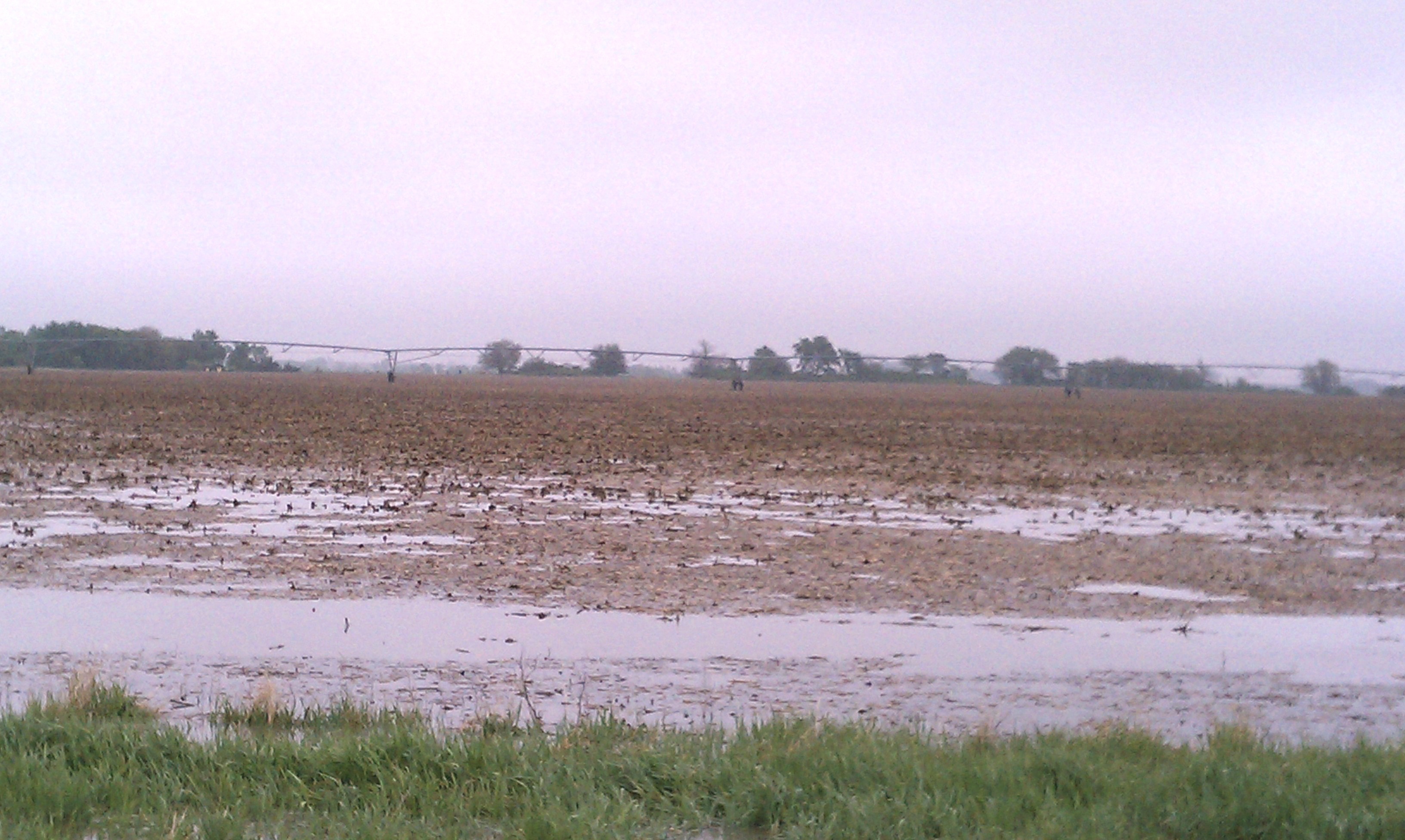 replanted after the storms from last week. Dr. Bob Nielsen from Purdue University reported that most agronomists believe young corn can survive up to about four days of ponding if temperatures are relatively cool (mid-60’s F or cooler); fewer days if temperatures are warm (mid-70’s F or warmer). Soil oxygen is depleted within about 48 hours of saturation and we know soil oxygen is important for the root system and all the plant’s life functions. So we’ll have to wait and see what happens.
Have also had a few calls regarding rye cover crops. When rye is killed out and decomposing, it releases toxins that can affect the germination of other cereal crops such as corn if it’s going to be planted into that rye cover crop. Thus we recommend at UNL that the producer kill the rye and then wait at least two weeks to prevent any major damage to the crop. I realize at this point with the rains to get in and kill that crop on top of waiting an additional two weeks, we’re getting close to the end of the month and will most likely be looking at reduced yields…and depending on maturity, you may need to consider different seed if you end up having to plant in June. If you have specific questions about this, please let me know and we can talk through some situations.
Stripe rust and powdery mildew have been obliterating mid-lower canopies of many wheat fields. I’ve received several calls on why wheat canopies are yellow-that’s the main reason but other factors such as the dry spell prior to these rains and/or deficiencies in nitrogen/sulfur or some viruses may also have been factors. Wheat in Nuckolls County last week was beginning to flower. Fungicides such as Prosaro, Folicur, or Proline are labeled for up to 50% flowering and cannot be applied after that. Remember the wheat head begins pollination in the middle-so if you’re seeing little yellow anthers at the top or bottom of that head, you’re towards the end of flowering. All those products have a 30 day pre-harvest interval-which has been the other main question-are we going to be harvesting in a month? I do believe we’ll be harvesting a month earlier than normal just because pretty much everything in wheat development is about a month ahead of schedule. I still feel the 30 day window for the fungicide application is worth it with the large amount of disease pressure we’ve seen. Wheat in Clay Co. and north still may have time for a fungicide application; those products mentioned above will help prevent Fusarium Head Blight (scab) as well as kill the fungi causing disease already present on your leaves. A list of all fungicide products, pre-harvest restrictions, and rates can be found here. Also check out my previous blog post with video on scouting for wheat diseases.
The other major disease appearing in wheat is barley yellow dwarf virus. This is a virus vectored by bird cherry oat aphids which we were seeing earlier this year. Unfortunately, this disease causes the flag leaves to turn bright yellow-purple causing yield loss (at least 80% of the yield comes from the flag leaf) as there’s nothing you can do once the virus manifests itself in those leaves. If you have a large incidence of barley yellow dwarf in your fields, you may wish to reconsider spraying a fungicide as the fungicide won’t kill the virus; however, it will help kill the fungi on the remainder of your leaves and potentially help protect some yield from the two leaves below the flag leaf.
Evergreen Tree Diseases
Somehow April flew by without me reminding you to apply fungicide sprays to Austrian and Ponderosa pines that have had  problems with Sphaeropsis tip blight in the past. I’ve also received several scotch pine samples in the office to diagnose for pine wilt nematode. While there is no cure for pine wilt, I recommend to take a 6” long, 1-2” diameter sample of a dead branch to your local Extension office for diagnosis before cutting down the tree. Pine wilt affects Austrian (long needles groups of 2) and Scotch pines (short needles in groups of 2) as they are non-native trees while the nematode is native. Since ponderosa pines (long needles in groups of 2 and 3) are native to Nebraska, they don’t seem to be affected by pine wilt nematode.
Pine wilt is caused by beetles carrying pine wood nematodes vomiting them into the water-carrying vessels of the tree (xylem). The tree senses the nematodes and essentially blocks water to those branches. Often you will observe a branch then perhaps a side of the tree and eventually complete death of the tree within 6-9 months. While I have diagnosed many samples of pine wilt, more often when I visit homeowners the tree problems are due to fungal diseases which occur on the needles. If you look closely at your needles and observe dark bands or rings on them followed by death of the needle either direction from the band, the tree problem is most likely due to a fungal needle blight like dothistroma in Austrian and Ponderosa pines or brown spot in Scotch pines. They can all be prevented by spraying a fungicide containing copper sulfate in the spring.
With everything about 3 weeks early this year, now is the time to spray Ponderosa and Austrian pines for needle blight and spruce trees that have had problems with needle cast or shoot blight where the new growth has died in the past. In early June spray for needle blight problems in Scotch pine and cercospora blight on cedars. If you have a windbreak of combinations of these trees and don’t want to spray twice, I recommend at least spraying in early June to catch all of them. Increasing air flow by cutting out some trees is another way to reduce fungal diseases on your trees.
Also watch trees for bagworms as you may be able to tank mix a fungicide/insecticide application in early June if needed. We would recommend picking the bags off trees and burning them, but that’s just not feasible in windbreak situations. To know when to spray, take a few of the bags off the tree, place them into a plastic ziplock bag, and place outside on the south side of your house. When the larvae emerge from the bags, check your trees to see if larvae can also be observed on them. Pyrethroid insecticides are recommended for managing bagworms because they cause an irritation that makes the larvae leave the bags and allow them to be exposed to the pesticide.
Great brochure! Evergreen Diseases
CropUpdate 7-18-11
While it may be strange, I love the smell of corn pollinating and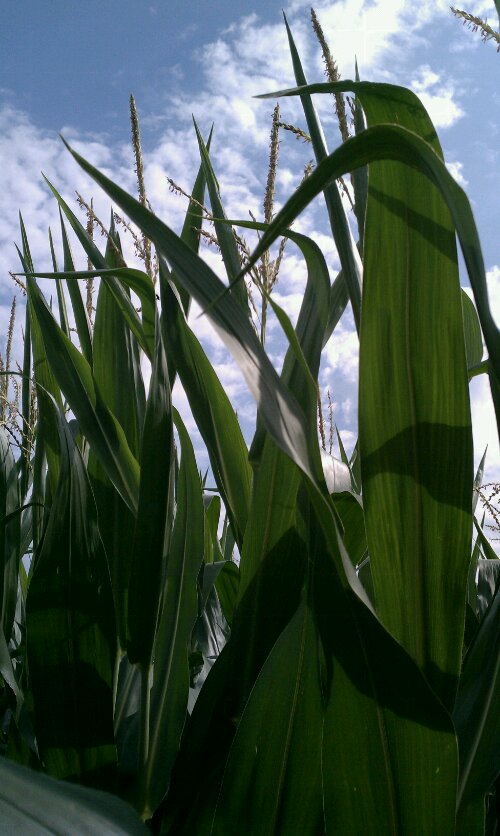 don’t mind walking fields this time of year! Summer is flying by but it seems like it’s taken a long time to get to tasseling in our fields this year. Now that corn is tasseling, we can take into account the third foot root zone for irrigation scheduling. There still is moisture to consider in the third foot so continue to check your readings on your irrigation scheduling tools and now take averages for all three feet. You may be surprised as some of you won’t need to water till end of July/beginning of August! If you have any questions about your irrigation scheduling tools, please continue to call any of us Extension educators or the NRD personnel as we want to help you and work with you now to answer them.
Disease just isn’t an issue so far in fields, so for those of you who purchased fungicide, wait till disease is present when you may need it. UNL research by Dr. Tamra Jackson has proven yields are just as good with delayed fungicide applications as they are at tassel. The longer you wait to use it for gray leaf spot, the more chances you will have residual for southern rust when it comes in. While corn prices are high, you want to keep as much of that money as you can! I don’t recommend fungicides on soybeans as we don’t have the disease to warrant it. If you did pre-pay fungicide for soybeans as well, the timing of that application should be R3 (beginning pod).
Soybeans are approaching beginning pod for many of you. For soybeans, this is a critical time for moisture in addition to seed fill at R5. Many irrigation systems were running on beans last week and I just cringed because the time we don’t want to water soybeans is full flower or (R2). The reason for that is because it can create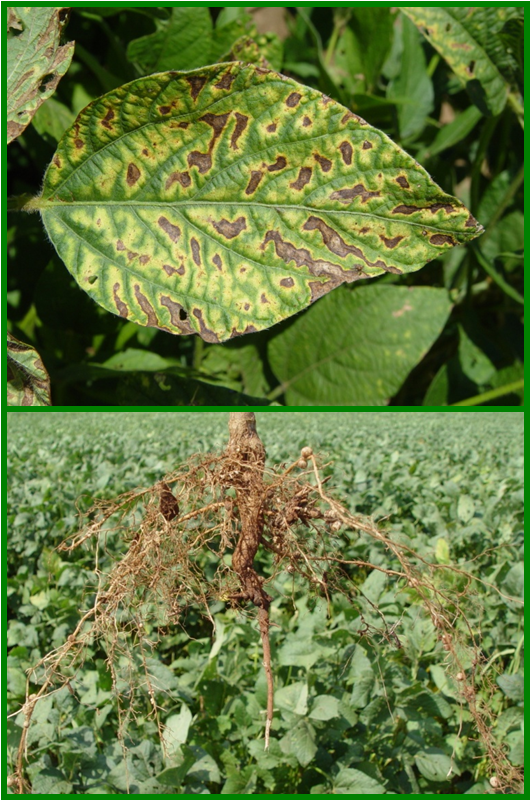 disease issues. We’ve seen a large increase of sudden death syndrome (SDS) the past few years in our county. Part of that is due to early planting in cold soils, but irrigation during flowering can also play a role. The major disease that occurs when irrigating during flowering is sclerotinia stem rot (also known as white mold). While we have very few cases of this in the area, this disease is one that you don’t want to get started in your fields. Like the fungal pathogen causing SDS, the fungal pathogen causing white mold is soil borne. Thus, once you have it, you can never get rid of it. White mold gets started during R2 when flower petals begin to die and the fungus develops on those dead petals. Wet, humid conditions during flowering are key to fungal development, so in the future, avoid irrigating beans during the flowering stages to avoid problems with these two diseases.


 JenResources