JenREES 6/26/22
It’s a beautiful Sunday afternoon as I write this from my deck! Looking in my backyard I see one new rose blossom, leaves appearing on my vegetables, perennials, and bare areas of trees again, and beauty from a couple annuals I planted yesterday from plants that didn’t recover. As I worked with farmers the past few weeks, similar words kept surfacing in conversations: exhausted, sadness, numb, discouraged, so much loss, at least I wasn’t the only one, frustrated, angry, anxious, stressed, was thinking it’d be a good year, he/she had it worse, thankful for insurance, hopeful. And, I share that because you’re not alone in these thoughts and feelings. There’s been a tremendous amount of loss; sharing with others can help with healing. There’s been a range of emotions experienced in destroying what remains of old crops and driving to non-affected areas. Also, hope as beans, corn, and sorghum have emerged from the ground in 3 to 6 days. Praying we can finish the season well.
For those with gardens, there’s new life from buds developing on tomato, pepper, potatoes, eggplant, beans! Onions shot new leaves. My rhubarb went from a mushed mess to new leaves coming now. I had just left everything alone and yesterday removed the mushed, rotted rhubarb and replanted beans and carrots. Some have tried to help their hostas by cutting out dead once it dried. Many perennials reduced to sticks are trying to shoot new leaves. We will have to watch trees.
For those with good crops, I received a report of a first tassel in southern counties. Also, northern corn leaf blight from a consultant, so perhaps watch for that. Japanese beetles have arrived; I’m not talking about problems this week!
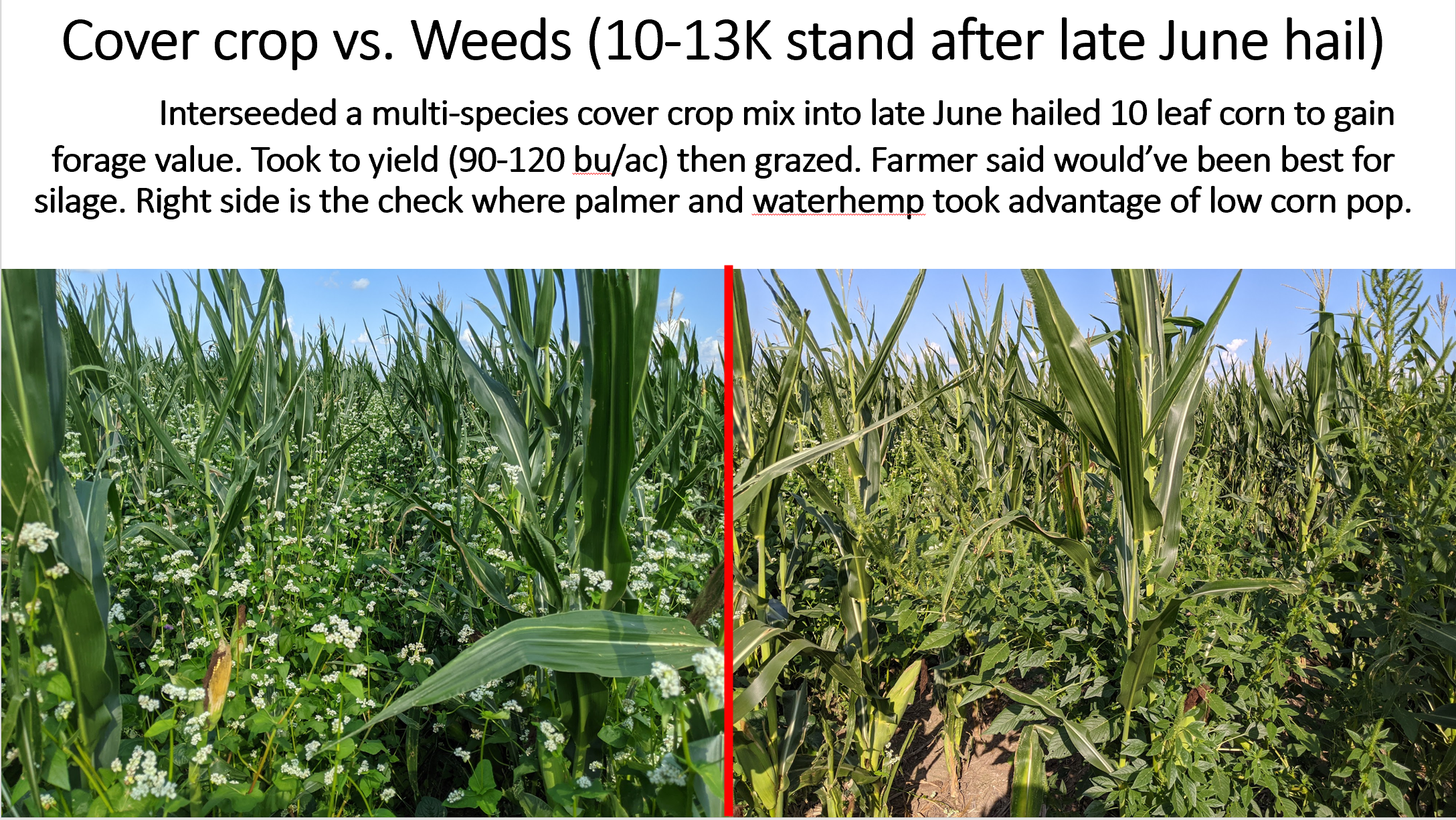
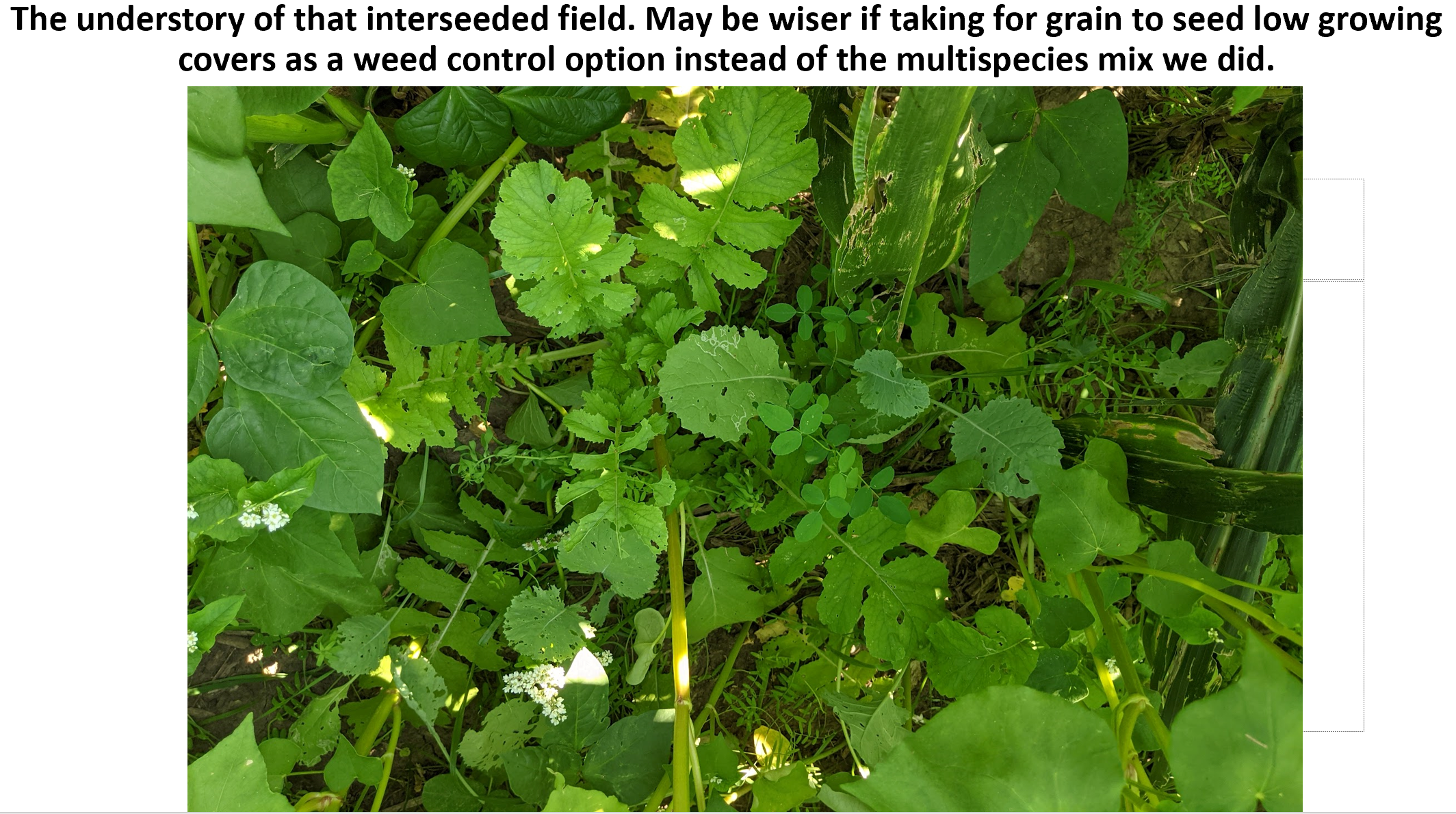
Have received two areas of cover crop questions: weed control in existing low corn populations and annual forages after a totaled out crop. If grazing/haying, please check the herbicide label. For example, the Resicore label specifies to ‘not graze or harvest rotational cover crops for food or animal feed for 18 months following the last application of Resicore.’
1—Weed control: For simplicity, low growth, low cost, quick shading I’d recommend brassica species such as forage collards, turnips, etc. They can be seeded now, or you can wait 3 weeks from when residual herbicide product was applied to the field. If you’d like a grass, annual ryegrass could be added; should survive the winter. Clovers could be added to provide N next year; should survive the winter. Ultimately just depends on your goals. I prefer drilling between the corn rows, but there are broadcast options that can cover acres faster. Our interseeding team will drill blocks of 5 to 10 acres of our small seed mix (brassicas, clovers, flax, ryegrass) for those interested in trying it (let me know asap if interested). Another project: several NRD’s including UBBNRD in partnership with UNL plan to apply covers via a high clearance machine around beginning dent in corn (targeted around eastern Beaver and Lincoln Creeks; contact UBBNRD if interested).
2-For those considering summer annual forages, if your fields got totaled or in the event your seed corn acres aren’t kept, here’s some ideas and tradeoffs. Sorghum sudangrass (4.2-5.3 T/ac), forage sorghum (4.4-5.3 T/ac), and sudangrass (4.1-4.8 T/ac) are some annual forage options. Sudangrass is an option for grazing due to its low prussic acid potential. Sorghum-sudangrass plants get tall and are suited well for greenchop. Forage sorghums are also known as ‘cane’ due to their sweet stems and are suited well for silage. They have higher prussic acid potential, so we don’t recommend grazing them. For those looking at haying followed by grazing, I’d recommend pearl millet (3.8-4.5 T/ac). It doesn’t get the tonnage of the sorghum species, but the stems are thinner for haying and you don’t have to worry about prussic acid poisoning in the regrowth when you graze it. It worked well for my uncle and dad on their prevent plant farm in 2019 and the cattle loved it. This publication goes into more detail regarding all these species, seeding rates, how to graze and hay each, etc: https://go.unl.edu/7ivw. If you’re interested in haying, I don’t recommend adding any other species to these as we’ve found it causes issues with drydown and with bales heating up. Rye (or wheat) could then be planted this fall/winter if desired.
Weed Management Field Day at UNL’s South Central Ag Lab is this week on June 29th near Clay Center (9 a.m.-1 p.m.). Great information including a second year research project of the same herbicide programs for corn and soybean when rye is terminated 2 weeks prior to planting vs. 2 weeks after planting. It’s interesting to see in the field, so hope you can join us! No cost, free lunch, please RSVP: https://agronomy.unl.edu/weed-management-field-day-registration.


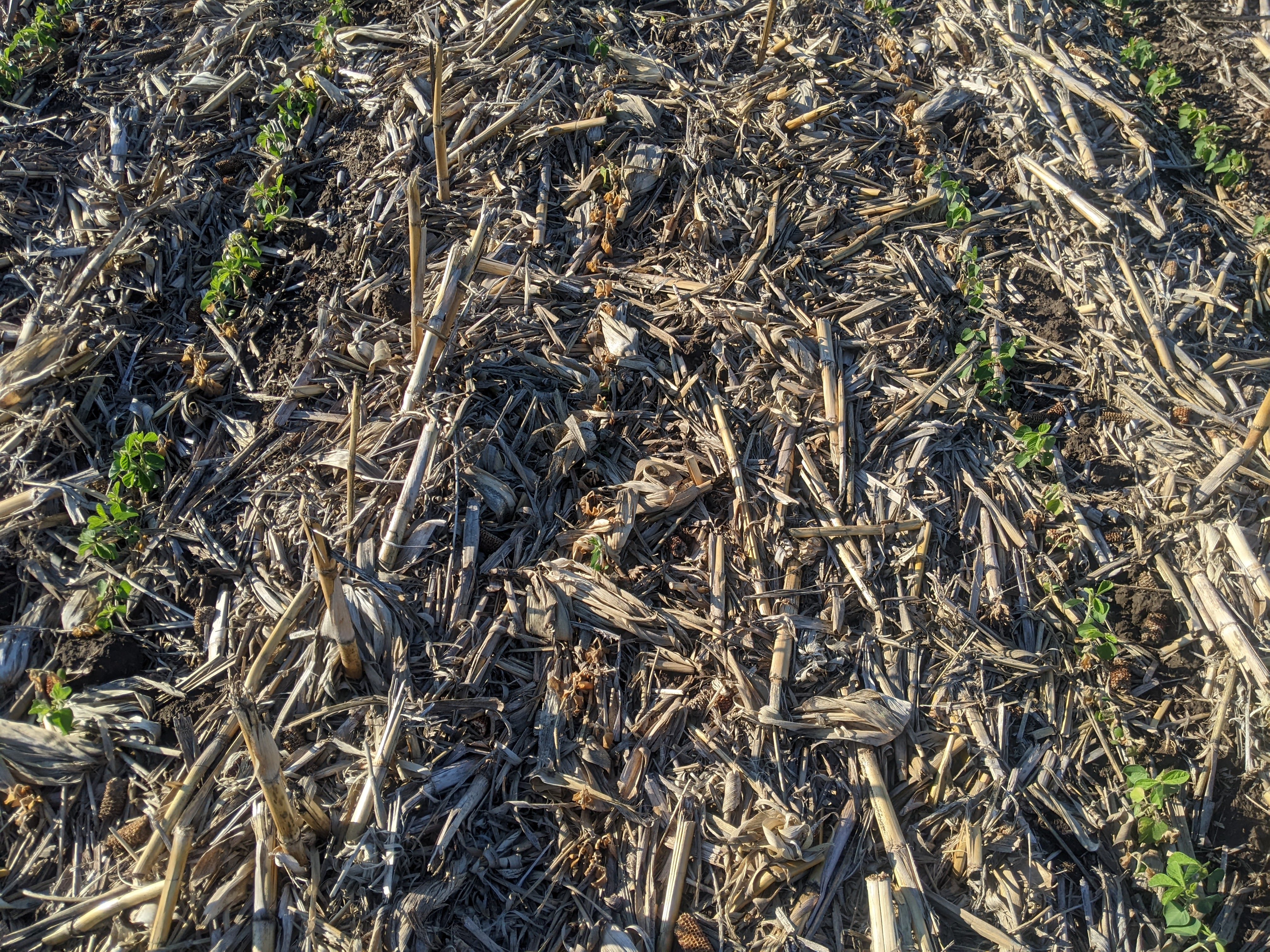
New soybeans alongside old sticks. Emerged in as little as 3 days. New corn in the old corn grower plot.
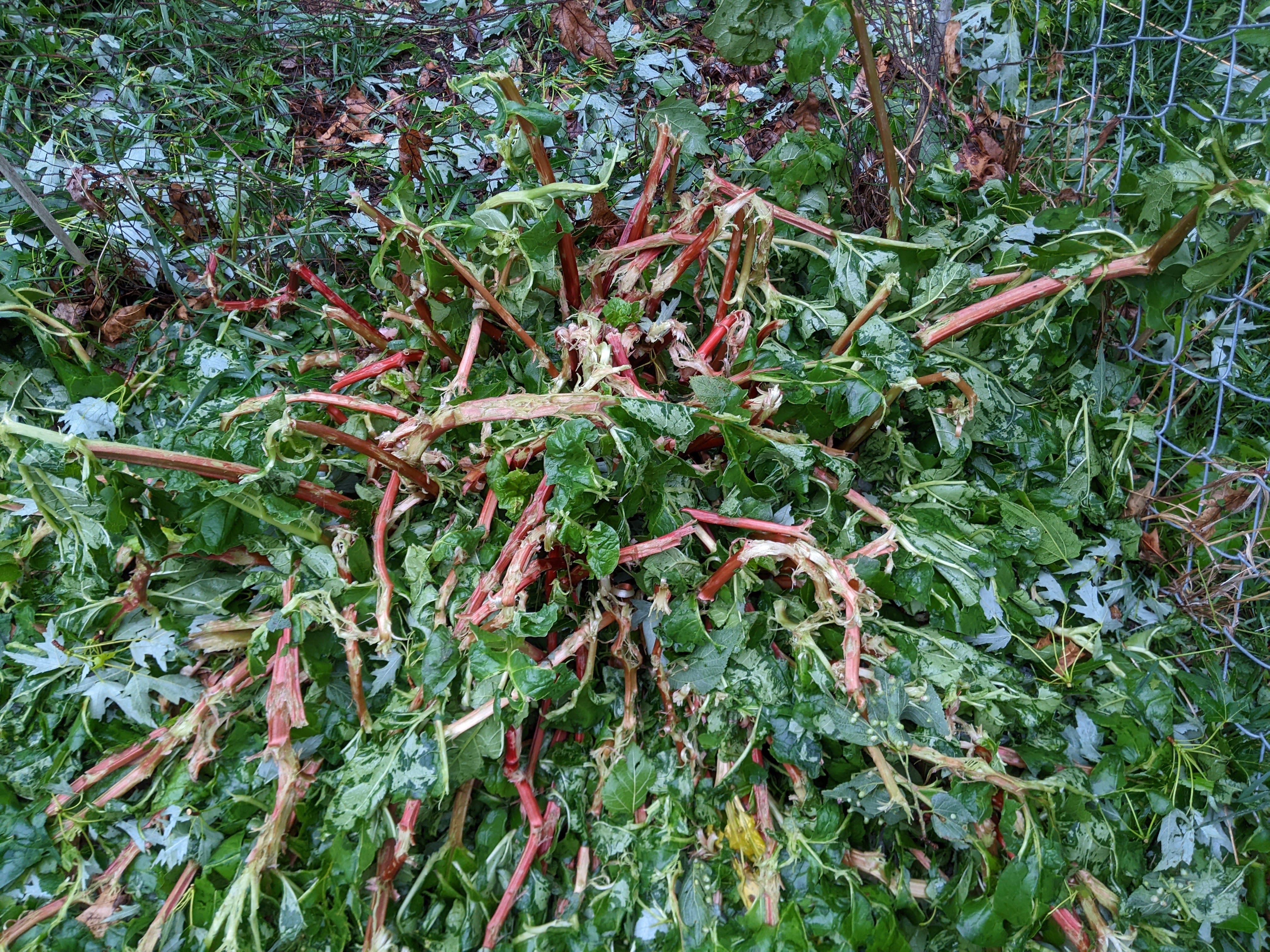

Part of my garden on June 15, 2022 the day after the hail events. I left it alone.


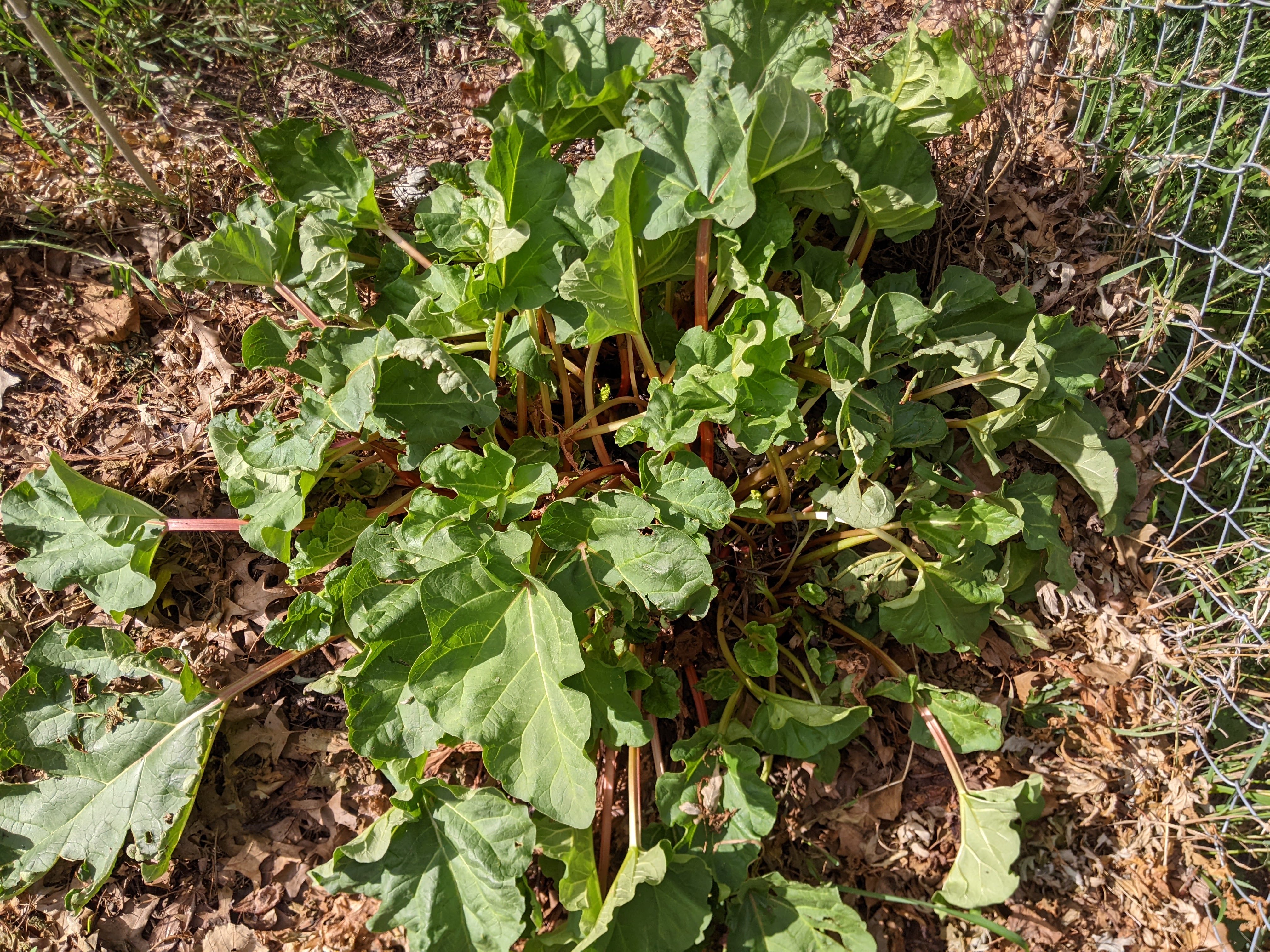

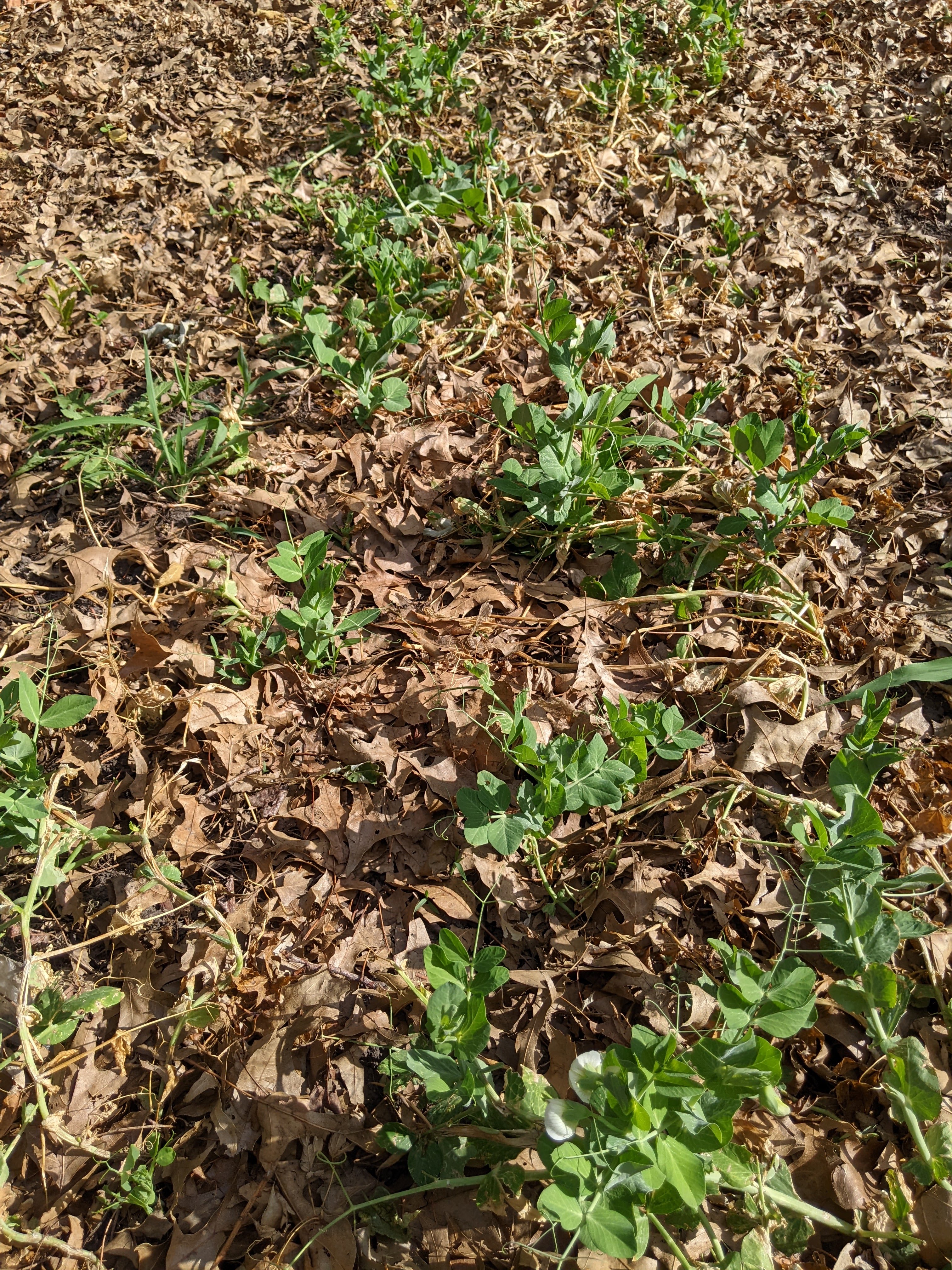
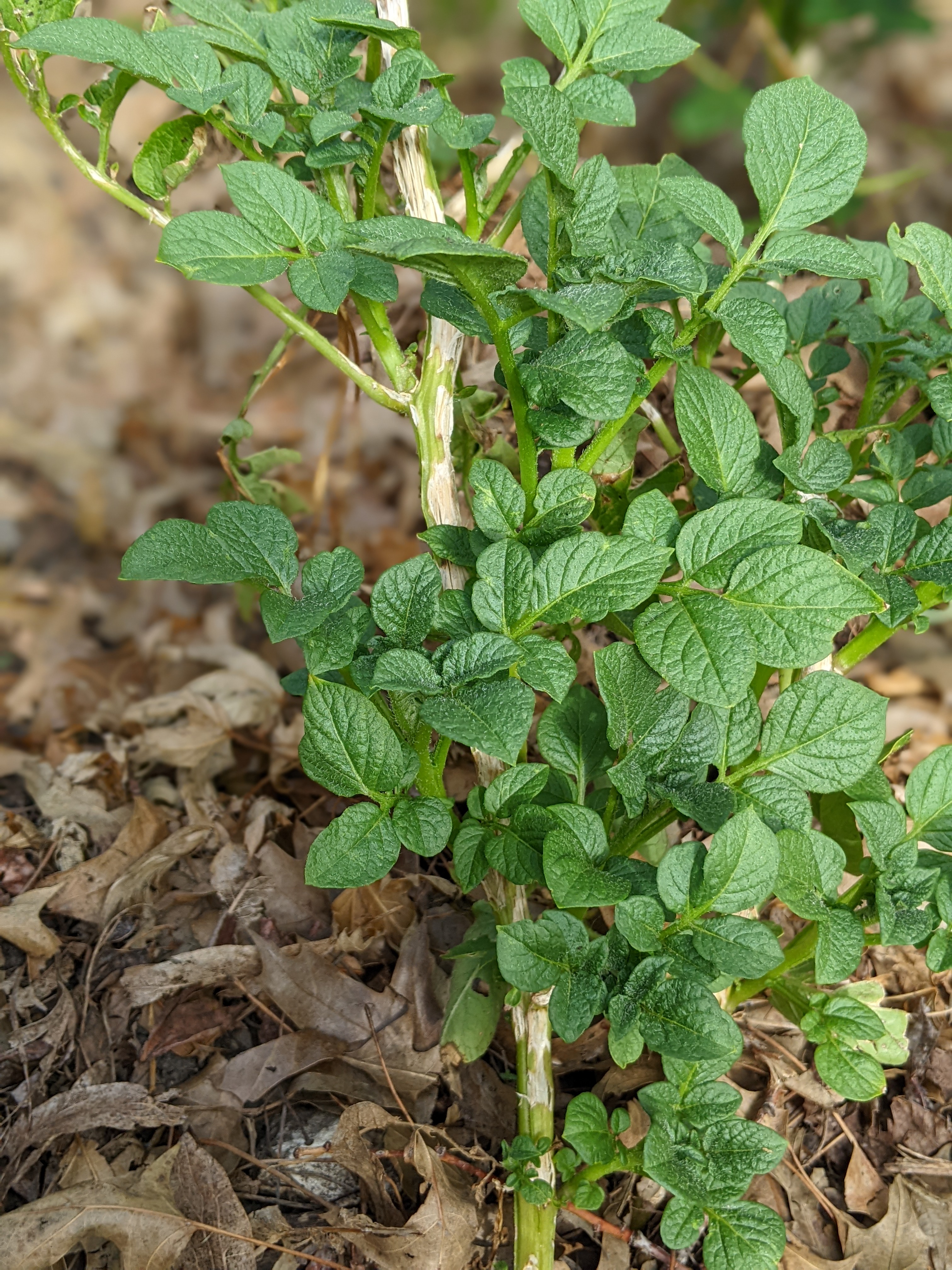
June 25th, 2022: New growth on most everything. Very few beans and none of my carrots survived. Rhubarb looks like a new plant again after removing the mushy, rotted growth and with the new leaves. Tomatoes, potatoes, peppers, eggplant came back from stems. Can see the hail damage on the stems. Onions shot new leaves out the top. Also had a new crop of asparagus come on. Need to re-stake remaining peas and will see what happens with them. Potatoes are all leaned over now instead of growing upright.
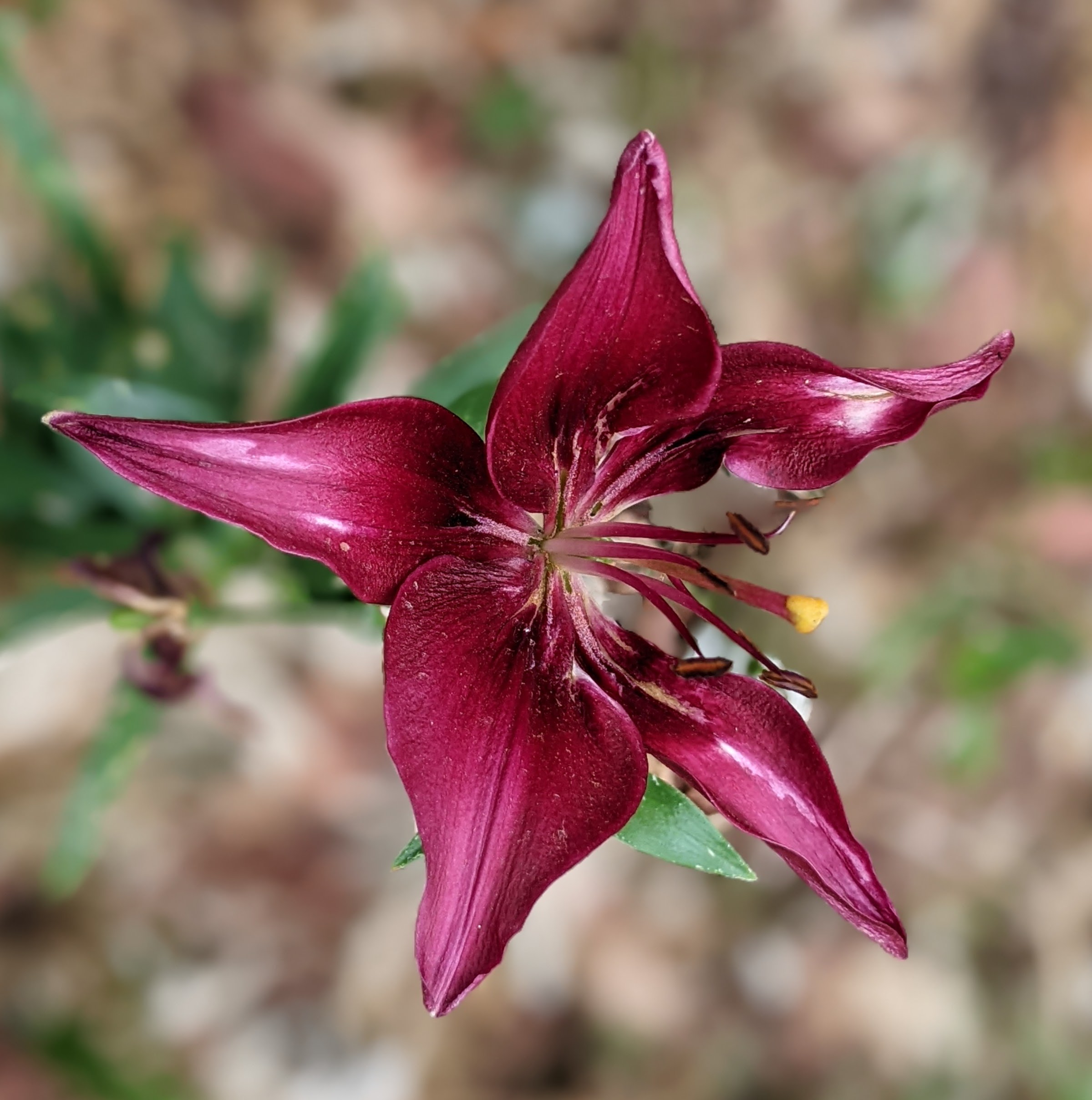
“…to give unto them beauty for ashes, the oil of joy for mourning, the garment of praise for the spirit of heaviness; that they might be called trees of righteousness, the planting of the Lord, that he might be glorified.” Isaiah 61:3 KJV
This is one of my favorite Bible verses and promises from God in the midst of hard things and I like this translation of it since it specifically says ‘beauty from ashes’. May we all look for the beauty in the midst of the ashes around us this week. And, I believe God is also desirous of creating beauty from ashes in all of our lives!
Hail Damage Update

Well, the June 14th hailstorm was something we hope to never again experience. The National Weather Service in Hastings shared a video of satellite imagery showing lack of vegetation that is incredibly insightful: https://twitter.com/NWSHastings/status/1538243511396360192. Feel for all who had damage to homes, animals, crops, buildings, bins, pivots, trees, gardens. For landscape info, check out the following from Backyard Farmer: https://www.youtube.com/watch?v=vIeA731LQg8&t=1s. Last week’s crop hailstorm webinar recording is at: https://go.unl.edu/pe9q.
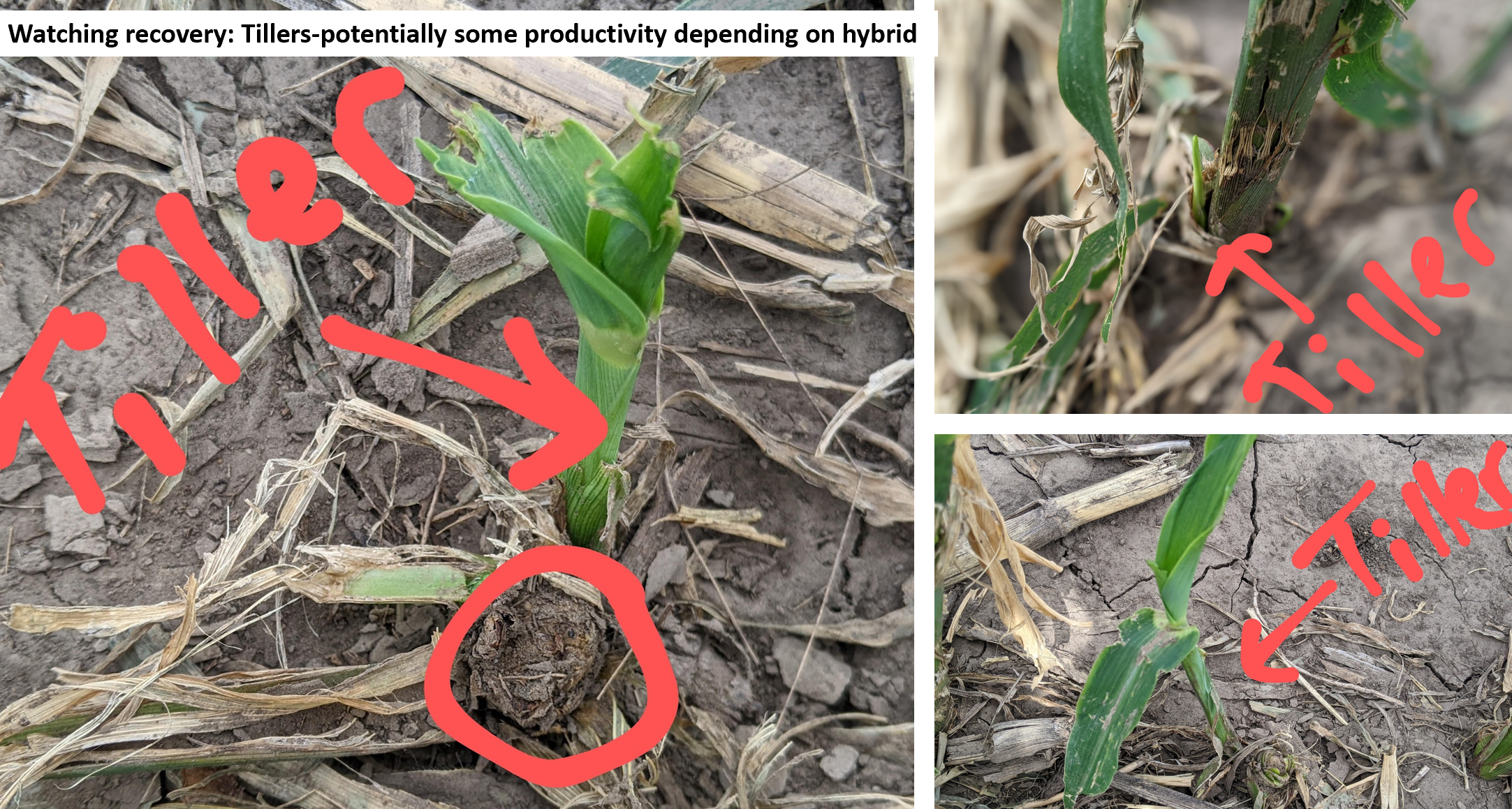
I had hoped to get a blog post out much sooner. Thank you to all who called and I truly hope something from these field visits and calls has helped. I realize a lot of replant is currently occurring and grateful for the weather for that. While replanting stinks, perhaps it’s providing a small bit of healing for the eternal optimists that so many of us in ag are? Several asked how people are destroying the old corn crop. Depending on tillage system, they have used shredding, root slicers, tillage all followed by residue removers during planting (because I’m seeing tillers growing from old stumps). Others plan to plant between the rows and then cultivate the old row out. Can chemically terminate with gramoxone. Some are using clethodim if going to soybean.
Time right now is critical with replant decision making. Some thoughts for those who need to wait for crop insurance adjusters and fields to dry:
- Start upright pivots, check control boxes, sprinklers, plastic lines to endguns, etc. Availability of parts may influence corn seeding rates. Document all damages for insurance.
- For potential replant situations where you don’t wish to plant corn due to loss of bins or inability to dry corn, depending on what you’re interested in, consider hand planting some soybean, milo, or cover crop seed into your corn fields at different depths. This will provide an idea of survival depending on corn herbicide used. Ultimately, make a plan A and B for your situation.
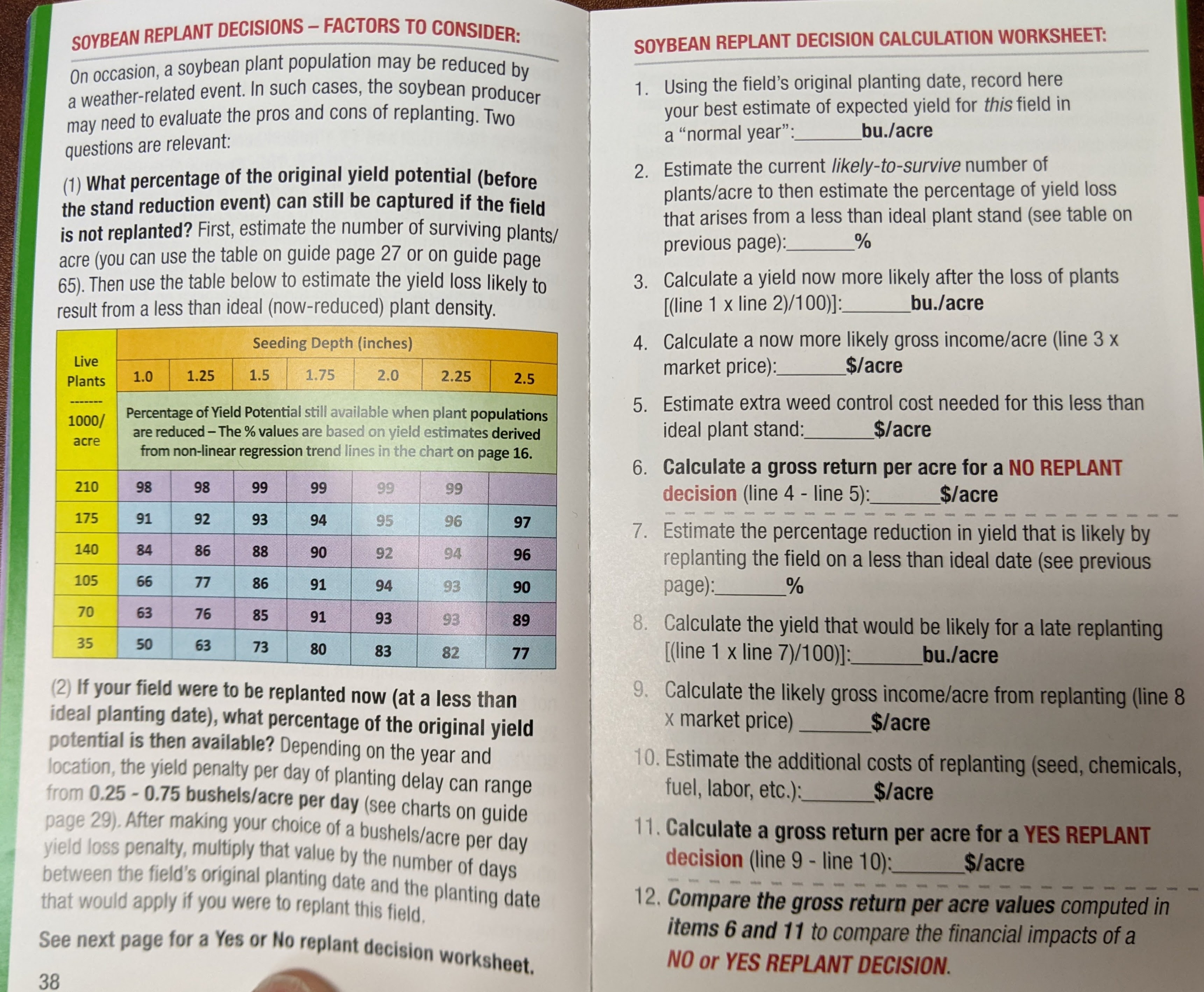
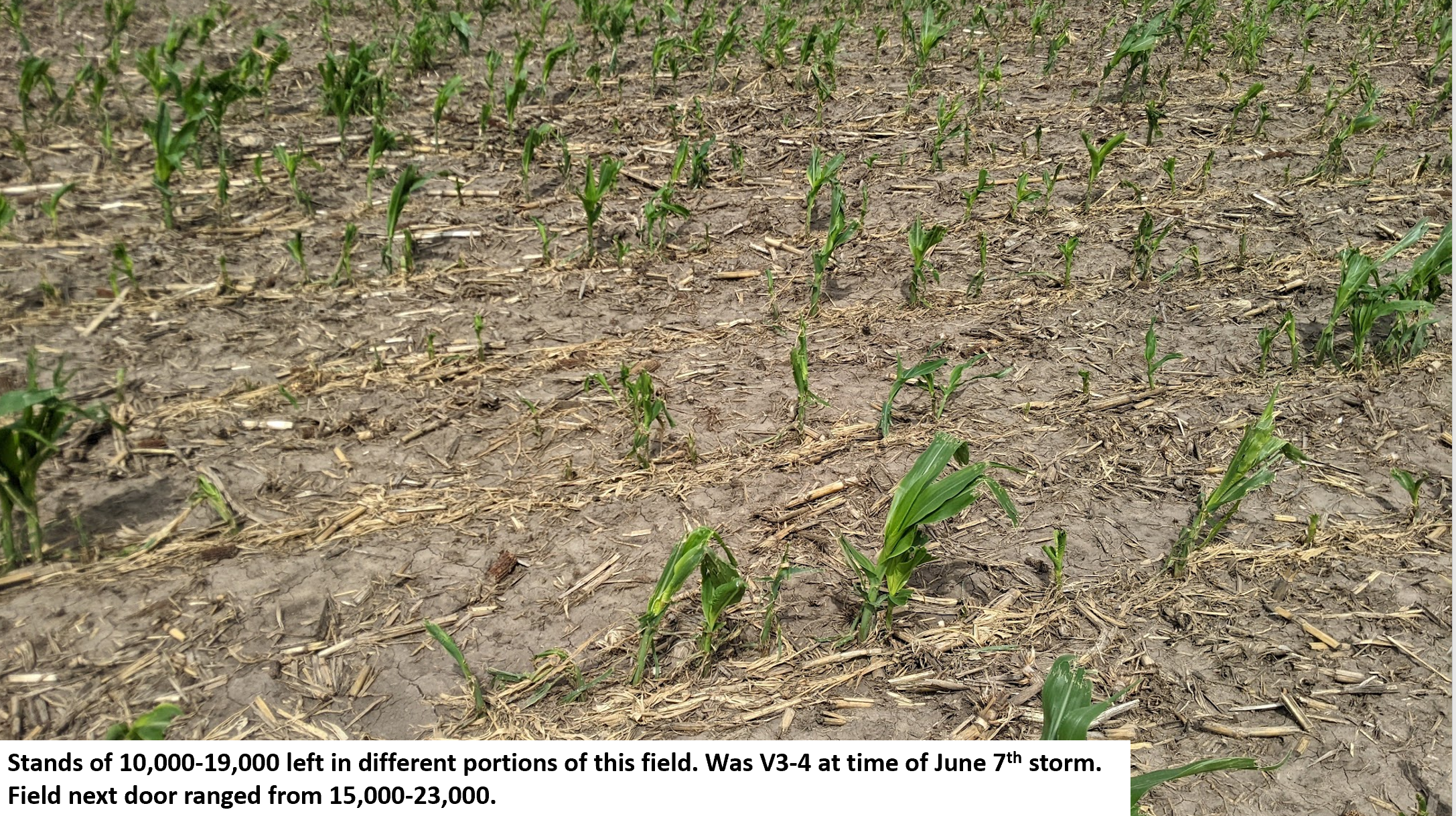
Corn: Hail damage recovery has varied. From June 7th storm, there was unevenness in plants that recovered. Saw bacterial top rot setting into plants even in several V3-V4 damaged fields. Plants may look better from the road but inside the field tells the story. June 14th storms: plants are severely bruised. Seeing hail stones causing deep bruising and rot both above and below the growing point. Often plants snap when barely touched. Fields less impacted are gaining new growth and will look better next week. Keep watching the fields with small plants that were pummeled into the ground and seed fields. My blog at jenreesources.com has recovery photos and a chart to help with replant decisions and potential yield due to reduced stands. Area Pioneer agronomists also made a video suggesting for every 1000 ‘healthier’ plants, can consider 10 bu/ac …so 15,000 plants could result in around 150 bu/ac: https://www.youtube.com/watch?v=viOwFqi3FDU.
Soybean: Normally, soybean is so resilient with all the growing points. The xylem and phloem in beans are on the outside of the stem, so the hail pummeling the stems and tops impacted that transport and many plants just turned white/gray and died. For replanting beans, would recommend using a fungicide seed treatment; have seen phytophthora root rot in replant beans in the past. You don’t need other seed treatments. Seeding rates: If have surviving plants, can slot some in at a reduced rate between rows or angle depending on row spacing. If you don’t, go with original rate or increase 10%. Regarding maturity, we at several universities say to use Group 2’s at this date. Indeterminate beans continue to produce nodes, leaves, flowers till R5 regardless of maturity group and beans are daylength sensitive.
I truly wish everyone the best with decisions. This amount of loss takes a huge toll whether or not we are honest in admitting that to ourselves. I hear and sense the stress with each conversation. Each situation is unique in damages received, crop insurance taken, amount of grain forward contracted, and other life things occurring. Some are walking outside to devastation each day. Some had multiple events occur this year. You may be in crisis mode right now just trying to patch things up and get new crops planted. I don’t know what is helpful for you. What I know for me is that my faith in God, my belief that He is in control, and His continued faithfulness to me is what has sustained me. Tears can be healing. Just would encourage you to also find a healthy way to take care of yourself such as talking to a trusted friend, prayer, journaling, exercise, or participating in a hobby. This is a great resource on taking time to listen and talk: https://go.unl.edu/3daw.
*End of column for newspapers.


This chart shows the relative corn yield potential compared to the original stand if the stand is reduced based on planting date. It provides an idea anyway assuming no additional storms or other issues.




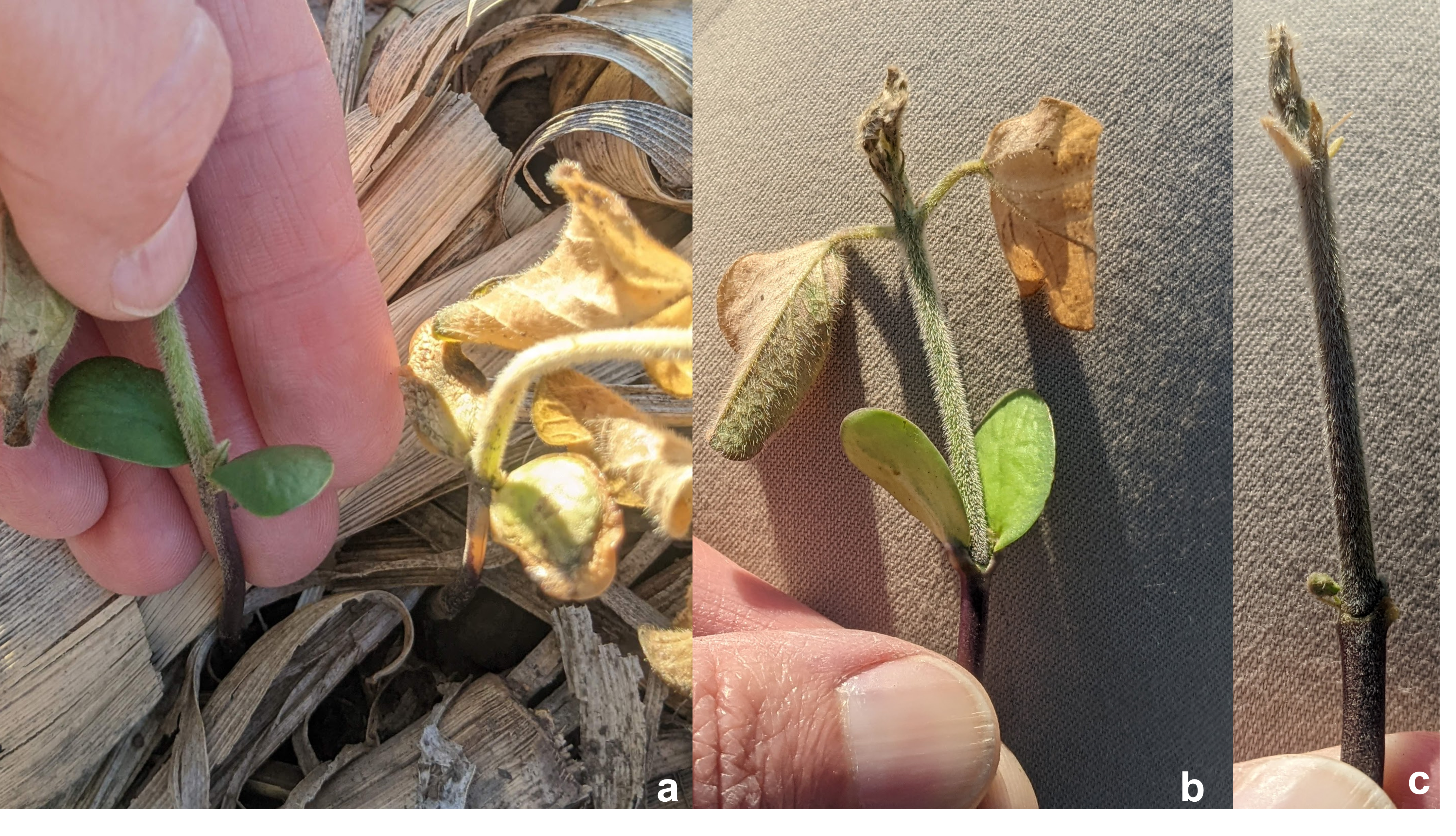
Different soybean fields. I keep failing to take pictures of soybeans. Mostly the fields look like the first pic and are clear-cut that they had too much stem damage and are dead. Or, they are obtaining new growth and look much better. Some are just super slow to get much growth, though, and for those fields, some growers are slotting some in from the standpoint of weed control. Those with lighter damage are seeing rapid new growth where petioles meet the stems (taller pic).

Showing these charts below again if helpful. We’d recommend 100 day or less maturities at this point.
| York Ne Data Avg. 28F frost Oct. 21 | Relative Maturity | 80 | 85 | 90 | 95 | 100 | 105 | 110 |
| Planting Date | GDD to R6 | 1917 | 2038 | 2159 | 2280 | 2401 | 2521 | 2642 |
| June 15 | Sept. 5 | Sept. 11 | Sept. 19 | Sept. 28 | Oct. 8 | Oct. 23*** | *** | |
| June 20 | Sept. 11 | Sept. 18 | Sept. 27 | Oct. 7 | Oct. 22*** | *** | *** | |
| June 25 | Sept. 18 | Sept. 27 | Oct. 7 | Oct. 21 | *** | *** | *** | |
| June 30 | Sept. 27 | Oct. 7 | Oct. 21 | *** | *** | *** | *** | |
| ***Date is beyond average 28F frost event of Oct. 21 |
***indicates the date is beyond the average 28F average first frost of October 21.
| Clay Center, Ne Data Avg. 28F frost Oct. 18 | Relative Maturity | 80 | 85 | 90 | 95 | 100 | 105 | 110 |
| Planting Date | GDD to R6 | 1917 | 2038 | 2159 | 2280 | 2401 | 2521 | 2642 |
| June 15 | Sept. 9 | Sept. 16 | Sept. 25 | Oct. 5 | Oct. 20*** | *** | *** | |
| June 20 | Sept. 15 | Sept. 24 | Oct. 4 | Oct. 17 | *** | *** | *** | |
| June 25 | Sept. 23 | Oct. 3 | Oct. 16 | *** | *** | *** | *** | |
| June 30 | Oct. 2 | Oct. 15 | *** | *** | *** | *** | *** | |
| ***Date is beyond average 28F frost event of Oct. 18 |
***indicates the date is beyond the average 28F average first frost of October 18.
JenREES 6/12/22
The storms this past week have resulted in a lot of damage at a difficult and critical time for crop decision making. I’m sorry for all affected and grateful for safety for those who had windows, vehicles, homes and other structures damaged. Last week I wrote a blog post on assessing hail damage at: https://jenreesources.com/2022/06/10/hail-damage-assessment/. It shares photos of things to look for in crops. I will continue to share recovery photos as time progresses on my jenreesources.com blog.
The challenge in sharing blanket information is each field and farm situation will have details to consider that don’t apply to others. Herbicides used and timing, crop insurance, amount of grain marketed, percent of acres impacted, amongst other factors all come into play. I’ve had individual conversations where I’ve shared experiences, especially regarding herbicides and replant considerations, but they’re not things I can write about. There’s a lot of experience and wisdom within the people in this area of the State who helped with and were impacted by the June 2014 storms. If you have stories/experiences you’re willing to share, please share your comments at the end of my blog post. Also, I’d just recommend talking to a variety of people (other farmers, agronomists, seed and chem reps, crop insurance) so you can get different perspectives and determine the wisest plan for your specific situation.
It seems like farming has continued to become more challenging, especially with weather events. It’s just another reminder to me how we’re not in control and how we’re ultimately stewards of everything we’ve been given to do the best we can. We have a long growing season left and storms like this take emotional tolls on everyone involved from farmers to families to those serving farmers with decision making and sales/application. So, I would encourage everyone to stay safe with the upcoming heat, find ways each day to look for positives and keep perspective, take small breaks whenever you can, and keep talking to others. And, for those who keep me accountable to what I write, I’m doing these things too!
After the storm webinar: Thursday, June 16th from Noon-1, a team of us will be presenting a webinar on crop decision making after the hailstorm. If interested, please register here: https://cap.unl.edu/webinars.
Hail damage to landscapes: The biggest thing to remember for trees, lawns, plants in general is to not apply fertilizer or any products to stressed plants. Plants will shoot new growth as long as the growing point wasn’t injured. Damaged vegetation will turn brown and eventually slough off. If you do choose to cut away dead growth, it may be wise to dip your scissors/pruning shears in a 10% bleach solution (1 part bleach to 9 parts water) after each cut to reduce the opportunity for bacterial transmission. For those with rhubarb that was ready to be harvested, you can still cut and use stems that aren’t mushy from rotting at this point (can cut out the most damaged areas of stems with stone damage). The following tips are from UNL’s Backyard Farmer: https://www.youtube.com/watch?v=vIeA731LQg8&t=1s.
Estate Planning Workshop Central City June 23: We had a packed house at Seward last winter for this meeting. Sharing this opportunity as several mentioned they’d be willing to drive to listen again to Al Vyhnalek and Tom Fehringer as there’s so much to glean. The info. they present is wise, practical, thought-provoking. So, please share with others this opportunity at the Fairgrounds in Central City from 10 a.m.-3 p.m. It includes a free lunch and please RSVP at: 308-946-3843.
Irrigation scheduling equipment: It’s crazy that this week is mid-June! Here’s a reminder if you haven’t already set out ET gages and/or your irrigation scheduling equipment. And, I realize that some of this has to be delayed depending on replant decisions and/or obtaining new pivots.

Hail Damage Assessment
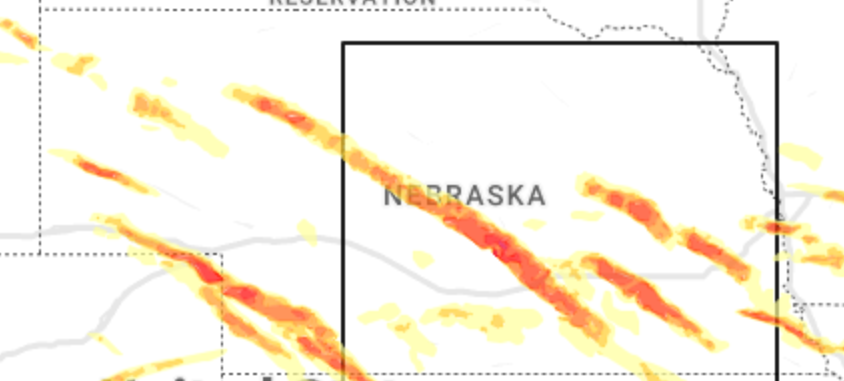
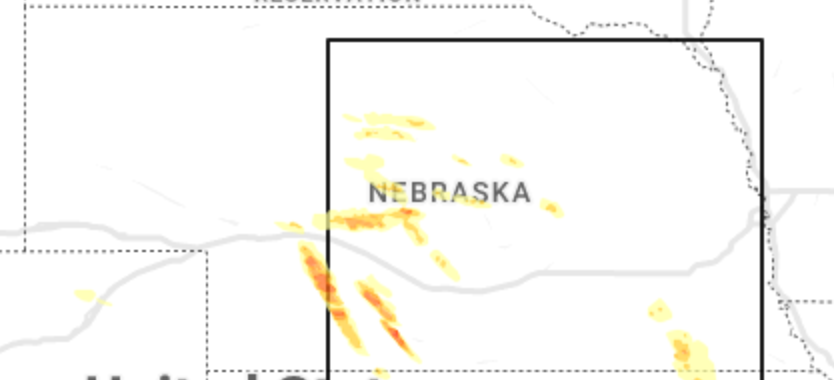
There’s been a lot of hail damage this past week in Nebraska. It’s always so hard to see the damage, regardless of when the storms come. I’m sorry for those impacted and am grateful for safety as many lost windows in homes too. Various tools are available to show hail storm paths. I grabbed these from ‘Interactive Hail Maps’ to get a better feel for how much of Nebraska has been impacted this week (June 5, 6, 7, 9 2022 shown below).


We are at a critical time right now for making replant decisions with the federal crop replant date next Tuesday. Have looked at a lot of fields the past few days with a range of damages. The following is what I’m doing in assessments right now that I’ve found to be practical for me in the event it can help you. Will also share some tools, what to watch for, and some thoughts based on questions received.
Helpful Resources
- HailKnow Website (has 6 sections including assessing damage): https://cropwatch.unl.edu/hailknow
- Webpage: https://cropwatch.unl.edu/hail-know/assess-my-damage
- Infographic: https://cropwatch.unl.edu/Hail/Images/HailKnow-Damage-Assessment.png
- Assessment Video: https://cropwatch.unl.edu/hail-know/video-hail-damage-assessment
- 2014 Storm Recovery Information: https://cropwatch.unl.edu/2014-storm-recovery-information
- Corn Hybrid Maturities & Late Planting: https://go.unl.edu/gnas
- Strategies with Late Soy Planting: https://go.unl.edu/20ry
- Corn GDD Tool: https://hprcc.unl.edu/agroclimate/gdd.php
- Bean Cam Replant App: https://ipcm.wisc.edu/apps/beancam/
What to Do Now
- Look at fields to see damage extent. Know what growth stage the field was in at time of the storm.
- Call crop insurance.
- Call an agronomist or review resources to anticipate what to look for in plant recovery.
- Flag plants in the field to assess recovery. This greatly aids in learning and has helped me tremendously! Taking a picture now and a week later of the same plants also helps.
- Wait 5-7 days to assess recovery. I realize the waiting is perhaps the hardest when we’re up against deadlines, but we need time to see what will happen with plant recovery.
- Consider options on what to do if the crop is totaled or not including herbicides applied, crop rotation restrictions, marketing and crop insurance, weed control going forward, etc.
Growth Staging Corn
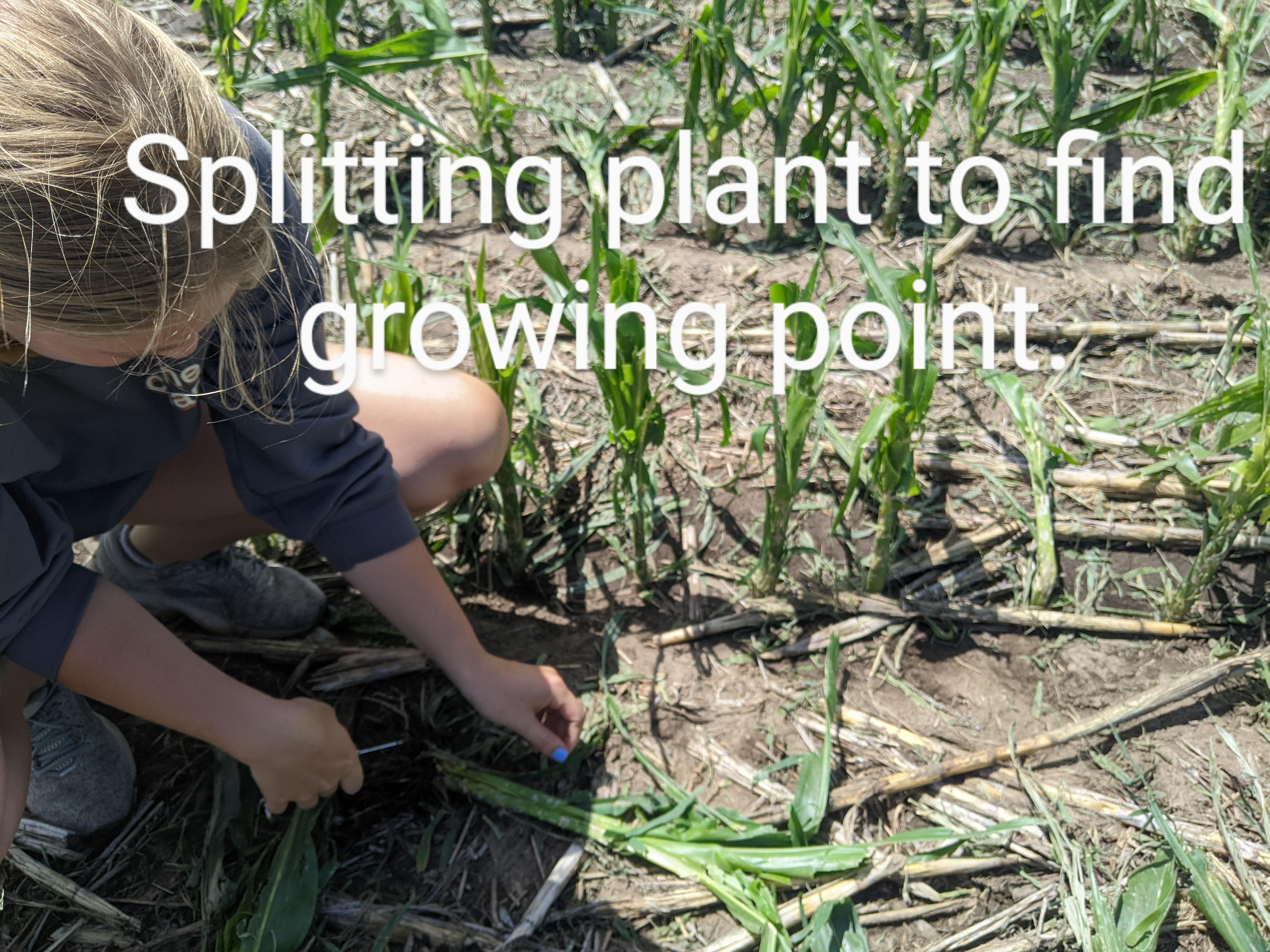


It’s important to know the growth stage at the time of the storm. You may have an idea on the growth stage from crop scouting reports. You can also do this yourself by finding the tallest plant standing in an area and dig it up. What I describe here is the agronomic method of counting collars and nodes which is different from the leaf method that crop insurance will use. Slice open the plant to view the growing point. Every leaf on a corn plant is attached to a node. There’s 4 nodes where the first 4 leaves attach in a triangle at the base of the plant. Then there’s a small gap and you will see a line that marks node 5 followed by a larger gap and a line that marks node 6. Because of the cooler soil temps this year, I’m finding smaller gaps between nodes 4 to 5 and 5 to 6 (nodes are closer together). Pulling collard leaves back, they will snap off at whichever nodes they are attached to (which can help you in determining the more advanced growth stages from 6 to 8 leaves). We had plants that ranged from emergence to V8 from what I’ve seen thus far. We say the growing point doesn’t come above ground till typically V5-V6. For corn that was less than V6 and cut off to stumps or at ground level, there’s potential for it to come back. I actually was seeing new growth today (2 days post-hail) on plants that were cut off at ground level. However, I will also say that’s not a guarantee as it all depends on how bacterial rots set in.
Stand Assessments for Corn
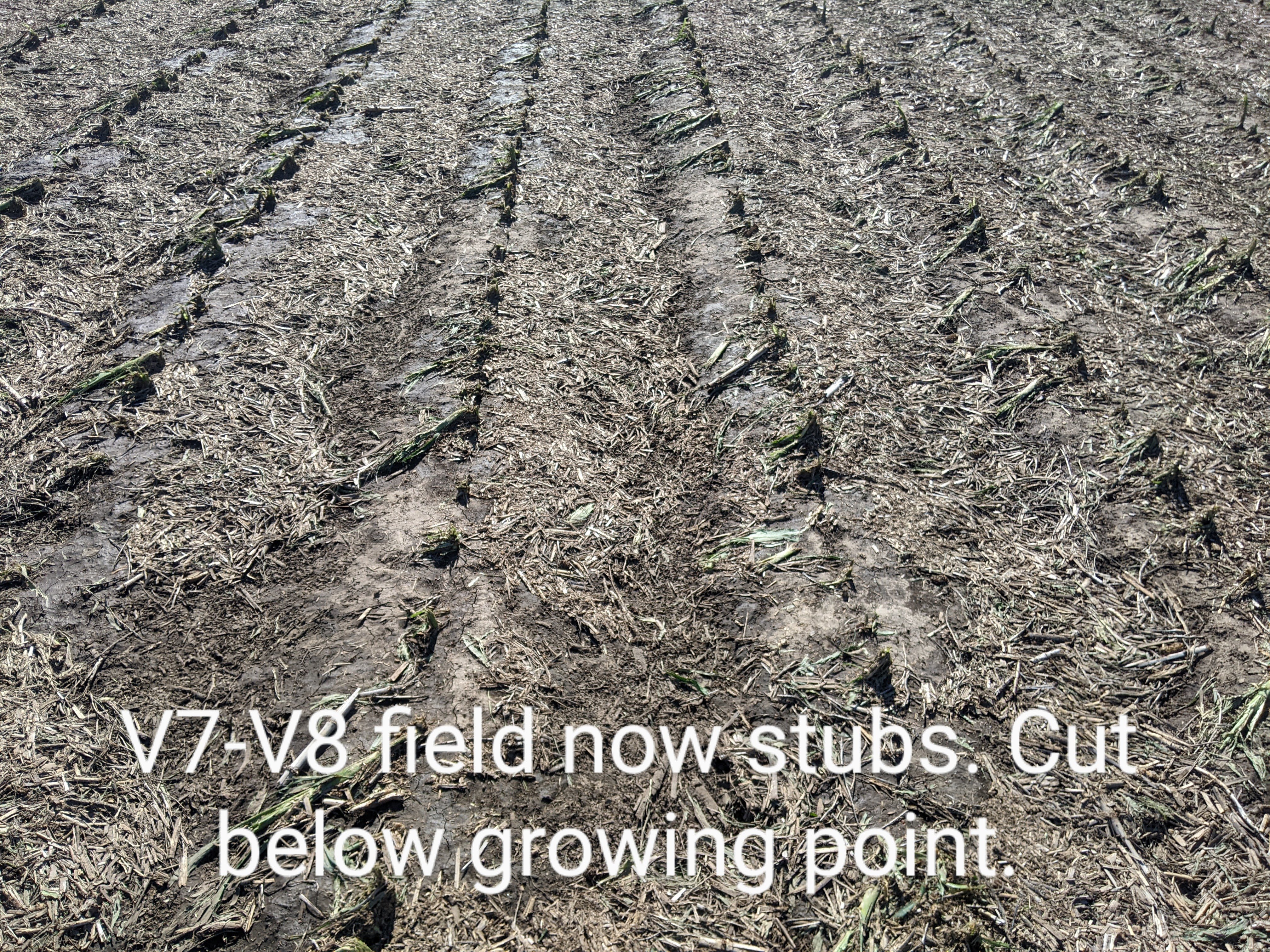

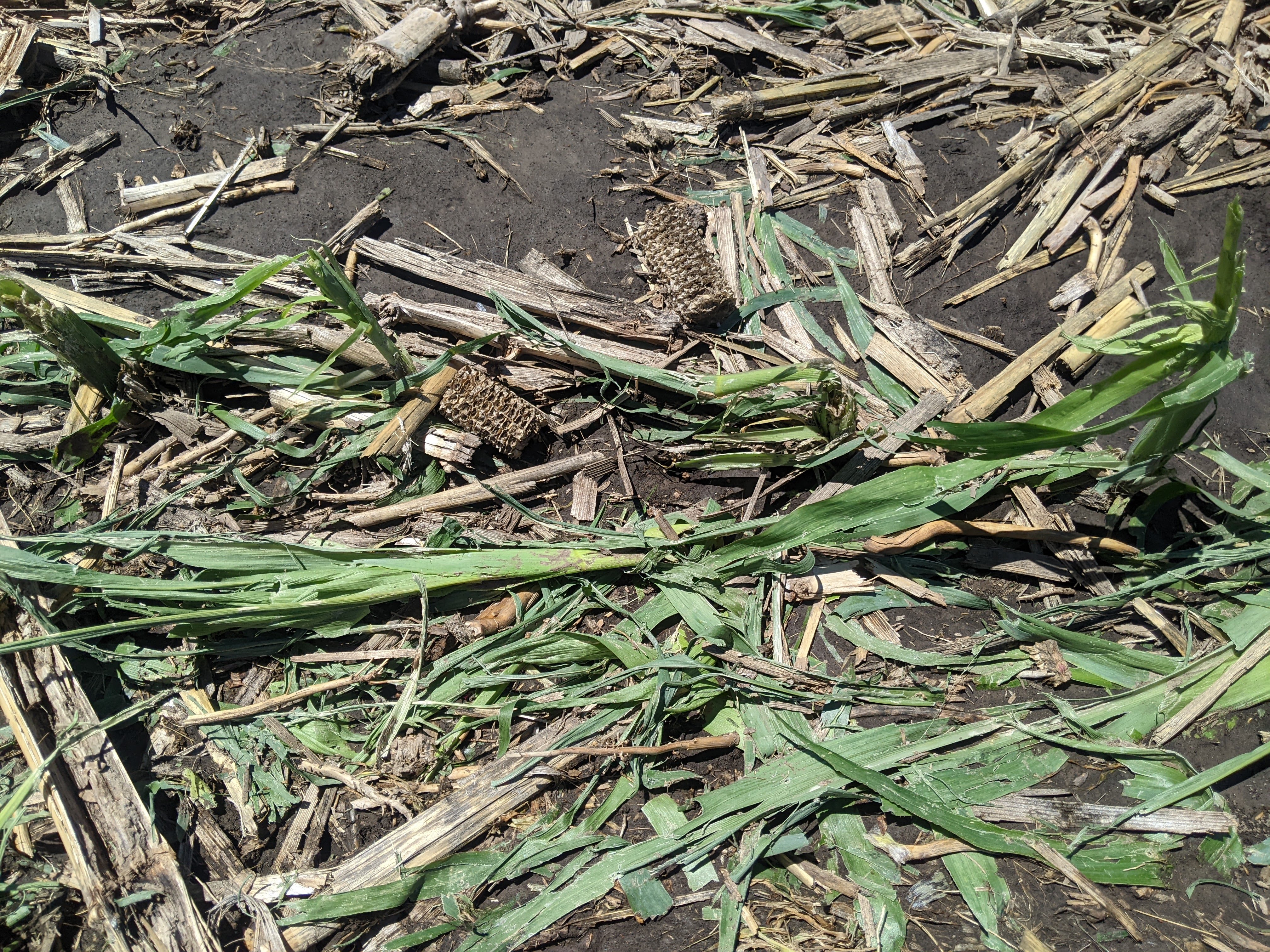
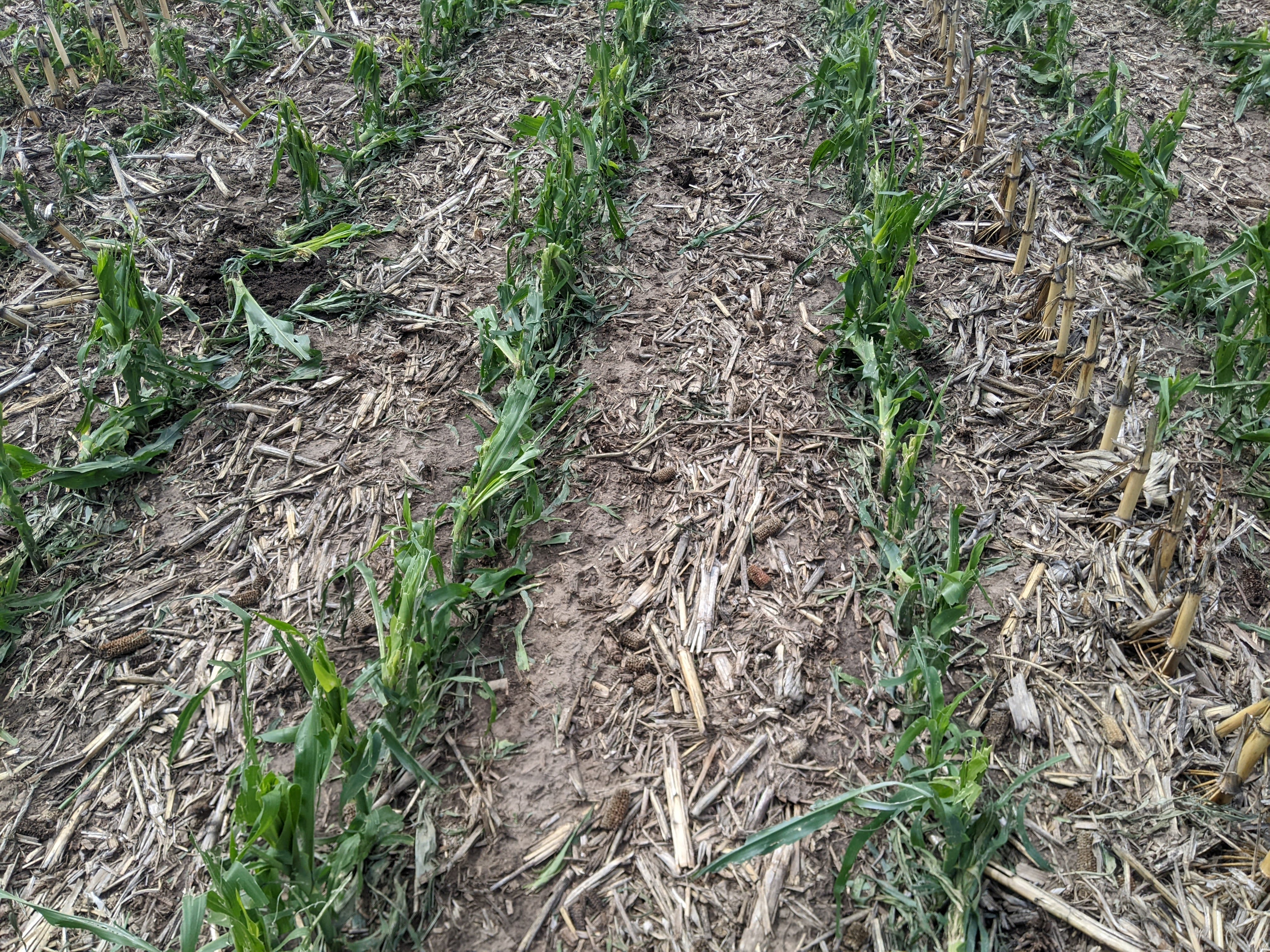

Next I take stand assessments by counting 1/1000th of an acre. I actually feel corn plants at the base as I count to see if they feel firm (likely to survive) or mushy (not likely) and only count plants which appear most likely to survive. I also keep track of which ones are questionable. In the previous paragraph I mentioned slicing a plant open to find the growing point. For these assessments, I use my finger to measure on that plant where the growing point is. Then for the stumps that are in a row, I use my finger to measure each stump of a plant to get a feel if the growing point may be above or below what’s left of the stump. If questionable, I don’t count it. It’s not perfect since slicing open the plant is always best, but it provides an idea for right now anyway. Some plants have quite a bit of hail damage to stems and we will have to see how far the damage penetrates for stalk rot. There’s some fields from the road that I didn’t think looked that bad until I got in them and realized how many were wrapped or where they were cut off. I’ve gotten between 15-26K for stands thus far with usually 3-6 questionable plants that weren’t counted. There are some fields that were near completely cut off below the growing point.
What to expect for corn
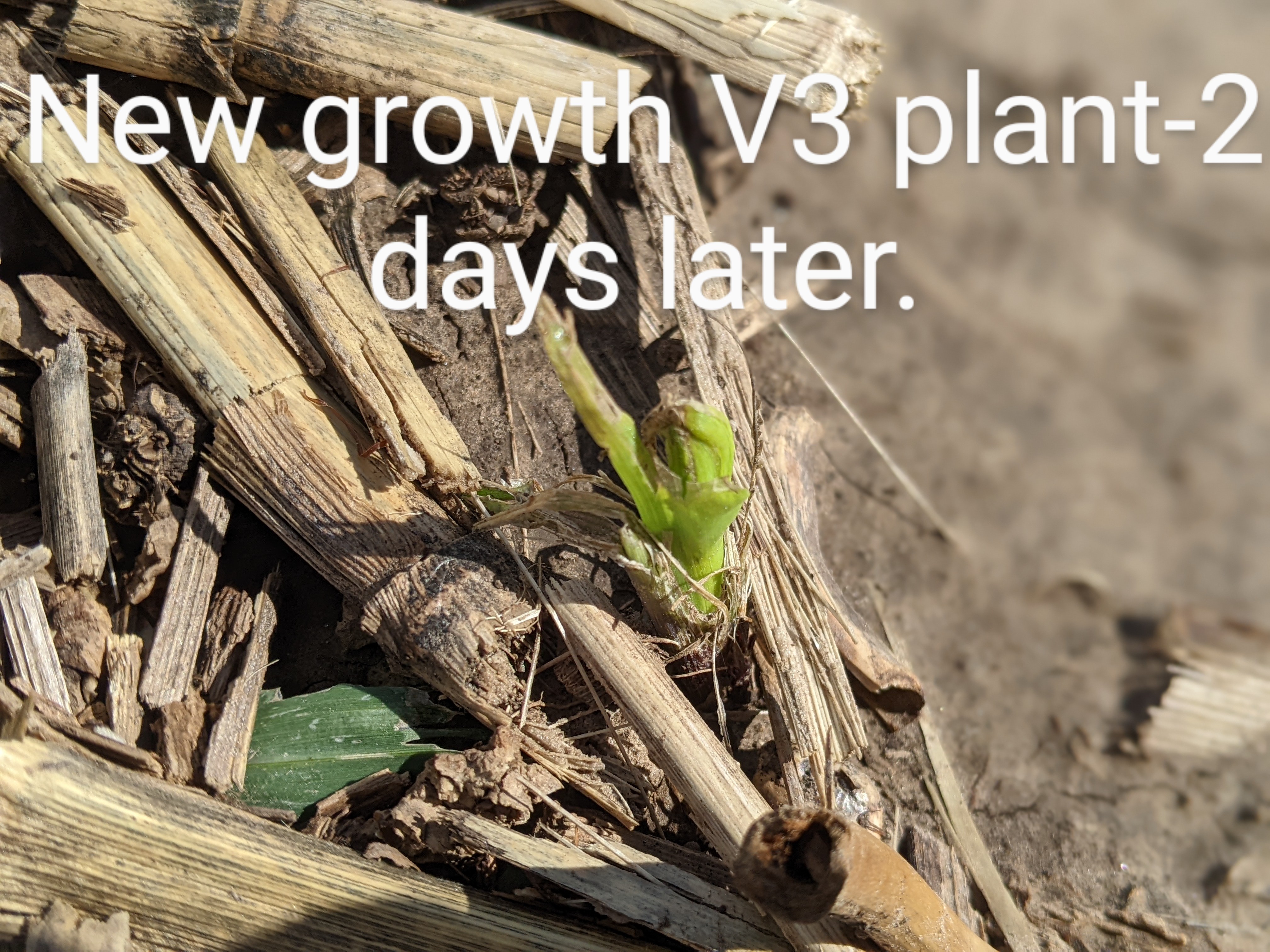


I know we’re tired of wind, but wind and sun are helpful right now. Today was so much better assessing plants as the wind has helped senesce dead parts of plants and started the process of tearing off bent whorls so the new growth can push through. For bent whorls that remain bent and don’t slough off, the new growth stays wrapped and those plants won’t survive. Watch stumps for new growth (depending on where the growing point may have been). Also watch stumps in particular to see if bacterial rot sets in. Even though the growing point is below ground, I’m unsure about some of the V2-V4 corn that was snapped off by washing rain and debris as to whether or not those plants will come back due to rot setting in. I just don’t know and that’s why we wait.
You can flag plants and also open up a few plants with hail damaged stems to see how deeply the stones penetrated the stalk tissue. I was seeing bacterial stalk rot already setting in today (2 days post-hail), which isn’t good, but something to be aware of. I’m also seeing discolored crowns at base of plants in some fields when they’re split open. Unsure why that is but ultimately, what’s more critical is that the growing point of the plant is healthy (white/cream color and firm, not brown and mushy).
What to expect for soybean


I haven’t taken any stand counts for soybean. I’ve only seen maybe two fields that may need replant at this point (from my perspective). Soybeans are so incredible at compensating! Today was seeing 3-5 growing points emerging on some of these sticks. They key to survival is if the plant was cut above or below the cotyledons. What I’m seeing for farmers who planted soybeans April 19-25, the cotyledons are close to the ground because of the cooler soil temps, which is good because there’s growing points lower on the sticks of stems that are left. In a week, these beans will look a lot different. I know people want to write them off now, but it’s incredible what they will do with some sunshine and 7-10 days. However, in saying that, each field is a field by field assessment. UNL and University of Wisconsin recommend leaving stands of 50,000 plants/ac. The bigger issue I realize at this point is weed control since early beans were V4-V5 and bushing nicely prior to this storm. Check out this cool app from University of Wisconsin on replanting bean decisions: Bean Cam Soybean Replant App.
Replanting Corn
Regarding herbicide applied and crop replant, ultimately, view the label for any replant and/or rotation restrictions (or 2022 Weed Guide starting on page 198). And, it’s good to have conversations with area chemical reps for specific questions on what may or may not be safe to try.
The corn replant decision is hard. It’s obviously an economical one, but there’s various slants to consider on it, especially in regards to crop insurance and how much a crop has been marketed. Each field will need to be assessed. I know some are hoping for crop insurance to total fields, but I really don’t know if they will total stands of 15-20K plants or not. Again, these are field by field decisions. If the field is totaled, depending on herbicides, replanting to corn, milo, and soybean may be options. A few have been interested in forages and that is really a conversation about your goals and how the forage will be harvested.
For those wanting to plant corn, we can’t predict when a fall frost will occur each year. What we can do is look at historical trends to get an idea on maturities to plant for different dates that hopefully will mature prior to frost. The following is based on data at: https://hprcc.unl.edu/agroclimate/gdd.php. For those located in a different part of the State, select your location on the map at the above web link. Then input the planting date and relative maturity you’re considering and see where it aligns with the 28F historical frost date. Below are charts I created for York and Clay Counties. Additional information on corn hybrid maturities and late planting can be found here: https://go.unl.edu/gnas.
| York Ne Data Avg. 28F frost Oct. 21 | Relative Maturity | 80 | 85 | 90 | 95 | 100 | 105 | 110 |
| Planting Date | GDD to R6 | 1917 | 2038 | 2159 | 2280 | 2401 | 2521 | 2642 |
| June 15 | Sept. 5 | Sept. 11 | Sept. 19 | Sept. 28 | Oct. 8 | Oct. 23*** | *** | |
| June 20 | Sept. 11 | Sept. 18 | Sept. 27 | Oct. 7 | Oct. 22*** | *** | *** | |
| June 25 | Sept. 18 | Sept. 27 | Oct. 7 | Oct. 21 | *** | *** | *** | |
| June 30 | Sept. 27 | Oct. 7 | Oct. 21 | *** | *** | *** | *** | |
| ***Date is beyond average 28F frost event of Oct. 21 |
***indicates the date is beyond the average 28F average first frost of October 21.
| Clay Center, Ne Data Avg. 28F frost Oct. 18 | Relative Maturity | 80 | 85 | 90 | 95 | 100 | 105 | 110 |
| Planting Date | GDD to R6 | 1917 | 2038 | 2159 | 2280 | 2401 | 2521 | 2642 |
| June 15 | Sept. 9 | Sept. 16 | Sept. 25 | Oct. 5 | Oct. 20*** | *** | *** | |
| June 20 | Sept. 15 | Sept. 24 | Oct. 4 | Oct. 17 | *** | *** | *** | |
| June 25 | Sept. 23 | Oct. 3 | Oct. 16 | *** | *** | *** | *** | |
| June 30 | Oct. 2 | Oct. 15 | *** | *** | *** | *** | *** | |
| ***Date is beyond average 28F frost event of Oct. 18 |
***indicates the date is beyond the average 28F average first frost of October 18.
Replanting Soybean
If changing from corn to soybean in the replant decision, maybe it’d be wise to poke some soybeans in the ground now just to see how they fare with the herbicide that’s been applied? And maybe you try poking them in at different depths? I know I normally recommend planting deeper, but right now I’m suggesting shallower…like 1″…to hopefully be above any herbicide band that moved into the soil (if planting into a corn field) and to hopefully get the beans out of the ground quicker. The following article shares considerations for soybean when planting mid-June: https://go.unl.edu/20ry. In summary of it, for maturities, UNL recommends to stick with as similar maturity as possible till around June 15 and then consider switching to 0.5-1.0 maturity group less. I’m hearing from many seed dealers that beans are in short supply, so talk with your seed rep if you’re thinking about seeding beans at this point. Different thoughts on row spacing. Drilling or 15″ can close canopy sooner but we saw problems with white mold last year in the area and 30″ also allows for cultivation as a weed control option with application date restrictions on herbicide-tolerant bean traits. Wider rows should hopefully close canopy unless the beans get hit with off-target herbicide. Seeding rates are also debated. Many sources recommend to increase them by 10% after early June. I can appreciate the thought behind that and honestly don’t have a preference either way. In my experience with seeding rates, I didn’t see a difference in canopy closure timing with 90K to 180K, but my experiences have been with early April-May plantings.
Products
There’s also a number of thoughts regarding products. We don’t have research on the nutrient side for those asking about applying various products. I do feel sulfur has some healing properties but have no research to share.
Regarding fungicides, we don’t recommend them from the standpoint that hail doesn’t create fungal diseases. At some point, they could be helpful to aid in stalk strength. However, if you’re considering this in the next few weeks, consider proving it to yourselves with on-farm research this year so we do have data for the future. All you do is spray fungicide in enough width so two 2 combine passes can be obtained. Then skip an area for at least 2 combine passes. Then treat again and repeat across the field. Fungicide Protocol for Hailed Corn and Soybean. Please let me know if you’re interested in this!
Timing of fungicide app: ISU did a study to simulate hail damaged corn at tassel stage within an average of 3 or 8 days post-hail. They didn’t find the timing to provide any yield effects. They also didn’t find a statistical yield increase (90% confidence level) in fungicide application to hail damaged plants vs those which weren’t hailed although they also reported a numerical increase in 12 of the 20 fields. They also interestingly found that hail damaged crops had less foliar disease than non-hail damaged crops in their 3 year simulated hail-damage study.
For herbicide application, some labels recommend waiting 2-3 days after a crop damage event. Ultimately, to be on the safe side, it would be wise to wait for new regrowth on both the crop and the weeds.
Hopefully some of this helps as you assess your hail damage situation. It can be emotionally draining to look at all the damage, but would encourage you to look for all the small positives you can find. Getting away to enjoy a hobby, talking to another person, relying on one’s faith, and keeping a greater perspective helps. We do have resources at our Rural Wellness website at: https://ruralwellness.unl.edu/. Hang in there and wishing you the best with your decisions! Please reach out with any questions or additional information.
JenREES 6/5/22
This past week was beautiful! We saw more recovery on frost-damaged plants and it allowed for a lot of post-herbicide spraying. A question I kept receiving was how long to wait to spray crops that were frost damaged. Some labels will say to wait 48-72 hours before applying a herbicide while others don’t give a time, they just mention that injury to the crop can occur under specific temperatures or when plants are under stress. How I answered based on what we have recommended in the past is for any type of adverse weather event impacting crops (hail, frost, etc.), wait at least 3-5 days based on the label or until one starts to see plant regrowth of both the crop and the weeds. We would say the same for anyone who unfortunately experienced hail damage this weekend.

Interseeded Cover Crops: This past week was also a busy one for our team interseeding cover crops into V3-V4 corn. We are currently in the third year of a partnership between our farmer cooperators, The Nature Conservancy, Nebraska Extension, UBBNRD, and Kellogg’s. A couple cooperators are in the 4th year. The goals for planting cover crops into early season corn and soybean include reducing nitrogen inputs, weed control, improving soil health, increasing diversity, and providing forage for livestock. We’ve successfully achieved cover crop establishment and season long growth, covers that survived after harvest and survived into the spring to various extents in all years of the study. In the on-farm research locations from 2019-2021, the interseeded cover crop yielded less in 5 of the 12 site-years but yield was not impacted in the others. In 2021, there was no yield difference between the interseeded cover crop and check strips when seeded into soybean at two locations. Yields in 2020 and 2021 were impacted in some fields due to the July 9th windstorm in both years which opened up the canopy producing greater cover crop biomass.
Biomass samples taken in late September pre-harvest and pre-frost has ranged from 97 lb/ac to 2192 lb/ac. These are field averages as individual reps were over 4000 lb/ac in severely wind damaged fields. Additional growth was achieved after harvest but not collected. Biomass samples for nitrogen content taken in 2021 ranged from 5-200 lb N /ac. Beginning soil health assessments were taken the first year of the study and will be completed in September of 2022 for comparison.
We’ve also learned a lot about herbicide interactions with cover crops; they are fairly resilient. For the corn locations, we’ve went with a full PRE herbicide (generic Lexar, Callisto, Acuron…have not used Resicore) and then for POST, within 3 days either direction of interseeding using Roundup, Liberty, and sometimes dicamba with no impacts to the covers that we interseed. We have also had success using ½ rate of Lexar or Callisto at least 1.5 weeks prior to interseeding. The covers were scraggly, but they did come through it. We have never used a residual on the corn we interseed, but using a Group 15 was an option once the covers emerged and got up about an inch to provide residual if the guys wanted it.
For the soybeans, if a full PRE was applied at least 3 weeks prior to interseeding, we didn’t worry about it (which was the case in 2021). For POST, we just used Roundup and either Liberty or Dicamba within 3 days either direction of interseeding with again, the thought of a Group 15 if needed for residual once the covers were 1″ tall. In soybean, we interseeded 10 lb/ac red clover with 20 lb/ac of wheat. The field we interseeded at emergence had red clover survive the entire growing season, through harvest, and was growing this spring for the successive corn crop. It was unexpected and gave us insight into another way of potentially establishing a perennial crop for nitrogen. It ended up being killed out by the corn herbicide, but is something we’re repeating in different ways in 2022.
Regarding species that we feel are most successful in the corn, we like buckwheat, iron and clay cowpeas, clovers (red and sweet), brassicas such as collards and radishes, forage soybean, annual and Italian ryegrass. We’ve consistently seen sweetclover and the ryegrasses survive the winter into the spring. Depending on the year, we’ve also seen red clover and hairy vetch survive the winter. We’ve learned much more that I don’t have room for here. If you’re interested in learning more, be watching for our articles at cropwatch.unl.edu. Also, save June 30th for a potential Interseeding Cover Crop Driving Tour.
JenREES 5/30/22
Thankful today for all those who paid the ultimate sacrifice for our freedom, that our flag is still flying and for the freedoms we still have. May we never forget freedom isn’t free.
Frost Damage: Looked at a lot of fields this past week for frost damage, particularly bean fields. A key for evaluation is making sure the hypocotyl (the portion below the stem) is still firm and not pinched in any way or soft. Then exam the cotyledon area as there is an axillary bud next to each cotyledon which can shoot new branches. The rest of the upper-most plant may die, but as long as the cotyledon area is healthy, the plant should live. I have pictures to show this at jenreesources.com and we go into more detail in a CropWatch article at: https://go.unl.edu/e3si.
There’s a lot of situations with one or two rows damaged, but the damage alternates between the two. There’s many situations where there’s several rows of beans missing in patchy areas of drilled or planted fields (however, it’s not the entire row in any field I’ve looked at). Some of the patchy areas of fields are between 30-65K while other portions of fields are 100K or over. Beans are incredible at compensating and they will branch to compensate for no plants in an adjacent row. I just keep wondering about damaging the yield potential already there from these early planted beans to slot more in. I realize I would leave things at a lot less population than many are comfortable with and our recommendation is to leave fields with at least 50K. One needs to consider history of weed control in these fields as well. Each decision to leave a stand or replant is an individual and field-by-field one. I still am encouraging anyone who wishes to slot some in to consider planting a strip, leaving a strip, and alternating that at least 3 times. (Or if you’re drilling beans, you may need to make a round instead of a pass). The goal is to get two combine-widths from each planted/drilled area. This at least would be a way to see for yourself if slotting the beans in made any difference for you and please let me know if you are interested in doing this! If you do slot beans in, we’d recommend going with as similar of maturity as what the original maturity was until June 15. Ultimately, I just wish you the best in the decisions you’re making.
York County Progressive Ag Safety Day will be Tuesday, June 14th, 2022 8:30 am – 1:00 pm York County Fair Grounds York, Nebraska. This is a fun-filled day of learning for school-aged children. Topics for demonstrations and discussions include: Electrical Safety, Pipeline-Gas Safety, Grain Safety, ATV/UTV Safety, Look-a-Likes, Power Tool Safety, Equipment Safety, and Internet Safety. The registration fee is $5.00. This safety day includes lunch, snacks, a T-shirt, and a take-home “goody” bag. Registration is due by June 7th to ensure a t-shirt and take-home bag. Please register with the York County Extension office at (402) 362-5508. Sponsors include York County Farm Bureau, York Co. Extension, Wilbur-Ellis, and Black Hills Energy.
Weed Management Field Day will be held June 29 at South Central Ag Lab near Clay Center. Growers, crop consultants and educators are encouraged to attend. The field day will include on-site demonstrations of new technology and new herbicides for corn, soybean, and sorghum. An early morning tour will focus on weed management in soybean and sorghum followed by a tour of weed management in field corn. Field experiments will provide information for weed control options with various herbicide programs.
Three Certified Crop Advisor (CCA) Continuing Education Units are available in the integrated pest management category. There is no cost to attend the field day, but participants are asked to preregister at http://agronomy.unl.edu/fieldday. A brochure with more info. is located at the website. The South Central Agricultural Laboratory is five miles west of the intersection of Highways 14 and 6, or 13 miles east of Hastings on Highway 6. GPS coordinates for the field day site are 40.57539, -98.13776.


JenREES 5/23/22
This past week was a tough one on some crops. We’ve seen crusting, hail, wind, and frost cause damage to crops throughout the State. The following are considerations for plant recovery and replant.
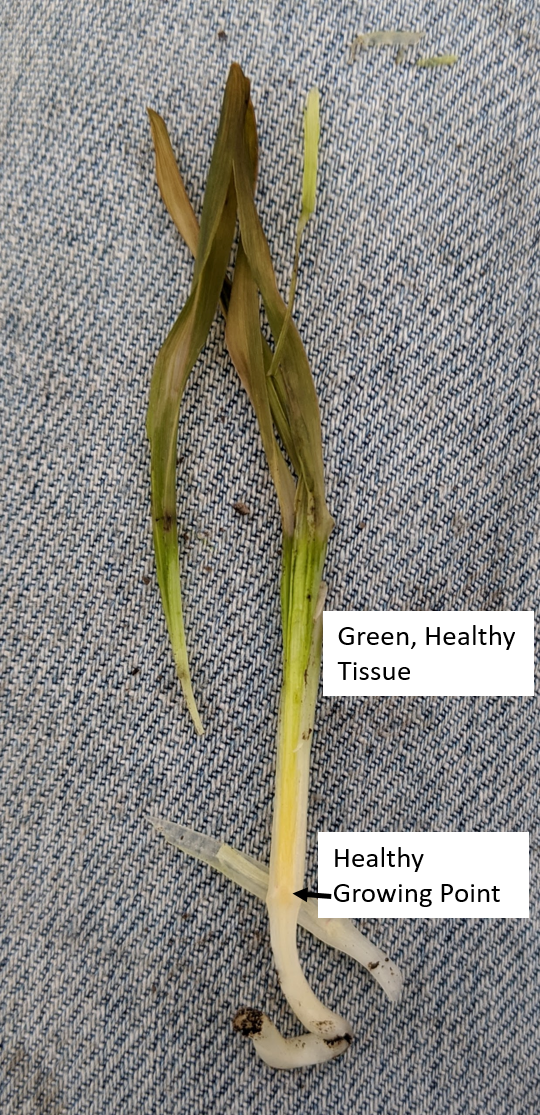
Recovery: For any situation, while it’s hard to wait, waiting 3-5 days does help when assessing any regrowth potential. We may need closer to 5 days with the rain and cool nights forecasted. Some may have experienced plants in your field that have burnt leaves and appear to be very dry. When you dig up the plants, check the roots and see if they appear white and healthy. If they appear stunted or burnt back, that may still be ammonia burn occurring. Most of what I’ve seen this week was due to wind damage from the amount of soil moving, ridges of dirt, and plants ultimately being ‘sand-blasted’ minus the sand. In cutting open plants, look to see if the growing point is white/cream in color and firm. That would indicate it is healthy and should survive. Often one can see the newer green leaves under the dying brown ones that were exposed to wind. The brown, drying leaves may do some wrapping. Often the wrapped leaves are removed by wind as regrowth pushes through, depending on severity of wrapping.
Similarly, if the corn experienced hail and/or freeze damage, digging plants and splitting stems to check for healthy growing points are part of the assessment.
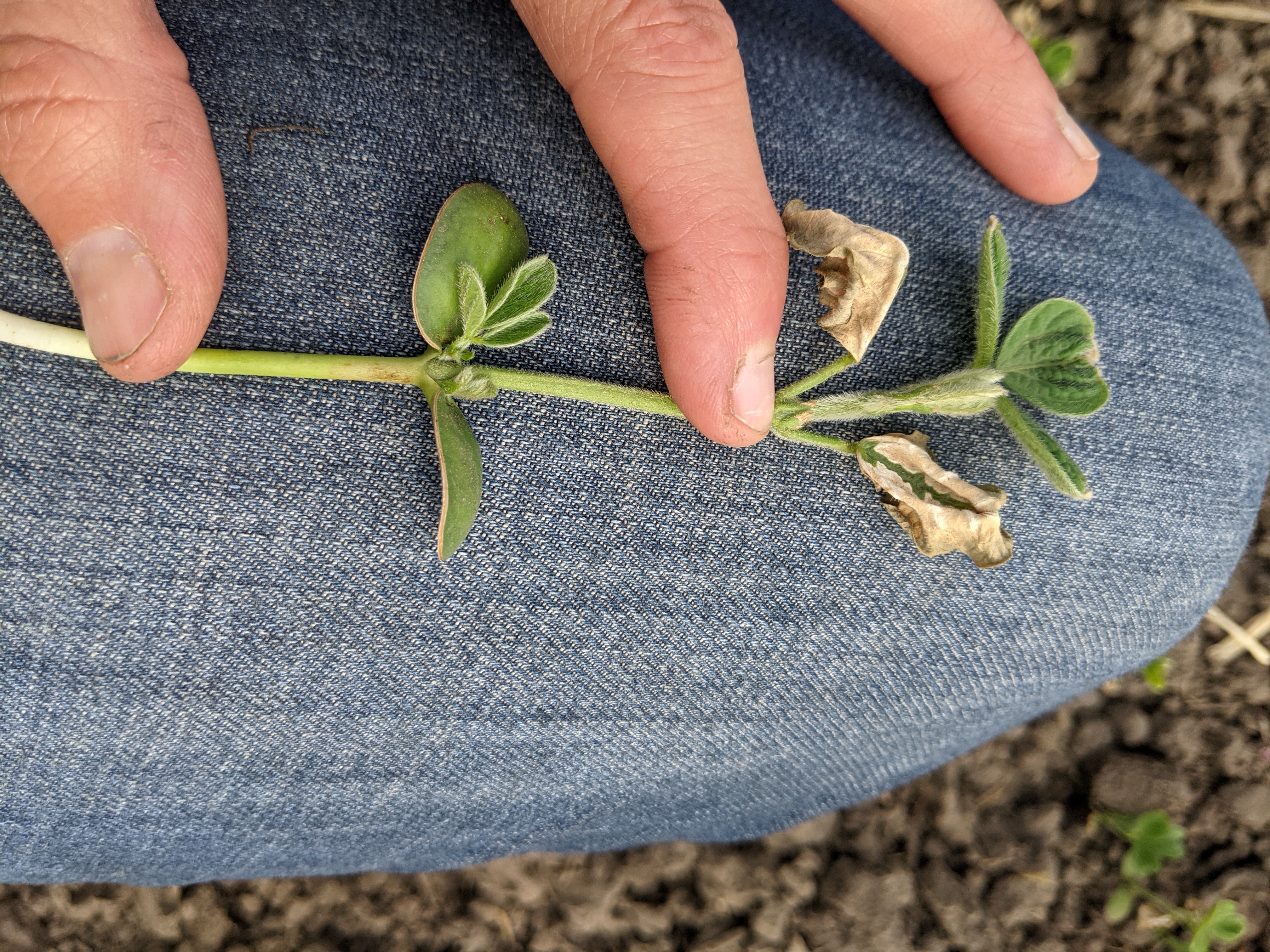
For soybean, the growing point is above ground. The most critical point for new soybeans is when they’re emerging with hypocotyl hook exposed. Anytime the hypocotyl gets pinched (whether from crusting, frost at soil surface, some PPO inhibitor damage), the soybean won’t survive. Soybeans can survive the cotyledons being stripped and/or burnt off. Soybeans at the true VC stage (unifoliolates unfurled) can have 4 growing points below the main growing point (due to the axillary buds) which can shoot new petioles. What was cool for me was watching this in an organic field where the farmers flame for weed control. The soybeans after flaming can look similar to frost damage, yet a few days later, new shoots formed from the axillary buds. I haven’t experienced frost damage past the true cotyledon (VC) stage so I can’t say for sure how they will recover in fields that were hit hard. I’m hoping they could react similar to the flaming situation, depending on how badly the hypocotyl was damaged. The hypocotyl is the stem portion below the cotyledons.



Replant Considerations: For corn, the following chart from Iowa State University by Roger Elmore and Lori Abendroth, is the standard for consideration regarding populations.
For soybean, I have left stands as low as 50,000 plants/acre, particularly the closer to mid-June we get. I realize that’s hard, especially when one considers weed control. University of Wisconsin found only a 2 bu/ac yield increase when replanting early soybeans between 50,000 and their optimum stand of 100,000-135,000 plants/acre. A York County irrigated field in 2018 comparing 90K, 120K, and 150K became final plant stands of 60,875, 88,125, and 121,750 plants/acre with yields of 93, 94, and 97 bu/ac respectively.
As you assess plant stands, keep in mind that a gap in one plant row will be compensated by plants in the adjacent flanking rows. They will form extra branches to take advantage of the sunlight. Thus single-row gaps may not be as yield-reducing as you might think, especially in narrower row spacings.
If one replants at this time of year, it’s best to use a similar maturity as what one started with. We can still use full season maturities to mid-June. For stands less than 50,000 plants per acre, plant a similar maturity into the existing stand; don’t tear out or kill an existing stand as early planted soybeans have a higher yield potential. And, you can also test this for yourself via an on-farm research study! Simply leave a planter pass of your existing stand, plant into your existing stand for a planter pass, and alternate this across your field. Please see this protocol for more information.
JenREES 5/15/22
I heard many say they’d never before seen that kind of wall of dirt that came through with the storm last week; I hadn’t either. Also can’t remember a spring where we’ve had this much wind and significant storms to have so many pivots needing replaced. In spite of the property damage, grateful to hear most share they were ok in spite of the scary situations they were in when the storm hit!

Tree Wind Damage: Heard a number of people had tree damage in addition to all the visible damage in York and other areas. For those with large branches down, it will be helpful for the life of the tree to get branches trimmed back to the next larger branch or the trunk. Corrective pruning can help with trees that lost less than 50% of their branches (and don’t have additional issues such as significant decay). The pruning should be done to balance the limbs on all sides of the tree canopy (crown). Cut at the collar area instead of flush to the trunk to aid the tree in healing. Cut large limbs in stages. With one cut, a branch often breaks before it’s completely cut, causing damage to the tree bark. Instead, as explained by K-State, “take a cut around 15” from the trunk. Start from the bottom and cut one-third of the way up through the limb. Make the second cut from the top down but start 2 inches further away from the trunk than the first. The branch will break away as you make the second cut. The third cut, made at the collar area, removes the stub that is left.”
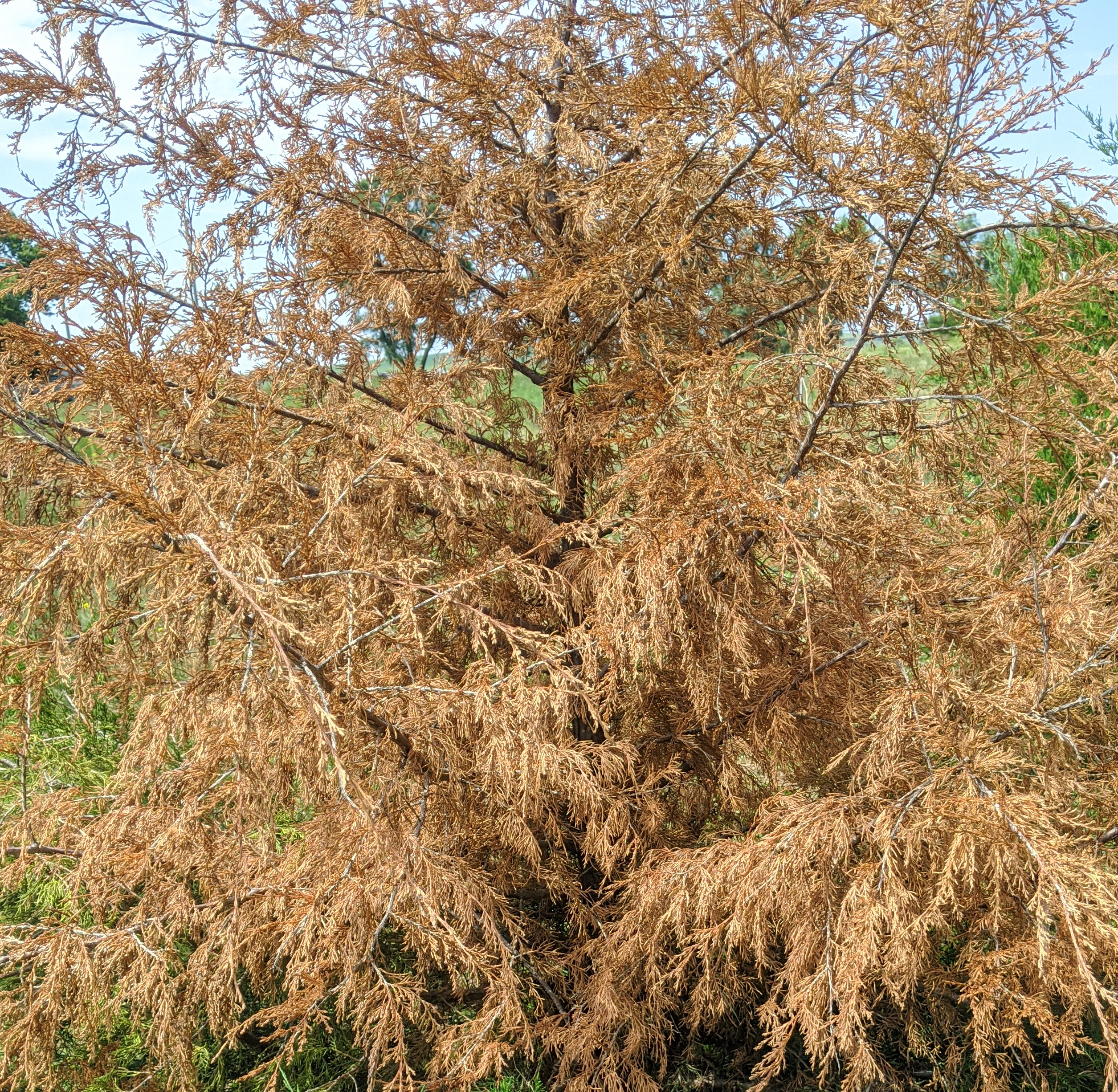
Sudden Tree Death in Windbreaks: Received a number of calls about evergreen trees that were suddenly dying, particularly in windbreaks. Anytime this happens, it’s due to some environmental and/or cultural problem. We most likely are going to see lots of tree and shrub issues this year due to the dry fall, winter, spring and the fact that we didn’t have snow cover. Trees rapidly dying right now are most likely due to the dry conditions and/or a combination of those conditions with my next comments.
A cultural example that I see aiding in the cause of tree death is landscape fabric/weed barrier. For example, (from my experience) the #1 cause of death I see of cedar tree windbreaks that are usually in the 10-20 year range, is when landscape fabric was used as weed barrier between the tree plantings.
So why does the fabric cause an issue? Often the original hole size doesn’t necessarily expand with the tree trunk as it expands. Getting under the tree (which is a pain with the pokey fallen needles!), one can often see how the tree is choked right where the fabric is and then the trunk flares right above that point, indicating the choking point. For trees that haven’t died, taking some type of long-handled tool that has a hook or something to pull the fabric away from the trees in several places around each tree can help. And honestly, if anyone reading this has a windbreak with landscape fabric, it would be wise to do this regardless if any trees are dying to potentially avoid future distress. I realize weed barrier is typically used with windbreak plantings. Research has shown that just planting grass between the trees (or leaving grass between the trees), while resulting in a natural weed barrier, causes trees to grow more slowly. It is an option though for weed control. Another option is using some type of mulch around the trees (but not against the trunk). I realize in the country, it can blow away more easily, but is another option that provides weed control.
Sickly looking evergreen trees could be due to a combination of things such as the dry conditions plus a disease/insect issue from previous years. I’ve seen several of these as well where they look sick, but aren’t rapidly dying. In those cases, it’s important to reduce the stress to the tree and be aware of the specific insect/disease problem for treatment.
Cutworms: As corn emerges, be scouting for cutworms. More info: https://go.unl.edu/a6fy.
BQA Training: Face to face BQA and BQA Transportation training for livestock producers is on May 18, 4:00 p.m.-6:00 p.m., Casey’s Building, Albion, NE. RSVP to Brad Schick at: 308-632-1230.
JenREES 5/8/22

Alfalfa Weevil should be scouted in alfalfa now. I have sweep nets that can be borrowed from the Extension office if you’d like. Otherwise, just go to different spots in the field and look for small holes on the newest leaflets near the stem tips. The larvae are small, green, and have black heads with a white stripe down the back. During the heat of the day, they’re often found near the crowns of plants and they curl into a C-shape when touched. To determine economic threshold, cut 10 alfalfa stems at ground level and shake the larvae off the stems by beating them off the sides into a bucket. The economic threshold right now is right around 1.5-2 larvae per stem. More info. here: https://go.unl.edu/tpkz.
K-Junction Public Forum: I’m grateful for the opportunity that EDF Renewables is allowing for a public forum in addition to their second open house regarding the proposed solar farm this Wednesday, May 11 from 6:30-8:30 p.m. at Stone Creek in McCool Junction. Because we’re to be impartial as Extension faculty, I was asked to serve as the moderator for the evening. I just wanted to share a little about this, and also felt it was important to share how I’m choosing to moderate the event so it’s not a surprise that evening.
As I’ve listened to various conversations and perspectives, it just seems like people need the opportunity to share their viewpoints publicly and ask their questions so all can hear the same answers provided. Because of this, a few of us expressed concern to EDF to allow for a public forum. EDF chose to change the open house format to a blended one of both display boards and the forum and I’m grateful for that. While public forums are difficult, I feel there can be some healing that occurs in just being heard, despite differences of opinion, and that’s my hope and prayer.
As I’ve tried to put myself in the shoes of landowners, while my family doesn’t own land in the area of the proposed solar farm, if we were in this situation, our decision would be based on our specific goals and plans for our farm. But our goals may not be the same as our neighbors. Thus, each landowner has to make decisions based on the goals and values that fits his/her family’s specific situation. The difficulty can be for those caught in the middle who don’t get to make that choice, such as neighbors, community members, and those whose jobs also support agriculture in some way.
As I’ve listened, the theme I continue to hear and sense, is the lack of information for a few years that occurred. I think that’s the greater underlying frustration. I’ll admit, that was a frustration to me as I felt I let landowners down by not knowing, thus didn’t have resources available for them to make informed decisions and to help with negotiating contracts. But I had to move past that to what I could do now. While hard, we can’t change the past. We can choose how we face the present and future doing our best to listen to each other and get answers to the questions we have. This public forum will hopefully allow an opportunity to do this. I think it also helps to remember we’re all just people. Regardless of which side a person is on, the person is not the enemy.
Rural Nebraskans are known for being respectful. I watched that during the first open house when differences of perspective were expressed in conversations. I only saw respectful conversation and discourse in addition to the passion for one’s position/perspectives. That’s what I would ask for this Wednesday evening as well.
In the public forum, there will be opportunity for sharing via a microphone and, for those who prefer not to speak, also via written questions. Each person will be given 3 minutes to speak followed by 3 minutes for EDF representatives to respond. I will make every attempt to get to everyone’s questions in the time we have. While it may be hard not to ask follow-up questions, I’m going to ask that everyone who desires has the opportunity to speak before anyone speaks twice. There will be additional opportunities to speak with EDF representatives following the public forum.
JenREES 5/1/22
What a blessing to receive rain!!! That almost seems like an understatement with the joy several shared with me as rain hit different locations of the State. The benefits were huge for pastures and lawns, activating herbicides, helping with ammonia burn, helping germinate seeds. There’s also just something about the way the air smells and to hear it after it being since last fall since much of the State has experienced a substantial rain.
And, I realize the winds also caused damage to some buildings and hundreds of pivots on top of all the pivots damaged from wildfires in the southwest part of the State. So sorry to hear about all the damages and here’s hoping they can be fixed/replaced soon.
Free Well Testing: From May 1-31, any Nebraska resident can sign up for free well water testing for nitrate, nitrate, and phosphate in well water and surface water. For more information and to sign up please go to: https://go.unl.edu/wqcs.
Food Preservation: Freezing Garden Produce webinar will be held May 3 from 7-8 p.m. To register, please go to: https://go.unl.edu/freezingclass. Freezing produce has been my go-to when I’m short on time!
K-Junction Solar Project Open House will be held on May 11th from 6:30-8:30 p.m. at Stone Creek Event Center in McCool Junction. From 6:30-7 p.m. will be an open community format. At 7 p.m. there will be moderated open Q/A with EDF renewable representatives. Food and drink will be provided.
Tractor Safety Training Courses will be held in late May and early June throughout the State. The first day of instruction can be taken either in person or online. The second day is a hands-on event including the required driving test. Teens 14 or 15 years of age who work on farms, or others who are interested in learning about safe farming practices are encouraged to register. Federal law prohibits children under 16 years of age from using certain equipment on a farm unless their parents or legal guardians own the farm. However, certification received through the course grants an exemption to the law allowing 14- and 15-year-olds to drive a tractor and to do field work with certain mechanized equipment. The closest hands-on training date is May 26th at Raising Nebraska, 501 East Fonner Park Rd, Grand Island (Contact: Sarah Polak, 308.385.3967, spolak2@unl.edu). The closest driving date is located June 9 at Adams County Extension, 2975 South Baltimore Ave, Hastings (Contact: Ron Seymour ron.seymour@unl.edu and Twila Bankson 402-461-7209, twila.bankson@unl.edu). For more information or to register, please go to: https://cvent.me/44ExVl.
Pasture/Range Management in Drought: A recent webinar shared how to trigger pasture and forage management decisions before a drought including animal turnout and stocking rates. You can view it here if interested: https://go.unl.edu/hygd.
Ornamental pears, also known as Callery pears, have been blooming. Kelly Feehan in Platte Co. shares, “If thinking of planting one of these white blooming trees, it might be best to reconsider. Ornamental pears have been a popular tree for white spring blooms, but this tree is overplanted and has issues with bark blasting and fire blight disease. More important, ornamental pear is on the Nebraska invasive species list; planting them is discouraged. The seeds of Callery pear are relished by song birds and small mammals who rapidly distribute them over a large area. If you want a white spring blooming tree, avoid planting ornamental pear and select a serviceberry, white flowering crabapple or Japanese tree lilac instead.”




 JenResources