Blog Archives
On-Farm Research Update
Hope to see you next week at our Nebraska On-Farm Research Updates to be held March 10 at ARDC near Mead and March 11 in York!!!

Cow-Calf College
This looks like an excellent workshop for anyone in cow-calf production. Hope to see you there!
(Click on the agenda below to enlarge the view).

Precision Ag Workshops
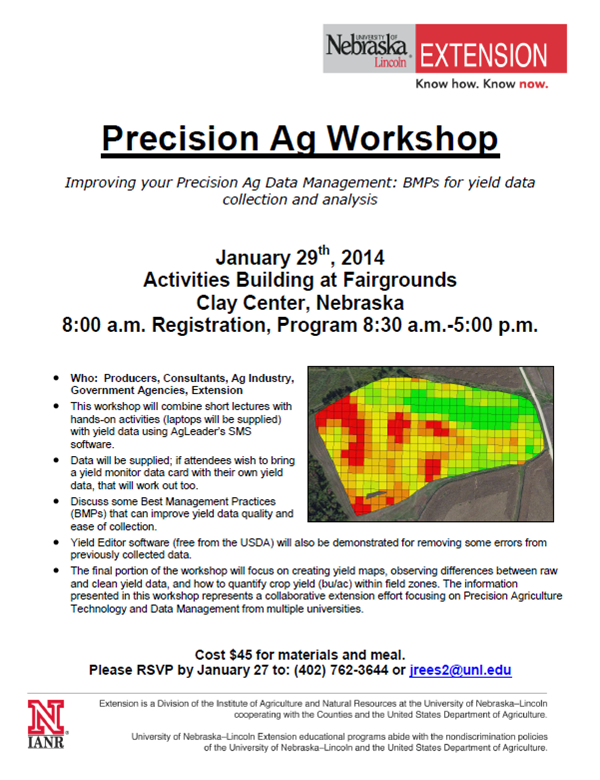
Agricultural machinery is equipped with numerous tools these days! When it comes to precision agriculture, do you know how to use these tools to the best of their ability for your operation? We’re hosting Precision Ag Workshops in Clay Center and York on January 29th and 30th respectively to help anyone interested learn how to utilize these tools more effectively. Computers, software, and data will be provided, but you are welcome to bring your own yield monitor data card to work on if you wish. Please register for Jan 29th session to Clay County Extension at 402-762-3644 or jrees2@unl.edu or for the January 30th session to York Extension at 402-362-5508 or gary.zoubek@unl.edu.
Soil and Water Conference
Hope you can join us for our Soil and Water Conference tomorrow in Clay Center!

Celebrating 100 years – Cooperative Extension
Cooperative Extension is celebrating 100 years in 2014! We will be celebrating throughout Nebraska in 2014, but in the meantime, check out our YouTube video!
#Ag Tour Day 1
UNL Extension Ag Educators from throughout Nebraska gathered together in late October for an excellent professional development tour to Iowa and Minnesota!
Before the bus started moving we were working on plant identification for a client. Then we learned about the status of Emerald Ash Borer among other pests at the Douglas-Sarpy County Extension Office. By the end of the presentation we were considering getting a meat thermometer and recordable Hallmark card! (will explain later).
Along the way, John Wilson provided an update regarding the flood recovery efforts from the 2011 flood. He mentioned at Gavins Point Dam, the lake would have drained every 25 hrs. when releases were occurring for the flood. He was involved with an effort in putting together a webinar that involved 25-30 agencies and 14 speakers from 5 states. During the recovery there were 2″ to 25′ drifts of sand in fields. One piece of ground that was reclaimed cost $125-150K and needed 7 excavators for a month. One 300 acre piece of ground that wasn’t reclaimed was going to cost $10,000/ac. to reclaim it.
John Hay provided an update regarding wind energy. He pointed out the different types of towers along the way as we passed several wind farms. Facts included: a 1.5Megawatt wind turbine can run 1000 homes each and the gear box is turning 2000:1 compared to the blades. Iowa is #1 in percent of electricity produced from wind power (20%) and it costs $3-6 million each to install a wind turbine (essentially double the cost of how many megawatts). The life span of a turbine is 20 years with a maintenance cost about $0.05/kwh. When considering efficiency, wind turbines are 40-50% efficient vs. coal power (35%), nuclear (35%), cars (25%); so they’re more efficient at converting free energy into electricity but they are less cost 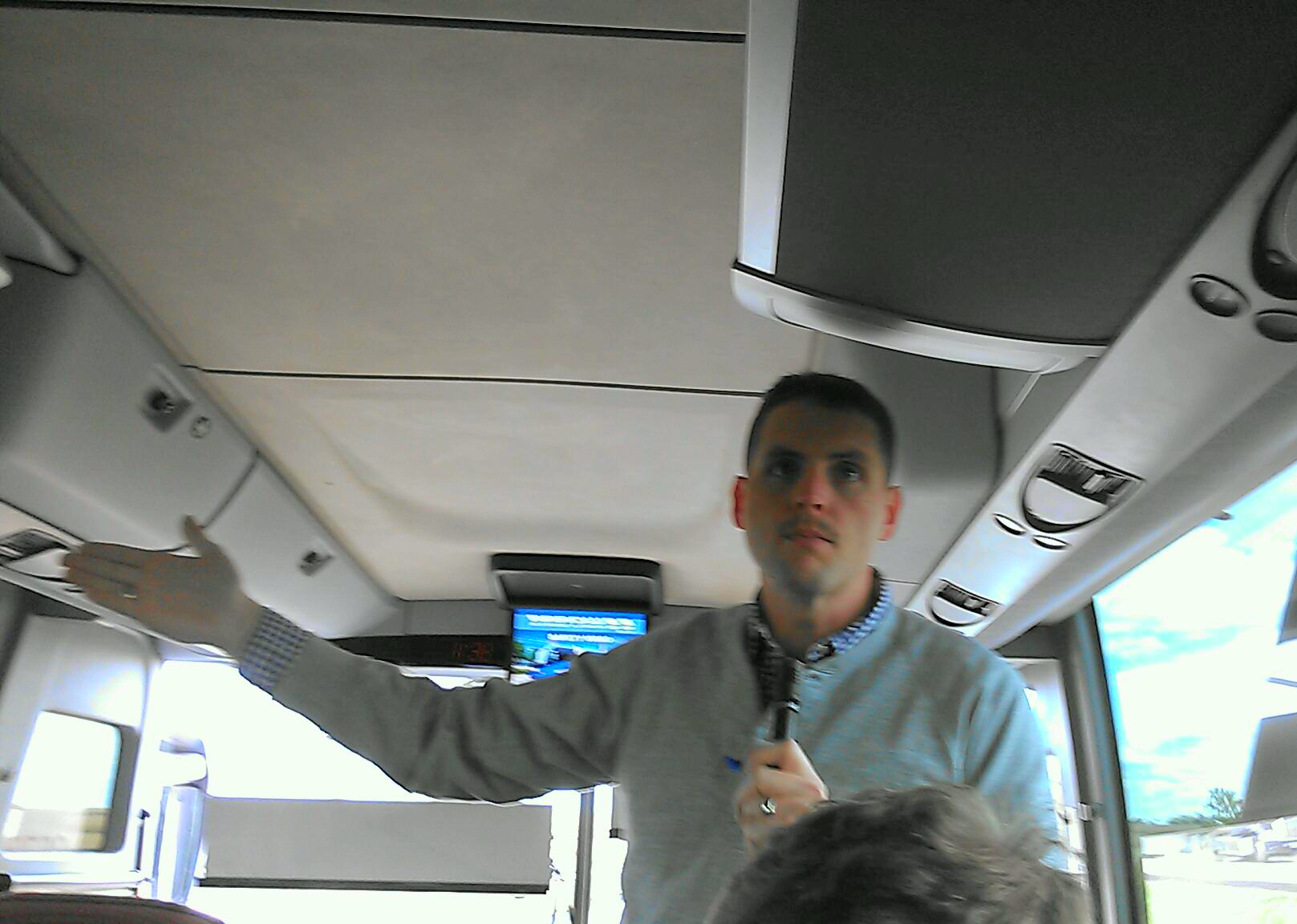 efficient than those other energy sources. Windfarms also typically pay for themselves in 5-10 years.
Our first stop was at Hawkeye Breeders where we saw their semen storage facility that essentially had enough semen to fertilize every cow in the U.S. They ship all over the world and their primary customer is the dairy industry. We also toured their semen collection facility and got the coolest pen from there.
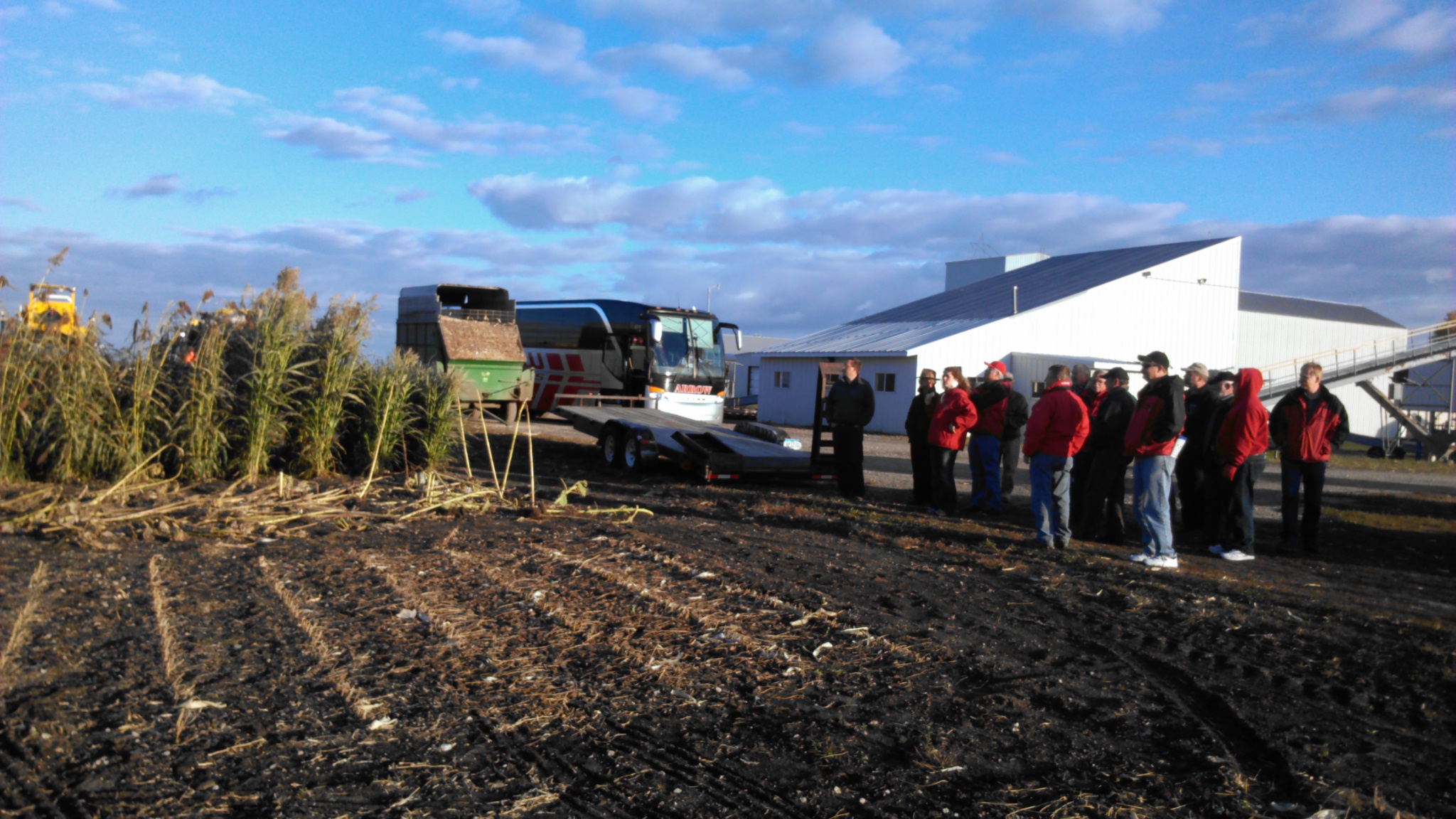
From there we stopped at Blue River Organic Seeds and were surprised to learn that all their organic seed research is done conventionally. They provide organic seed for corn, alfalfa, soybean, and various forages and are looking for more growers. We also learned about PuraMaize which was developed by Dr. Tom Hoegemeyer to essentially block pollen from outside sources to maintain purity.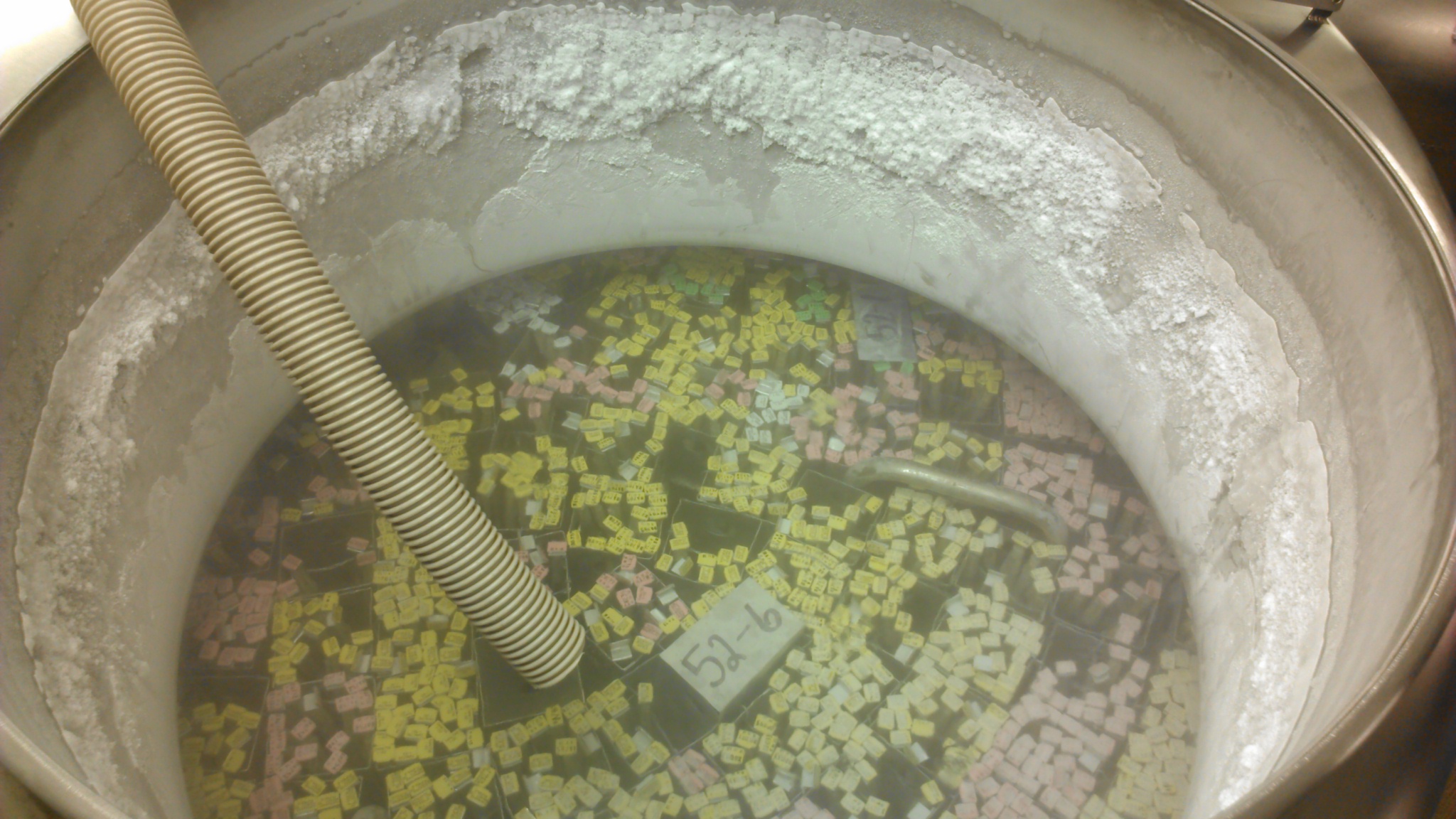
That night we had supper with faculty from Iowa State University talking about programming efforts there, including their manure programming, ag economics, and Roger Elmore spoke of the corn programming there. But before that, a few of us took advantage of the 45 min. of time to get a few geocaches in the area 🙂
National 4-H Week!
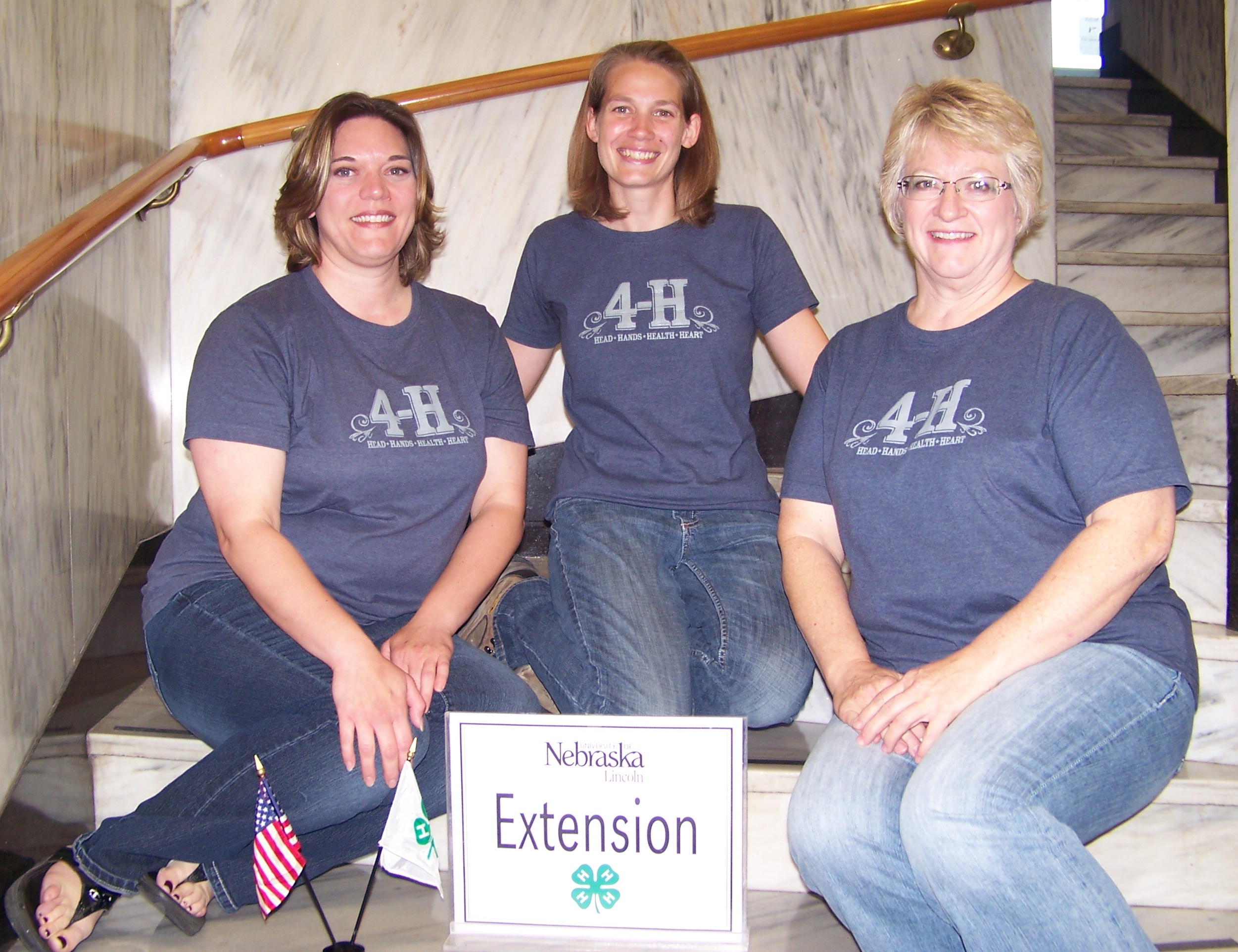
Did you know that more than 6 million young people across the United States are celebrating National 4-H Week October 6-13, 2013?! Research has proven that participation in 4-H has a significant positive impact on young people. Recent findings from the Tufts University 4-H Study of Positive Youth Development indicate that, when compared to their peers, young people in 4-H are:
1) Nearly 4 times more likely to contribute to their communities
2) Two times more likely to pursue healthy behaviors
3) Two times more likely to engage in Science, Technology, Engineering and Math (STEM) programs in the out-of-school time.
4-H is the largest youth development organization in the world! It’s a community of seven million young people across the globe learning leadership, citizenship, and life skills. In the U.S., 4-H programs are implemented by the 109 land grant universities and the Cooperative Extension System through their 3,100 local Extension offices across the country. Overseas, 4-H programs operate throughout more than 50 countries.
To learn more about 4-H locally, contact our office at 402-762-3644 or on our webpage. We would like to visit with you about the program and how you and your youth could become involved! We’re always looking for potential volunteers and program ideas. You can also learn more about 4-H at the State and National levels.
Challenge-Wear a 4-H Shirt and Post it on Facebook or Twitter:
When to Post: October 6 to 12, 2013. Post your pictures then check back to “like” your favorite photos! Official voting ends October 13th at midnight.
How to Enter: Post your picture via:
1) Facebook: post to the event titled: 2013 Wear A 4-H Shirt
2) Twitter: use hash tag #weara4Hshirt
Be sure to tag your photo with your category entry! The picture categories:
1) Most People in One Photo
2) Nebraska Landscapes
3) Fun and Food
The best picture from each category will receive a prize!
Sprouting Corn Kernels on Hail-Damaged Ears
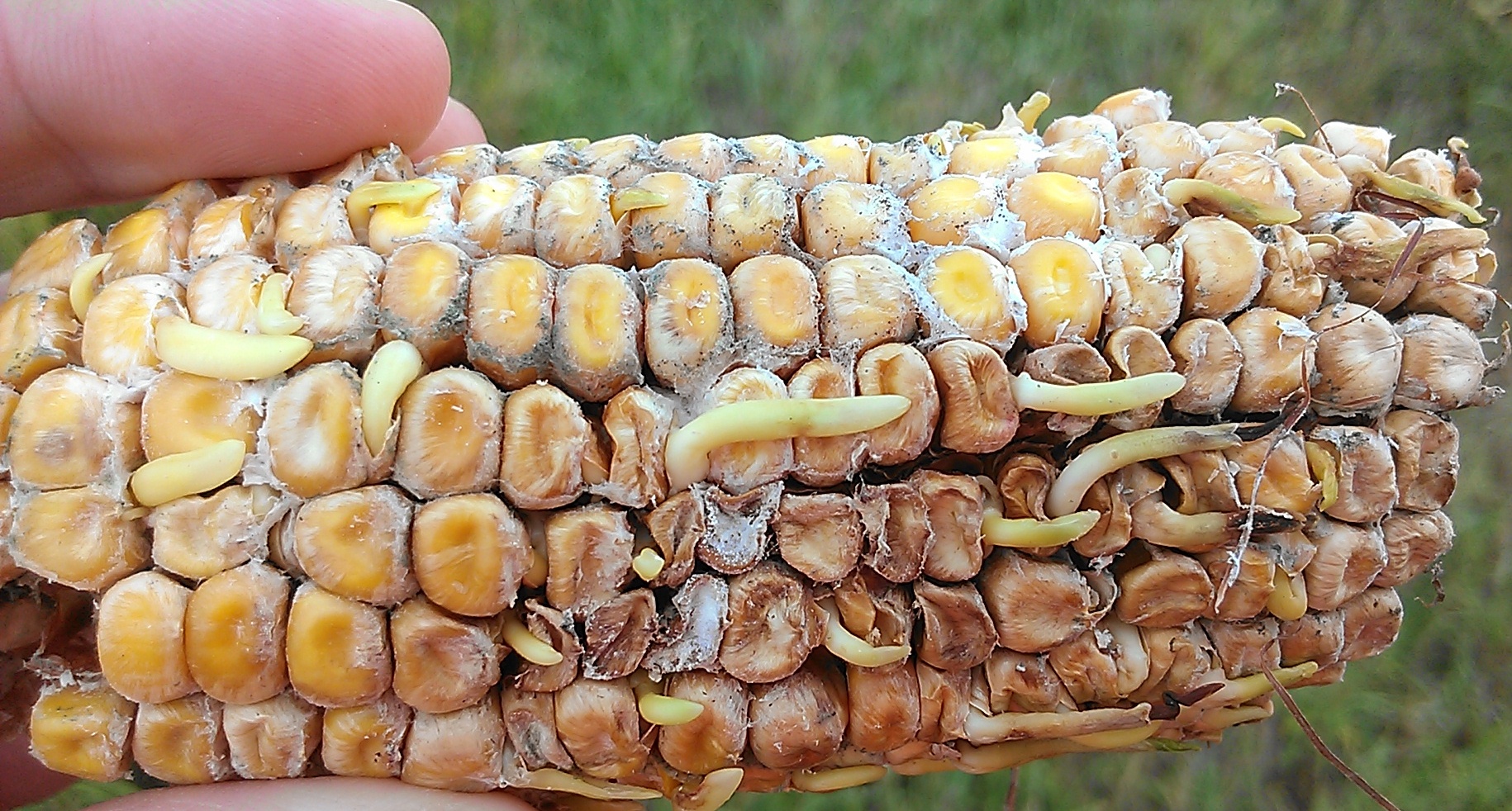
The latest event in the Clay County storm occurring August 1st has become germination of “good” kernels left on the ears that have been damaged by hail. This event of kernel germination prior to harvest is also called “vivipary”.
Typically we wouldn’t see this occur before black layer because of the hormonal balance within the kernels-particularly the balance between gibberellin and abscisic acid. According to a study by White, et. al (2000), Gibberellin production with the lack of ABA allowed for kernel germination while less Gibberellin and more ABA deterred kernel germination. At full maturity, very little ABA is left in the kernel (in both corn and soybeans) which allows them to germinate in correct conditions after harvest. But this can also allow for sprouting in the ear after black layer when corn is still drying down, particularly in tight-husked, upright ears with conditions of high humidity or rain after black layer. Sprouting under those conditions typically occurs at the base of the ear first.
Why are kernels sprouting before we’ve reached black layer?
That’s a good question. I haven’t found much in the way of scientific explanation other than the thought that the hormonal balance of the kernels can be altered by physical damage from hail, bird feeding, and grain mold. Some ear mold fungi also produce gibberellic acid which can lead to a hormonal balance shift in these ears stimulating germination. I also haven’t observed that this is hybrid-dependent and am finding as much as 25-50% sprouted ears in various areas of hail-damaged fields.
What can you do now?

Make sure your crop insurance adjuster is aware of the situation and make sure to submit samples for kernel damage due to mold, sprouting, and check for mycotoxins prior to harvest.
The local co-op may or may not choose to accept the load depending on percent damage and the standards they need to follow. If the load is rejected, contact your crop insurance agent to determine your next step. DO NOT bin the grain on your farm until you contact your insurance agent as they have specific rules that need to be followed in the case of grain rejected due to mycotoxins or kernel damage from storms.
Sprouted kernels lead to higher kernel damage and more fines in a load. Keys for harvest will include harvesting early, getting corn dried down to 14%, potentially drying at a high temperature to kill the sprout, screening out fines, and monitoring stored grain closely for hot spots, mold, and additional sprouting grain.
You can also choose not to take it to grain right now, and honestly, that may be the best option for several of the hail-damaged fields. Silage is still an option and it would be recommended to sample the green chop going into the silage pit for potential mycotoxins. Mycotoxin level does not change with fermentation so cattle feeders would have a good idea of any mycotoxin levels if sampling was done in this manner. See this post for additional information on making silage.
Additional information:
Du-Pont Pioneer. (2007). Field Facts: Pre-mature Germination of Corn Kernels.
Nielsen, R.L. (2012). Premature Corn Kernel Sprouting (aka Vivipary). Corny News Network, Purdue University.
White et. al. (2000). Gibberellins and Seed Development in Maize. II. Gibberellin Synthesis Inhibition Enhances Abscisic Acid Signaling in Cultured Embryos. Plant Physiology Vol. 122 no. 4 pg. 1089-1098.
Wiebold, B. (2009). Wet Weather Can Cause Seeds to Sprout before Harvest. Integrated Pest & Crop Management Newsletter, Univ of Missouri.
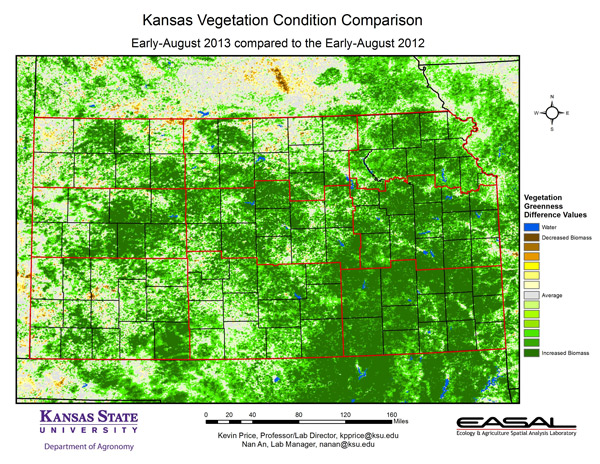
Extent of Storm Damage Visual
This map came from Kansas State University in a newsletter where they were talking about the vegetation differences from the Drought of 2012 to 2013 in Kansas. A colleague shared this with me pointing out how obvious the storm in Clay County, NE is on this map. Look above Kansas to the brown area-that’s the LOSS of vegetation we have right now in Clay County which is quite extensive-and neat how it’s captured unexpectedly on this map.


 JenResources