Blog Archives
Reflections: After the Storm
It’s been an interesting few weeks. Last week I was continuing to receive calls about considerations for drought damaged corn. Then southern rust arrived in the area earlier last week. Followed by the tremendous August 1 storm that affected so much of our County.
Numb…..
is how I’ve felt these past few days-and I can’t imagine how difficult it is for you whose crops were affected! It’s just a sickening feeling walking into field after field and driving around the County seeing the storm damage every day. I’m so sorry for those of you who have lost your crops! As I look at the crops, though, I’m a little puzzled at the way things are laying, the twisted plants….things aren’t all adding up for “straight-line winds”.
In spite of how difficult things look right now, I can’t help but wonder if we were spared from something much greater?
The follow passage in the Bible has been my go-to during times of drought and difficult times in farming. I was going to share this in a drought post…but I feel it still applies with as many partial and total crop losses we’ve experienced in the area.
Though the fig tree should not blossom and there be no fruit on the vines,
Though the yield of the olive should fail and the fields produce no food,
Though the flock should be cut off from the fold and there be no cattle in the stalls,
Yet I will exult in the Lord, I will rejoice in the God of my salvation! Habukkuk 3:17-18
In the midst of trying to provide advice, it’s nice to know that God has everything already figured out and that He’s always in control. Even in the midst of this, He is always good!
#Crop Update
While every growing season is unique and there’s an element of risk involved, this year seems to take the cake. 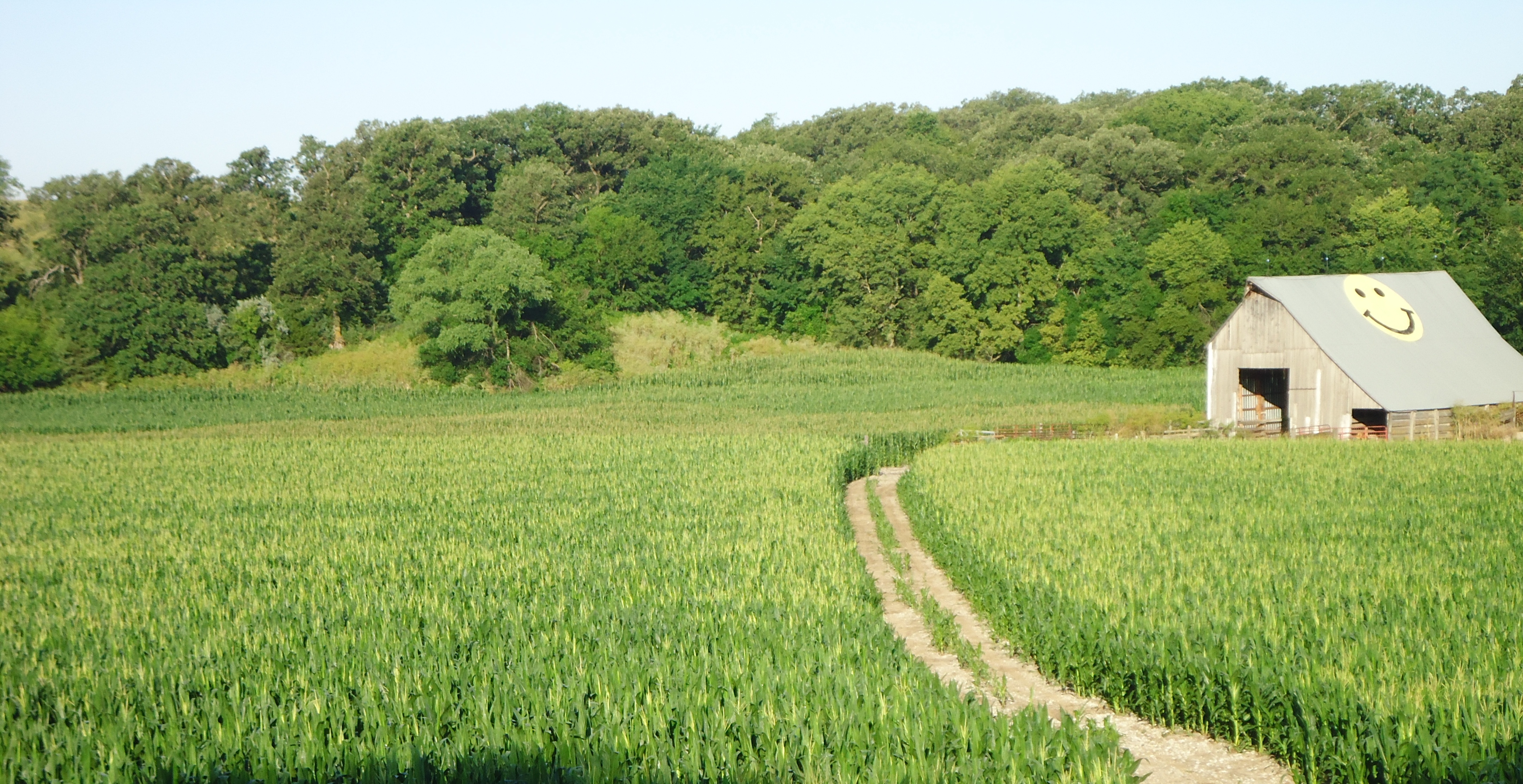

Drought conditions have affected much of Nebraska. In our area in south-central Nebraska particularly in our southern tier of counties, we’re seeing brown pastures and alfalfa that stopped growing. Wheat was harvested nearly a month early and yields range from 0-50 bu/acre depending on if it was hit by the hail storm Memorial Day weekend which totaled it out.
I’m unsure how many planting dates we currently have in Clay County! The spring planting season went so well with corn and many beans being planted in April. Soybeans planted in April that haven’t received hail are forming a nice canopy. Corn that hasn’t received hail should be tasseling by beginning of July. One Clay Co. field planted in March was only 3 leaves from tasseling when I took this picture this week and looks great (it’s probably 2 leaves by now!).  Adding another picture from a farmer friend Bob Huttes near Sprague, NE showing his field currently tasseled out and love the smiley face barn 🙂
But then there’s the hail damaged fields. The hail pattern has been fairly similar all year for this area of the State with some producers receiving four consecutive hail events on their fields. Every week of May was spent helping our producers determine replant decisions, particularly for soybeans…leaving irrigated stands of 85K and dryland stands of 60-65K when beans were smaller before stem bruising was so severe later. We would leave a stand one week and end up needed to replant after the hail hit again the following week. Some farmers got through the first two hail storms but the Memorial Day weekend storm did them in. I never saw hail like where ground zero of this storm occurred. After replanting after that weekend, they received yet another hail storm last week with the wonderful, much needed deluge of rain we received in the county. My heart hurts for these farmers yet for the most part they have good attitudes and are making the most of it. That’s the way farming is…lots of risk, thus an abundance of faith and prayer is necessary too. One farmer I talked to has had hail on his house seven times this year (including prior to planting).
Pivots have also been running like crazy prior to the rain last Thursday night where we received 3.30-4.40 inches in the county. Installing watermark sensors for irrigation scheduling, we were able to show the farmers that there was truly moisture deeper in the soil profile and attempted to convince them to hold off. It’s a hard thing to hold off on  water when the neighbors are irrigating, but several farmers who didn’t irrigate told me they were able to let the rain soak in and their plants
 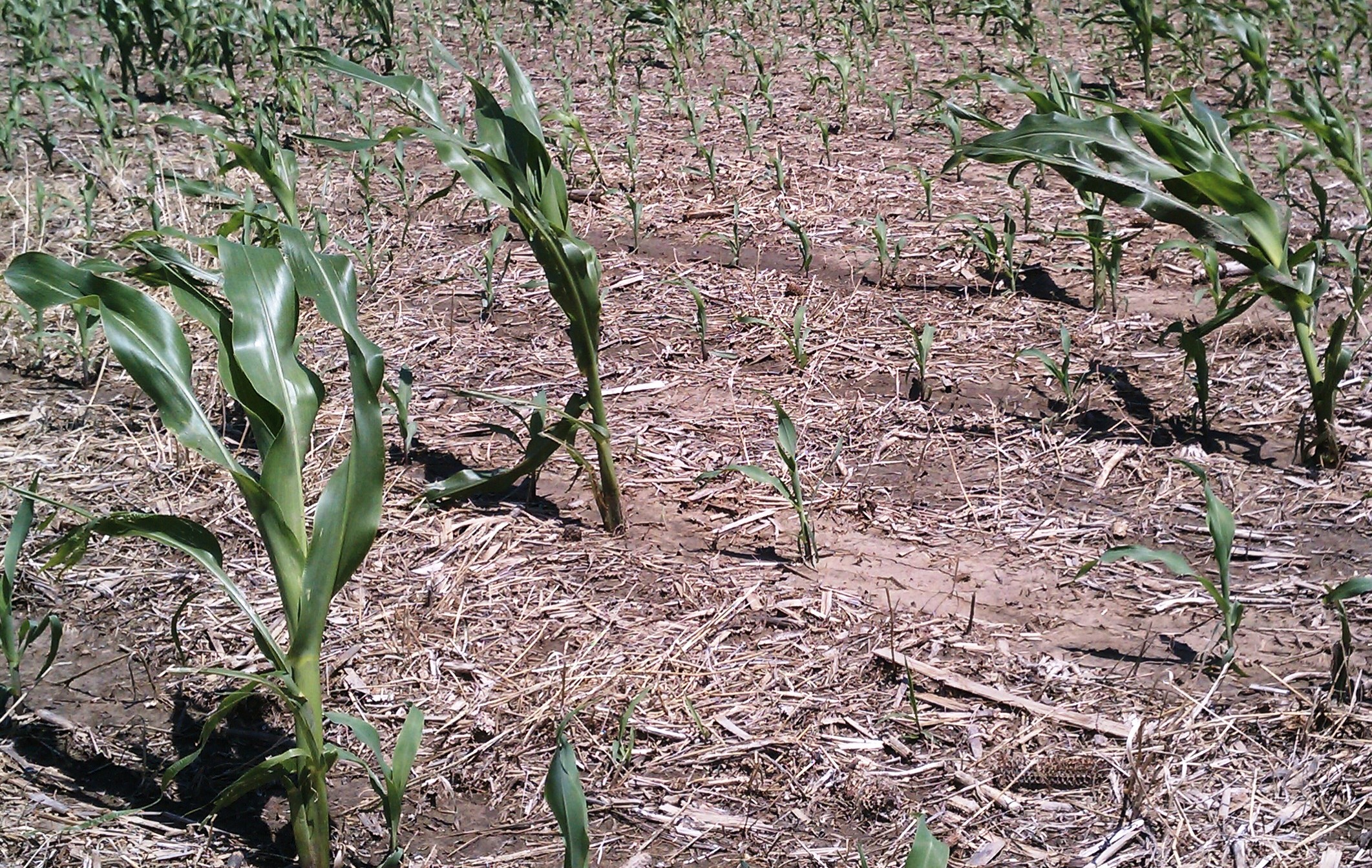 weren’t leaning after that rain because the ground wasn’t saturated prior to the rain event.
Future of Rural America
Sunsets over rolling hills of green pastures and straight corn rows. Barely seeing above soybeans I was walking to remove 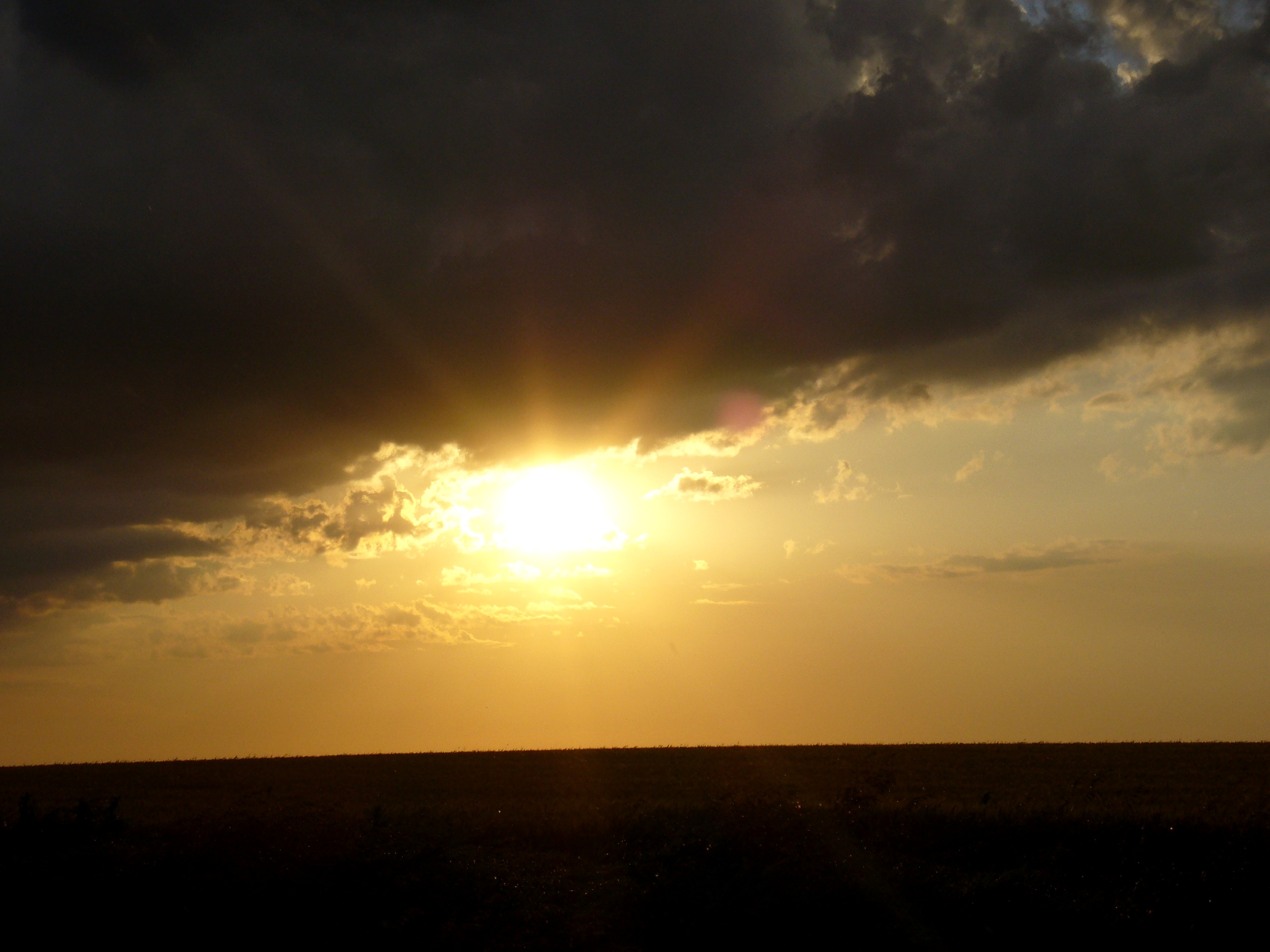 weeds. Attending a small school that provided an excellent education with opportunities to participate in a variety of activities to become more well-rounded. These are a few of numerous memories of growing up on the farm and in a rural community that I hold dear. While I enjoy hearing my grandparent’s stories of what life was like for them farming 60 years ago and even enjoy watching the Nebraska State Cornhusking Contests held each year, I also realize times have changed and don’t have a false sense of nostalgia about what rural means today. While technological advances allow our farmers to produce more food for more people with less inputs and less water than ever before, what hasn’t changed about rural communities is the hard work ethic, dedication, risk, determination, and reliance on Faith and family to get through each year.
Last week I had the opportunity to participate in the Rural Futures Conference held in Lincoln. For me, it was the best conference I’ve attended; the energy and enthusiasm from 450 people gathering from a variety of backgrounds all to discuss the future of rural America was refreshing to say the least. My favorite part of the conference was the first evening. The key note speaker Joel Sartore, a Nebraska native who is also a National Geographic photographer, challenged us to maintain a positive attitude and to look for the opportunities that were available in our small towns. For example, one town in Kansas was all about a certain sparrow where they would take people out on field trips to “listen”-they didn’t even get to “see” the sparrow-and people paid money for that! There was also a town in Oklahoma where all they had was rattlesnakes…so they made the most of that too and created a huge attraction around snake handling, pics with snakes, snake skinning, etc.
My favorite part of the conference occurred after that during the youth panel. A panel discussion with Caleb Pollard,  Executive Director of Valley Co. Economic Development in Ord, NE; Amanda Crook, Graduate Student; Anne Trumble, Executive Director of Emerging Terrain in Omaha; Jim McClurg, University of Nebraska Board of Regents; and University of Nebraska Med Center’s Bob Bartee answered questions moderated by Dr. Ronnie Green, IANR Vice Chancellor. The young people struck a chord with me-most likely cause we were of similar age. Some key take-away quotes:
- Vibrant organizations identify strong leadership.
- Failure can be a good thing as it can lead to the next innovation.
- To go some place and change the trajectory of history is exciting!
- We need to change the way we place young people into jobs….we don’t offer young people jobs; we offer them opportunities.
These young people were so excited about living in Nebraska! Some of them had spent time elsewhere before choosing to move back to Nebraska and eventually choosing to find a small town to raise their families or have the rural way of life. Another theme that emerged throughout the conference was the need to get young people involved in the local community such as youth representatives on city council, etc. even as early as when they’re in high school. Some people think small town communities in Nebraska are dead…but that’s not necessarily the case. It mostly depends on leadership-a strong leader will rally the town around an idea to grow it or create opportunities. That’s what’s happening in Ord, NE with Caleb Pollard. Another example comes from Fairfield Iowa. Sometimes it just takes the right person to ignite a spark and help the rest of the town see the possibilities. Nebraska has so much to offer!
Frans Johansson, author of The Medici Effect, was also a phenomenal speaker! He spoke about creating breakthrough innovations by thinking outside the box and working at intersections of different disciplines/cultures, etc. Key points I obtained from him include:
- New ideas are combinations of existing ideas.
- People who change the world try FAR more ideas.
- Diverse teams can unleash an explosion of new ideas.
- Find inspiration from fields/cultures other than our own.
- Look for the smallest executable step-essentially don’t eat the elephant in one bite.
- Stepping into intersections isn’t risky-it’s risky to do the same thing over and over again.
Maybe these aren’t earth-shattering new concepts, but good reminders for a task as large as creating a Rural Futures Institute…and frankly for anything in life.
There was much discussion about the role of a University/State/Community Colleges in trying to save rural communities…how is this done…how build partnerships and trust…how to provide incentives to faculty working in creative/innovative ways in a structured academic setting when it comes to promotion and tenure…and even if the University changed its incentives, how does that bode if a faculty member moved on to another University? How are incentives provided to teams and excellent team work? We are standing at the crossroads…maybe an intersection right now in academia which can shape the future of creatively rewarding innovative work while still maintaining needed structure in the promotion/tenure process. I remain positive that we’ll find a way to work through this!
There were discussions in small groups regarding the meaning of rural. What does it entail? Often we think of agriculture-and I would argue that’s a strong part of rural-but it’s also much more…health care, infrastructure, industry, schools, broadband, etc. Some were saying we need to use the term non-metro instead of rural in order to get away from the ag connotation. Yet others felt the discussion was too focused away from agriculture on other components of rural and missing ag as a key component. Needless to say, the entire conference provided interesting discussion, dialogue, and a chance to meet people from a variety of backgrounds. It truly provided an opportunity to look for intersections with which to create innovative ideas for the future.
There was also the reality that hit during focused group conversations that there are also problems that need to be addressed in rural communities that weren’t touched on at this point: poverty; crime; infrastructure; food deserts; building trust and interfacing with university, college, and other partners, etc. Overall it was a thought-provoking conference and has the feel that several small steps can be achieved in the coming year. I would encourage you to check out the Web page and follow the Facebook page. You can also check out the Twitter Conversation at #RFC2012. This conference was also not just focused on Nebraska as the focus was the Great Plains and people from numerous states attended. I’m looking forward to seeing the small executable steps that will occur in the future and am also looking forward to doing my part to maintain strong rural communities as I’d like to see the next generation enjoy the rural life and learn the values I did growing up!
April 1 Flowers-No Fooling!
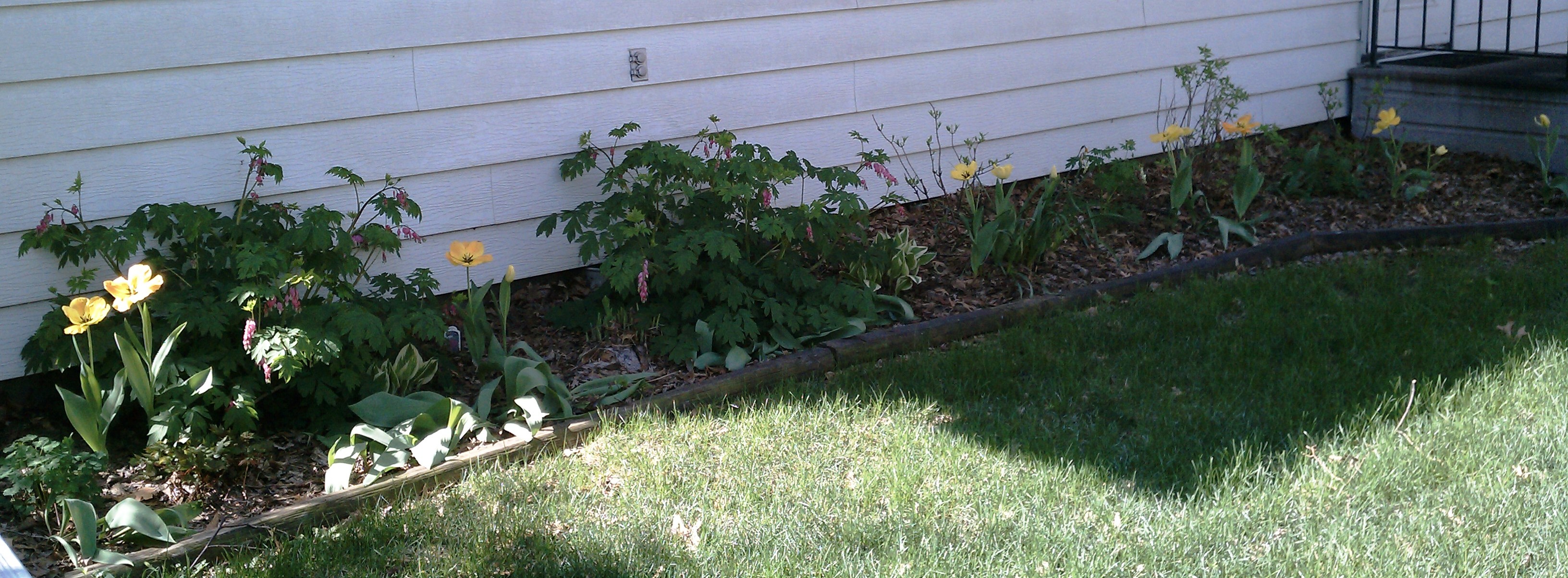
April 1st, while typically a day of pranks and jokes, has one obvious truth. Spring has arrived in full force with flowering plants at least 2-3 weeks earlier than normal. I couldn’t believe that my lilacs, which typically bloom around mid-May were blooming for the first time today! I planted many of the bulbs and shrubs last fall and have been rewarded with beauty, color, and lovely smells via God’s creation this spring; enjoy the pics!


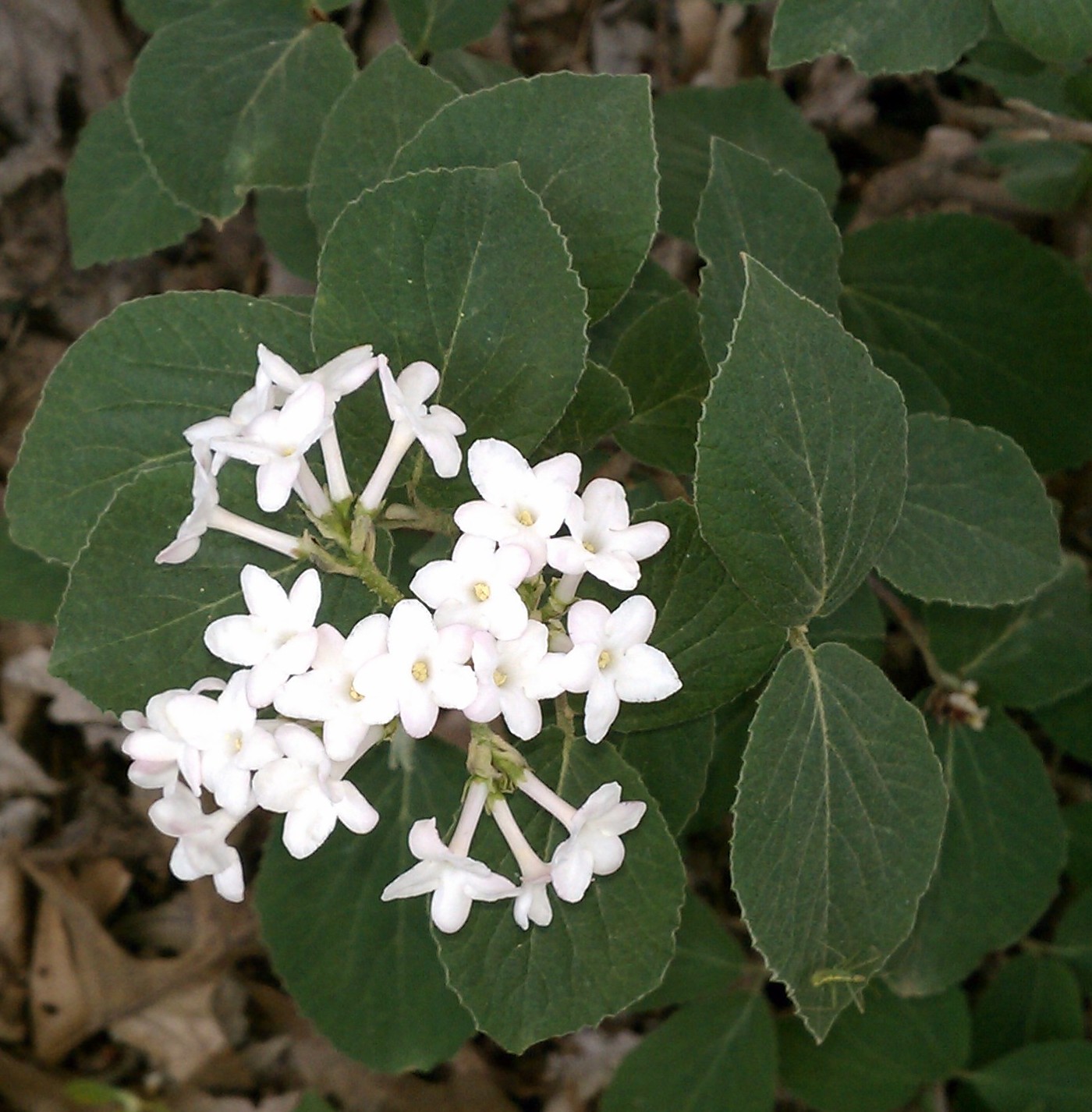

Spring!
Happy Belated Spring! I meant to get this posted earlier this week but just didn’t get it done. I love living in Nebraska and  being able to observe God’s creation via the changes in seasons! Spring and Fall are probably my favorite, but there’s beauty in all of them. Everything is 2-3 weeks early this year so will be interesting to see if we end up with March going out like a lion or if we end up with an Easter freeze like we did a few years ago. While it wasn’t a bad winter, I always enjoy seeing new life and green in the springtime!
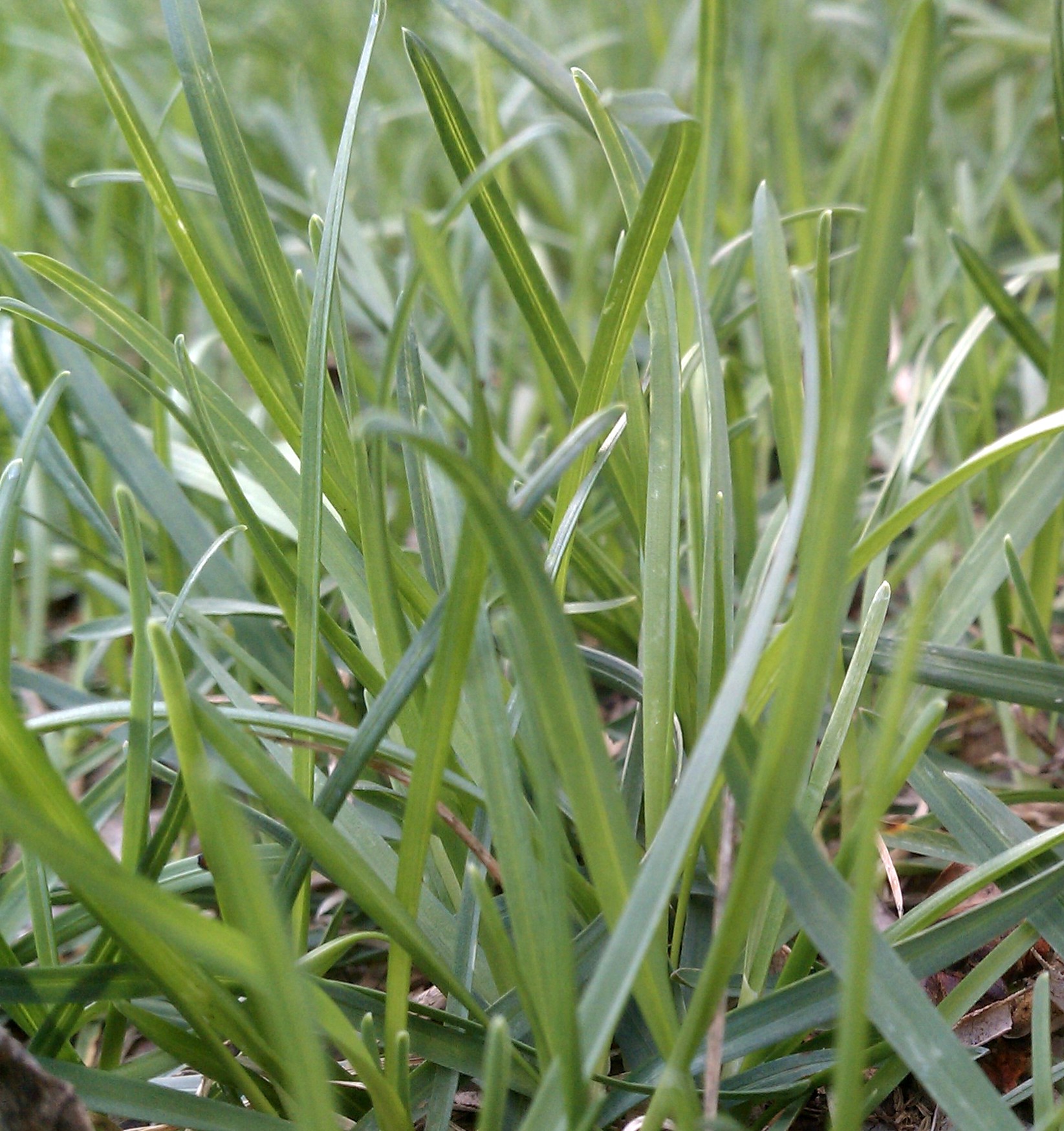
Grass greening up in front lawn. Sending this pic out to my husband who has seen grass very little in 9.5 months in Afghanistan! Will look forward to you helping me mow when you return! : )
My favorite tree is the magnolia and someday I hope to have one! I always enjoy going to UNL East Campus in the spring and seeing the magnolias in bloom. However, I was surprised how quickly they bloomed this year and that they were already loosing their blossoms!

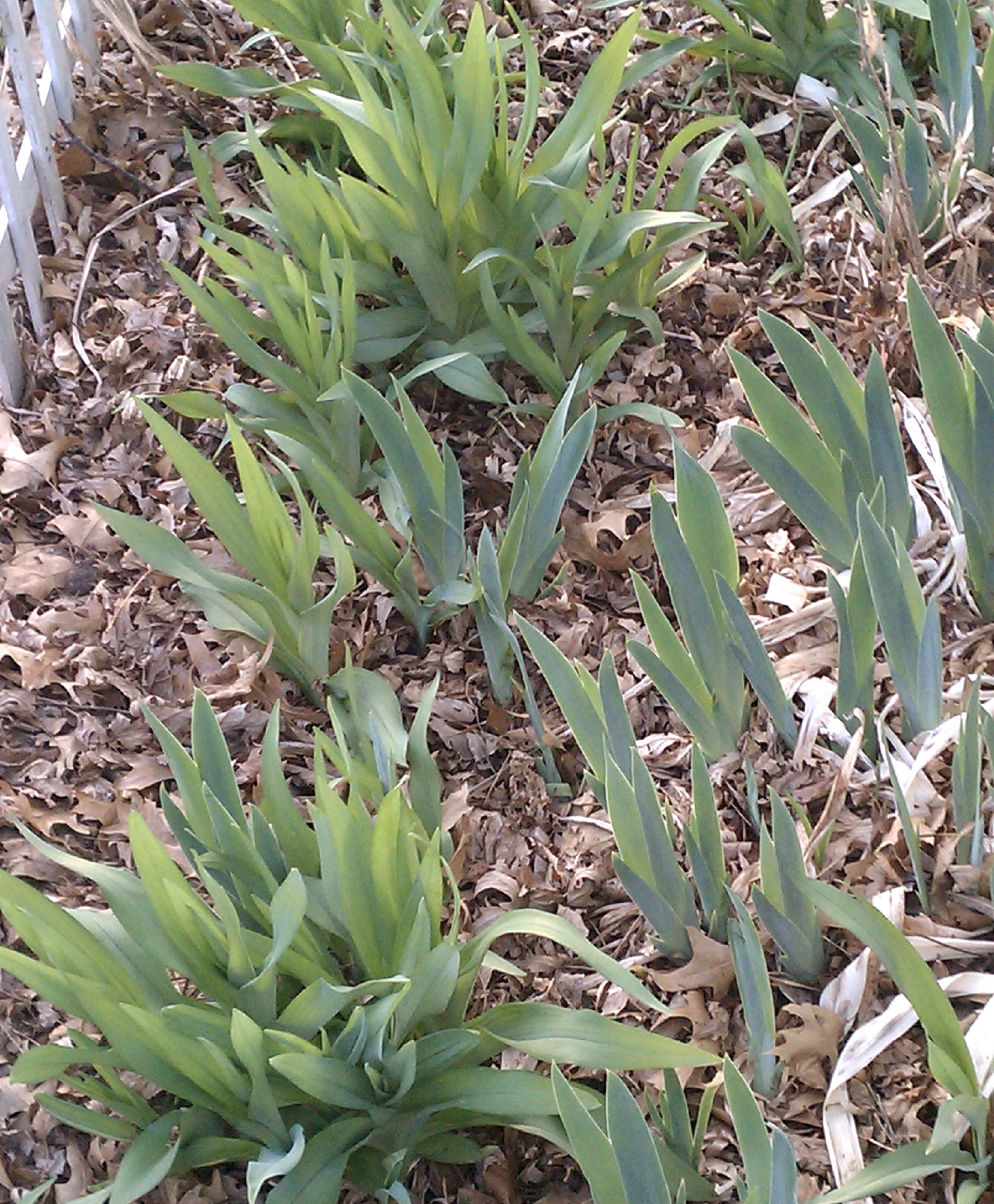
Through the leaf mulch even my iris and daylillies are emerging. I haven’t removed mulch yet in the event we end up with a cold snap. It’s still early, though tempting!
Great resources from UNL regarding horticulture and turf: http://byf.unl.edu/ and http://turf.unl.edu/.
Women in #ag #farm Transition
Last week I attended the Women in Ag Conference in Kearney. It’s always a great conference to see many friends and meet 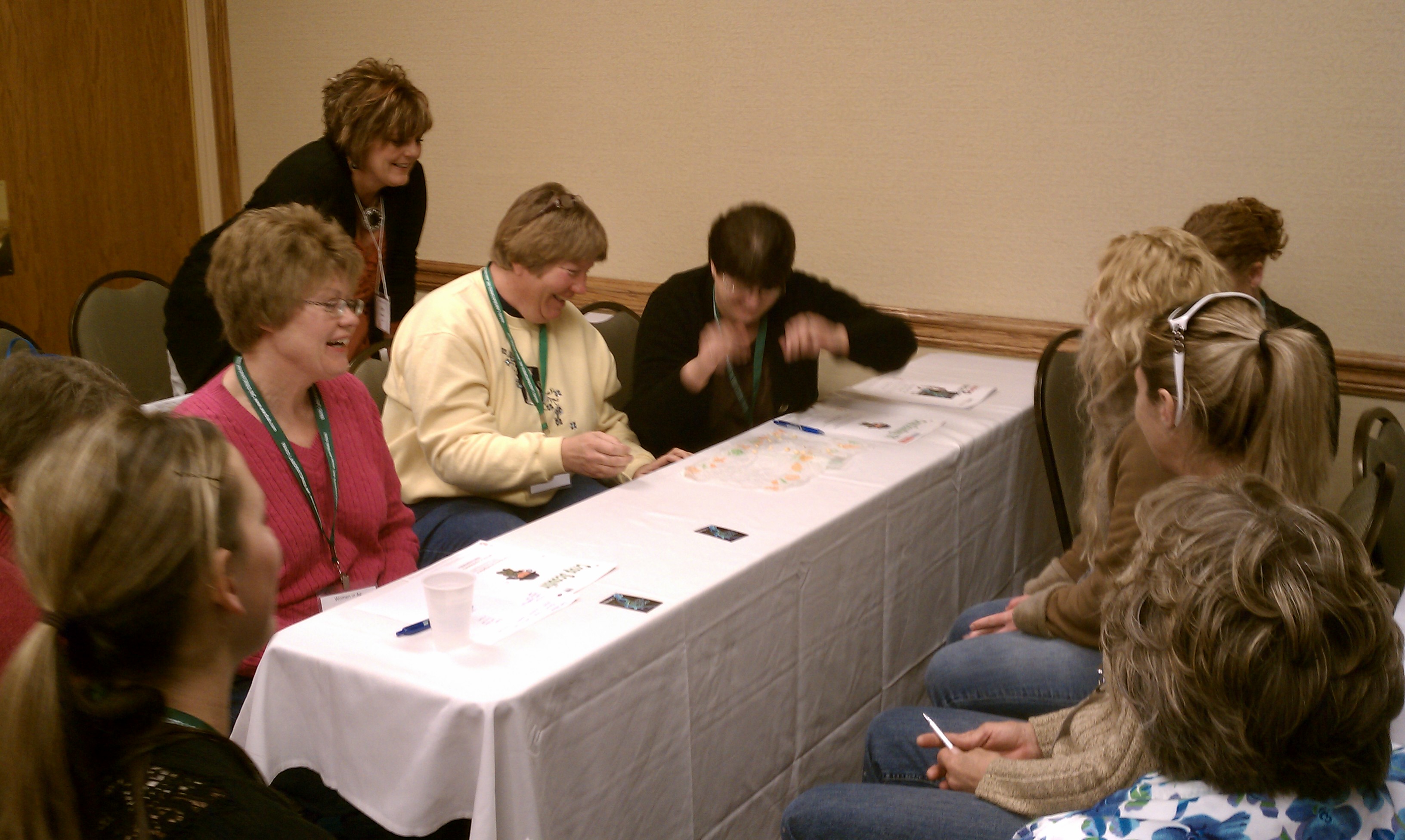 new ones who live and work in agriculture! I also enjoyed teaching a very engaged group of women the second day about crop science investigation. It was fun for me to see them dig into the hands-on activities!
The first session I attended was by Dave Specht from the UNL Ag Economics Dept. He does a great job of relating to the audience and talked about “Woman’s Influence-the Key to Generational Business Transitions”. Dave has a consulting business on the side and as part of that business he meets with families to develop a farm transitional plan based on the Continuity Quotient he developed. The Quotient contains 7 parts and I’ll share some key highlights via questions he raised that stuck out to me. Perhaps they’ll raise more questions for you as well.
1-Business/Estate Planning: The goal of the business/estate plan is to reduce the number of surprises to the farm and family members upon death of the farm owner. Is your plan coordinated with all the advisers in the operation and does it consider the perspectives of all the generations involved in the operation? Is it even documented and has it been communicated to the entire family before the owner passes away?
2-Communication: Are family members able to openly discuss the farm and what it means to them?
3-Leadership Development: No one is ever “ready to take ownership”; it is learned along the way. Opportunities for the next generation to make decisions need to be allowed. Often we hear of exit plans, but is there an “entrance plan”-a strategy to invite the next generation back to the farm?
4-I didn’t catch the name of this point but essentially Dave was saying that if the next generation is always asking his/her parents for a bailout, that it delays the trust that the person can someday operate the farm. How the next generation handles personal finances is important in showing he/she can someday run the operation.
5-Personal Resilience: How does the next generation handle challenges? Does the person retreat and avoid them or does the person look for ways to overcome them and use it as a growing experience? If the person retreats, he/she may not be wired for ownership in the future.
6-Retirement/Investment Planning: When will the older generation plan to retire? How much will the farm support (meaning how many people)? Where will retirement cash flow come from? The goal is to not rely on the next generation to generate your entire retirement income.
7-Key non-family employees: Sometimes the most valuable family business asset goes by a different name! Is the vision for the family farm communicated to these employees? How you talk about employees to next generation and how you talk to next generation about the employees is important in dictating future partnerships; someday the employees and next generation will be partners.
I would recommend checking out Dave’s Web site at http://www.davespecht.com for more information. He provides communication and consultation about farm transition and financial planning. Life is so short! Make sure you have a plan in place that follows the keys Dave provided above!
Thanksgiving Reflections
Thanksgiving is upon us and every day I’m reminded I have so much for which to be thankful! It seems like there’s such a rush to go from Halloween to Christmas and it’s sad to me that Thanksgiving seems to be lost in the shuffle. Today as I gather with my family, I’m thankful for so many things God has blessed me with: salvation, my wonderful family, all our men and women serving overseas, my home/career/dogs, wonderful food and our farmers who grow it, so many things! May you have a blessed 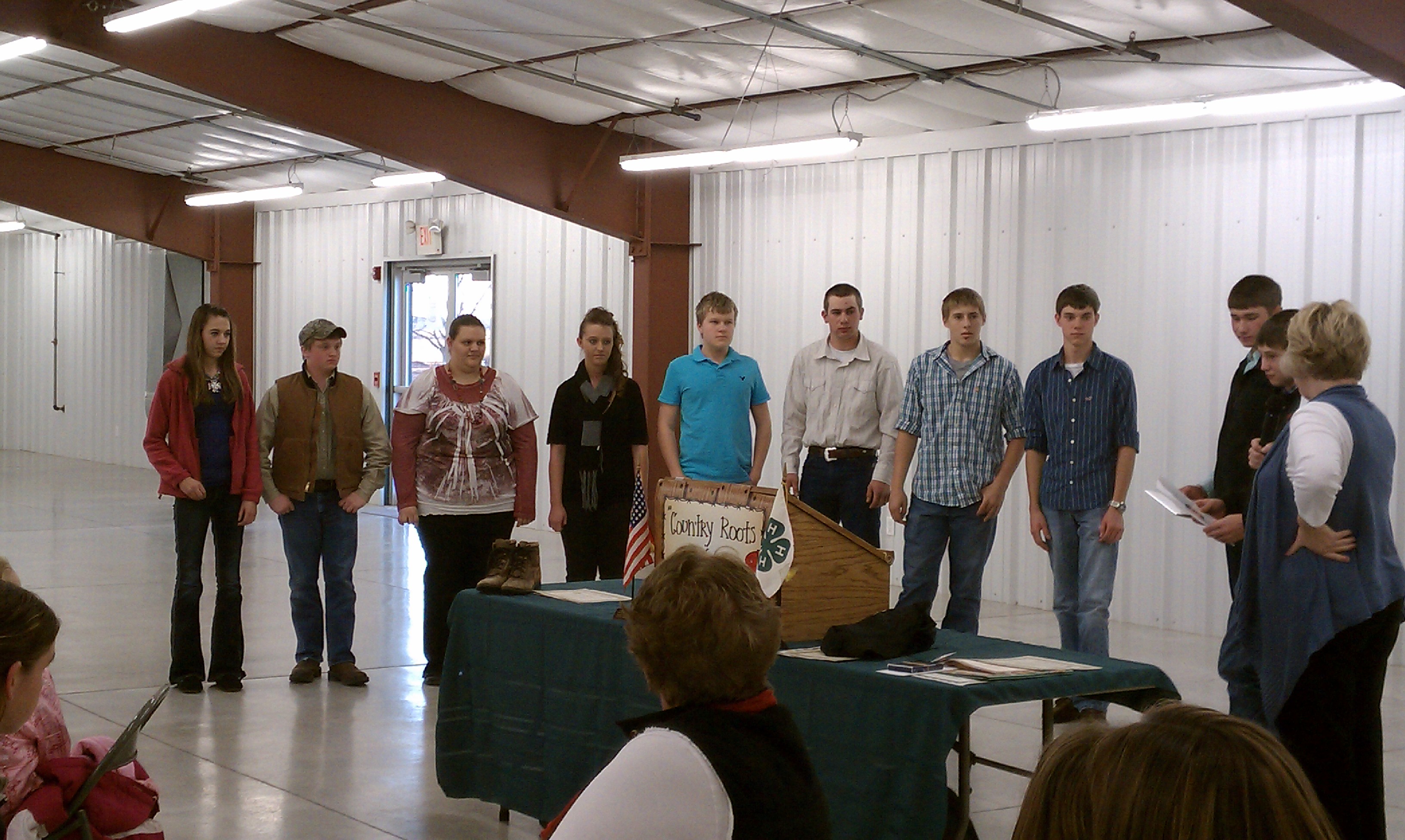 Thanksgiving reflecting on the blessings in your life as well!
Sunday night was our 4-H Achievement program. Watching the youth receive their awards, I was thankful for the parents, grandparents, leaders, and volunteers who helped those youth achieve success in their projects. I’m thankful to work in a county with such wonderful people! Every organization or board our office works with understands that the 4-H program and fair are about the youth-developing life skills and successful young people for the future. I’m so thankful for these relationships and the fun we all have at 4-H activities and the fair! I’m also thankful for all the sponsors of our 4-H program and the youth and parents appreciate you as well! It was a great night with a great turnout and a nice conclusion to the 2011 4-H year.
Speaking of being thankful, IANR released a special feature entitled “Feeding the Future”. It shares a Thanksgiving message from Dr. Ronnie Green and how IANR’s research, teaching, and extension efforts are helping to ensure success in feeding the future throughout Nebraska and around the globe. Check it out here: http://www.unl.edu/ucomm/ucomm/special/20111115/
National 4-H Week and Reflections
Happy National 4-H Week! Thank you to all the volunteers and supporters that make 4-H in our area counties and the State a success; we wouldn’t have the 4-H program without numerous volunteers such as many of you reading this!
A few weeks ago, I was attempting to explain not only Extension but 4-H to a group of people who didn’t understand either. A survey found that nearly 96% of people recognize the name 4-H but only 35% recognize Extension. That’s why at our County fair, I put up the large red flags to help people make the connection between Extension and 4-H. I think many in our county are familiar that 4-H has to do something with the fair, but it’s so much more than that! Essentially 4-H is a youth development program coordinated by land grant universities such as UNL through the Cooperative Extension System. The National 4-H site at http://4h.org states that “4-H fosters an innovative, “learn by doing” approach with proven results.” A study conducted by Tufts University found that youth involved with 4-H are nearly two times more likely to get better grades in school, are nearly two times more likely to go to college, 41% less likely to engage in risky behaviors, and 25% more likely to positively contribute to their families and communities.
The 4-H pledge explains what the 4 H’s stand for including pledging our:
*Heads to clearer thinking
*Hearts to greater loyalty
*Hands to larger service
*Health to better living….for our clubs, communities, country, and world.
I remember reciting this pledge at every monthly meeting at a 4-Her. I’m so thankful for the numerous volunteers-particularly the amount of time our club leader invested into the youth in our club-teaching us to sew and the importance of straight seems, cook the 4-H way, model sewn garments, importance of volunteering and community service, and teaching us parliamentary procedure by empowering us as youth to run and conduct meetings. I’m thankful for volunteers who spent each week during the summer teaching me about weeds, trees, and horticulture ID….skills I use nearly every day of my Extension career and as a homeowner. While we often worked on them last minute and weren’t thrilled about doing them, I’m thankful my mom required us to do 4-H presentations each year to develop public speaking skills. I’m thankful my grandma taught me how to make homemade bread and rolls and that so many volunteers worked with me on my 4-H Jr. Leader projects to help me develop leadership skills. I’m also thankful for the Extension staff at the office while I was growing up-they were always so friendly and helpful and modeled the way for me in my career today.
Thinking about my 4-H experiences reminds me that you are encouraged by the Nebraska 4-H Foundation to share your 4-H story! Some have asked me what this means. Essentially, any of us who have went through the 4-H program or volunteered with the 4-H program has a story to tell about how 4-H has benefited us or how we’ve seen the program benefit others. It may be a funny story or a serious one. The best part is that it’s YOUR story and the 4-H Foundation wants to hear them to help with promoting 4-H! The deadline is November 30th and you can find more information at: http://www.ne4hfoundation.org. Thanks again to everyone involved with helping or supporting the 4-H program and to the 1 in every 3 Nebraska youth currently involved with the 4-H program!
Inspiring Young Nebraskans-HHD 2011
Last week was busy with Husker Harvest Days-the coldest one I can remember! It’s always fun for me to see many familiar faces-like a big reunion! The theme at the IANR booth this year was “Inspiring Young Nebraskans”. This theme was important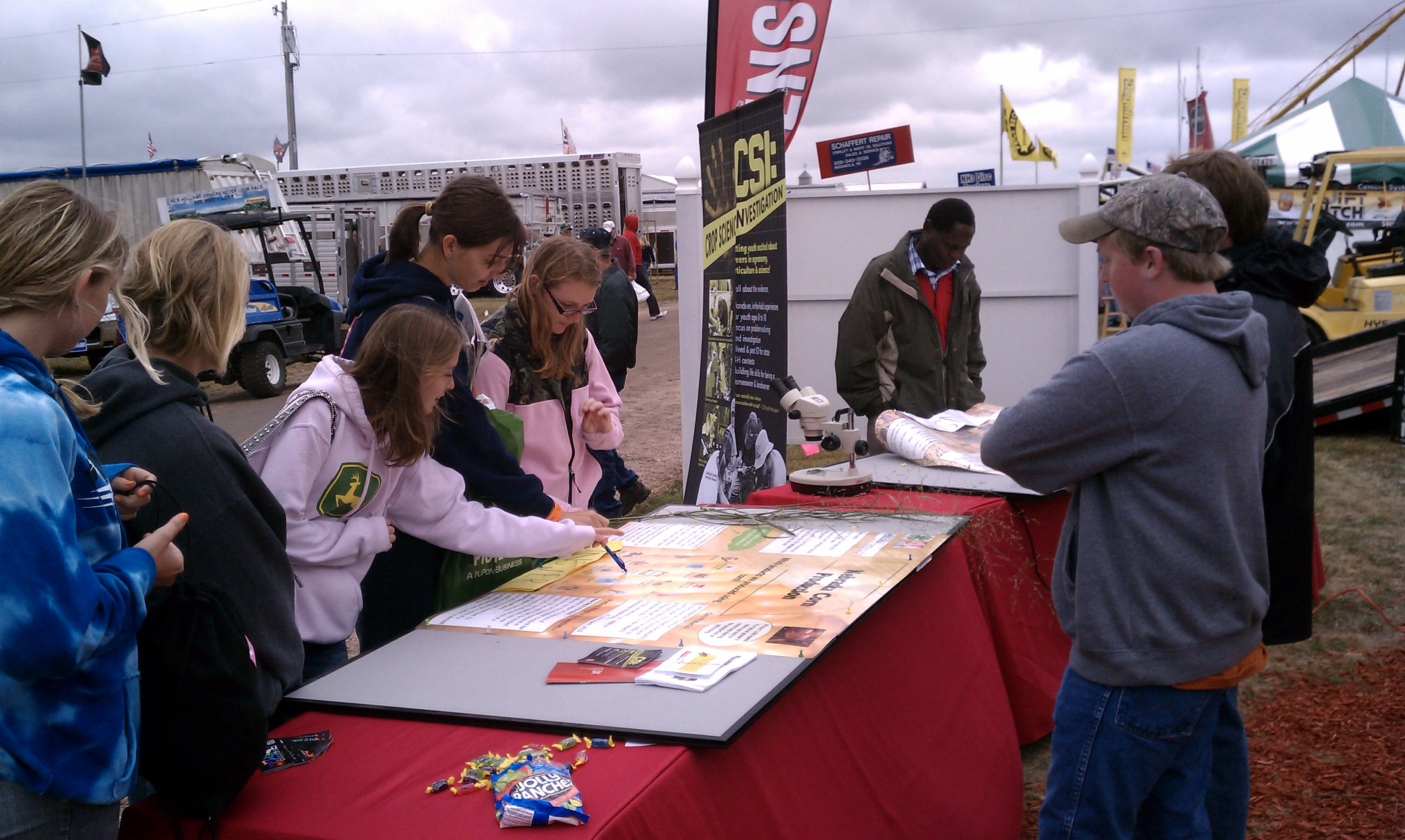 to showcase how IANR is influencing our youth from early childhood development to entrepreneurship activities and future careers. A statistic that may surprise you is that over 144,000 Nebraska youth (nearly every 1 in 3 youth in the State) is involved with 4-H. That’s something we would like to continue to grow as I think any of you who have been involved with youth programs whether 4-H, FFA, or scouts can attest they build life skills! The goal of this year’s exhibit was to show how IANR is impacting youth to hopefully keep more local youth here in Nebraska.
The first exhibit dealt with UNL Extension’s focus on Early Childhood Development which focuses on youth ages 5 and under by helping childcare providers, babysitters, and parents understand brain development and UNL’s research in this area. An alarming statistic is that up to 25% of children are not ready to begin school. The second exhibit was Teaching Science through Soybeans in which an iPad app was created for youth to drag and drop items into grocery carts to learn from where their food comes. There are many additional activities involved in the partnership between the College of Ag Sciences and Natural Resources, UNL teacher education, and local schools.
The third exhibit showcased the Unique Role of Teachers in Rural Communities and a research grant obtained by UNL to study the best strategies for supporting rural teachers in reading (K-3) and science education (6-12). Robotics is a curricula exploding with interest amongst youth in the State and was the fourth exhibit. “Bots are Hot” but they’re not only toys, they’re teaching technology to our youth with Nebraska being the leader in this National Science Foundation initiative. The fifth display showcased Youth-Adult Partnerships in which youth are encouraged to define and address community issues in addition to helping provide youth a voice and responsibility in their communities by working with adults. Connecting the Dots for Nebraska Youth was the sixth display in which an iPad app was developed for youth to link actions and personal choice to his/her future success in a college or career. So often we showcase projects in 4-H, but we’re striving consciously link them with future careers-to show youth how their 4-H projects truly are their first class at the University of Nebraska!
The seventh exhibit showcased Public/Private partnerships in which UNL Extension is working with Nebraska businesses to create opportunities for young Nebraskans across the State. Entrepreneurship was the focus of the eighth display with the goal of building a strong root system for homegrown Nebraska businesses. Reid Ely was front and center on that display banner with his asparagus and Ashley Nunnenkamp helped in the booth as part of the Paul Engler Agribusiness Entrepreneurship Program at UNL. Market Journal taped their latest show there and the Mobile Diagnostic Lab had interactive displays this year on Soybean Cyst Nematode kits for FFA youth, Pine Wilt Nematode, Biological Invaders, and Crop Science Investigation (CSI) for youth. I was thankful for the Clay and Fillmore County youth who helped us in our CSI display as youth can better inspire their peers to be involved!
Like in the past, a Web site was developed and rolled out at Husker Harvest Days. To find out more about what UNL Extension is doing in the child and youth area, please check out our latest Web site at http://child-youth.unl.edu.
County Fair Reflections
A HUGE thank you to all the Fair Board members, 4-H Council, leaders, youth, parents, volunteers, Clay County News Staff, and Extension staff that made the 2011 Clay County Fair a success! 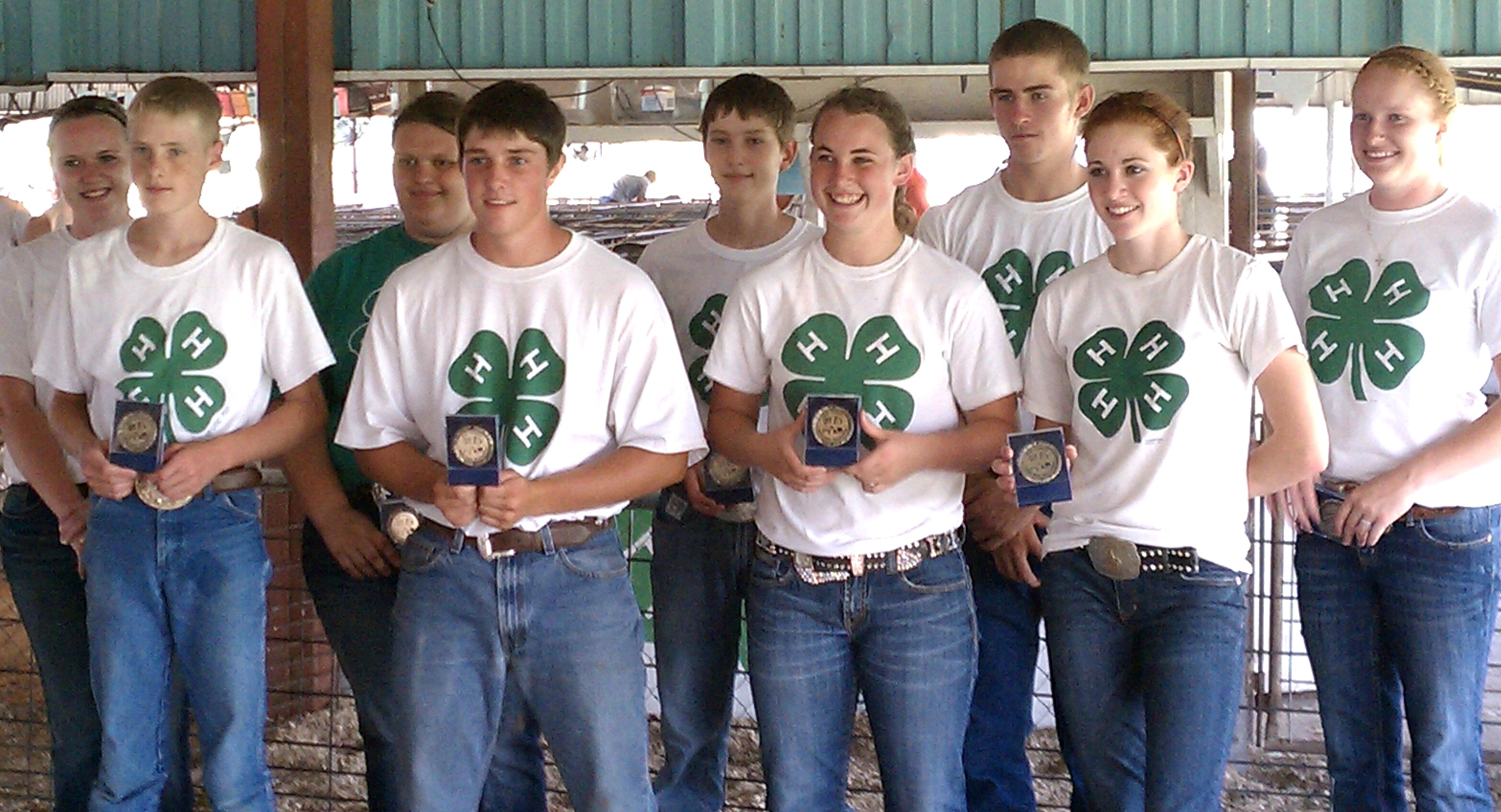 Words can’t really express my appreciation. Driving home every night, I had time to reflect on each day so I decided (for all you farmers) I’d give you a break from irrigation scheduling : ) and provide some reflections from the county fair.
I love watching the fairgrounds come alive…to see the barns and buildings filling up and the excitement of the youth and parents.  While it’s a lot of work, I really love fair week and I’ve always appreciated our county fair in Clay County. I appreciate that the focus is on the youth and families-exactly where it should be; we truly have something special here! There was several times in conversation a person this week would say “I haven’t been to the fair in X years” to which I’d respond “Welcome back!”. For those of you reading this and can identify with that statement, I’d really encourage you to come out next year-because you truly are missing out on something special.
Every year different things stand out as I’m sure they do for the youth and parents as well. This year, these are some of my reflections looking back:
*Deanna and Holli working so hard to prepare before fair while Cindy and I continued programming right up to fair. Everything was ready to go and we felt prepared for everything this year!
*The Fair Board Members working so hard before fair, deciding not to run me over before fair : ), and cheerfully picking up trash each morning and doing various tasks throughout fair.
*All the Superintendents, 4-H Council members, and Leaders pitching in wherever needed-how you all organized your volunteers to make the shows, exhibit judging, and the food stand run so smoothly.
*Kurt and Amy-the FFA Advisors from Sutton and Sandy Creek becoming so involved this year-it was great having them as a part of our team!
*The adults and youth who pitched in to clean out horse stalls Wednesday night before the fair.
*The beautiful day for the poultry/rabbit show outside and the youth excited to show their bucket calves and do their interviews on Thursday.
*The family fun night on Thursday night-I love seeing all the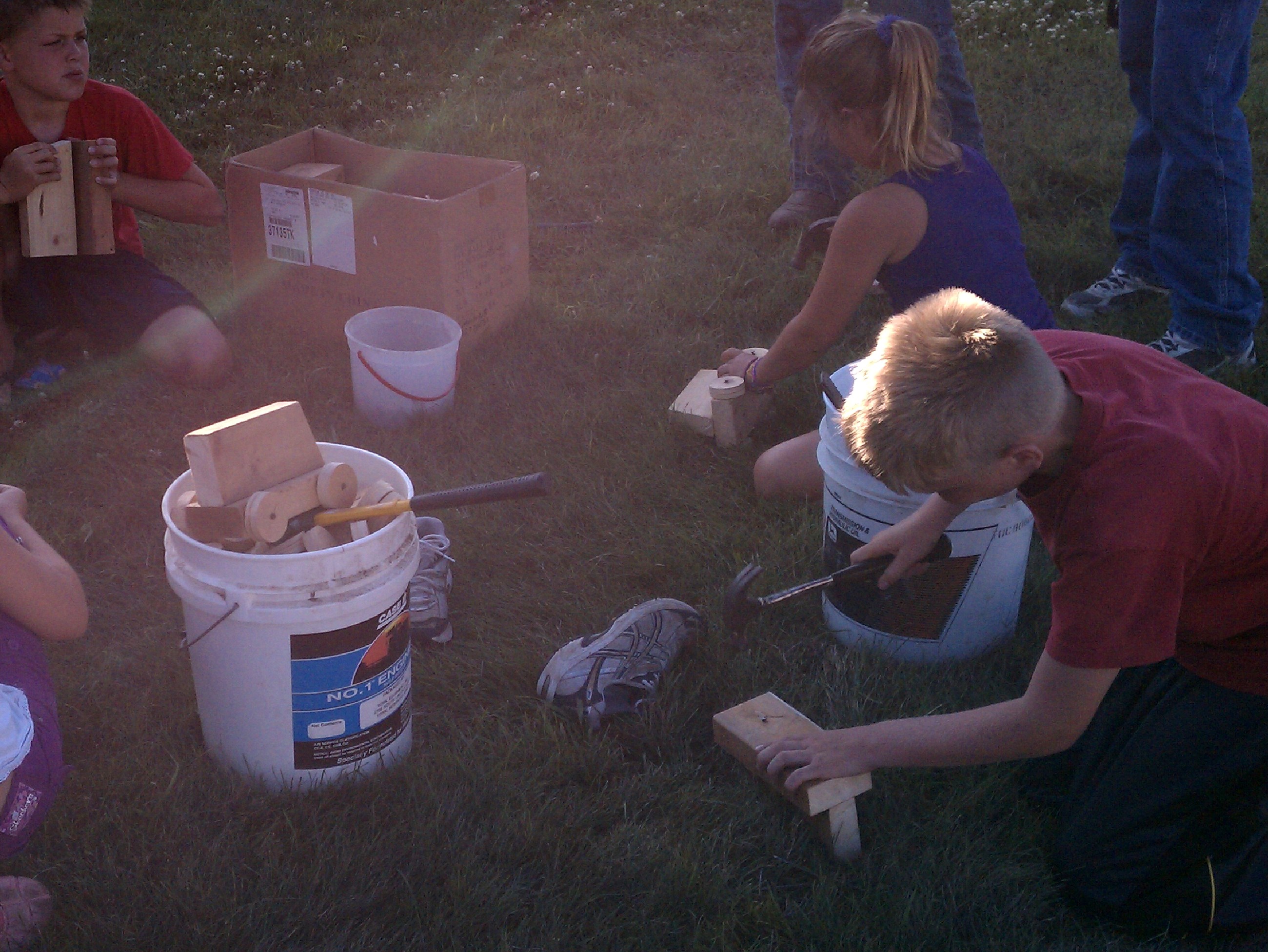 families come out and see what the 4-H clubs come up with each year! Games, face painting, campfire, and all the work that went into pre-cutting the wheels and blocks to make small vehicles out of wood-a really cool and fun night!
*Beautiful morning for the hog show and the horse shows running so smoothly.
*The sheep and meat goat judge working so well with the youth – frankly all our judges did a great job with this-it’s where the focus should be-but the sheep/meat goat judge was exceptional!
*The beef judge commenting the quality of our breeding beef can compete with any show anywhere; just watching our youth building their herds for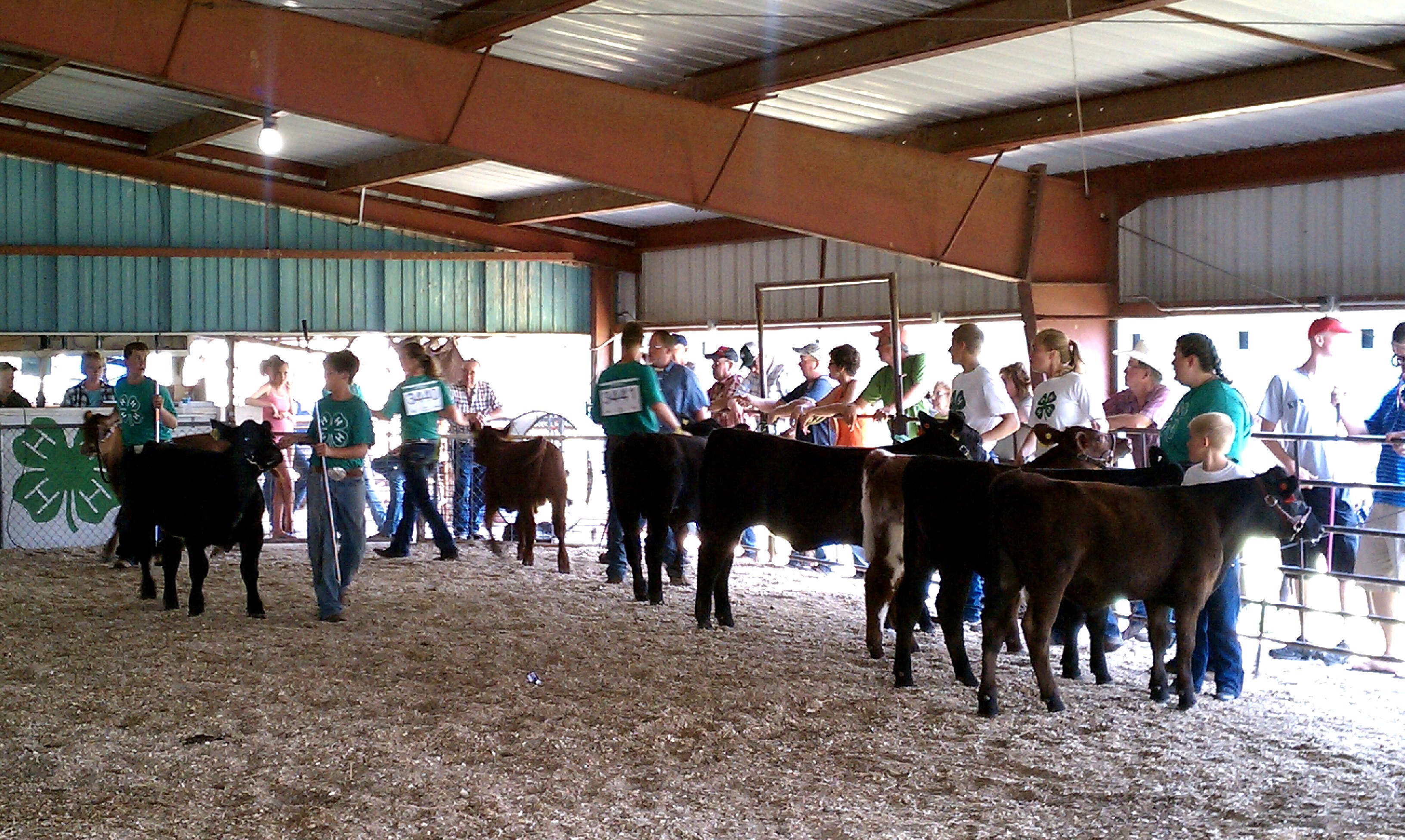 the future with hopes of coming back-that is exciting!
*The awesome buyers at the livestock auction, the excellent job that Bruce McDowell did as always and that Lonnie Stripe did as well, and a smooth-running auction!
*The dedication of the Clay County News staff-especially Tory who endured all the shows in order to capture those special moments and feature stories!
*The way so many swine families stuck around at the end to clean up the swine/sheep barn and help me put things away this year so I didn’t have to do that myself. I really appreciated that!
*There are many moments but for the sake of space, THANK YOU ALL for making the Clay Co. Fair a success!


 JenResources