Blog Archives
Inspiring Young Nebraskans-HHD 2011
Last week was busy with Husker Harvest Days-the coldest one I can remember! It’s always fun for me to see many familiar faces-like a big reunion! The theme at the IANR booth this year was “Inspiring Young Nebraskans”. This theme was important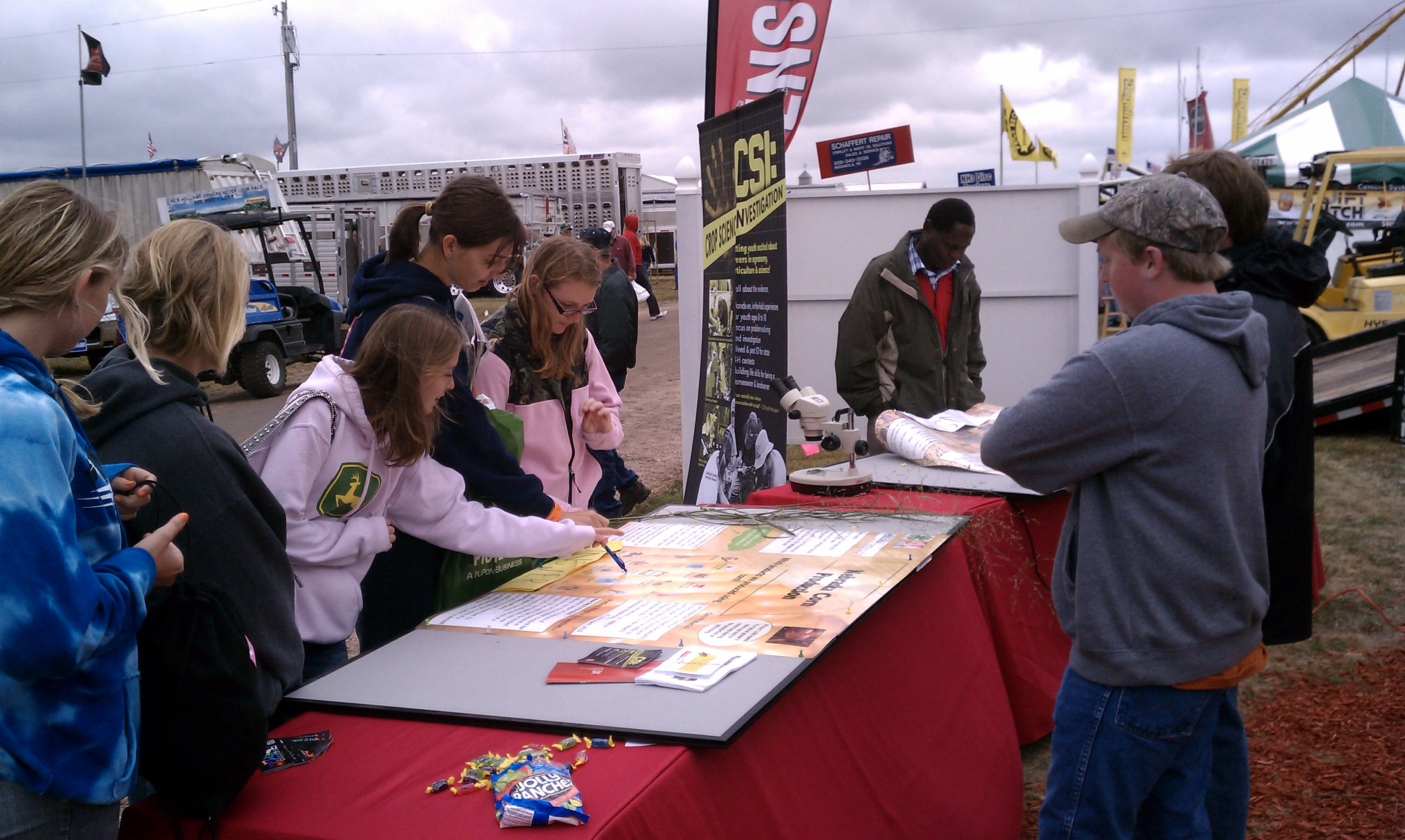 to showcase how IANR is influencing our youth from early childhood development to entrepreneurship activities and future careers. A statistic that may surprise you is that over 144,000 Nebraska youth (nearly every 1 in 3 youth in the State) is involved with 4-H. That’s something we would like to continue to grow as I think any of you who have been involved with youth programs whether 4-H, FFA, or scouts can attest they build life skills! The goal of this year’s exhibit was to show how IANR is impacting youth to hopefully keep more local youth here in Nebraska.
The first exhibit dealt with UNL Extension’s focus on Early Childhood Development which focuses on youth ages 5 and under by helping childcare providers, babysitters, and parents understand brain development and UNL’s research in this area. An alarming statistic is that up to 25% of children are not ready to begin school. The second exhibit was Teaching Science through Soybeans in which an iPad app was created for youth to drag and drop items into grocery carts to learn from where their food comes. There are many additional activities involved in the partnership between the College of Ag Sciences and Natural Resources, UNL teacher education, and local schools.
The third exhibit showcased the Unique Role of Teachers in Rural Communities and a research grant obtained by UNL to study the best strategies for supporting rural teachers in reading (K-3) and science education (6-12). Robotics is a curricula exploding with interest amongst youth in the State and was the fourth exhibit. “Bots are Hot” but they’re not only toys, they’re teaching technology to our youth with Nebraska being the leader in this National Science Foundation initiative. The fifth display showcased Youth-Adult Partnerships in which youth are encouraged to define and address community issues in addition to helping provide youth a voice and responsibility in their communities by working with adults. Connecting the Dots for Nebraska Youth was the sixth display in which an iPad app was developed for youth to link actions and personal choice to his/her future success in a college or career. So often we showcase projects in 4-H, but we’re striving consciously link them with future careers-to show youth how their 4-H projects truly are their first class at the University of Nebraska!
The seventh exhibit showcased Public/Private partnerships in which UNL Extension is working with Nebraska businesses to create opportunities for young Nebraskans across the State. Entrepreneurship was the focus of the eighth display with the goal of building a strong root system for homegrown Nebraska businesses. Reid Ely was front and center on that display banner with his asparagus and Ashley Nunnenkamp helped in the booth as part of the Paul Engler Agribusiness Entrepreneurship Program at UNL. Market Journal taped their latest show there and the Mobile Diagnostic Lab had interactive displays this year on Soybean Cyst Nematode kits for FFA youth, Pine Wilt Nematode, Biological Invaders, and Crop Science Investigation (CSI) for youth. I was thankful for the Clay and Fillmore County youth who helped us in our CSI display as youth can better inspire their peers to be involved!
Like in the past, a Web site was developed and rolled out at Husker Harvest Days. To find out more about what UNL Extension is doing in the child and youth area, please check out our latest Web site at http://child-youth.unl.edu.
County Fair Reflections
A HUGE thank you to all the Fair Board members, 4-H Council, leaders, youth, parents, volunteers, Clay County News Staff, and Extension staff that made the 2011 Clay County Fair a success! 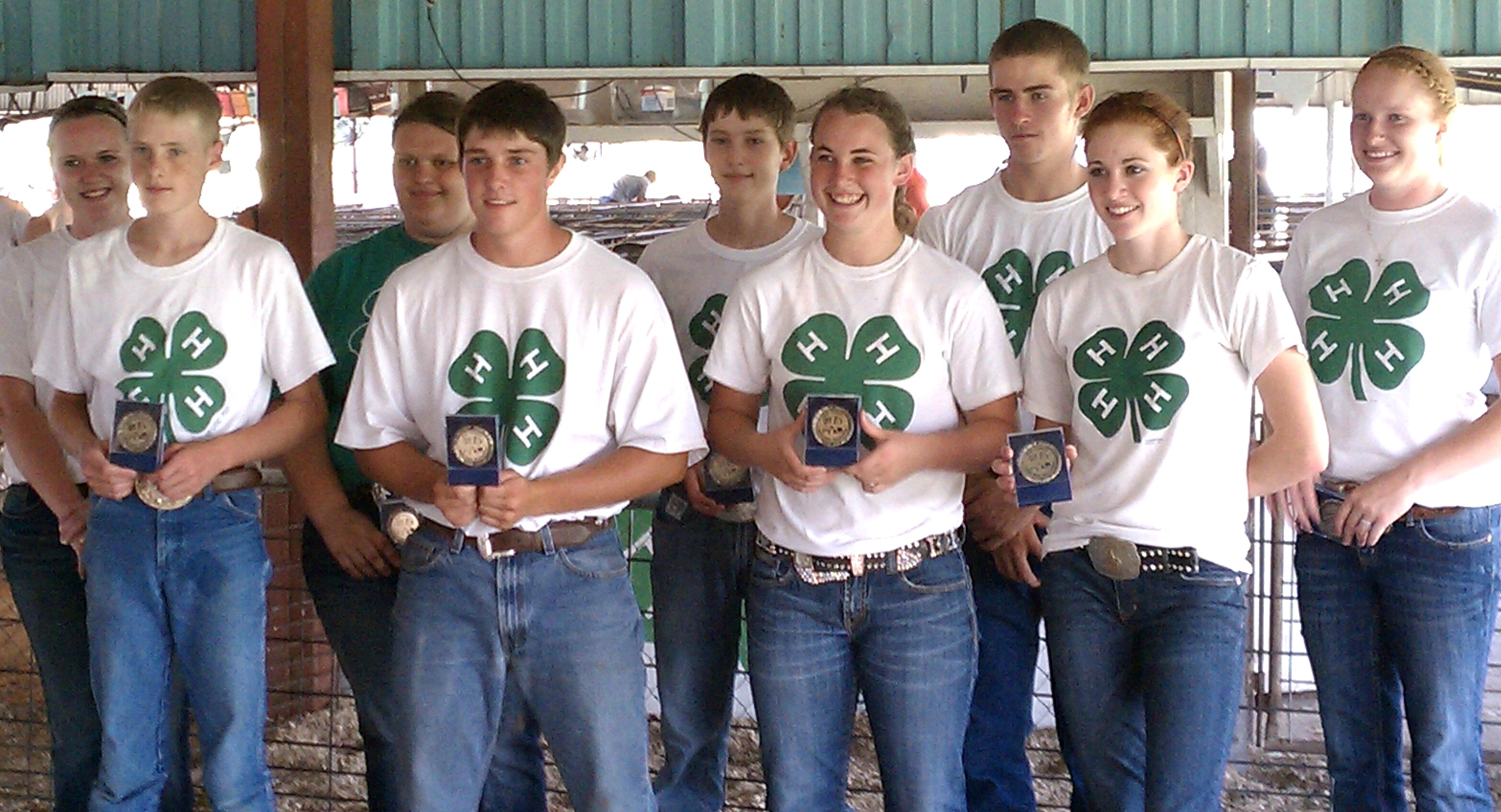 Words can’t really express my appreciation. Driving home every night, I had time to reflect on each day so I decided (for all you farmers) I’d give you a break from irrigation scheduling : ) and provide some reflections from the county fair.
I love watching the fairgrounds come alive…to see the barns and buildings filling up and the excitement of the youth and parents.  While it’s a lot of work, I really love fair week and I’ve always appreciated our county fair in Clay County. I appreciate that the focus is on the youth and families-exactly where it should be; we truly have something special here! There was several times in conversation a person this week would say “I haven’t been to the fair in X years” to which I’d respond “Welcome back!”. For those of you reading this and can identify with that statement, I’d really encourage you to come out next year-because you truly are missing out on something special.
Every year different things stand out as I’m sure they do for the youth and parents as well. This year, these are some of my reflections looking back:
*Deanna and Holli working so hard to prepare before fair while Cindy and I continued programming right up to fair. Everything was ready to go and we felt prepared for everything this year!
*The Fair Board Members working so hard before fair, deciding not to run me over before fair : ), and cheerfully picking up trash each morning and doing various tasks throughout fair.
*All the Superintendents, 4-H Council members, and Leaders pitching in wherever needed-how you all organized your volunteers to make the shows, exhibit judging, and the food stand run so smoothly.
*Kurt and Amy-the FFA Advisors from Sutton and Sandy Creek becoming so involved this year-it was great having them as a part of our team!
*The adults and youth who pitched in to clean out horse stalls Wednesday night before the fair.
*The beautiful day for the poultry/rabbit show outside and the youth excited to show their bucket calves and do their interviews on Thursday.
*The family fun night on Thursday night-I love seeing all the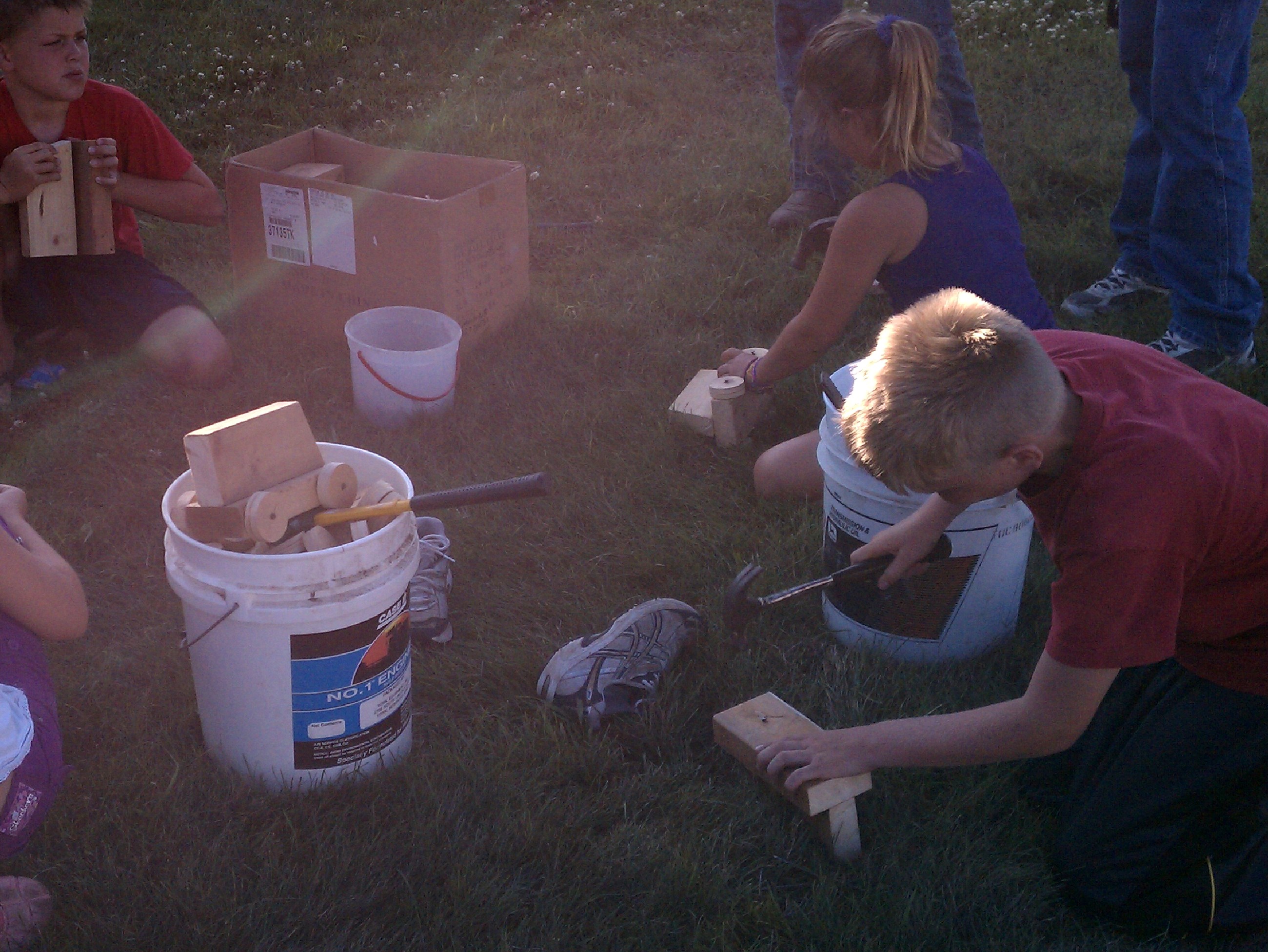 families come out and see what the 4-H clubs come up with each year! Games, face painting, campfire, and all the work that went into pre-cutting the wheels and blocks to make small vehicles out of wood-a really cool and fun night!
*Beautiful morning for the hog show and the horse shows running so smoothly.
*The sheep and meat goat judge working so well with the youth – frankly all our judges did a great job with this-it’s where the focus should be-but the sheep/meat goat judge was exceptional!
*The beef judge commenting the quality of our breeding beef can compete with any show anywhere; just watching our youth building their herds for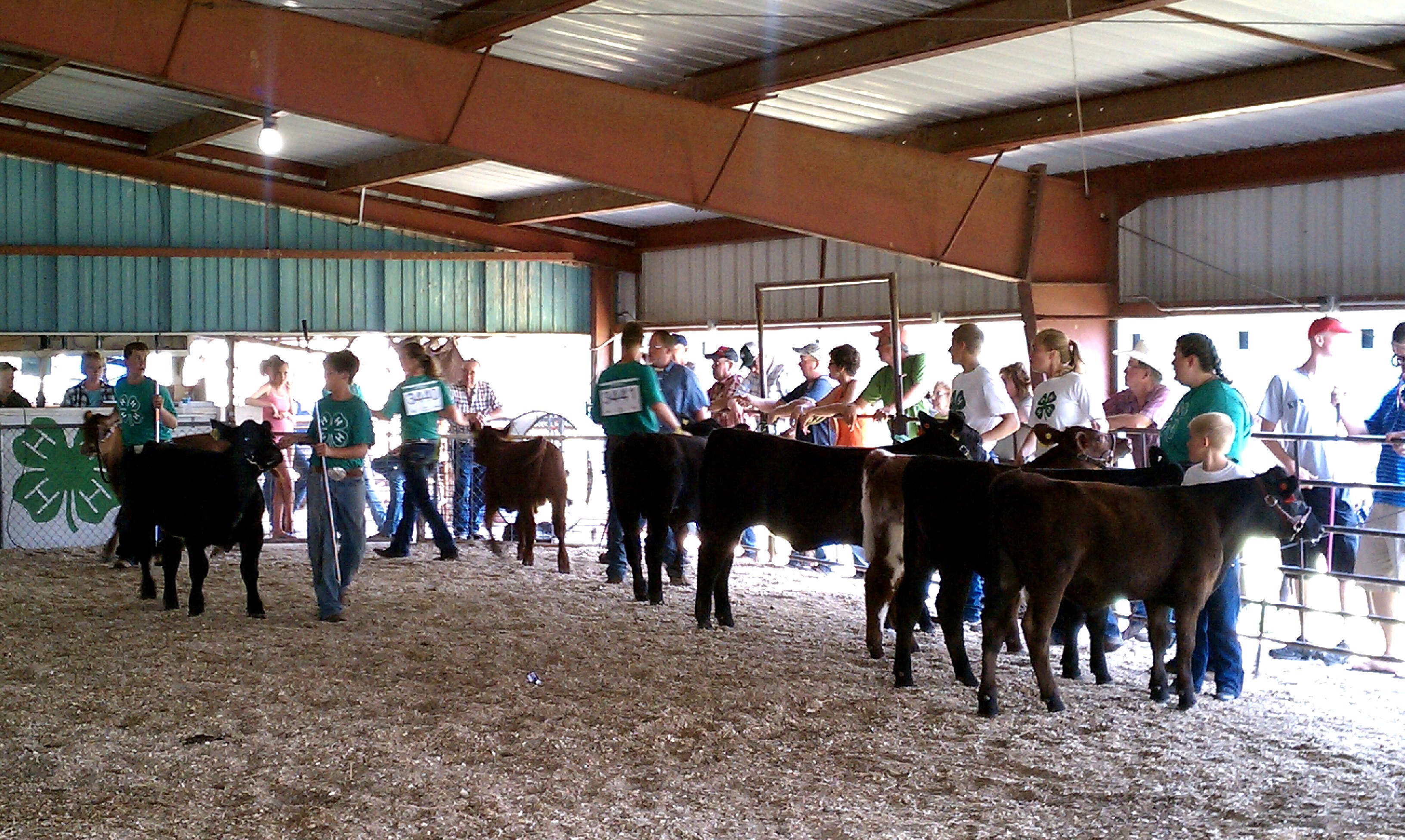 the future with hopes of coming back-that is exciting!
*The awesome buyers at the livestock auction, the excellent job that Bruce McDowell did as always and that Lonnie Stripe did as well, and a smooth-running auction!
*The dedication of the Clay County News staff-especially Tory who endured all the shows in order to capture those special moments and feature stories!
*The way so many swine families stuck around at the end to clean up the swine/sheep barn and help me put things away this year so I didn’t have to do that myself. I really appreciated that!
*There are many moments but for the sake of space, THANK YOU ALL for making the Clay Co. Fair a success!
Telling our Ag Story
On Wednesday I had the opportunity to attend a conference for UNL and ISU Extension Educators regarding animal rights and animal welfare and the importance of how we tell our agricultural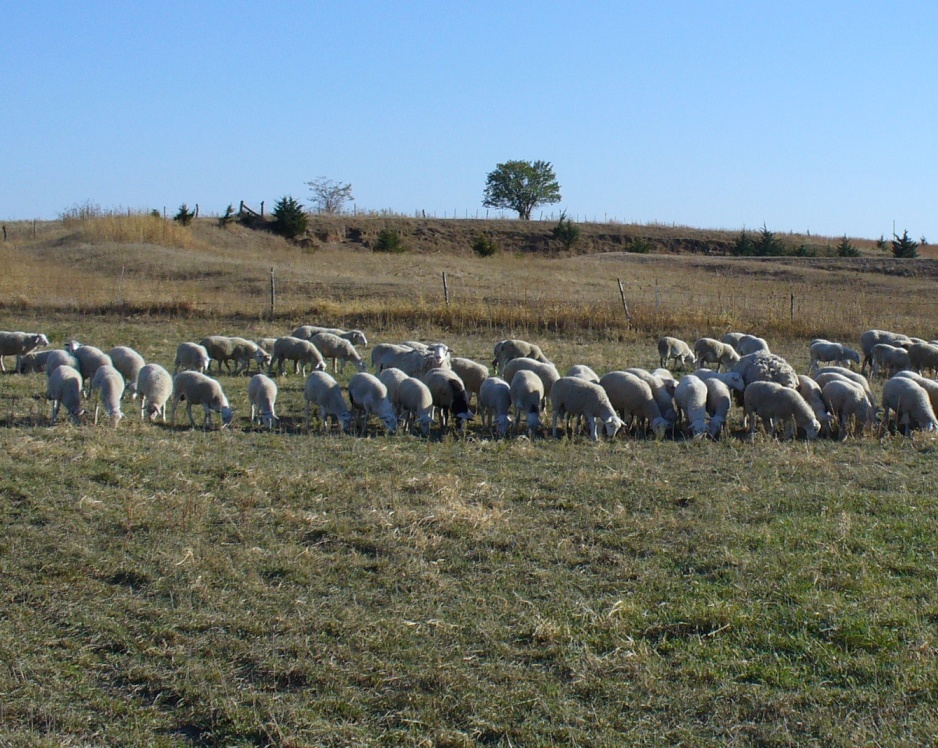 stories to a public increasingly disconnected from where their food comes from. I learned so much and wanted to share.
Dr. Candace Croney from The Ohio State University shared that animal welfare defined to most of us in production agriculture is stewardship-our animals are entrusted to us, use is acceptable, and we have the obligation to treat those animals humanely. She defined animal rights as animals have certain characteristics similar to humans (ex. mental capabilities) and thus have rights. Relationships with pets have become the new paradigm regarding how all animals should be treated. A key message driven home to me was we need to consider how we say our message. So often we position animal care as an economic issue instead of an ethical one. We say things like “We take care of our livestock because if we didn’t, we wouldn’t make any money”…so people focused on animal rights hear from that message the reason we care for animals is for profit…which leads to the next thought that if profit drops, care for the animals is potentially at risk. We instead need to address ethical issues and find ways to connect with the public meaningfully. Charlie Arnot from the Center for Food Integrity said it this way, “We need to first communicate ethics, then science, then economics”.
I also have been guilty of saying “we just need to provide more education about what we do”. But that again isn’t completely correct. While the science of why we do what we do is important to us, ethics are more important to the general public. In a survey from the Center for Food Integrity, when asked what factors influence confidence that food comes from humanely treated farm animals, the fact that the producer worked with a veterinarian ranked first in increasing their confidence, but the fact that what the producer did was science based ranked dead last. Instead of first going to science, begin with showing we’re interested in doing what’s right. For instance, tell the person thank you for his/her question and that you can tell he/she cares for animals as you do too. Then go on to explain why you do what you do to care for your animals rather than provide a data dump of scientific facts. Science can be mixed in, but show the ethics of what you do first. Go beyond the traditional “food, shelter, water” as that doesn’t resonate; it’s expected as that’s what we also provide to our pets. Train people who work for you and make sure they truly do care for the animals as you train them. Determine the message for your operation. The best part is this is free; with good people it just requires a change in commitment and being consistent with your message.
I also appreciated so much of what Trent Loos, Nebraska Rancher and host of “Loos Tales” radio show said. “The message we leave out is why we have animals and agriculture”. The vast majority of the public cares about reasonably priced, safe, healthy food for their families. Our message should be that “we convert animal resources into human resources such as food, fiber, pharmaceuticals, fuels, and products to improve human lives”. It’s a matter of changing our terminology and way of thinking. We shouldn’t say we “slaughter” animals in the U.S….instead “we respectfully harvest plants and animals.”
With the growing disconnect between the general public and where food comes from, we need to be ready to tell our story anytime/anywhere. I’ve often caught myself saying “it’s been busy” when asked how things have been going. I’ve been retraining myself to continue for 20-30 seconds explaining what I’ve been doing which usually sparks a conversation about something regarding agriculture. Part of my reason for this was to help people better understand Extension, but in doing this, I can also help people better understand production ag today. Whether it’s in the line at the grocery store, at church, at a ball game, or wherever, we all have the opportunity and responsibility to share with those around us our agricultural story because no one else can tell your story for you. As Trent Loos said in closing, “If it is to be, it’s up to me”.
Residue Concerns
The recent rains have left their impact on fields throughout the county and Nebraska in general. I’ve received several questions this week regarding flooded fields and how to help crops buried beneath piles of residue.
For flooded fields, Bob Nielsen with Purdue University wrote an excellent article to address these concerns. In short, our cooler temperatures will help plants survive better, but plants completely submerged under water in saturated soils for more than 48 hours don’t stand much of a chance for survival. You can read his entire article here.
If there’s one thing I would like to see farmers reconsider, it’s stalk chopping. It seems like every year we deal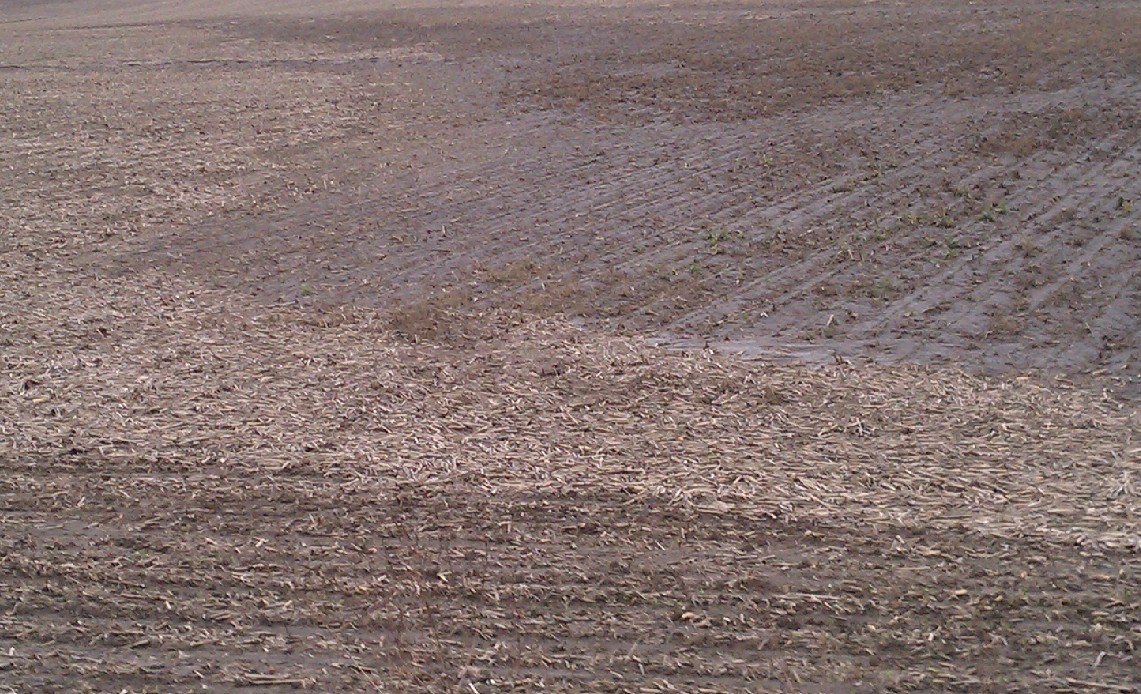 with heavy rains washing stalks from fields where they pile in certain areas of the fields burying plants, covering roadside ditches or jamming creeks. Talking to my colleagues and to several area farmers, we’ve all considered burning as an option. However, burning may only get the top-most dry material while the material underneath is still wet and won’t burn. Another farmer correctly pointed out that there’s usually so much silt intermingled with the residue that it’s hard to get a good burn anyway.
Keith Glewen, UNL Extension Educator in Saunders Co. suggests you consider harrowing or possibly rotary hoeing the stalks, knowing that the depth of stalks and the period of time which elapses following a heavy rain event are important factors in determining success or failure in managing the unwanted stalks. There’s a short amount of time to get that residue off those plants if there’s no light getting down to them. In some situations in the county, residue is up to 1 ft. deep over the top of plants. Harrowing can help even out the field and emerged seedlings may be damaged, but the growing point for corn is still below ground at this point. For emerged beans, the growing point would be above ground so harrowing wouldn’t be a good option. With the rains again today and forecast for more in the future, I’m not even sure that harrowing is much of an option right now for corn as it will take awhile to get back into the fields. In places where 1 ft. of residue is burying plants and the inability to get to those piles with the wet conditions, I don’t expect much plant survival there.
For now we’ll have to wait and see. In the mean time, evaluate your operation and the need for chopping stalks. If you don’t detach the stalk it won’t move. UNL on-farm research found no yield benefit to shredding vs. not shredding stalks in the research which can be found here.


