High Heat and Early Harvest
Thank you for all the kind messages! The heat pushed crops along and harvest has started. There’s been a lot of top dieback seen this year in corn (when the top 4-5 leaves lose their green color and appear more bleached and dead in appearance). However, I’m not necessarily seeing anthracnose as the cause of that and UNL Plant and Pest Diagnostic Lab is also not seeing much in the way of anthracnose either.
We know high heat impacts photosynthesis, respiration, and other plant processes. I was also thinking about the heavier rain events seen in some areas prior to the high heat (coupled with growers also irrigating prior to the rains). So I’m also wondering if we are seeing some root stress from reduced oxygen in the soil coupled with the high heat that caused the top dieback to occur faster in plants? I also realize there’s crown rot in fields that adds to the complexity of this along with late season tar spot (in which hybrid susceptibility is showing).
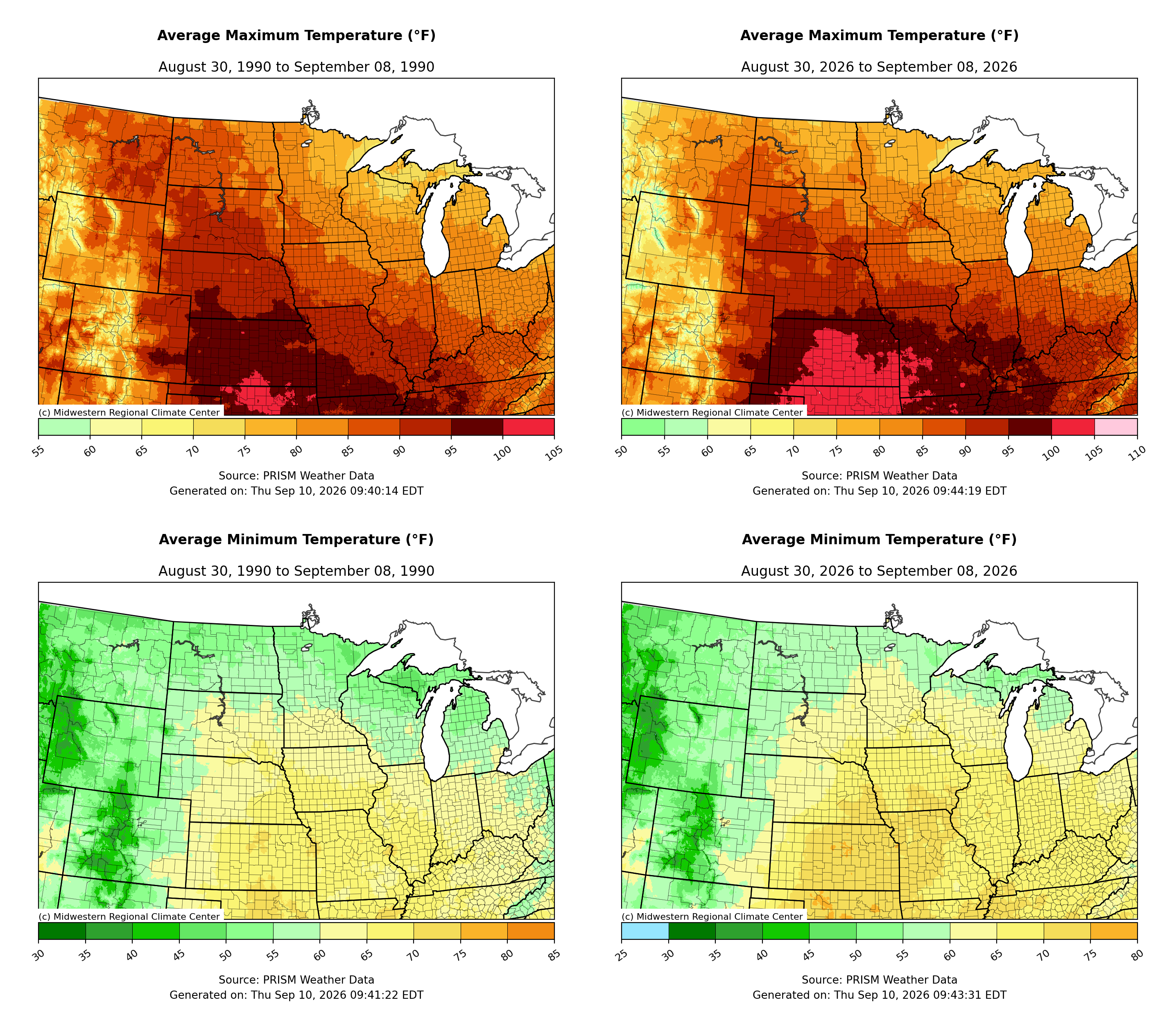
Regarding the weather data, Eric Hunt, UNL Extension Statewide Climatologist, shared an article at: https://nsco.unl.edu/news/recent-heat/. He shared, “the previous 10 days were warm statewide and it was easily the hottest stretch of weather in 2026 for south central and southeast Nebraska. Average temperatures were above 80°F for most locations south of the Platte River and were close to 85°F in places like Lincoln, Omaha, and Falls City. For Omaha and Lincoln the last 10 days were the hottest stretch of weather since 2012 and in Omaha, this was the second longest streak of maximum temperatures over 90°F in the last 50 years.” Minimum temperatures have been well over 70°F with some nights not getting below 80°F. Corn needs a reduction of temperature to at least 70°F to accumulate sugar from photosynthesis instead of burning it to keep the plant cooler during the night. He also shared a comparison with me between the same stretch of weather data (Aug. 30-Sept. 8) in 1990 vs. this year, which were very similar to each other. 2026 shows higher night-time temps for the same stretch, though.
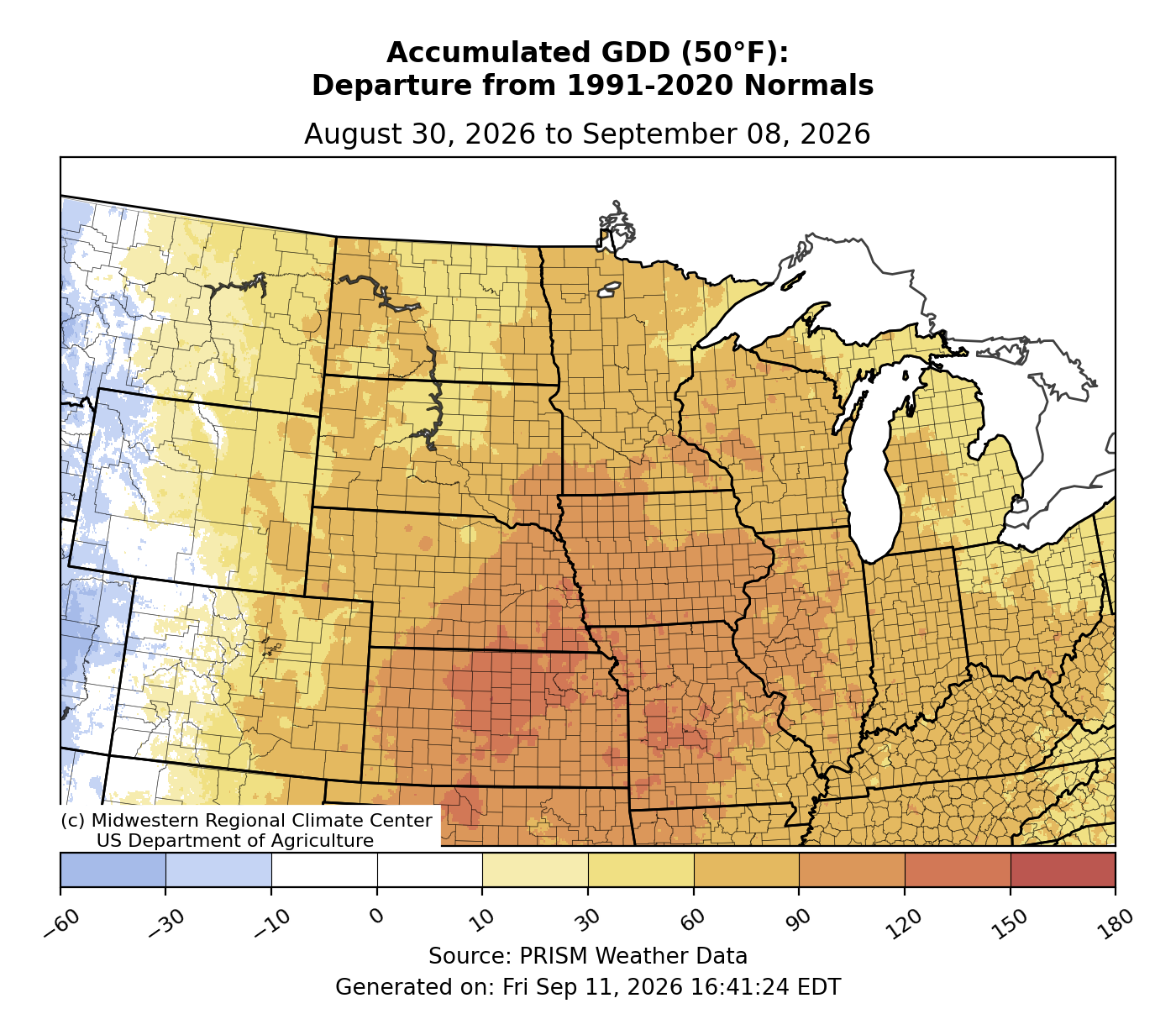
The heat has led to accumulated growing degree units which has pushed the crop ahead of pace. A number of growers shared how quickly the corn moisture is dropping. Upon reaching physiological maturity (black layer), most corn hybrids are around 30% moisture. It’s possible we are losing as much as 0.8-1.0 percentage points/day (prior to the cooler, moist spell this coming week). Dr. Bob Nielsen, Extension Emeritus Corn Specialist from Perdue shared, “It is not uncommon for grain moisture to decline more than one percentage point per day over a period of days when conditions are warm, sunny, windy and dry.” Research that he and others conducted back in the 90’s showed that when corn matures also impacts drydown rate. Corn that matured in late August had a daily average drydown rate of 0.8 percentage points per day while corn that matured in late September averaged 0.4 percentage points per day.
I received many comments (prior to top dieback) from growers about how soon their husk leaves were turning brown. That’s one of the characteristics of quicker drydown. Others include: lower husk leaf number and thinner husk leaf, how well the husk covers the ear (less coverage allows for faster drying), how tight the husk is (as looser husks will increase moisture loss), and how fast the ear turns down vs. remaining upright. While we can’t do anything about the weather and how it impacted the hybrids, we can watch kernel moisture in fields to prioritize harvest. Also watch stalk rot. I’m seeing something interesting where the internode around the ears is rotted first in fields. Unsure if others are noticing that too? While I mostly talked about corn, soybeans are rapidly maturing too and moisture should be watched on them too. I know this isn’t the way any of us wanted to end the season. Here’s hoping that yields are better than expected in spite of all of this and may you have a safe harvest as well!
Research by Dr. Bob Nielsen, Purdue. https://www.agry.purdue.edu/ext/corn/news/timeless/GrainDrying.html


Posted on September 13, 2026, in JenREES Columns and tagged early corn harvest, high heat impacts to corn, rapid dry down corn. Bookmark the permalink. 2 Comments.


Jen- This is full of practical and helpful information. You are making a big impact and are a rockstar in the extension space.
Well done.
David, you are very kind! Thank you for your kind encouragement!-Jen