Blog Archives
More on Last #Irrigation
It’s been a long irrigation season thus far, but we are so thankful for irrigation in this part of the Country during this drought of 2012! Questions continue to roll in regarding last irrigation for corn and soybeans. Corn at 1/2 starch only needs 2.25″ to finish up so it’s important to know what your soil moisture status is. For most irrigated producers, at 1/2 starch, you should be finished irrigating.
For soybeans at R5 or beginning seed fill, you still need about 6.5″ to finish out the crop. At R6 when the seeds are filling, that drops to 3.5″. At R7 when you begin to see leaves yellowing, that is beginning maturity and you are finished irrigating. They key is we don’t want to fill the profile going into the fall as we’d like to replenish the profile with fall and spring rains and winter snow. However, with soybeans, it’s also critical not to stop irrigating too soon during seed fill.
Gary Zoubek, Extension Educator in York County sheds more light in the following video produced by UNL’s Market Journal.
Tomato Troubles!
Here’s a good post from Elizabeth Killinger, UNL Extension Educator, regarding all the tomato troubles we are currently seeing in the garden. You can also check out the following YouTube video by Sarah Browning, UNL Extension Educator.

Vegetable gardening has become more and more popular. It is a way to relax, if you consider pulling weeds relaxing, and is also a way to grow your own groceries. Tomatoes are grown in over 86 percent of gardens in the United States. There are many common diseases and problems that can plague tomatoes in the home garden. With a little help you can keep your tomatoes in tip top shape.
Early blight is a common tomato disease. It is caused by a soil-borne fungus. Rain water, or overhead irrigation, can cause the soil and fungi to splash onto the lower leaves of the plant. The infection starts as leaf spots on the lower leaves then causes yellowing then eventually causes the stems to turn brown. The infection works its way up the plant causing the foliage to die.
There are ways to help prevent the spread of this fungal…
View original post 574 more words
High Heat & #Corn Pollination
With the high heat, lack of rainfall, and pollination occurring in many fields or just around the corner, questions have been 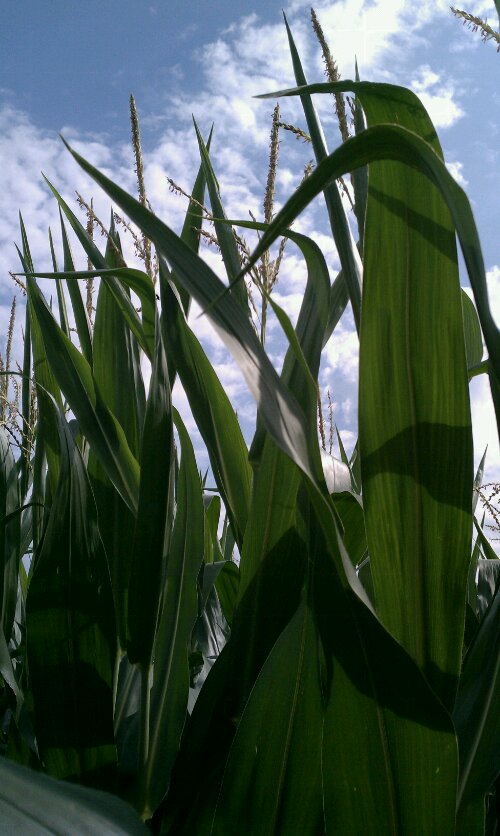 rolling in regarding how high heat affects corn pollination. Dr. Tom Hoegemeyer, UNL Agronomy Professor of Practice wrote the following article and I’m sharing it for the excellent info. Hybrid Maize simulations will be shared in this week’s CropWatch and in next week’s news article.
“Corn was originally a tropical grass from the high elevation areas of central Mexico about 7,400 feet above sea level, 2,000 feet higher than Denver. Today, corn still prefers conditions typical of that area — warm daytime temperatures and cool nights. Areas that consistently produce high corn yields share some significant characteristics. These areas — central Chile, the west slope of Colorado, etc. — are usually very bright, clear, high light intensity areas with cool nights.
This year, in the prairie states and in the Cornbelt, conditions have been dramatically less than optimal. Corn maximizes its growth rate at 86°F. Days with temperatures hotter than that cause stress. In the high yield areas, cool night temperatures — at or below 50°F — reduce respiration rates and preserve plant sugars, which can be used for growth or reproduction, or stored for yield. These are optimum conditions for corn, and interestingly, are fairly typical for areas around central Mexico where corn is native.
In years when we get high day and nighttime temperatures coinciding with the peak pollination period, we can expect problems. Continual heat exposure before and during pollination worsens the response. Daytime temperatures have consistently stayed in the upper 90s to low 100s.The high humidity, which helps reduce crop water demand, also increases the thermal mass of the air—and provides extra stored heat and insulation at night.
Corn pollen is produced within anther sacs in the anther. The plant releases new, fresh anthers each morning, starting from near the top of the tassel, on the first day of shed, and proceeding downward over several days. The process of releasing the pollen from the anthers is called “dehiscence.” Dehiscence is triggered by the drop in humidity, as the temperature rises. However, when it is extremely humid and the humidity falls very little, dehiscence may not occur at all, or it may be delayed until late in the day. If one has breezes, while the humidity is still very high, the anthers may fall to the ground before pollen is released. If the temperature rises too high before pollen dehiscence occurs, the pollen may have reduced viability when it is shed. A person experienced at hand pollination in corn will often see this happen. There will be anthers in a “tassel bag,” but little pollen. The usual solution to this is to wait a couple hours until the temperature rise reduces the humidity. However, last year we had some conditions where pollen was never released from the anthers. This can impact silk fertilization, particularly in open-pollinated situations.
Corn is a “C4 Photosynthesis” plant, making it extremely efficient at capturing light and fixing CO2 into sugars. One drawback of this system is that with high daytime temperatures, the efficiency of photosynthesis decreases, so the plant makes less sugar to use or store. High nighttime temperatures increase the respiration rate of the plant, causing it to use up or waste sugars for growth and development. This results in the plant making less sugar but using up more than it would during cooler temperatures. Heat, especially combined with lack of water, has devastating effects on silking. If plants are slow to silk, the bulk of the pollen may already be shed and gone. Modern hybrids have vastly improved “ASI” or anthesis-silk interval (the time between mid-pollen shed and mid silk). Regardless, in some dryland fields we see seed set problems because of “nick” problems between pollen and silking.
Even in some stressed areas within irrigated fields (extreme sandy spots, hard pans or compaction areas where water isn’t absorbed and held, and some “wet spots”) we can see stress-induced slow silking and resulting seed set issues. Historically, this has been the most important problem leading to yield reduction, particularly in stressful years. Once silks begin to desiccate, they lose their capacity for pollen tube growth and fertilization.
Even with adequate moisture and timely silking, heat alone can desiccate silks so that they become non-receptive to pollen. This is a bigger problem when humidity is low and on hybrids that silk quite early relative to pollen shed. Even with dew points in the 70s, when temperatures reach the high 90s to the100s, the heat can still desiccate silks and reduce silk fertility.
Heat also affects pollen production and viability. First, heat over 95°F depresses pollen production. Continuous heat, over several days before and during pollen-shed, results in only a fraction of normal pollen being formed, probably because of the reduced sugar available. In addition, heat reduces the period of pollen viability to a couple hours (or even less). While there is normally a surplus of pollen, heat can reduce the fertility and amount available for fertilization of silks. Research has shown that prolonged exposure to temperatures reduced the volume of pollen shed and dramatically reduced its viability. For each kernel of grain to be produced, one silk needs to be fertilized by one pollen grain.”
#Crop Update
While every growing season is unique and there’s an element of risk involved, this year seems to take the cake. 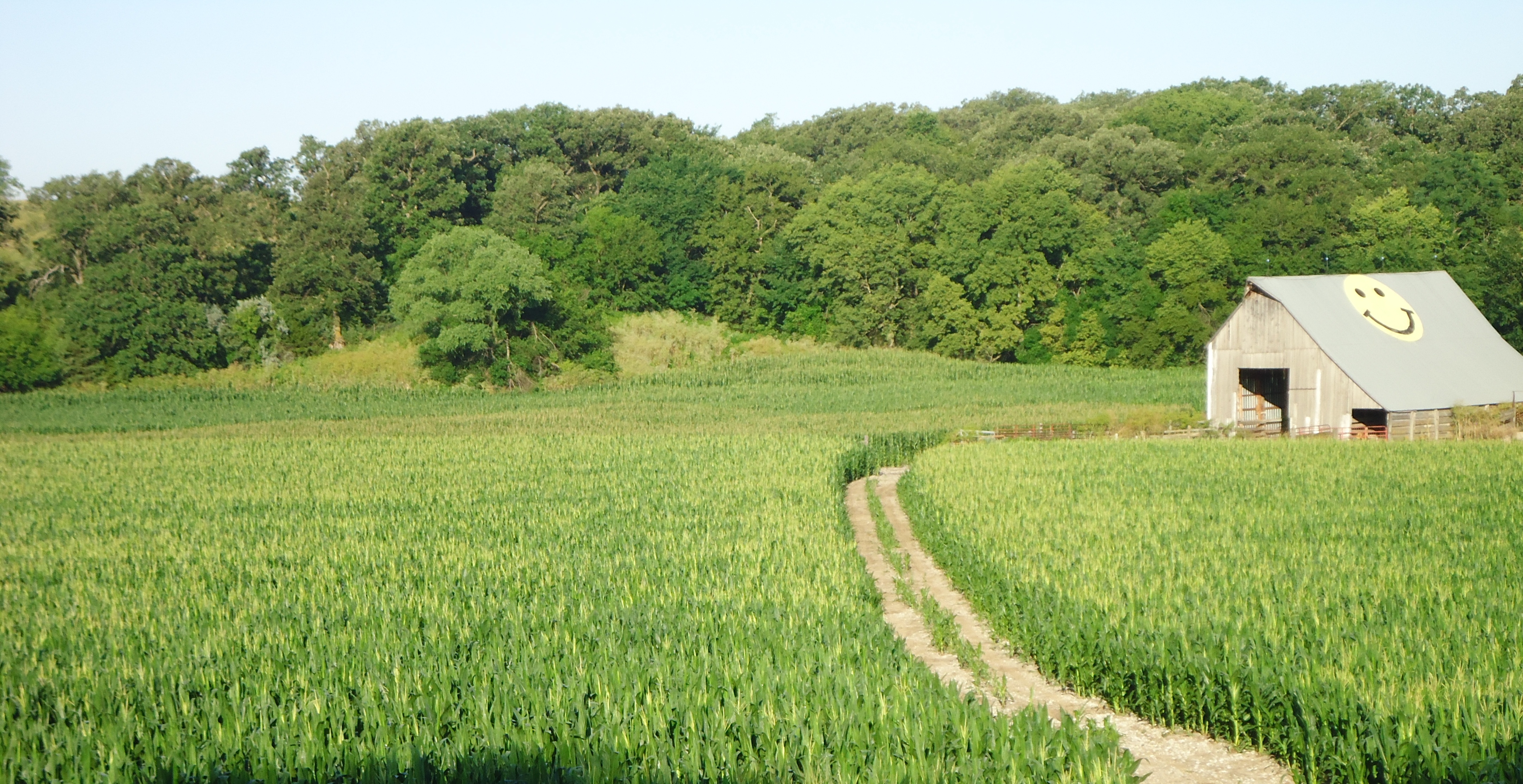

Drought conditions have affected much of Nebraska. In our area in south-central Nebraska particularly in our southern tier of counties, we’re seeing brown pastures and alfalfa that stopped growing. Wheat was harvested nearly a month early and yields range from 0-50 bu/acre depending on if it was hit by the hail storm Memorial Day weekend which totaled it out.
I’m unsure how many planting dates we currently have in Clay County! The spring planting season went so well with corn and many beans being planted in April. Soybeans planted in April that haven’t received hail are forming a nice canopy. Corn that hasn’t received hail should be tasseling by beginning of July. One Clay Co. field planted in March was only 3 leaves from tasseling when I took this picture this week and looks great (it’s probably 2 leaves by now!).  Adding another picture from a farmer friend Bob Huttes near Sprague, NE showing his field currently tasseled out and love the smiley face barn 🙂
But then there’s the hail damaged fields. The hail pattern has been fairly similar all year for this area of the State with some producers receiving four consecutive hail events on their fields. Every week of May was spent helping our producers determine replant decisions, particularly for soybeans…leaving irrigated stands of 85K and dryland stands of 60-65K when beans were smaller before stem bruising was so severe later. We would leave a stand one week and end up needed to replant after the hail hit again the following week. Some farmers got through the first two hail storms but the Memorial Day weekend storm did them in. I never saw hail like where ground zero of this storm occurred. After replanting after that weekend, they received yet another hail storm last week with the wonderful, much needed deluge of rain we received in the county. My heart hurts for these farmers yet for the most part they have good attitudes and are making the most of it. That’s the way farming is…lots of risk, thus an abundance of faith and prayer is necessary too. One farmer I talked to has had hail on his house seven times this year (including prior to planting).
Pivots have also been running like crazy prior to the rain last Thursday night where we received 3.30-4.40 inches in the county. Installing watermark sensors for irrigation scheduling, we were able to show the farmers that there was truly moisture deeper in the soil profile and attempted to convince them to hold off. It’s a hard thing to hold off on  water when the neighbors are irrigating, but several farmers who didn’t irrigate told me they were able to let the rain soak in and their plants
 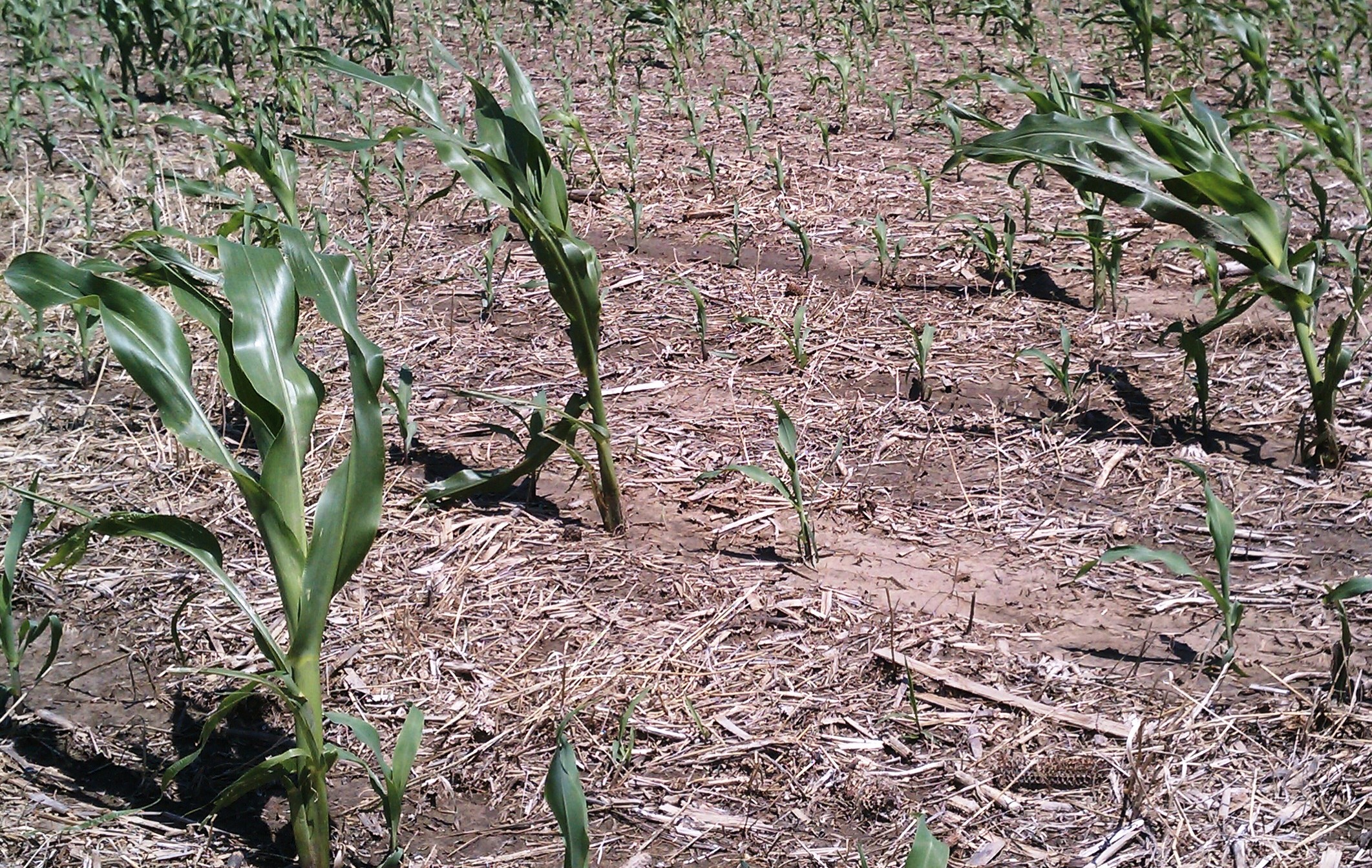 weren’t leaning after that rain because the ground wasn’t saturated prior to the rain event.
Water Jamboree & Removing Irrigation Scheduling Equipment
Last week was fun and somewhat exhausting teaching with my colleagues in Extension and several area Agencies at the Water Jamboree at Liberty Cove in Lawrence. Water Jamboree started over 15 years ago to teach 5th and 6th graders about the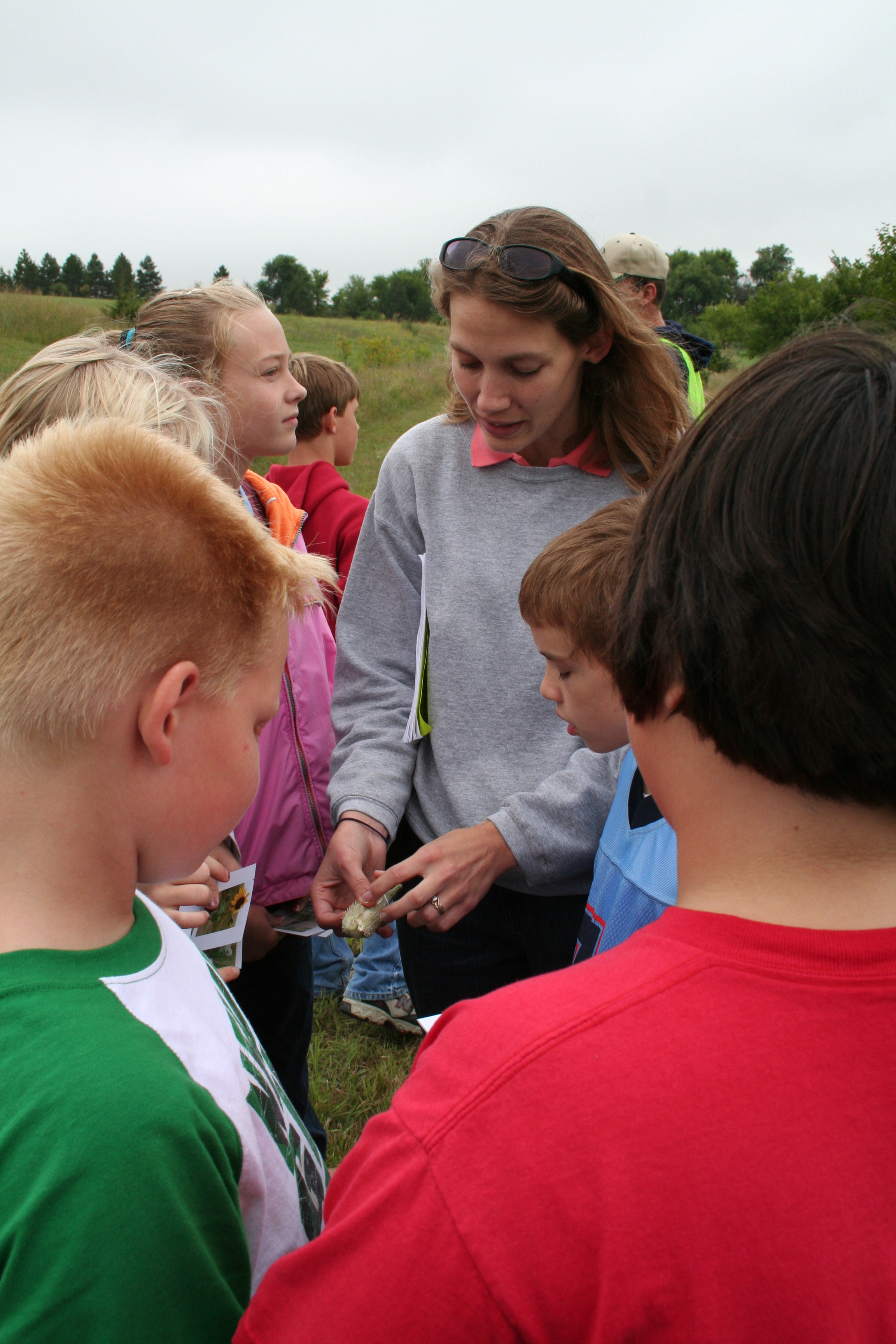 importance of water and water-related subjects. Nearly 800 youth learned about where water goes when it goes down the storm drain, about irrigation and siphon tubes, the aquifer, life inside and outside of the lake, mosquitoes, water movement, and much more. Holli Weber and I utilized the nature trails through the tallgrass prairie to teach a session on life outside the lake focusing on the importance of plants as buffers to filter chemicals and allowing youth to run through the trails doing a photo ID scavenger hunt of the area plants (also to burn off energy!). While I’ve done this session the past 5 years, this year I took time to show the youth specific characteristics to ID grasses. God created each plant unique and I was showing them how Indiangrass has rabbit ears when you pull the leaves back from the stem…or the M/W on the smooth brome leaves. It was fun watching the youths’ faces light up and then try to find these and other characteristics for themselves while on the trails. It was a great day, although I really don’t know how teachers do it day in and out! I wish I could’ve attended something like this when I was young! A special thanks goes to Marlene Faimon at the Little Blue NRD for coordinating this each year.
After Water Jamboree, I headed to my research plot at Lawrence. It’s been a trying year of coon damage and most recently a skunk inside our traps instead of the coons (and it still smelled like skunk out there!). Anyway, I was pulling watermark sensors and the 1st and 2nd foot ones were really rough but the 3rd and 4th feet came out easily. So just a reminder, when pulling watermark sensors, clamp a vice grip below the cap, twist and pull up. I’ve taken out hundreds of these and have only pulled apart four. If your sensor won’t pull up, simply take a spade and dig around the sensor and also bring a jug of water with you. This is the first time I’ve had to dig sensors out but the water really helped as I got it to run down the tube, it eventually loosened at the base to pull out easily without removing the sensor from the pvc pipe. Sensors can be gently washed with a hose or in a bucket of water using your fingers to gently clean them-don’t use a brush. Allow to dry and store in your shed, garage, basement, etc. Also a reminder (although I should’ve done this during the cold of Husker Harvest Days), to get your ET gages inside. Pour out the water and empty the ceramic top by pulling out the tube and then store that inside where it won’t freeze during the winter.
Discussion: Irrigation Scheduling
I’m adding this post as a discussion topic as we get into the growing season for producers to post their irrigation scheduling questions or to share what their sensors and ET gages are reading. With the Nebraska Ag Management Network, we’ve learned that producers often need other producers to check their readings with-kind of like a support group for producers involved with this effort. That’s because it’s hard to not irrigate when neighbors are irrigating and your irrigation scheduling tools are telling you that you don’t need to irrigate! We’ve had some good discussions in the past so I look forward to the discussions this coming year!
Irrigation Scheduling Equipment
It’s nearing mid-May and crops should hopefully be emerging soon! For those of you utilizing watermark sensors for irrigation scheduling, it’s important to install those shortly after emergence so you can monitor soil moisture fluctuations long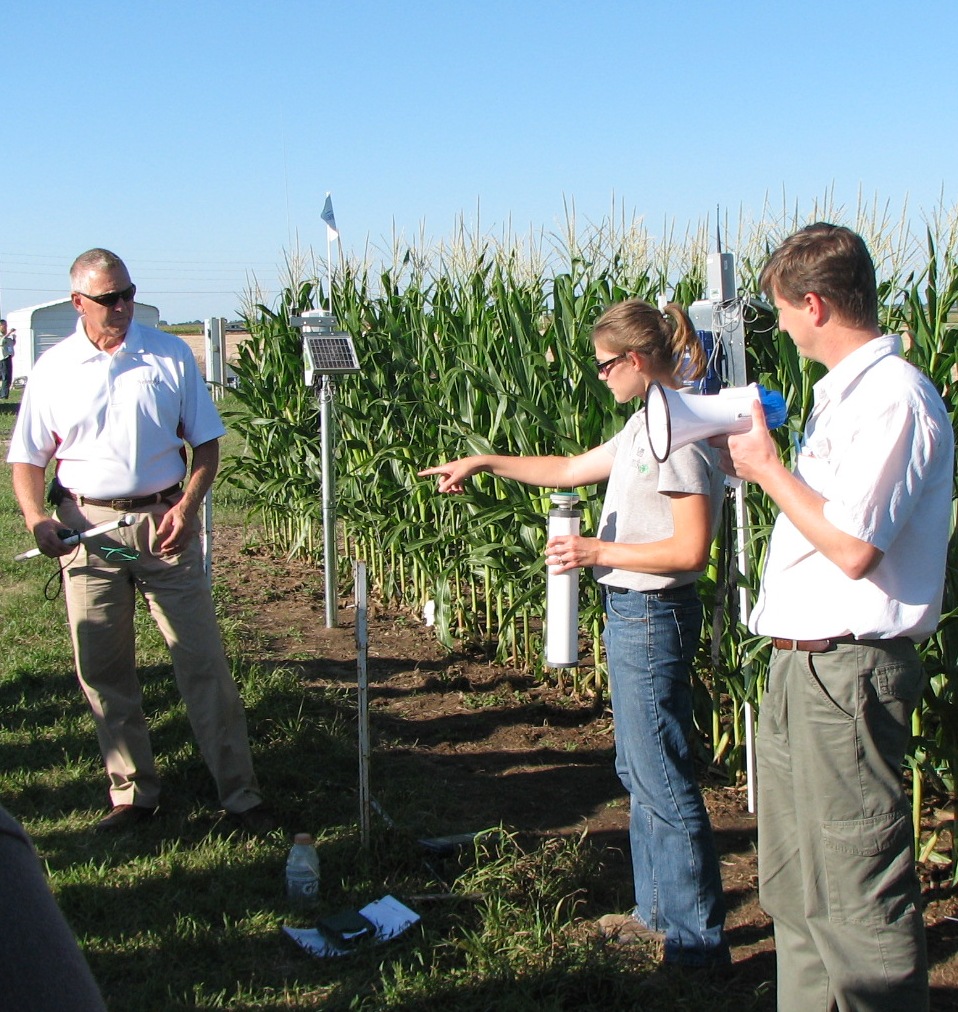 before you ever need to think about irrigating. I’ve found that our cooperators who install these early after emergence are far more confident in the readings than those who install them closer to irrigation time. That’s why we no longer install these for anyone past June 15.
In case you’re wondering what is a watermark sensor, it’s a 3″ sensor filled with fine sand with a fiber glass mesh around it that measures how much energy it takes for the plant roots to extract moisture from the soil. The sensor measures this in a unit of energy called kilopascals or centabars…units that don’t mean much to you or I. That’s why we’ve created charts that convert these units to inches of depletion/foot-terms with which we are more familiar! We recommend farmers install one set at 1′, 2′, and 3′ depths in their fields to monitor when their soil reaches at least 35% depletion. The basic rule of thumb based on research by Dr. Suat Irmak at UNL is to take the average of the top two sensors prior to the reproductive stages of the crop and the average of all three sensors once the crop has reached the reproductive stages (tasseling or flowering). When the average of these sensors reaches 35%, we suggest you consider scheduling an irrigation.
The other tool we use are Evapotranspiration (ET) Gages. The green canvas cover mimics the leaf surface and essentially as the cover is exposed to different environmental conditions such as wind and low humidity, water is moved out of the tube through the canvas cover and the depletion is noted on a site gage on the front. This tool has helped farmers visually better understand why their crop did or didn’t use water for any given week as they can look at the ET gage and consider the weather conditions and the influence they had on what the crop used.
On average, our farmers have saved 2.0-2.5″ of water in corn and soybeans since participating in this program. This program called the Nebraska Ag Water Management Network began in 2005 and now has over 500 cooperators State-wide in Nebraska. More information about the Network, the tools and charts I described above, and videos demonstrating the equipment can be found at: http://water.unl.edu/nawmdn.


 JenResources