Cover Crops & Fall/Spring Forage Options
With corn being harvested for silage, corn maturing early, and livestock producers looking for forage options, I’ve received questions about seeding cover crops or forage options. Mike Burgert from the Clay County Natural Resources Conservation Service also wanted me to share the concern of the loss of reside and the increased likelihood of soil erosion. He said if harvesting crops for forage takes place on a USDA program participant’s “highly erodible” acres, this would likely not be an approved conservation system and could cause ineligibility for USDA programs on all of their land in programs. He also said they have cost share for drought related practices (cover crops for forage on cropland, stock water well/pipe/cross fencing/water facility, etc.).
Dr. Bruce Anderson shared the following information: Before planting anything, review your herbicide history. Prior use of contact herbicides like glyphosate won’t cause any problems, but some herbicides have a long soil residual effect that could prevent successful establishment of some crops. Double crop choice is likely to be different for rainfed and irrigated conditions. One ton (dry weight) of forage production is likely to use 4-5 inches of water. For rainfed conditions, a crop that will winter kill is preferred in order to accumulate soil water from snow melt and spring rainfall for the next crop. For irrigated conditions, forage production will be more with a crop that survives winter and is spring harvested—although irrigation for the forage and following crop will likely need to be increased compared with no double cropping.
Fall Forage options: Determine when the forage crop is to be harvested and how it will be used. For fall-harvested hay or silage, oats or other spring cereals will outyield all other options. Plant about 100 lb. of seed per acre. Various legumes like hairy vetch, field peas, or winter peas can be added to increase protein concentration a percentage point or two, but they are unlikely to increase dry matter yield; the forage from the cereal alone will meet most cattle protein needs. Also be wary of spending more for the seed than the extra protein might be worth. For grazing this fall and winter, turnips and oats (separately or in a mixture) usually will provide the most feed.
Early planting and emergence (irrigation or soil moisture must be available immediately) is essential for successful fall forage. Plantings after Labor Day rarely produce sufficient growth for mechanical harvest in the fall and the amount of fall grazing becomes negligible for plantings made after mid-September. Even earlier planting dates may be needed for sites north of the Platte River. Later plantings should consist of winter cereals. Also, the chances for successful establishment are low unless soil is sufficiently moist to at least an eight-inch depth at time of planting.
Spring Forage Options: For spring forage, the winter cereals rye, triticale, and wheat tend to be the best choices. Rye is your best choice for early spring pasture and produces much growth before being terminated for timely planting of a row crop. Some rye varieties also provide enough fall growth for some light grazing if planted early enough. Rye also may be the most reliable crop when planted under stressful conditions. Rye has some drawbacks. It turns stemmy and matures much earlier than triticale or wheat, with a loss in feed value and palatability, although this should not be an issue if harvest ends in time for spring planting of a row crop. Also, it should not be used in fields that will be used to grow grain wheat due to potential contamination that could lead to discounts/dockage when wheat grain is sold.
Triticale holds on to its feed value best into late spring. This makes it well suited for hay and silage, or for stretching grazing well into June if grazing begins two or three weeks later than it could begin with rye. Triticale often is more susceptible to winter injury than rye and wheat.
Winter wheat will provide very little grazing for fall. During spring, forage quality and acceptance is very high but forage yield is less than rye and triticale. It can be grazed and then allowed to produce grain if grazing ends when plants begin to joint and elongate.
Mixtures often can be desirable and can be designed for individual needs. For example, an early planting of 30 lb. of oats plus 75 lb. of winter rye per acre may provide both fall grazing from the oats and spring grazing from the rye.
#UNL South Central #Ag Lab Field Day
We have a great field day coming up on August 22 at South Central Ag Lab near Clay Center. Check out the flyer below for more details and hope to see you there!

#UNL #Drought12 Educational Summary

Harvesting & Utilizing #drought12 #crops
Harvesting & Utilizing #drought12 #crops for forage Webinar from #unl Aug. 7th 12:30 PM CST http://ow.ly/cMolK #beef
Field Days
Well, August has begun and so has the season for field days. Here are a few I hope you mark on your calendars and plan on 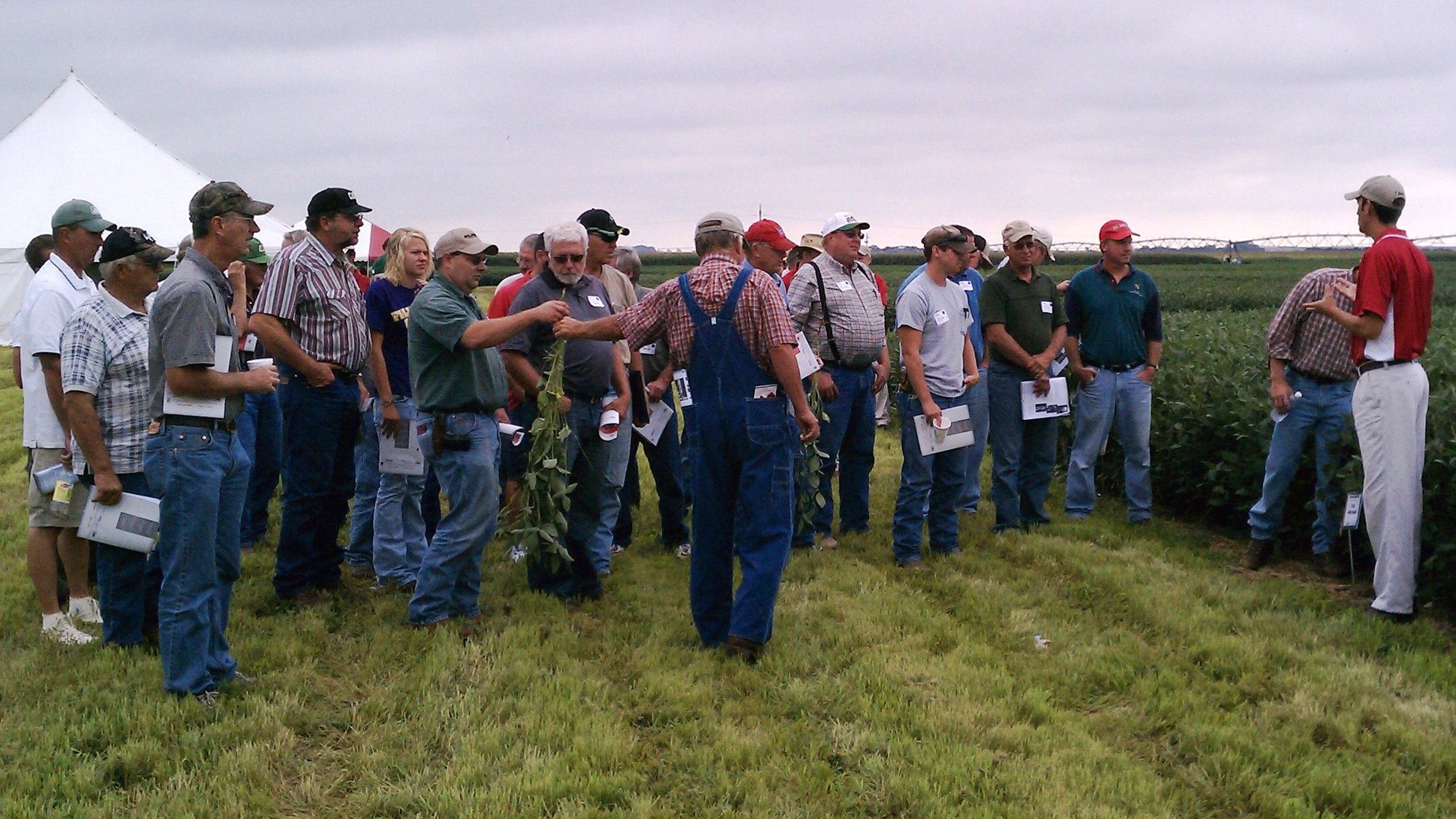 attending. Also a reminder, for all drought information from UNL Extension including crop, livestock, water, lawn, and garden, please check out http://droughtresources.unl.edu.
With the drought and a shortage of forages, if you are considering harvesting or grazing crops for forage, it is important to consider the herbicide restrictions applied to these fields. Check the labels of these herbicides to confirm that grazing restrictions or forage harvesting restrictions have been met before you turn livestock into the fields or cut the crop for hay or silage. Check out this link for more information.
Soybean Management Field Days Planned: Please mark the dates of the upcoming Soybean Management Field Days on your calendar. They are planned for August 14-17 with sessions planned for Lexington, O’Neill, Platte Center and David City. Registration for each of the Field Days starts at 9:00 a.m. with four one hour programs from 9:30 a.m. to 2:30 p.m. Topics include: Soybean Seed Treatments and Foliar Fungicides Growth Enhancement Interaction with Herbicides, Managing Land Leases and Soybean Marketing, Herbicide Carrier Rate Study and Quest for the Holy Grail in Soybean Production! Check out the sessions by going to http://ardc.unl.edu/soydays. The David City date and location is August 17th and it’s located from the Jct of 92 & Hwy 15, 1 mile east on 92 and ¾ mile north on county road.
South Central Ag Lab Field Day: Some of you have been asking about the next field day at South Central Ag Lab near Clay Center. Please mark your calendars for August 22 from 9:00 a.m.-2:00 p.m. with registration beginning at 8:30 a.m. Topics include: Weed control, timing, resistant weeds; Emerging diseases of corn and corn rootworm management options; Impacts of corn stover harvest on soil quality and greenhouse gas emissions; Variable rate nitrogen and irrigation management according to landscape variation; and Use of Soy-Water for managing soybean irrigation. There is no charge but please RSVP for a meal count by Friday, August 17 to (402) 762-4403. Hope to see you there!
York County Corn Grower Plot Tour: The York County Corn Growers Annual Plot tour will be held Thursday, August 23, 2012 from 5:30 – 7:30 p.m. This year’s cooperators are Ray and Ron Makovicka and the plot is located west of York on the Dwight Johnson farm. The plot is located ¾ miles north of Hwy 34 on Road I. Those attending will be able to check out the various corn varieties and visit with the seed company representatives. Supper will be served after the tour. Then there will be a report on 2012 practices, products used and irrigation update.
Also this year they have several different types of irrigation equipment in the field to monitor soil moisture and estimate crop ET. Systems in the field include: AquaCheck USA provided an AquaCheck soil moisture sensor system; Servitech provided the Profiler Watermark soil moisture sensor system; McCrometer provided an EnviroPro soil moisture sensor system; and AquaSpy provided AquaSpy soil moisture sensor system. Several of you have asked about wireless irrigation scheduling systems-here’s your chance to compare them all in one place!
2012 Last Irrigation Scheduling
While farmers may be tired of irrigating right now, I think all who have irrigation are thankful for it in such a dry year. Honestly, thankfully with our irrigation we have some of the best looking crops in the Corn Belt right now. Even so, with corn that hasn’t been replanted nearing dent or stages of starch fill, you may be wondering how to schedule for your last irrigation.
For those of you in our Nebraska Ag Water Management Network using watermark sensors, the goal is to use them to determine when the soil profile reaches 60% depletion (for silty-clay soils in our area aim for an average of 160 kpa of all your sensors). You may be thinking, “An average of 90kpa was hard enough!” but as Daryl Andersen from the Little Blue Natural Resources District points out, you’re only taking an additional 0.30 inches out of each foot. So if you’re averaging 90kpa on your three sensors, you have depleted 2.34 inches in the top three feet so you still have 0.96 inches left (see the Soil Moisture Depletion Chart). If you add the fourth foot (using a similar number from the third foot), it would bring the water available to the plant up to 1.28”.
At beginning dent corn you need 24 days or 5 inches of water to finish the crop to maturity. If you subtract 1.28 from 5 you will need 3.72” to finish out the crop. Corn at ½ milk line needs 13 days or 2.25” to finish the crop to maturity-so subtracting it from 1.28 would be only 0.97”.
Soybeans at the beginning of seed enlargement (R5) need 6.5”. Soybeans in R6 or full seed which needs 3.5 inches yet for maturity. Subtracting off the 1.28” in the four foot profile would lead to 2.22”. The UNL NebGuide Predicting the Last Irrigation of the Season provides good information on how determine your last irrigation in addition to showing charts on how much water the crop still needs at various growth stages.
Several people I’ve talked to who have been irrigating using watermark sensors aren’t replenishing the second foot, so you may have a few rounds yet to go on corn and beans. For a quick way to know where you’re at, think about irrigating this way as explained by Daryl Andersen at the Little Blue Natural Resources District:
One way to look at this is by the numbers of days left. At 1/4 starch, there are about 19 days before maturity so you can let your sensors average 130kpa on the first week and 150kpa on the next week. If these targets are met during the week, you would put on about 1 inch of water. By going to these numbers, it might give you a higher probability for rain in the next couple of weeks. I’m hoping for many answered prayers that we will see rain in August!
Drought-Maintaining Silage Quality
Unfortunately the drought continues to intensify. All Nebraska counties have now been released for haying and grazing of Conservation Reserve Program (CRP) lands. Information and resources continue to be added to UNL Extension’s Drought Resource page at http://droughtresources.unl.edu. Please check it out for drought information for livestock, crops, water, and gardening.
Some have started chopping corn for silage or are about to soon. Dr. Bruce Anderson, UNL Extension Forage Specialist, shares the following information about maintaining silage quality in the future. “After silage has been chopped and piled and packed correctly, it still can be damaged seriously by air and moisture slowly penetrating the outer 3 to 4 feet. Animals often eat less when fed moldy silage and can even experience health problems due to mycotoxins.
Good, well-eared silage can lose over 20% percent of its feed value from fermentation and spoilage under normal conditions. Silage made from corn with little or no grain might have even greater losses. This loss can be cut in half or even more if the silage is kept well covered by plastic.
Cover freshly chopped silage with black plastic immediately after you finish filling the trench, bunker, or pile. Then cover the plastic with something to help hold it down. Old tires are readily available and do a good job of keeping the plastic from blowing away, but they only keep keep pressure on the silage directly under the tire. In between the tires, air can circulate and cause spoilage.
An even better choice would be a solid cover over the plastic, something like freshly chopped forage or weeds or maybe even a 3- to 4-inch layer of manure. This would ensure that the entire surface of silage is fully protected to reduce the chance for air bubbles to form under the plastic which could reduce silage quality. You go to a lot of time and expense to make good silage. Isn’t it worth it to protect that investment?”
Southern vs. Common Rust in #Corn
In early July, southern rust caused by the fungal pathogen Puccinia polysora was discovered in Hall, Adams, Clay, Fillmore, 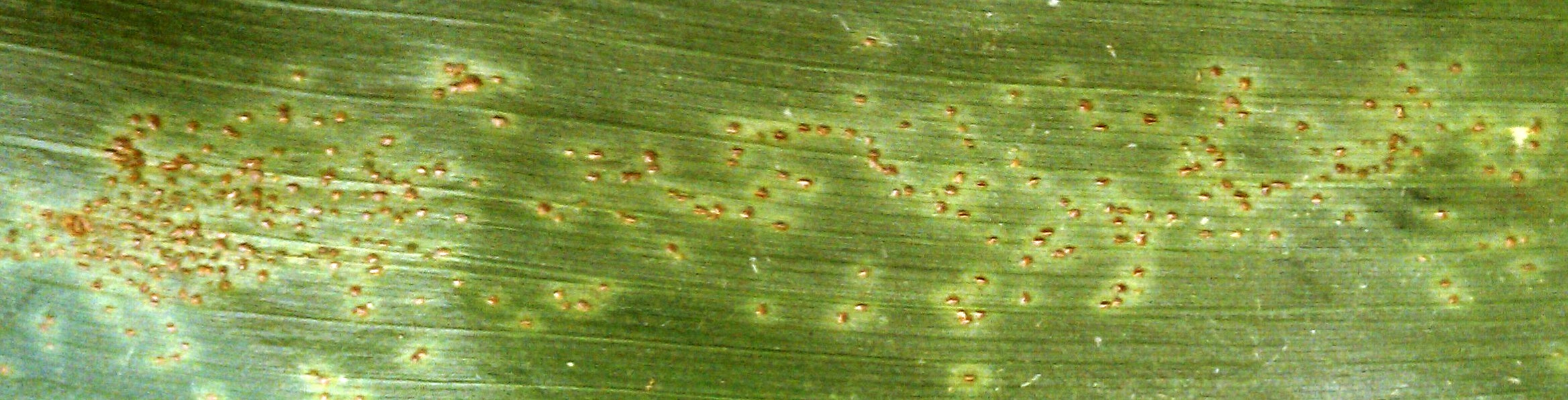 Thayer, and Burt counties in Nebraska. Most farmers in south-central Nebraska remember the corn season in 2006 walking out of fields orange and the slow harvest due to downed stalks. Since then, southern rust has been a disease of concern and fungicides are used to prevent and also treat it when it’s found in fields.
I promised when we were first discovering southern rust this year that I’d post pics, so while delayed, here they are! It is often confused with common rust which we see earlier every year. Common rust typically has pustules (raised fungal spores) that are brick red in color, larger, and on the upper and lower leaf  surfaces. The pustules tend to be more spread out.
Southern rust typically has very small pustules that are clustered on predominately the upper leaf surface and are tan to orange in color. This year, southern rust pustules tend to be more tan in color than orange but are still distinctively different with their smaller and clustered appearance. Both fungal rust pathogens arrive in Nebraska each year via wind from the south. Southern rust prefers warm, moist conditions which, in spite of our dry spell, is typical within our pivot and gravity-irrigated fields in the area. At this time we are recommending if you find southern rust in your field to consider treating with a fungicide. Please be sure to read and follow all label directions including paying attention to pre-harvest intervals. A list of corn fungicides and efficacy can be found here by scrolling down to the corn section.
Additional information and pictures of these diseases can be found here.


Drought: Resources & Options for Corn
Well, the heat isn’t letting up. Sixty-nine Nebraska counties are allowed to hay and graze Conservation Reserve Program (CRP) lands. In our area these counties include: Hamilton, Hall, Webster, Nuckolls, and Thayer. From Teri Post at the Webster Co. FSA office, this means that: “If it (CRP) is hayed, it cannot be sold and cost to the livestock person cannot exceed the 10% reduction on contract payment. Paperwork MUST be completed prior to anything being done. If you do not have livestock but do have a CRP contract, you can lease your acres to a livestock producer. They have also released CP25 (wildflower mix) for grazing only. If you prefer to sell the hay and you qualify for managed haying, you may do that but you will be assessed a 25% payment reduction rather than the 10% with emergency release. Also keep in mind that use of emergency haying or grazing restarts the time clock for when you can hay or graze next. If you use the emergency hay or graze release, even if you hayed or grazed in a prior year you are now eligible to hay or graze again.”
Nebraska Farmers who have drought damaged corn which could be swathed and baled, chopped, or grazed can list that on the Nebraska Hay and Forage Hotline. The hotline is available free of charge for buyers and sellers to list feed resources. Call the hotline at 1-800-422-6692 to list the forage you have or to list your need for forage. I’ve been contacted by Extension 
UNL Extension has developed a Drought Resource Web resource that pertains to crop and livestock producers. Some of you have been asking about options for dryland crops right now. Research has shown benefits to the following crop if stubble height is left at least 10 inches tall when haying or cutting silage from drought damaged corn fields. Leaving a higher stubble height will also reduce the nitrate levels in the forage that has been cut.
When it comes to your options on what to do with weather-damaged corn, Dr. Bruce Anderson, UNL Extension Forage Specialist and Tom Dorn, UNL Extension Educator, recommend to consider the following points before harvesting your crop as forage:
- If grain prices remain high, grain yield may not need to be very high to justify selecting grain harvest over forage harvest.
- Sometimes leaving the corn residue can result in increased yield next year and that increase may provide more value than that resulting from forage use. See NebGuide G1846, Harvesting Crop Residues for information on evaluating your situation.
- Check labels of all chemicals applied to be sure they are cleared for forage use and that the minimum harvest interval has been met.
- Check with the USDA Farm Service Agency and your crop insurer to maintain compliance with farm programs and crop insurance requirements.
- Nitrate concentrations can reach toxic levels in weather-damaged corn. The harvest method can affect the nitrate, a particular concern when its being fed to livestock. Leaving a tall stubble (8 or more inches) will reduce nitrate risk but note eliminate it. Choose the harvest method accordingly.
Silage may be the safest method of harvest as fermentation usually (but not always) reduces nitrate levels and risk. Yield is about one ton per acre of silage for each harvested foot of earless corn plant (not counting the tassel). Feeding value is about 70% to 80% of well-eared corn silage. Corn with some grain (less than 50 bushels) tends to produce about one ton of silage for every five bushels of grain with a feed value about 80 to 90% of regular corn silage.
Harvest timing is critical with silage to ensure the correct moisture for proper fermentation. Plants probably are about 80% moisture now and the desired moisture level for silage is about 65%. Plants with any green leaves usually are too wet to chop for silage. For proper moisture, most leaves may need to be dead before chopping. The stalk and ear hold amazingly high water concentrations. For corn with no grain, even if all leaves are dead, the whole plant (and silage) moisture can be 70% if the stalk is still green and alive. Once plants actually die they can rapidly dry down. There are several ways to reduce moisture content:
- If corn has pollinated, delay silage harvest until all chances of increased biomass tonnage have passed or plants naturally dry down to appropriate moisture levels.
- Corn can be windrowed and allowed to partially dry before chopping.
- Excessively wet material can be blended with drier feeds such as ground hay, cracked grain, or dried distillers grains. However, this can take a lot of material — about 500 lb of grain or hay to reduce each ton of chopped corn with 85% moisture down to 70% moisture.
- Silage inoculants may improve fermentation and preservation of drought-damaged silage.
Green Chop: Green chop minimizes waste but may be the most dangerous way to salvage corn. If present, nitrates will start to change into nitrites (about 10 times as deadly) as green chop begins to heat. Chop and immediately feed only an amount that animals will clean up in one feeding. Chop and feed two or three times per day instead of providing excess feed from a single chopping. If any green chop remains two hours after feeding, clean out bunks. Never feed green chop held overnight because nitrites can be exceptionally high. Be sure to allow plenty of bunk space (36 inches per cow is recommended) so boss cows don’t overeat and timid cows can get their share.
Hay: Hay may be the most difficult method of mechanical harvest, especially if ears have started to form – the stalk and especially the ears will be slow and difficult to dry. If possible, use a crimper when windrowing. Unlike with silage, nitrate levels do not decrease in hay after it is baled. Some of the nitrate risk can be reduced by cutting to leave a tall stubble, about 8 inches. Tall stubble also will elevate the windrow off the ground, allowing air to circulate better through the forage and aid in drying.
Grazing: Challenges with grazing include acidosis risk for cattle not accustomed to grain if ears have started to fill (smart cows will selectively graze ears), waste from excessive trampling, availability of drinking water, perimeter fencing, and nitrates. Reduce acidosis risk by feeding increasing amounts of grain similar to feedlot step-up rations before turning into standing corn that has much ear development.
Reduce waste by strip-grazing with at least two or three moves per week; daily is best. Back fences are not needed because regrowth is not expected. Water can be hauled in as with winter corn stalks or lanes might be constructed with electric fence to guide animals back to water sites that are nearby. If strip grazing, animals can walk back over previously grazed areas since back fences aren’t needed.
Perimeter fences can be built using the same fencing as for winter stalks. Cows are likely to respect such fencing but inexperienced calves may not remain where desired. To better control calves, use a double strand of electric wire and/or a more visible barrier such as electric polyrope or polytape. Animals not already experienced with electric fences may need some exposure and training before moving them to a corn field.
Nitrates usually are not a problem with grazing since the highest concentration is in the stem base, the plant part least likely to be consumed. Risk increases, though, if animals are forced to “clean-up” a strip before moving to fresh feed and when corn plants are short (probably less than 3 to 4 feet tall) with small, palatable stem bases. Tests for nitrate concentration (whole plant and just the bottom 8 inches of the stem base) can be made prior to grazing to assess risk. If nitrate levels are risky, the hazard can be reduced by offering enough desirable forage to discourage consumption of hazardous plant parts as a major component of diet. Also, delaying grazing until plants more fully mature often lowers nitrate risk. NebGuide G1865, The Use and Pricing of Drought-Stressed Corn, offers additional information.
Windrow Grazing: This method includes cutting as you would for hay and then grazing the windrows rather than baling them. It eliminates the cost of baling, transporting bales, feeding bales, and maybe hauling manure. It also eliminates any flexibility in feeding location and may reduce opportunities to sell the corn forage.
Windrowing tends to preserve forage quality better than allowing plants to stand. Usually it is easier to strip graze windrows than standing corn because building fences and estimating strip size are easier. Snow cover rarely causes problems if animals already know the windrows are there. They will use their hooves and face to push snow aside to access the windrow. Thick ice, however, can cause a significant barrier. Follow appropriate management recommendations listed earlier for hay and grazing for best utilization and safety.
Additional Resources: US Drought Monitor Map and High Plains Drought Monitor Map
County Fair-Special Time of Year
Fair time is a special time of year. It’s the one time in the year where people from all parts of the county come together for the youth. Yes, there’s healthy competition involved, but 4-H and FFA are building life skills in our youth. Families congratulate each other and are excited for a youth’s job well done. It’s the one time in the year where people from all parts of the county come together for the youth.
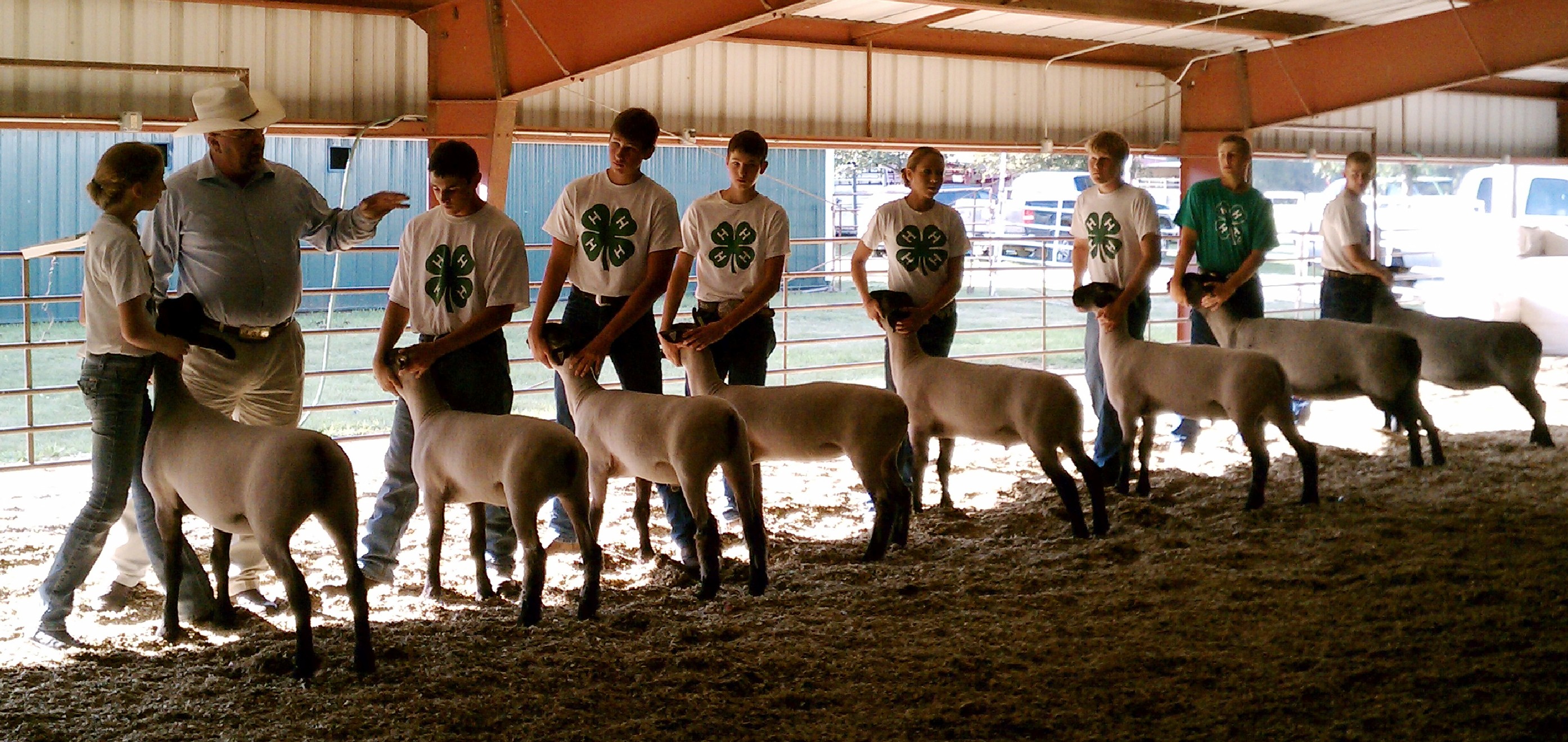
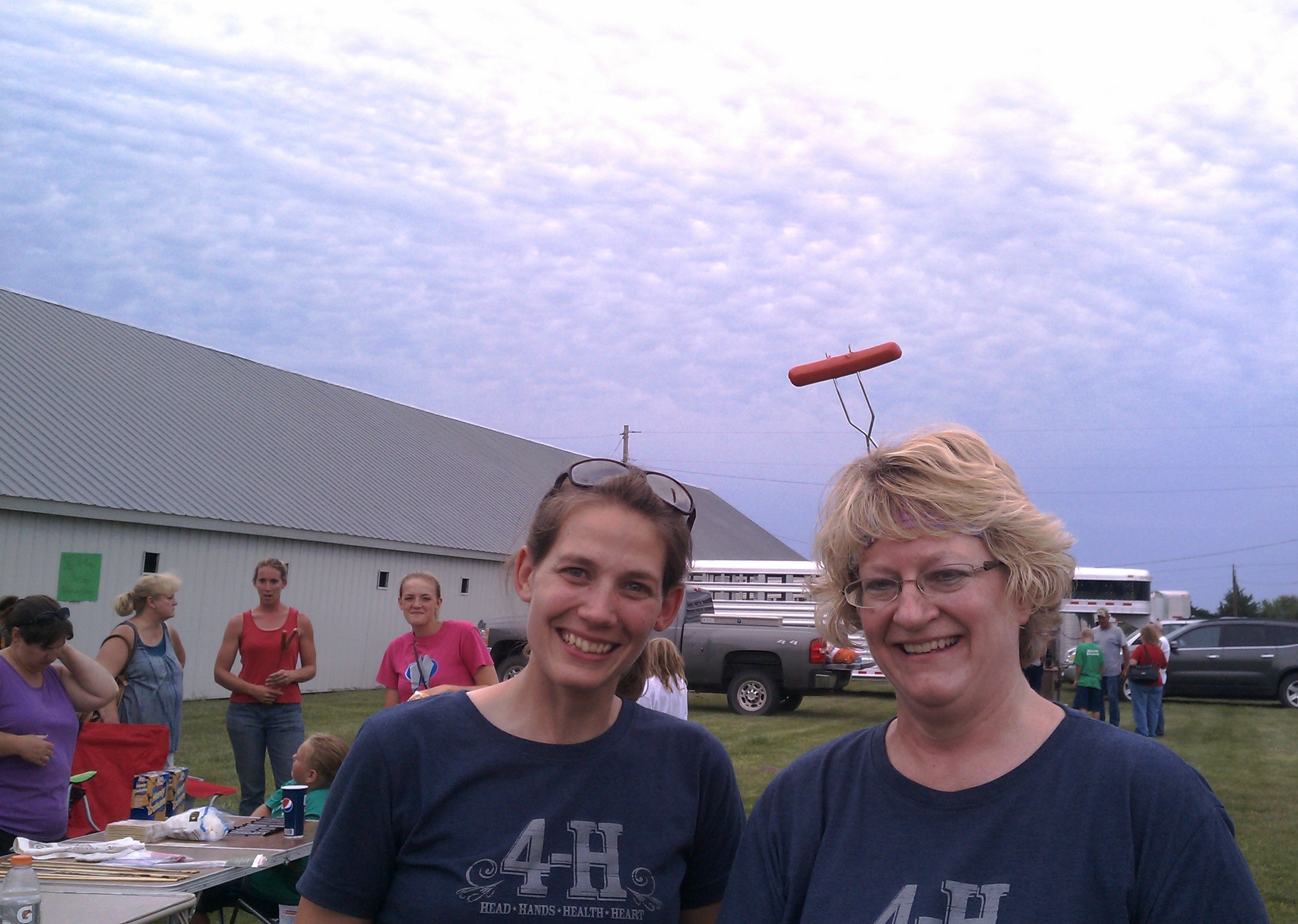
It’s always fun for me to watch the fairgrounds come alive Wednesday night as youth bring in their static exhibits and livestock entries. People are smiling and most youth-particularly the younger exhibitors-are excited. Many people, including me, checked the weather forecast throughout the fair in hopes of rain. This is the first fair in a long time that it didn’t rain Wednesday night or anytime during the fair. Thursday is a busy day with exhibits being judged, livestock being weighed in and the beginning of livestock shows. Something I always enjoy is family fun night on Thursday night. Clouds appeared and families enjoyed kiddie games, shelling popcorn, an obstacle course, and roasting hot dogs and marshmallows. Friday and Saturday continued with the remaining livestock shows and plenty of heat. Sunday brought a fun beef-fitting contest where youth of various ages and clubs worked together. It also brought smiles watching the young children tell their stories and show animals in the Rainbow Classic, watching all our top showmen compete in the Round Robin Showmanship Contest, and wonderful support from all our buyers at the Livestock Auction; we’re thankful for your support.
While probably most people are hot and tired by fair’s conclusion Sunday evening, it’s always a little saddening to me to watch the fairgrounds become empty so quickly again. Deanna and Holli in our office spend a great deal of time preparing for it as do all the youth, parents, grandparents, and 4-H leaders; thank you for all you do and the time you all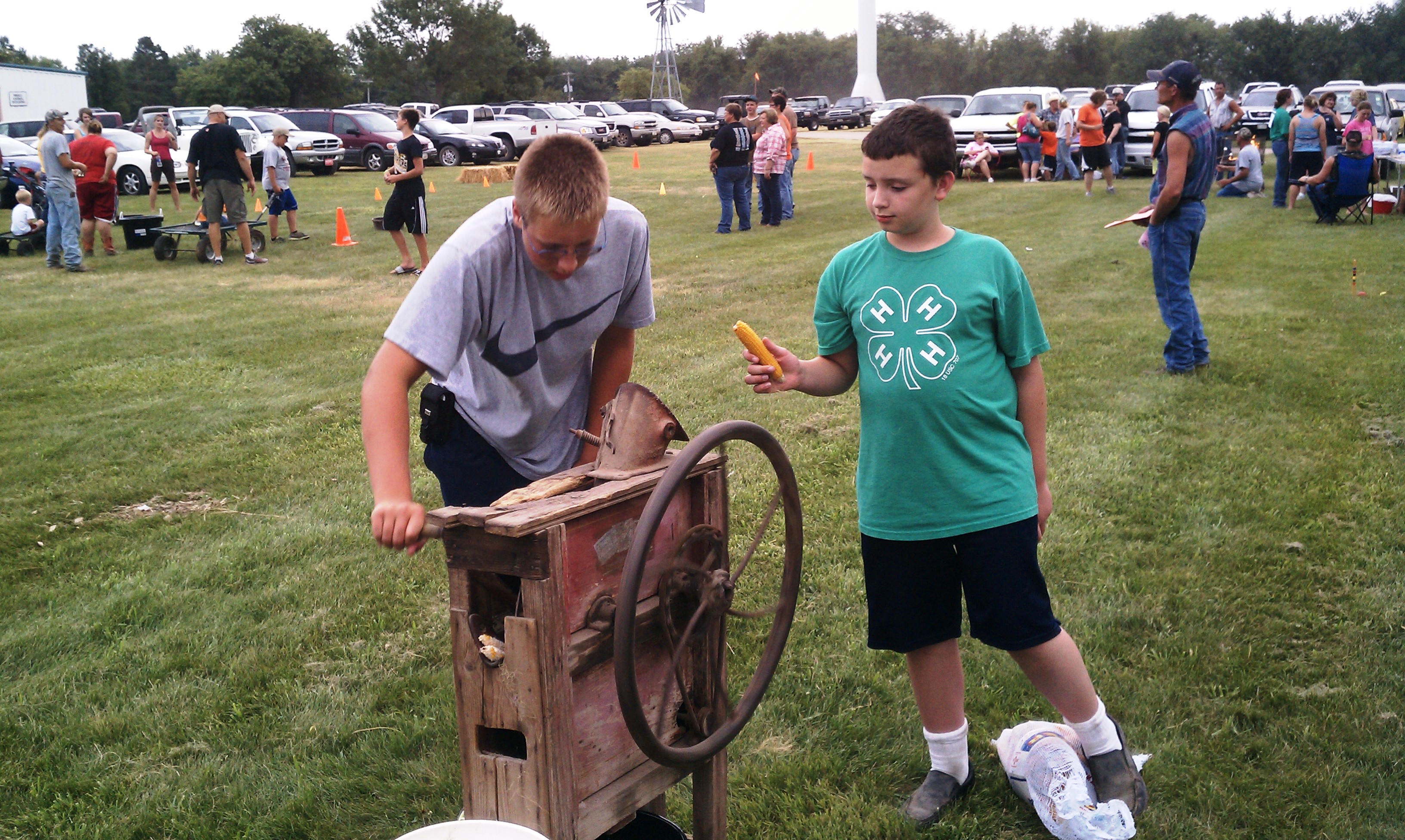 invest in our youth! Thank you to the Fairboard members who spend countless hours preparing the Fairgrounds and always take care of things during fair with a smile-no matter how often they have to plunge the toilets! Thank you to 4-H Council for your help on various committees, your work with the food stand and BBQ, and for all you do. Thank you to all our superintendents and to all our volunteers; without you our 4-H program and fair wouldn’t be possible. Thank you to Tory and the Clay Co. News for all your support and coverage of our fair. We have something so special in our county and I truly feel blessed to work in Clay County! We may not have big-time entertainment at the fair, but I love our fair. I love how the focus is on our 4-H and FFA youth and families; many other counties would love to have that. Our numbers and entries are similar to counties much larger than us and I appreciate the quality brought to the fair each year from our youth. Thank you to everyone for making the 2012 Clay County Fair a success!



 JenResources