
Blog Archives
Crop Updates-May 2016
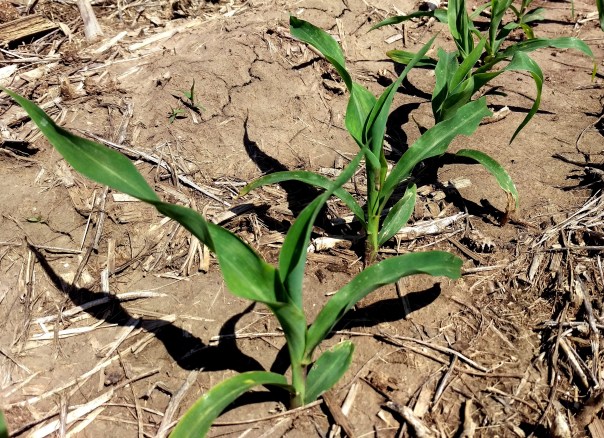
May 27: Sunshine has been welcomed for corn amidst the rains we’ve received. Corn ranges from 1-4 leaf depending on emergence dates. For those who put the majority of nitrogen application pre-plant, soil and/or foliar samples may be necessary to determine the extent of nitrogen available to the crop throughout the season.
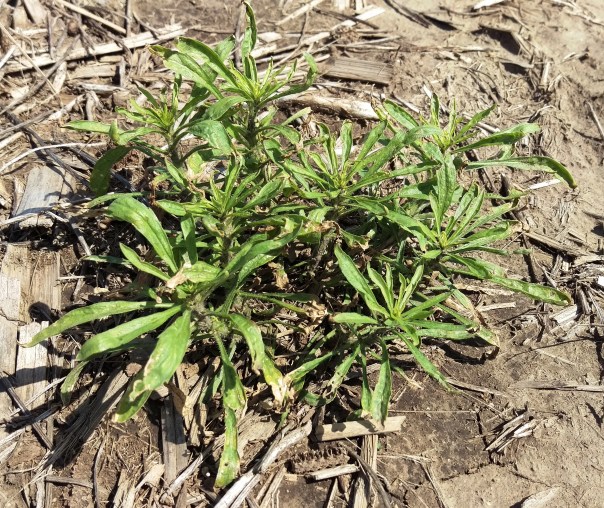
May 27: Receiving numerous calls on marestail escapes in corn this year. At this point, there’s no options guaranteed for 100% control. Our Guide for Weed Management shows options for 80% control right now including: Buctril + atrazine, Buctril + dicamba, Hornet, Realm Q, Resolve SG/Solida or Resolve Q, and Status. Please read and follow all label instructions. For soybeans, options are even more limited and control mostly goes down to 70%. Page 116 of our Guide for Weed Management provides options for consideration.
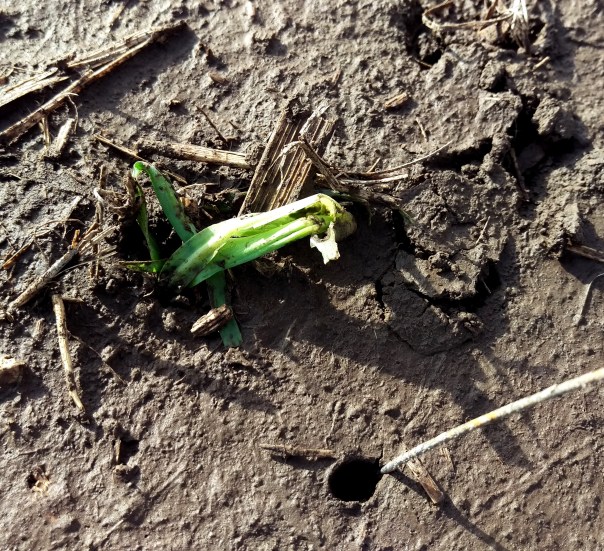
May 27: Also was called to a field for unique situation to me. Field had been two years of soybeans before planted to corn this year and had received hail 2 days before and over 4″ of rain within a few day period. Night crawler trails and holes the diameter of pencils existed throughout the field. The hail-stripped leaves were being moved down into holes. Where the stripped leaves were still attached to plants, the entire plant was bent over into the holes. It’s a unique situation in which the corn will hopefully outgrow with warm weather and sun. This unique occurrence is also mentioned at the following Purdue University website: http://extension.entm.purdue.edu/pestcrop/2010/issue9/index.html
May 23: Corn is looking good for the most part with few major concerns yet. Some have commented on the yellow-looking corn. This is most likely due to cool, wet soils rather than any nutrient issues. There may be field-specific issues such as saturated soils, compaction, and some herbicides that can cause this yellowing too. Also had a call on cutworms in seed corn but not widespread calls on this yet. Extension Educators have set up light traps for tracking cutworm moths and you can find that information here: http://go.unl.edu/rhhe. Cutworms will cause the most damage the first 7 days after corn emergence so scouting is important. The York County Corn Grower Plot was planted on April 24th with the corn currently at 2 leaf stage. Special thanks to Ron, Ray, and Brad Makovicka for hosting and the work put into this plot each year!
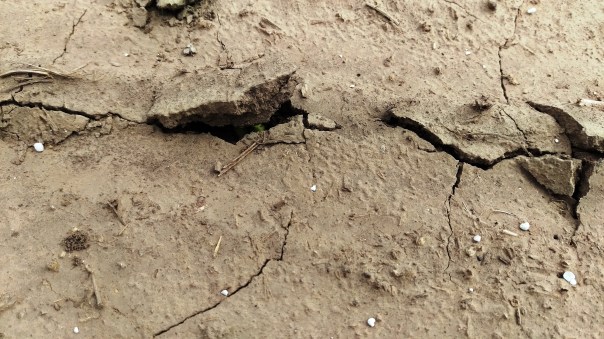
May 23: Soybeans are emerging and the concern several have discussed is crusting. Soybeans have an amazing ability to push through crusted soil and we were hoping for rains this past weekend to soften the soil and help them along. I’ve watched soybeans lose both cotyledons when trying to push up through the soil. Surprisingly these can survive if the growing point is still intact, and a small plumule will begin to develop.
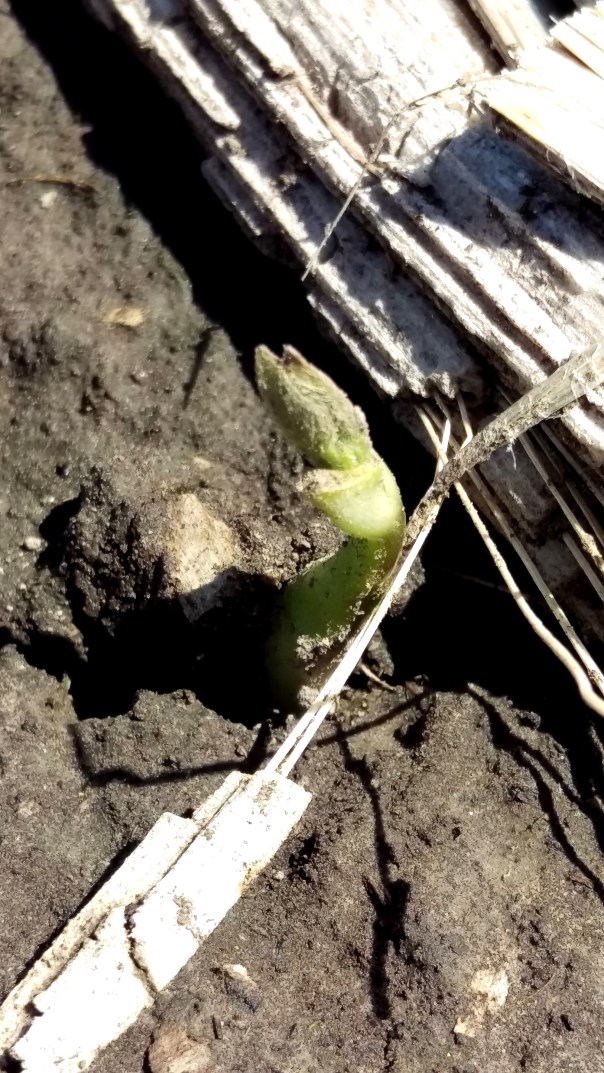
The plumule, which is the seedling stem tip and its undeveloped leaves above the cotyledonary node, may remain, but without the cotyledons to serve as a carbon and nitrogen source, development of new seedlings with small leaflets will be slow. These plants may not become competitive with surrounding plants. Therefore, when counting seedlings to determine plant stand after a soil crusting event, count only the seedlings that have at least one cotyledon. You can count seedlings missing cotyledons if they have large unifoliolate leaves that will soon unroll. Information from Purdue University shows that losing both cotyledons can lead to 2-5% yield loss.

May 15: After last week’s storms, some have wondered how long their germinated seed and emerged plants could survive under water. There isn’t a great deal of research regarding germinated corn hybrid seed. From some corn inbred research, it is not expected that germinated seed can survive in flooded conditions for more than four days. Within 48 hours, soil oxygen becomes depleted and crusted soils from heavy rains can lead to reduced emergence. A two day flooding event after soybean seed germination and imbibition (water uptake) reduced soybean stands from 20-43% in research conducted in the early 2000s. Corn less than 6 leaf growth stage at temperatures less than 77F can survive around four days. Temperatures higher than 77F may only allow those emerged plants to survive around 24 hours. As waters recede and for those who received hail on young corn, it will be important to monitor your plant stand. The high rains received early May 2015 in Nuckolls and Thayer counties resulted in a number of early corn diseases including bacterial soft rot and systemic goss’ wilt which reduced plant stands. We also saw an onset of anthracnose and a Xanthomonas bacterial disease that we couldn’t do anything about. Correct diagnosis will also be important. We would recommend monitoring your plant stand in ten areas of your field, counting plants from two adjacent rows in each area and assessing the distance of gaps between plants. Digging in the areas where gaps occur can help determine if seedlings still have an opportunity to survive. Seedlings that have leafed out underground or are corkscrewed will most likely not develop normally and may never make it out of the ground; it’s a judgement call on your part. An article is also provided in CropWatch this week to help with stand assessment for corn replant decisions at: http://go.unl.edu/iic6. One thing to keep in mind with the final decision table from Iowa State is that it all rests on an assumption of optimum planting of 35,000 seeds/acre planted in a window between April 20-May 5. That may or may not be a realistic assumption for your field conditions. Another thing to keep in mind is that while on average, as planting dates move into May, corn yields tend to drop, 2016 may not be an average year and the best planting date for 2016 with the weather conditions we’ve had may not have been the earliest ones. Regarding gaps, ISU shares gaps from 1.3-2.8 feet result in an additional 2% yield reduction while 4-6 foot caps result in an additional 5% yield reduction.
May 1: It never ceases to amaze me how quickly planting occurs each year! Corn planted the week of April 10th has emerged and for those fields that received hail from last week’s storms, I’m hoping we don’t see disease issues later on. Also of note, some have asked me about the CropWatch soil temperatures as they are higher than what some of you have been measuring in your fields before planting. The CropWatch soil temps at http://cropwatch.unl.edu/cropwatchsoiltemperature are averages of 24 hours under bare soil which may be different than the residue conditions in your fields and is an average of the entire day vs. one point in time. This may help explain some of the differences.
Many stands of alfalfa are lush green with over a foot of growth at this point. I looked at some alfalfa in Clay County that got dinged by cold temperatures in areas of the field and stopped growing. At this time I’m also finding quite a few aphids and a few alfalfa weevils. A disease common this time of year called spring black stem can be observed in nearly all alfalfa fields right now in the lower canopies. This disease consists of small black lesions on the leaves which eventually cause the leaves to turn yellow and drop. Normally this disappears with later cuttings as humidity and rainfall are typically high during the first cutting and can be managed with cutting the alfalfa. One option to consider according to Dr. Bruce Anderson, our Extension Forage Specialist, is to consider cutting alfalfa before bloom. He shares that weather can cause long delays and alfalfa doesn’t bloom very aggressively during spring. Bruce felt there were advantages to cutting alfalfa when it is 15-20” tall before bloom during first cutting including: weather compared to later spring, spread out alfalfa harvest if you consider cutting one field earlier, reduction in insect and disease problems by early harvest, and high feed value. It also potentially allows the second cutting to be ready before the summer heat which can lower forage quality. Disadvantages include lower yield from cutting early which could be made up in later harvest, regrowth may be slower if cut early, and the need to allow for longer recovery after first or second cutting to maintain long-term stands. So, harvesting before bloom may be something you wish to test in one of your fields this year and consider how this works for you, especially if you did have some frost damage or are having insect/disease issues in your alfalfa right now.
Field to Market Workshops
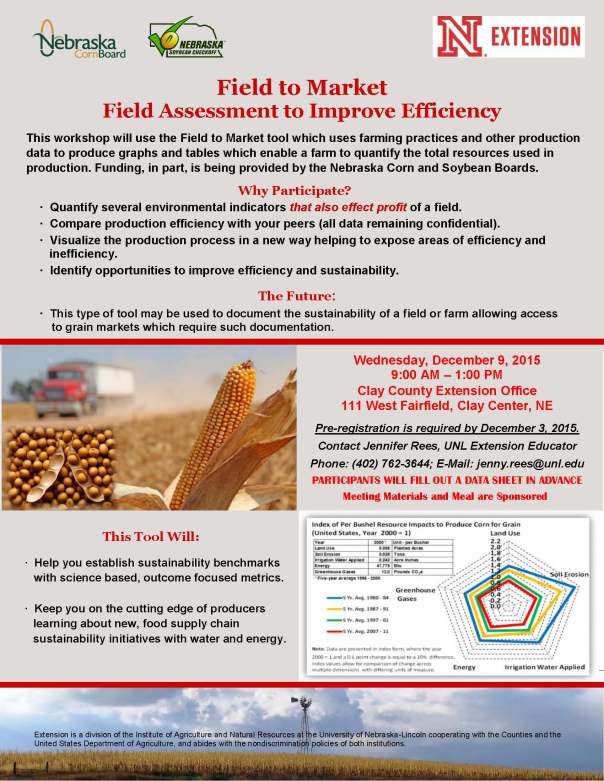
Most of the major grain buyers and companies using feed grains in food are reporting ways they are becoming more resourceful with energy, water, raw materials, and product waste streams. The consumer is asking these companies to improve the efficiency of producing and bringing their products to market. Nebraska Extension in cooperation with the Corn and Soybean Boards is conducting workshops to introduce Nebraska farmers to a tool that measures key farm efficiencies (web-based computer tool called the Fieldprint Calculator).
The field assessment workshops in Nebraska are hands-on and will show growers how to document eight sustainability and efficiency indicators via use of a laptop computer. The indicators are:
- land use,
- conservation,
- soil carbon,
- irrigation water use,
- water quality,
- energy use,
- greenhouse gas emissions, and
- water quality.
Computer laptops are provided or participants can bring your own. No prior computer knowledge is necessary and experienced users will be available to provide assistance.
Workshop Schedule
Please contact the Extension Educator listed for each site to preregister by Dec. 3.
Lincoln
Monday, December 7, 9 a.m. – 1 p.m.
UNL Extension Office in Lancaster County, 444 Cherrycreek Road
Contact: Tyler Williams, (402) 441-7180 or tyler.williams@unl.edu
Beatrice
Monday, December 7, 5:30 – 9 p.m.
UNL Extension Office in Gage County, 1115 West Scott St.
Contact: Paul Hay, (402) 223-1384 or paul.hay@unl.edu
Auburn
Tuesday, December 8, 9 a.m. – 1 p.m. Nemaha County Hospital Meeting Room, 2022 13th St.
Contact: Gary Lesoing, (402) 274-4755 or gary.lesoing@unl.edu
Geneva
Tuesday, Dec. 8, 5:30 – 9 p.m. UNL Extension Office in Fillmore County, 1340 G St.
Contact: Brandy VanDeWalle, (402) 759-3712 or brandy.vandewalle@unl.edu
Clay Center
Wednesday, Dec. 9, 9 a.m. – 1 p.m.
UNL Extension Office in Clay County, 111 West Fairfield Contact: Jennifer Rees, (402) 762-3644 or jenny.rees@unl.edu
Central City
Wednesday, Dec. 9, 5:30 – 9 p.m.
UNL Extension Office in Merrick County, 1510 18th St.
Contact: Troy Ingram, (308) 946-3843 or troy.ingram@unl.edu
Fremont
Thursday, Dec. 10, 9 a.m. – 1 p.m. UNL Extension Office in Dodge County, 1206 West 23rd St.
Contact: Nathan Mueller, (402) 727-2775 or nathan.mueller@unl.edu
Mead
Friday, Dec. 11, 9 a.m. – 1 p.m.
UNL Extension Office in Saunders County, 1071 County Road G
Contact: Keith Glewen, (402) 624-8030 or kglewen1@unl.edu
UNL Grazing Corn Residue Research
Many stalks in Nebraska are left ungrazed for various reasons. One reason I’ve heard is the potential impact of increased compaction and reduced yield of the next crop. Nebraska Extension has long-term research addressing this concern…in fact, 16 years of research conducted at the Ag Research and Development Center near Mead. There’s various components to this study and you can view the full report at: http://go.unl.edu/8mp6.
In this study, cattle were allowed to graze corn residue in the spring (February to mid-April) or the fall (November through January) and these treatments were compared to an area not grazed. Corn and soybeans were planted the spring after grazing the residue for 16 years to determine the effect of grazing on the subsequent crop yield.
In the fall grazing treatments, the corn and soybeans were planted no-till. For corn or soybeans planted into the spring grazing treatments, three tillage treatments were also implemented for nine years: no-till, ridge-till, and spring conventional till, after which all treatments were converted to no-till. This result of the tillage by spring grazing treatments for either corn or soybean yield over nine years showed no interaction and suggested the same effect on yield regardless of tillage treatment used after spring grazing.
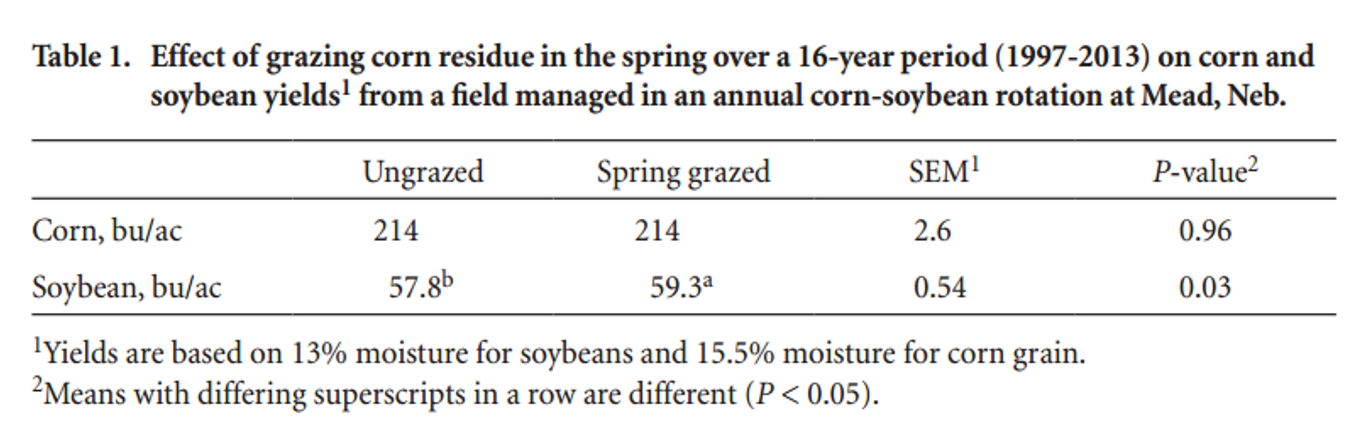
“Effect of Corn Residue Removal on Subsequent Crop Yields“, 2015 Nebraska Beef Cattle Report. Mary E. Drewnoski, L. Aaron Stalker, Jim C. MacDonald, Galen E. Erickson, Kathy J. Hanford, Terry J. Klopfenstein
Spring grazing across all tillage treatments did increase soybean yields statistically (58.5 bu/ac for spring grazed vs. 57.0 bu/ac for ungrazed) and had no effect on corn yields. The results were similar looking at 16 years of grazing vs. not grazing under no-till for both corn and soybeans in the spring; there was no yield effect found for corn and the soybeans showed a slight yield increase with grazing.

“Effect of Corn Residue Removal on Subsequent Crop Yields“, 2015 Nebraska Beef Cattle Report. Mary E. Drewnoski, L. Aaron Stalker, Jim C. MacDonald, Galen E. Erickson, Kathy J. Hanford, Terry J. Klopfenstein
Looking at a 10 year period of no-till management for both spring and fall grazed corn residue and subsequent corn and soybean crops, fall grazing statistically improved soybean yields over both spring grazing and no grazing (65.5 bu/ac vs. 63.5 bu/ac and 62.1 bu/ac respectively). No grazing effects were observed on corn yields in either season. All statistics were at the 95% confidence level meaning the researchers were 95% confident any yield differences were due to the treatments themselves vs. random chance.
Regarding compaction, in the fall, the field was typically frozen and the researchers felt any mud and compaction associated with grazing cattle was minimized; highest subsequent soybean yields were achieved with fall grazing. The spring treatment was designed to look more at potential compaction and muddy conditions after spring thaw till right before planting-thus the implementation of different tillage treatments as well. They used a stocking rate consistent with UNL grazing recommendations resulting in removal of half the husks and leaves produced (8 lbs of leaf and husk per bushel of corn grain produced). Results of this study indicate that even with muddy conditions in the spring, grazing increased subsequent soybean yields compared to not grazing regardless of tillage system used and that corn yields were not different between grazing vs. not grazing and regardless of tillage system used in the spring. This study was conducted in Eastern Nebraska in a rainfed environment with yields ranging from 186-253 bu/ac with a 16 year median yield of 203 bu/ac.
Additional Grazing Study
A five year fall grazing study (December through January) was conducted in an irrigated continuous no-till corn field at Brule, NE to determine the effect of corn residue removal via baling corn residue or fall grazing on subsequent corn yields. That environment receives limited rainfall and residue is deemed important for reducing evaporation of soil moisture in addition for catching/keeping snow on fields. Farmers were questioning the effects of any residue removal on subsequent corn yields and the study was implemented.
Treatments were 1) fall grazing at 1 animal unit month/acre (AUM), 2) fall grazing 2 AUM/ac, 3) baled, or 4) ungrazed. The researchers found that residue removal did not affect corn grain yields from 2009-2013 in the continuous corn rotation. There were no statistical yield differences with 5 year average yields of: 152 bu/ac, 155 bu/ac, 147 bu/ac and 148 bu/ac respectively for the above-mentioned treatments.

“Effect of Corn Residue Removal on Subsequent Crop Yields“, 2015 Nebraska Beef Cattle Report. Mary E. Drewnoski, L. Aaron Stalker, Jim C. MacDonald, Galen E. Erickson, Kathy J. Hanford, Terry J. Klopfenstein
Sudden Death Syndrome and Corn Residue

Symptoms of Sudden Death Syndrome (SDS) on leaves show green veins with discoloration between the veins (left photo). Signs of the blue/gray/white Fusarium fungus causing SDS on a rotted soybean root (right photo).
Grazing corn residue provides many benefits to both livestock and grain farmers, yet many corn stalks in our area are not grazed for various reasons. With as much hail as we’ve had this fall, grazing is also an option to remove ears and kernels that were lost, preventing volunteer corn next season. Normally there is less than a bushel of ear drop per acre, but we most likely have more than that in some of our fields this year. Two kernels per square foot or one ¾ pound ear in 1/100 of an acre is the equivalent of 1 bu/ac yield loss. In 30” rows, 1/100 of an acre is 174’ long if you count in one row or 87’ if you count in two rows.

Soil samples (0-8″) for soybean cyst nematode (SCN) can be taken at any time but always good to sample areas that were affected with SDS to determine if SCN is also present.
What may also be of interest to you is a recent finding between corn grain loss pre-and during harvest and sudden death syndrome (SDS) of soybean. Many asked me this this year, “Why did I see SDS this year when we’ve never had it in this field before?” It’s a great question and I often responded by saying we need to sample the areas affected with SDS for soybean cyst nematode (SCN) as the two diseases are synergistic. Sampling for SCN still remains free through your Nebraska Soybean Board Checkoff dollars and you can stop by the Extension Office for free sampling bags. Crop consultants should contact the UNL Plant and Pest Diagnostic lab directly at (402) 472-2559 if you are requesting 10 or more sampling bags.
Anything that moves soil can transport the fungal soil-borne pathogens causing these diseases. But recent research from Iowa State University also suggests that the fungal pathogen causing SDS (Fusarium virguliforme) survives on grain lost during the harvest process in fields and that SDS management in soybean actually needs to begin at corn harvest.
Studies were conducted for two years in greenhouse and in field plots with nine treatments to determine the survivability of Fusarium virguliforme (Fv) on corn and soybean residue. The treatments were: 1-Corn kernels + Fv; 2-Corn roots + Fv; 3-Corn stem/leaves/husk + Fv; 4-No residue + Fv; 5-Soybean seeds + Fv; 6-Soybean stem/leaves/pods + Fv; 7-Soybean roots +Fv; 8-Corn stalk on soil surface + Fv; 9-Corn kernels and stalk on soil surface + Fv. The researchers consistently found in both the greenhouse and field experiments that Treatment 1 of corn kernels at average harvest loss resulted in the most SDS. Treatment 2 consistently resulted in the second most SDS.

From Iowa State University, September 2010, “Good Harvest in Corn Should Help Manage SDS“.
This helps to explain why some farmers are finding SDS in fields that have been continuous corn for a period of years, are finding SDS in corn and soybean rotation when little or no SDS was previously observed, and why SDS has increased in seed corn fields that may have higher harvest losses. They did not experiment with tillage systems and their recommendation is to reduce harvest losses to reduce the risk of SDS.
Grazing residues can reduce your risk from these harvest losses and for those losses which were incurred with the hail/wind storms we’ve experienced since Labor Day. When grazing corn residue, cattle are selective. They will eat the grain first followed by the husk and leaf followed by the cob and stalk.
It’s also important to be aware of grazing restrictions from herbicides applied to row crops; you can read more about that in this post.
Forage, Feed, and Grazing Restrictions for Row Crop Herbicides
It’s nice seeing cattle being turned out into corn stalks!  One point that I haven’t mentioned recently is that we all need to be checking the herbicide label for any grazing restrictions of crop residues.
So check the labels from in-season applied herbicides to row crops and fall-applied herbicides to crop residue for any potential grazing restrictions…and any restrictions on grazing cover crops planted into crop residues following application of those chemicals to a row crop. If the label doesn’t specify any restrictions, then it should be ok. If you want to be on the safe side, a rule of thumb many chemical reps use is to use the pre-harvest interval for the amount of time to wait before grazing stalks.
Some labels will say that residue should not be grazed or baled and fed to livestock. Sometimes studies were actually conducted to know there is a safety concern. In other cases, the chemical company may not choose to conduct all the studies the Environmental Protection Agency (EPA) required for labeling due to high costs. If that’s the case, the EPA requires the strongest restrictive language be placed on the label.
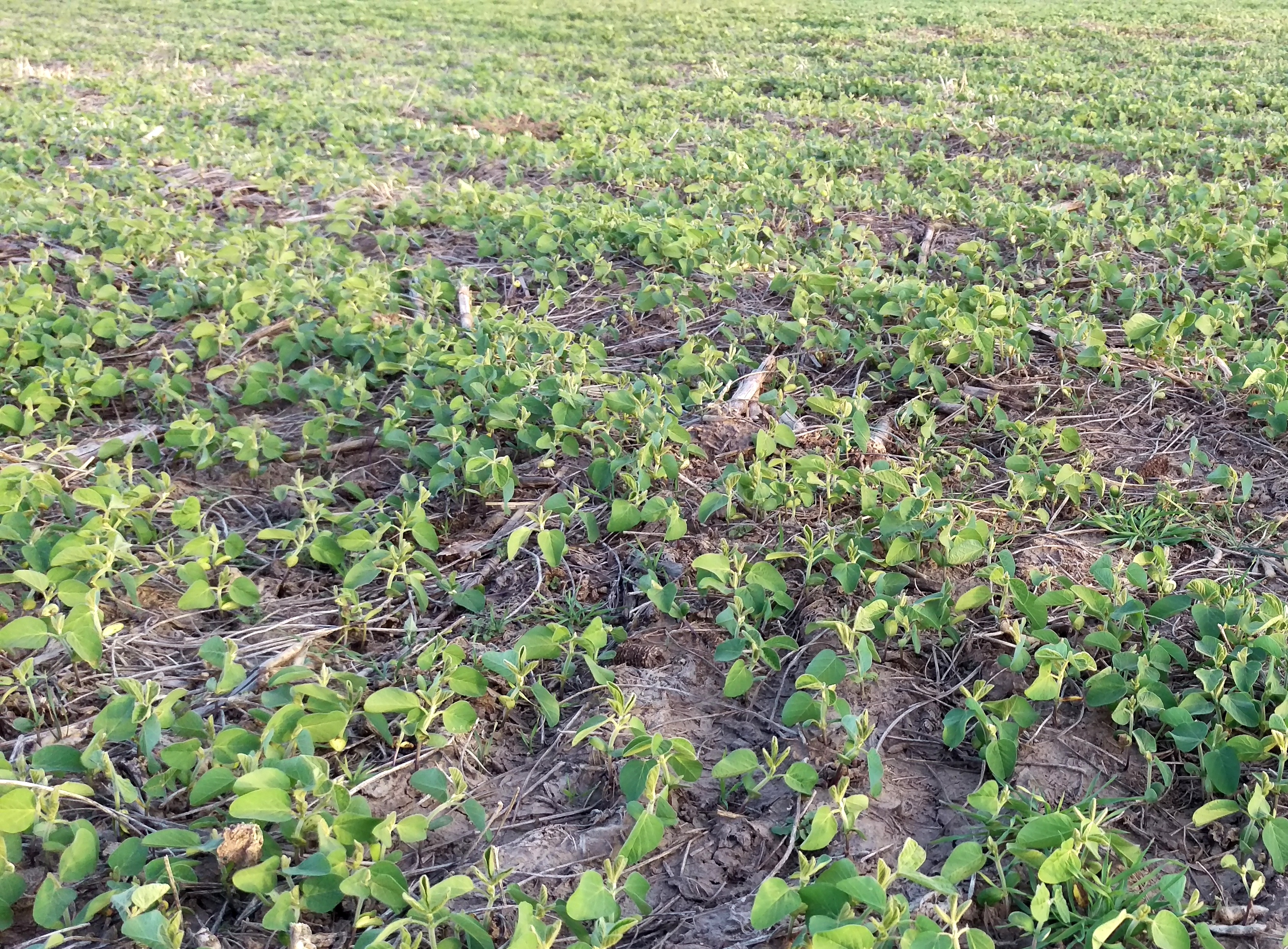
Hail/rain/wind caused for soybean shatter and harvest loss. Volunteer beans have created green fields in the area. For those considering grazing, one needs to look at any herbicide grazing restrictions from herbicides applied in-season to soybeans as well. Dr. Bruce Anderson says, “Soybeans can cause bloat, but the incidence is low. The young green ones may be more risky. Founder would be possible problem with a sudden diet change. Too many unsprouted beans in the diet could cause excess fat; I think maximum is about 3 lbs beans per cow. I’d try to limit amount of grazing for a few days, maybe feeding a very palatable supplement like a ground forage/distillers mix and reduce the amount of this supplement each day for a week or so. And keep a dry, palatable hay always available free choice.” Additional information from the University of Missouri.
Regardless, if it says there’s a grazing restriction on the label, the label needs to be followed as it is a legal document and the law. Your cattle may/may not be affected by grazing stalks or cover crops where a chemical with a grazing restriction is on the label, but there may be other concerns such as problems with the chemical affecting the calf or being retained in the cow’s milk.
For quick references, the 2015 UNL Guide for Weed Management shows Forage, Feed, Grazing Restrictions for Row Crop Herbicides on pages 174-177. A new weed guide will be released January 2016. These pages just provide a reference; it’s truly best to read and follow the label.
Wind-Hail Crop Damage Meeting

Recent wind and hail storms have created damage across our area counties in Nebraska and Kansas. This brief meeting to be held on Monday near Gladstone, NE is designed to answer farmers’ questions regarding harvest, crop insurance expectations, and what to expect regarding crop maturity and future damage. Please click on the image to enlarge.
Corn Disease July 2015
Radio advertisements, email blasts, and other media are warning of corn diseases and the need for fungicides. Two months of humid, wet weather has allowed for disease development. It’s important to know what diseases truly are in your field before spraying a fungicide, particularly with today’s economics. Here’s what we’re seeing in fields right now in the Clay, Nuckolls, Thayer, Adams county area. Based on the diseases we’re seeing, we would recommend you scout your fields to know whether you have mostly bacterial or fungal diseases present. Consider disease pressure, where on the plant the disease is occurring, growth stage, and economics. We have had southern rust show up in 10 of the last 11 years I’ve been serving in this area. If you spray a fungicide at tassel, you may not have enough residual to ward off southern rust when it appears later, potentially resulting in the need for a second application. In our area thus far, I’m not seeing enough disease pressure in many fields to warrant a fungicide at tassel; consider delaying an application till later for economic and resistance-management reasons. Ultimately this decision needs to be done on a field by field basis. Please also see this UNL CropWatch article regarding fungicide application and corn growth stage. Although I don’t have a photo of it, I’ve also seen common rust in the mid and lower portions of corn canopies thus far.
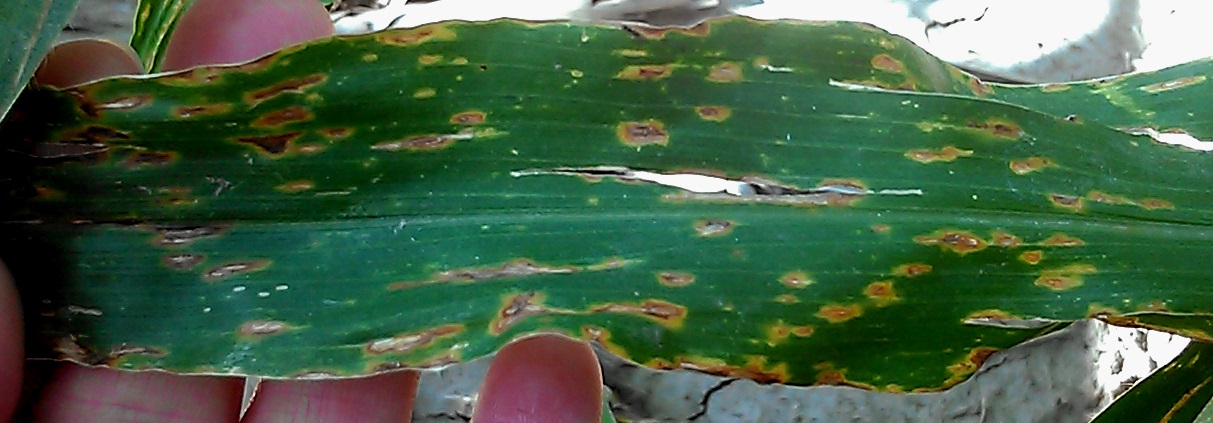
Anthracnose has been observed in fields for a good month now. It is mostly seen on lower leaves of plants, particularly in fields where we’ve had high amounts of rainfall, standing water, and/or hail. Lesions are tan in the center and have a wavy yellow colored margin. I haven’t seen it moving up the plant very far yet. There are fungicides labeled for this, but we don’t often recommend fungicide treatment for anthracnose.

We saw this disease in the Saronville/Sutton area last year. This year, we are seeing it throughout Nuckolls, Thayer, Clay, and Adams counties…and most likely others too. Some hybrids (and have seen this across companies) are highly affected by this bacterial disease. Neither last year, nor this year, has the pathogen causing this disease been confirmed. Plants will have vein-limited lesions in streaks on the leaves. It is often confused with gray leaf spot early on. Take a hand-lens and looking closely, you will see wavy margins on the lesions which doesn’t usually occur with gray leaf spot. Over time, these lesions become elongated and can coalesce with other lesions. Also looking closely with a handlens or microscope, one finds the leaf tissue eventually becomes transparent. While other diseases can look similar to it, under the microscope, no fungal spores are found other than secondary ones. Putting an infected leaf in water reveals cytoplasmic streaming in which the bacteria is escaping the leaf tissue. (The pathogen causing Goss’ wilt also does this, but this disease is not the same as Goss’ wilt). Fungicides will not cure bacterial diseases and the products advertised for targeting bacterial diseases haven’t been researched for this disease. This is the primary disease we are seeing in our area right now-and it looks nasty in some fields! Unfortunately there’s nothing we can do about it. If you are considering testing one of the products for bacterial diseases, please let me know as I’d appreciate testing it with you via on-farm research.

Goss’ wilt (bacterial disease) has been observed in fields as well. I typically notice it along field edges, pivot tracks, pivot/well roads or hail-damaged fields as plant wounds in general allow an entry for bacterial pathogens. However, research has shown that the bacterial pathogen causing Goss’ wilt can enter through the leaf stomates as well. Leaf miner damage can be observed at the top of this photo, and often, but not always, I notice this occurring together in fields. There is nothing we can do for Goss’s wilt if you have this disease in your fields right now. There are products targeting bacterial diseases on the market. If you’re interested in trying these, please consider an on-farm research experiment to prove the efficacy to yourself and help us obtain data.

Physoderma brown spot typically doesn’t occur in our area until tasseling (which is where we are at now in some fields). However, I was seeing this as early as two weeks ago on some hybrids. The pathogen causing this disease is a fungal-like pathogen that moves with water. You will notice a purple/brown color on midribs of leaves, leaf sheaths, stalks, and tiny yellow/brown/purple spots on leaves. This disease isn’t considered yield-limiting or of significance to us in Nebraska. Some confuse this disease with southern rust, but there are no pustules produced with Physoderma brown spot.
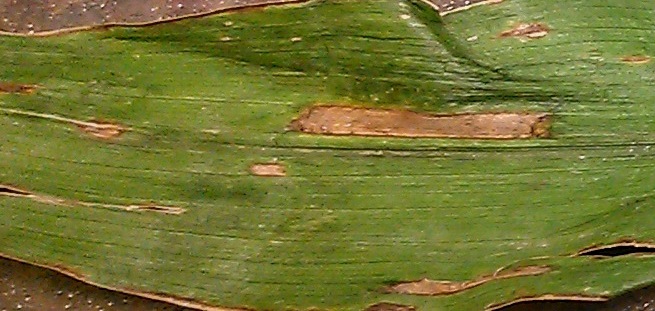
The larger, rectangular lesion is typical of gray leaf spot found in some lower leaf canopies right now. It is easy to confuse with anthracnose as both diseases appear a little different on various hybrids. Gray leaf spot will be vein-limited while anthracnose is more blotchy in appearance. Comparing gray leaf spot with the unknown bacterial disease, the lesion edge will be straight for gray leaf spot and wavy for the bacterial disease.
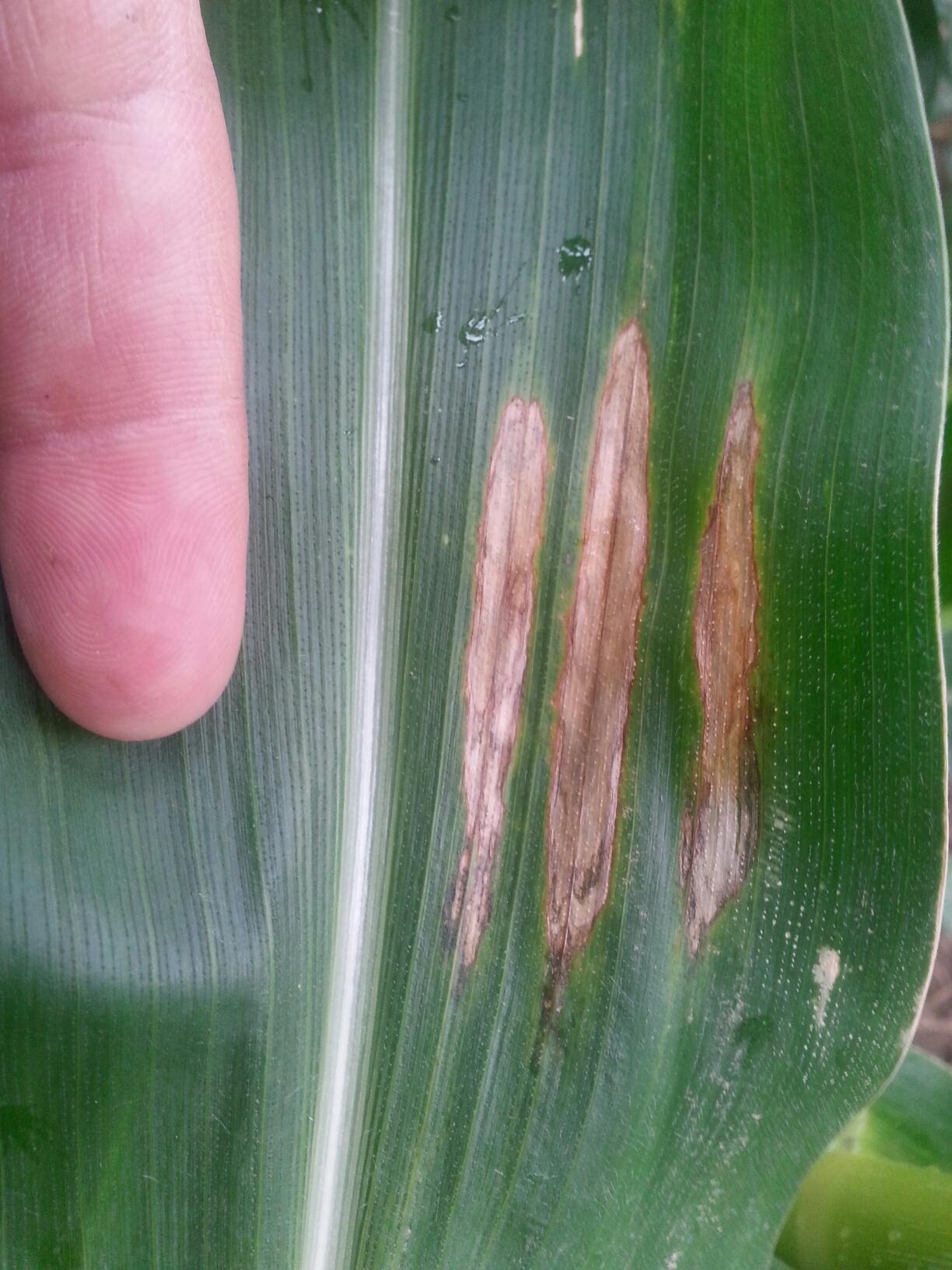
Northern corn leaf blight is a disease we’re hearing a lot about but I have yet to see it in our area. Most have been mistakingly calling the unknown bacterial disease shown above and even Goss’ wilt, northern corn leaf blight, but there’s truly a difference as you see these photos. Compared to gray leaf spot, northern corn leaf blight will be more cigar-shaped instead of forming a rectangle. As this photo taken from the Mead, NE area shows, lesions are often forming in close proximity to each other on the leaves in Nebraska right now. This disease is one to watch as it has been expanding on certain hybrids in some fields, particularly in eastern, Nebraska. However, I still haven’t seen it in our area and haven’t received any confirmations of it being found in our area at this time. (Photo courtesy of Aaron Nelson, Nelson Precision Agronomics).
Sugar Application in Crops
Corn is approaching or at V7-V8 growth stage. A few weeks ago, we published research results in our UNL CropWatch website. That information can be found in the links below the video. If you are interested in trying this in your field this year, please see the Nebraska On-Farm Research protocals also shown below.


 JenResources