Blog Archives
Wheat Planting Resources
This dry fall has raised questions about winter wheat planting…should I plant or delay? How much seed should I drop? My wheat has emerged but how do I assess my stands?
UNL Extension’s CropWatch newsletter has featured several wheat articles from Bob Klein, UNL Extension Cropping Systems Specialist and other Extension faculty. Since they’re on several different CropWatch release dates, I decided to put all the info. in one place for you. Hope this helps!
Recommendations to Compensate for Delayed Winter Wheat Seeding and Improve Yield Potential
For those who have waited to plant winter wheat, Bob Klein, UNL Extension Cropping Systems Specialist, says to increase wheat seeding rate 10-15 lbs per acre (150,000-225,000 seeds/acre) per week for every week delayed after the seeding rate for our area. Hessian fly free seeding dates range from September 25 for most of our area to September 28 in southern Nuckolls and most of Thayer Co.
For no-till, he recommends automatically increasing seeding rate an additional 50%. So if you’re a dryland no-till producer planting in October, he would recommend seeding 90 lbs to 120 lbs maximum of wheat seed. For irrigated wheat, start at at least 90 lbs/ac and increase 15-20 lbs/acre every week later than suggested seeding date but don’t exceed a maximum of 180 lbs/acre of seed.
Determining the Seeding Rate for Your Winter Wheat
A review of seedling rates vs. yield potential: On the average, there are 22 seeds per head and 5 heads per plant, or 110 seeds per plant. With an average seed size of 15,000 seeds per pound or 900,000 seeds per bushel, a pound of average-sized seed with 80 percent germination and emergence has a yield potential of approximately 1.5 bushels per acre. Seeding 40 lb of seed with a weight of 15,000 seed per pound has a yield potential of 60 bushels per acre.
Seedbed Conditions and Seeding Equipment Affect Timing of Wheat Seeding
Paul Jasa, UNL Extension Engineer says to make sure the drill is running lower in back than normal. Transfer more drill weight to the back of the drill and add extra weight to the drill. This will allow for penetration into dry, hard soil, forcing the seed into the soil and insuring seed-to-soil contact. Also, don’t seed wheat too shallow. When using disc drills, plant at a depth of 2 inches or more.
Additional Resources:
- Fertilizer Options for Dryland Wheat: Is Wait and See a Good Option?
- Grasshopper Management Considerations in Emergent Winter Wheat
- Use of Seed Treatment Fungicides to Improve Wheat
- Guides to Winter Wheat Variety Selection
- How Wheat Seeding Date Affects Yields
- Assessing Winter Wheat Stands and Estimating Yield Potential
Aflatoxin Concerns in #Corn

This article originally appeared in http://cropwatch.unl.edu written by Dr. Tamra Jackson-Ziems, UNL Extension Plant Pathologist.
Drought and high temperatures promote development of the disease Aspergillus ear rot (pictured right). The fungi that cause this disease (most commonly, Aspergillus flavus) can produce aflatoxin. Aflatoxin is one of many chemicals in a group known as mycotoxins that are produced by fungi (molds). Mycotoxins, such as aflatoxin, can be toxic to animal and human consumers and, at certain concentrations, can lead to dockage or rejection of grain at elevators.The unusually high temperatures and drought this summer are having severe impacts on Nebraska corn. In addition to reductions in test weight and overall yield, secondary problems are developing in some corn fields as a result of these conditions.
Corn harvested for grain to this point has been predominantly from fields that sustained substantial drought damage leading to early maturation and plant death. Notable aflatoxin contamination appears to be in a small percentage of southeast Nebraska fields, based on samples submitted to several laboratories in the area.
Mycotoxins are common and can be safely consumed at low concentrations. The concentration of aflatoxin that is considered safe for consumption depends on the age and species of the consumer. An abbreviated summary listing the Action Levels identified by the FDA for aflatoxin is listed in Table below.
Testing for Aflatoxin: Farmers and crop consultants can scout high risk fields for Aspergillus ear rot as an indicator for aflatoxin, but only lab testing of grain samples can accurately identify the concentrations of aflatoxin in the grain. Accurate lab test results for aflatoxin will depend greatly on the quality of the sample that is collected and the laboratory methods used to test it. The test results are only applicable to the sample that is submitted, so it is very important to collect an adequate sample for the best results. Refer to the publication, Sampling and Analyzing Feed for Fungal (Mold) Toxins (Mycotoxins) for recommendations on how to collect and submit a high quality sample for mycotoxin analysis.
Contact and submit samples to a laboratory that is certified by the federal Grain Inspection Service and Grain Inspection, Packers, and Stockyards Administration (GIPSA) for mycotoxin analysis for the most accurate results. A GIPSA website lists laboratories certified to conduct testing in Nebraska. They include
- Lincoln Inspection Service, Inc.;
- Fremont Grain Inspection Department, Inc.;
- Omaha Grain Inspection Service, Inc; and the
- Sioux City Inspection and Weighing service Company.
Some grain elevators and individuals may be using a black light (ultraviolet light) to detect for fluorescence as a method for rapid screening of grain samples. This practice is NOT recommended when making decisions about aflatoxin contamination in loads of grain. The component that produces fluorescence under black light is called kojic acid. Although kojic acid is produced by the same fungus that produces aflatoxin, its presence is not necessarily an indicator of aflatoxin and might lead to false positive results and unnecessary rejection of grain.
High Risk Factors for Aflatoxin Contamination in Corn
- Drought-damaged fields, including rainfed (dryland) fields and non-irrigated pivot corners
- Fields or areas with higher incidence of corn ear-feeding insects, such as the corn ear worm
- Grain damaged before or during harvest or after harvest while in storage
Ear rot diseases and aflatoxin are not evenly distributed across fields or in the grain, so scouting and/or sampling should include a substantial portion, at least several acres. The presence of the fungus in kernels does not always correlate well with the presence of aflatoxin, nor does the absence of visible fungal growth necessarily indicate the absence of aflatoxin.Scouting For Aspergillus Ear Rot
- Open husks to view a large number of ears.
- Look for the presence of dusty yellow-green to olive-green spores, especially on the surface of damaged kernels or ear tips (Figure above).
- Pay special attention to higher risk areas.
Harvest and Storage: If fields have documented Aspergillus ear rot and/or risk of aflatoxin contamination, it is recommended that you harvest and keep grain separate from other grain at less risk, such as irrigated fields. Storage of affected grain is not recommended because ear rot diseases and mycotoxins can continue to accumulate during storage. If storage is necessary, cooling and drying grain to less than 15% moisture within 48 hours of harvest will help to slow fungal growth and aflatoxin production. Grain intended to be stored for longer periods of time should be dried to less than 13% moisture.
Presently, it is too early in the harvest to know the extent of aflatoxin contamination in this year’s corn crop, but at this time only a small percentage appears to be affected.
Resources: For more information, refer to the list of publications below or view this week’s episode of Market Journal.
- Plant Disease Profiles #3: Ear Rot Diseases and Grain Molds, EC1901
- Understanding Fungal (Mold) Toxins (Mycotoxins), G1513
- Sampling and Analyzing Feed for Fungal (Mold) Toxins (Mycotoxins), G1515
- Use of Feed Contaminated with Fungal (Mold) Toxins (Mycotoxins), G1514
- Aspergillus Ear Rot and Aflatoxin Production, Iowa State University Integrated Crop Management News
- Check Cornfields for Aspergillus Ear Rot, University of Illinois the Bulletin
| Table 1: FDA action levels for aflatoxin contamination in corn intended for livestock. | |
|
|
|
| Commodity Action Level | (ppb) |
| Finishing (feedlot) beef cattle | 300 |
| Finishing swine of 100 pounds or greater | 200 |
| Breeding beef cattle, breeding swine, or mature poultry | 100 |
| Immature animals and dairy cattle | 20 |
| For animal species or uses not otherwise specified, or when the intended use is not known | 20 |
| Human food | 20 |
|
|
|
| Source: FDA Action Levels for Aflatoxin | |
#UNL South Central #Ag Lab Field Day
We have a great field day coming up on August 22 at South Central Ag Lab near Clay Center. Check out the flyer below for more details and hope to see you there!

Field Days
Well, August has begun and so has the season for field days. Here are a few I hope you mark on your calendars and plan on 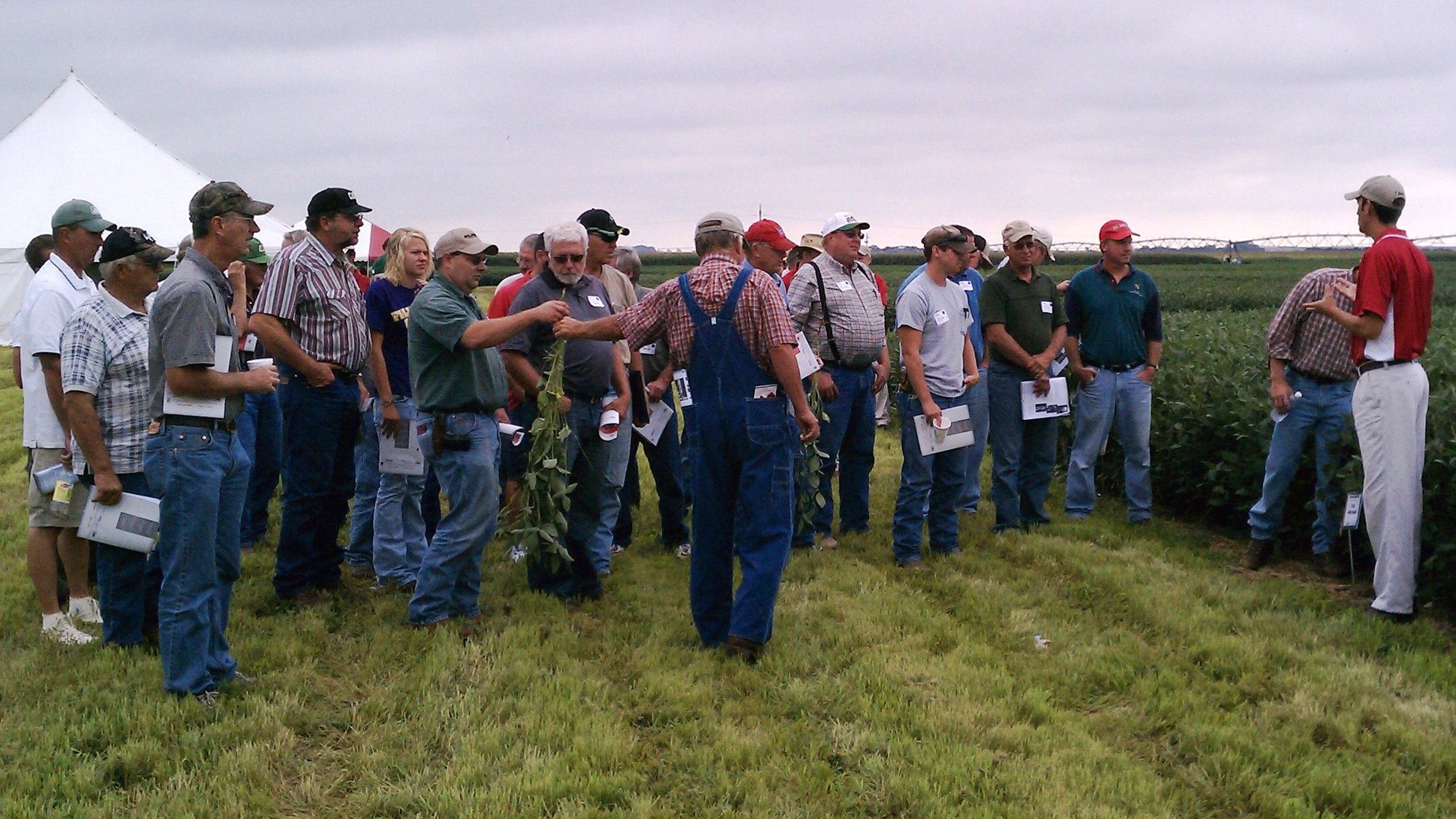 attending. Also a reminder, for all drought information from UNL Extension including crop, livestock, water, lawn, and garden, please check out http://droughtresources.unl.edu.
With the drought and a shortage of forages, if you are considering harvesting or grazing crops for forage, it is important to consider the herbicide restrictions applied to these fields. Check the labels of these herbicides to confirm that grazing restrictions or forage harvesting restrictions have been met before you turn livestock into the fields or cut the crop for hay or silage. Check out this link for more information.
Soybean Management Field Days Planned: Please mark the dates of the upcoming Soybean Management Field Days on your calendar. They are planned for August 14-17 with sessions planned for Lexington, O’Neill, Platte Center and David City. Registration for each of the Field Days starts at 9:00 a.m. with four one hour programs from 9:30 a.m. to 2:30 p.m. Topics include: Soybean Seed Treatments and Foliar Fungicides Growth Enhancement Interaction with Herbicides, Managing Land Leases and Soybean Marketing, Herbicide Carrier Rate Study and Quest for the Holy Grail in Soybean Production! Check out the sessions by going to http://ardc.unl.edu/soydays. The David City date and location is August 17th and it’s located from the Jct of 92 & Hwy 15, 1 mile east on 92 and ¾ mile north on county road.
South Central Ag Lab Field Day: Some of you have been asking about the next field day at South Central Ag Lab near Clay Center. Please mark your calendars for August 22 from 9:00 a.m.-2:00 p.m. with registration beginning at 8:30 a.m. Topics include: Weed control, timing, resistant weeds; Emerging diseases of corn and corn rootworm management options; Impacts of corn stover harvest on soil quality and greenhouse gas emissions; Variable rate nitrogen and irrigation management according to landscape variation; and Use of Soy-Water for managing soybean irrigation. There is no charge but please RSVP for a meal count by Friday, August 17 to (402) 762-4403. Hope to see you there!
York County Corn Grower Plot Tour: The York County Corn Growers Annual Plot tour will be held Thursday, August 23, 2012 from 5:30 – 7:30 p.m. This year’s cooperators are Ray and Ron Makovicka and the plot is located west of York on the Dwight Johnson farm. The plot is located ¾ miles north of Hwy 34 on Road I. Those attending will be able to check out the various corn varieties and visit with the seed company representatives. Supper will be served after the tour. Then there will be a report on 2012 practices, products used and irrigation update.
Also this year they have several different types of irrigation equipment in the field to monitor soil moisture and estimate crop ET. Systems in the field include: AquaCheck USA provided an AquaCheck soil moisture sensor system; Servitech provided the Profiler Watermark soil moisture sensor system; McCrometer provided an EnviroPro soil moisture sensor system; and AquaSpy provided AquaSpy soil moisture sensor system. Several of you have asked about wireless irrigation scheduling systems-here’s your chance to compare them all in one place!
Southern vs. Common Rust in #Corn
In early July, southern rust caused by the fungal pathogen Puccinia polysora was discovered in Hall, Adams, Clay, Fillmore, 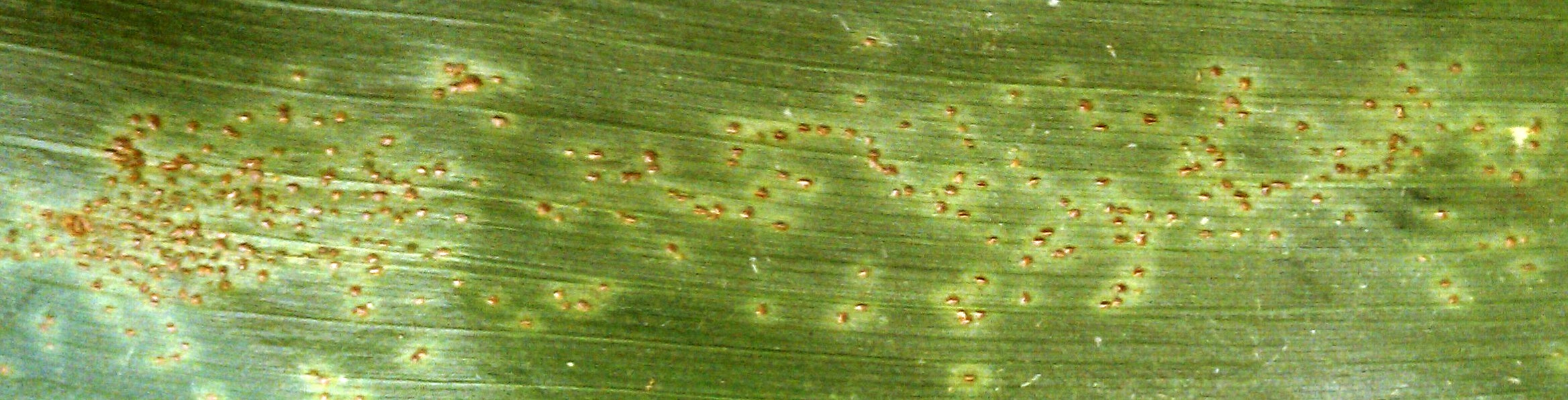 Thayer, and Burt counties in Nebraska. Most farmers in south-central Nebraska remember the corn season in 2006 walking out of fields orange and the slow harvest due to downed stalks. Since then, southern rust has been a disease of concern and fungicides are used to prevent and also treat it when it’s found in fields.
I promised when we were first discovering southern rust this year that I’d post pics, so while delayed, here they are! It is often confused with common rust which we see earlier every year. Common rust typically has pustules (raised fungal spores) that are brick red in color, larger, and on the upper and lower leaf  surfaces. The pustules tend to be more spread out.
Southern rust typically has very small pustules that are clustered on predominately the upper leaf surface and are tan to orange in color. This year, southern rust pustules tend to be more tan in color than orange but are still distinctively different with their smaller and clustered appearance. Both fungal rust pathogens arrive in Nebraska each year via wind from the south. Southern rust prefers warm, moist conditions which, in spite of our dry spell, is typical within our pivot and gravity-irrigated fields in the area. At this time we are recommending if you find southern rust in your field to consider treating with a fungicide. Please be sure to read and follow all label directions including paying attention to pre-harvest intervals. A list of corn fungicides and efficacy can be found here by scrolling down to the corn section.
Additional information and pictures of these diseases can be found here.


Tomato Troubles!
Here’s a good post from Elizabeth Killinger, UNL Extension Educator, regarding all the tomato troubles we are currently seeing in the garden. You can also check out the following YouTube video by Sarah Browning, UNL Extension Educator.

Vegetable gardening has become more and more popular. It is a way to relax, if you consider pulling weeds relaxing, and is also a way to grow your own groceries. Tomatoes are grown in over 86 percent of gardens in the United States. There are many common diseases and problems that can plague tomatoes in the home garden. With a little help you can keep your tomatoes in tip top shape.
Early blight is a common tomato disease. It is caused by a soil-borne fungus. Rain water, or overhead irrigation, can cause the soil and fungi to splash onto the lower leaves of the plant. The infection starts as leaf spots on the lower leaves then causes yellowing then eventually causes the stems to turn brown. The infection works its way up the plant causing the foliage to die.
There are ways to help prevent the spread of this fungal…
View original post 574 more words
The Season for #ag & #horticulture Questions!
This past week was a blur of calls, questions, and visits to homes and fields but it was a great week and flew by staying very busy! I’ll touch on a few of the common questions I’ve received this week.
Trees: Some trees such as willows, hackberries, tops of maple trees, ash, and black walnut are just taking time leafing out. Some trees leafed out once already and dropped leaves. Things that may have caused this were the sudden flux of temperatures from very warm to cool and the strong winds we received. Some trees have also unfortunately had herbicide drift damage that caused leaves to drop. On those trees, watch for new buds as nearly every situation I’ve looked at thus far have new buds forming after about a week-10 days. With all these situations, give the trees a few weeks to leaf out again and if they’re still not doing it, feel free to give me a call. Trees are interesting plants as sometimes environmental impacts that happened 3-5 years ago will show up that much later-and sometimes environmental impacts show up right away!
Disease/Insect issues: This year has been a strange year all around but with our warm winter, I was concerned about an increase in diseases and insects. Thus far, we’re experiencing increases in both-so hang on-it may be a long growing season! Our high humidity, warm temps, and heavy dews have created perfect conditions for fungal diseases on our trees, ornamental plants, lawns (I’m currently fighting a bad case of powdery mildew-as a plant pathologist it is kind of pretty but I don’t like what it’s doing to my lawn!), and in our wheat and alfalfa crops and some pasture grasses. Fungicides may help in some of these situations, increasing airflow can also help as can more resistant varieties or hoping the weather will change. In the case of most ornamentals, we don’t usually recommend doing anything. The same goes for insects as insecticides can help in some situations. I’ve received several calls this past week of people afraid they had herbicide drift damage. While there were a few cases of that, many of the cases were actually fungal leaf spots on leaves. There are various fungicides and insecticide products available from home/garden centers, etc. Be sure to read and follow all label directions and only apply the product on places the label specifies it can be applied.
Crops Update: Later this week we may have a better idea on the extent of storm damage and if some fields will need to be 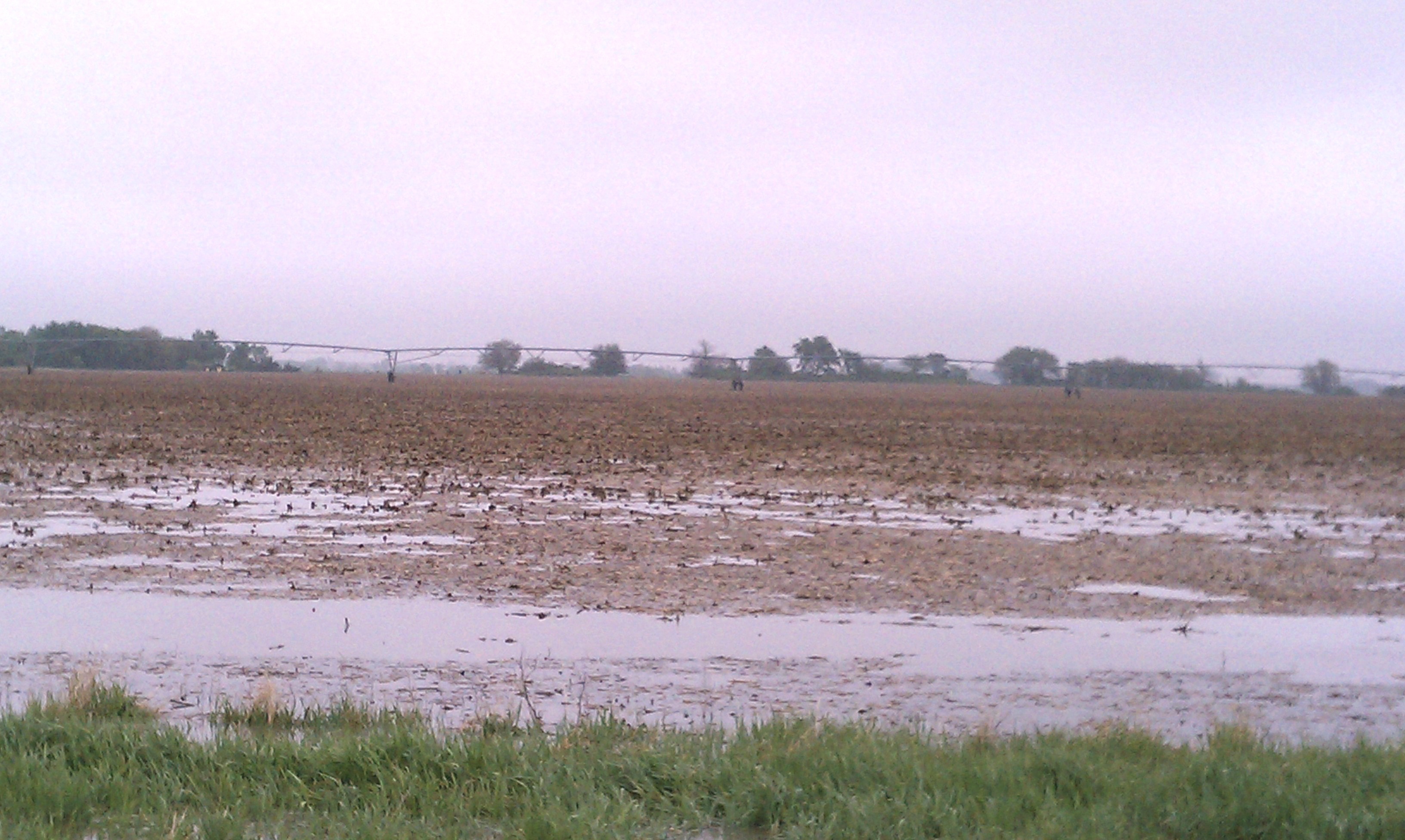 replanted after the storms from last week. Dr. Bob Nielsen from Purdue University reported that most agronomists believe young corn can survive up to about four days of ponding if temperatures are relatively cool (mid-60’s F or cooler); fewer days if temperatures are warm (mid-70’s F or warmer). Soil oxygen is depleted within about 48 hours of saturation and we know soil oxygen is important for the root system and all the plant’s life functions. So we’ll have to wait and see what happens.
Have also had a few calls regarding rye cover crops. When rye is killed out and decomposing, it releases toxins that can affect the germination of other cereal crops such as corn if it’s going to be planted into that rye cover crop. Thus we recommend at UNL that the producer kill the rye and then wait at least two weeks to prevent any major damage to the crop. I realize at this point with the rains to get in and kill that crop on top of waiting an additional two weeks, we’re getting close to the end of the month and will most likely be looking at reduced yields…and depending on maturity, you may need to consider different seed if you end up having to plant in June. If you have specific questions about this, please let me know and we can talk through some situations.
Stripe rust and powdery mildew have been obliterating mid-lower canopies of many wheat fields. I’ve received several calls on why wheat canopies are yellow-that’s the main reason but other factors such as the dry spell prior to these rains and/or deficiencies in nitrogen/sulfur or some viruses may also have been factors. Wheat in Nuckolls County last week was beginning to flower. Fungicides such as Prosaro, Folicur, or Proline are labeled for up to 50% flowering and cannot be applied after that. Remember the wheat head begins pollination in the middle-so if you’re seeing little yellow anthers at the top or bottom of that head, you’re towards the end of flowering. All those products have a 30 day pre-harvest interval-which has been the other main question-are we going to be harvesting in a month? I do believe we’ll be harvesting a month earlier than normal just because pretty much everything in wheat development is about a month ahead of schedule. I still feel the 30 day window for the fungicide application is worth it with the large amount of disease pressure we’ve seen. Wheat in Clay Co. and north still may have time for a fungicide application; those products mentioned above will help prevent Fusarium Head Blight (scab) as well as kill the fungi causing disease already present on your leaves. A list of all fungicide products, pre-harvest restrictions, and rates can be found here. Also check out my previous blog post with video on scouting for wheat diseases.
The other major disease appearing in wheat is barley yellow dwarf virus. This is a virus vectored by bird cherry oat aphids which we were seeing earlier this year. Unfortunately, this disease causes the flag leaves to turn bright yellow-purple causing yield loss (at least 80% of the yield comes from the flag leaf) as there’s nothing you can do once the virus manifests itself in those leaves. If you have a large incidence of barley yellow dwarf in your fields, you may wish to reconsider spraying a fungicide as the fungicide won’t kill the virus; however, it will help kill the fungi on the remainder of your leaves and potentially help protect some yield from the two leaves below the flag leaf.
Evergreen Tree Diseases
Somehow April flew by without me reminding you to apply fungicide sprays to Austrian and Ponderosa pines that have had  problems with Sphaeropsis tip blight in the past. I’ve also received several scotch pine samples in the office to diagnose for pine wilt nematode. While there is no cure for pine wilt, I recommend to take a 6” long, 1-2” diameter sample of a dead branch to your local Extension office for diagnosis before cutting down the tree. Pine wilt affects Austrian (long needles groups of 2) and Scotch pines (short needles in groups of 2) as they are non-native trees while the nematode is native. Since ponderosa pines (long needles in groups of 2 and 3) are native to Nebraska, they don’t seem to be affected by pine wilt nematode.
Pine wilt is caused by beetles carrying pine wood nematodes vomiting them into the water-carrying vessels of the tree (xylem). The tree senses the nematodes and essentially blocks water to those branches. Often you will observe a branch then perhaps a side of the tree and eventually complete death of the tree within 6-9 months. While I have diagnosed many samples of pine wilt, more often when I visit homeowners the tree problems are due to fungal diseases which occur on the needles. If you look closely at your needles and observe dark bands or rings on them followed by death of the needle either direction from the band, the tree problem is most likely due to a fungal needle blight like dothistroma in Austrian and Ponderosa pines or brown spot in Scotch pines. They can all be prevented by spraying a fungicide containing copper sulfate in the spring.
With everything about 3 weeks early this year, now is the time to spray Ponderosa and Austrian pines for needle blight and spruce trees that have had problems with needle cast or shoot blight where the new growth has died in the past. In early June spray for needle blight problems in Scotch pine and cercospora blight on cedars. If you have a windbreak of combinations of these trees and don’t want to spray twice, I recommend at least spraying in early June to catch all of them. Increasing air flow by cutting out some trees is another way to reduce fungal diseases on your trees.
Also watch trees for bagworms as you may be able to tank mix a fungicide/insecticide application in early June if needed. We would recommend picking the bags off trees and burning them, but that’s just not feasible in windbreak situations. To know when to spray, take a few of the bags off the tree, place them into a plastic ziplock bag, and place outside on the south side of your house. When the larvae emerge from the bags, check your trees to see if larvae can also be observed on them. Pyrethroid insecticides are recommended for managing bagworms because they cause an irritation that makes the larvae leave the bags and allow them to be exposed to the pesticide.
Great brochure! Evergreen Diseases
CropUpdate 7-18-11
While it may be strange, I love the smell of corn pollinating and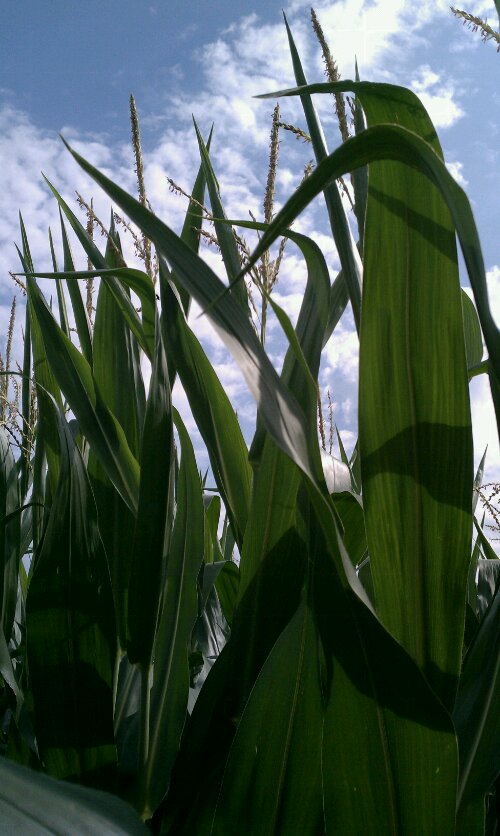 don’t mind walking fields this time of year! Summer is flying by but it seems like it’s taken a long time to get to tasseling in our fields this year. Now that corn is tasseling, we can take into account the third foot root zone for irrigation scheduling. There still is moisture to consider in the third foot so continue to check your readings on your irrigation scheduling tools and now take averages for all three feet. You may be surprised as some of you won’t need to water till end of July/beginning of August! If you have any questions about your irrigation scheduling tools, please continue to call any of us Extension educators or the NRD personnel as we want to help you and work with you now to answer them.
Disease just isn’t an issue so far in fields, so for those of you who purchased fungicide, wait till disease is present when you may need it. UNL research by Dr. Tamra Jackson has proven yields are just as good with delayed fungicide applications as they are at tassel. The longer you wait to use it for gray leaf spot, the more chances you will have residual for southern rust when it comes in. While corn prices are high, you want to keep as much of that money as you can! I don’t recommend fungicides on soybeans as we don’t have the disease to warrant it. If you did pre-pay fungicide for soybeans as well, the timing of that application should be R3 (beginning pod).
Soybeans are approaching beginning pod for many of you. For soybeans, this is a critical time for moisture in addition to seed fill at R5. Many irrigation systems were running on beans last week and I just cringed because the time we don’t want to water soybeans is full flower or (R2). The reason for that is because it can create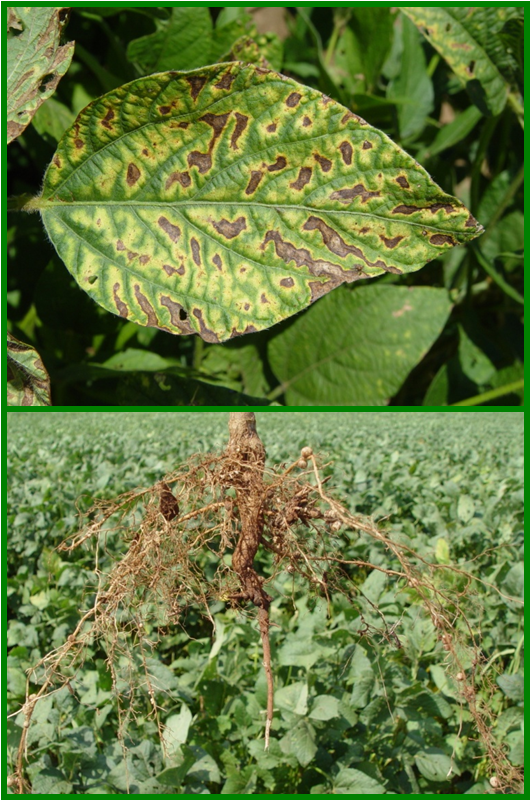 disease issues. We’ve seen a large increase of sudden death syndrome (SDS) the past few years in our county. Part of that is due to early planting in cold soils, but irrigation during flowering can also play a role. The major disease that occurs when irrigating during flowering is sclerotinia stem rot (also known as white mold). While we have very few cases of this in the area, this disease is one that you don’t want to get started in your fields. Like the fungal pathogen causing SDS, the fungal pathogen causing white mold is soil borne. Thus, once you have it, you can never get rid of it. White mold gets started during R2 when flower petals begin to die and the fungus develops on those dead petals. Wet, humid conditions during flowering are key to fungal development, so in the future, avoid irrigating beans during the flowering stages to avoid problems with these two diseases.

CropUpdate: 7-5-11
Last week was a blur of phone calls but it’s great to receive them and know so many of you are doing your best to wait for your soil to be depleted before scheduling your first irrigation! There are some of you in the Little Blue NRD who haven’t received the rains the past few weeks and have hit the 90-100 trigger on your watermark sensors to schedule your first irrigation. Most of you reading this won’t have to irrigate till after tassel (and then you can take into account the 3rd foot in your average)! The 90-100 trigger relates to 35-40% soil moisture depletion and is proven by research via Dr. Suat Irmak at South Central Ag Lab for our silty clay soils. Waiting for the trigger, regardless if you’re on load control or not, will still allow you at least a week to 10 days before you have to worry about getting behind. Please continue to call with questions. There’s also a discussion topic on my blog for your comments/questions.
Corn and beans are looking good overall, are closing canopies, and corn is rapidly growing. Wheat is being combined in the southern tier of counties and there has been quite a range of yields due to the dry weather producing small heads and disease issues such as scab, smut, and ergot. Scab (Fusarium Head Blight) is a concern when we receive rain and high humidity during and around flowering. We were recommending fungicides at that time. Some people escaped it, some put the fungicide on, and others didn’t-so there’s a range of yields out there from that. Common bunt (stinking smut) is the smut that creates clouds of black spores when you’re combining and the grain smells like fish. Loose smut is loose in the head and doesn’t form a kernel shape like common bunt does. Both can be prevented by not saving contaminated seed and using fungicide seed treatments at planting.
Ergot is one I hadn’t seen in wheat since I’ve been here but have in roadside grasses. Ergot is caused by a fungus that infects the wheat head during cool, wet conditions during flowering. Like the fungus that causes scab, it simply replaces the normal pollination process and instead, a black/purple hard fruiting body (sclerotia) is eventually formed. Before this is formed, a sugary drop called honeydew is formed which then turns into the sclerotia. It’s a problem for our producers because I don’t know that you can set your fans to blow it out like you can for light, scabby kernels since ergot sclerotia are denser. The problem with ergot is that it contains toxic alkaloids (one is like LSD)…in fact, it’s blamed that ergot-contaminated grain is what caused the Salem Witch Trials. These alkaloids are also toxic to livestock so contaminated grain should not be fed or even blended off for livestock. Federal grain standards classify wheat as ergot infested when it contains more than 0.3% sclerotia. If you are finding ergot-contaminated grain in your fields, do not save seed back next year; start over with disease free certified seed. The sclerotia will live on top of the soil for a year (they will produce spores next growing season so don’t plant contaminated wheat fields back into wheat, barley, oats, or triticale). Mowing roadside ditches and keeping wheat fields free of other grasses can help prevent ergot infested grasses from spreading the ergot fungus to wheat via blowing spores and rain splash. More information can be found by checking out the UNL Extension publications Head, Grain, and Seed quality on the http://cropwatch.unl.edu/web/wheat/disease Web site.


 JenResources