Blog Archives
JenREES 10-13-19
Crop Update: The sunshine, hard freezes, and wind are helping dry things out. Grateful this week looks favorable for harvesting! Please continue to think safety. With the increase of late season diseases this year, I’ve been hearing reports of combines turning orange and/or black from fungal spores and running hot. This week’s CropWatch at https://cropwatch.unl.edu addresses fire safety during harvest if you’re interested in checking out those tips. Masks/respirators may help those affected by fungal spores.
The rains/humidity and also Fusarium/Gibberella fungal growth (which produce
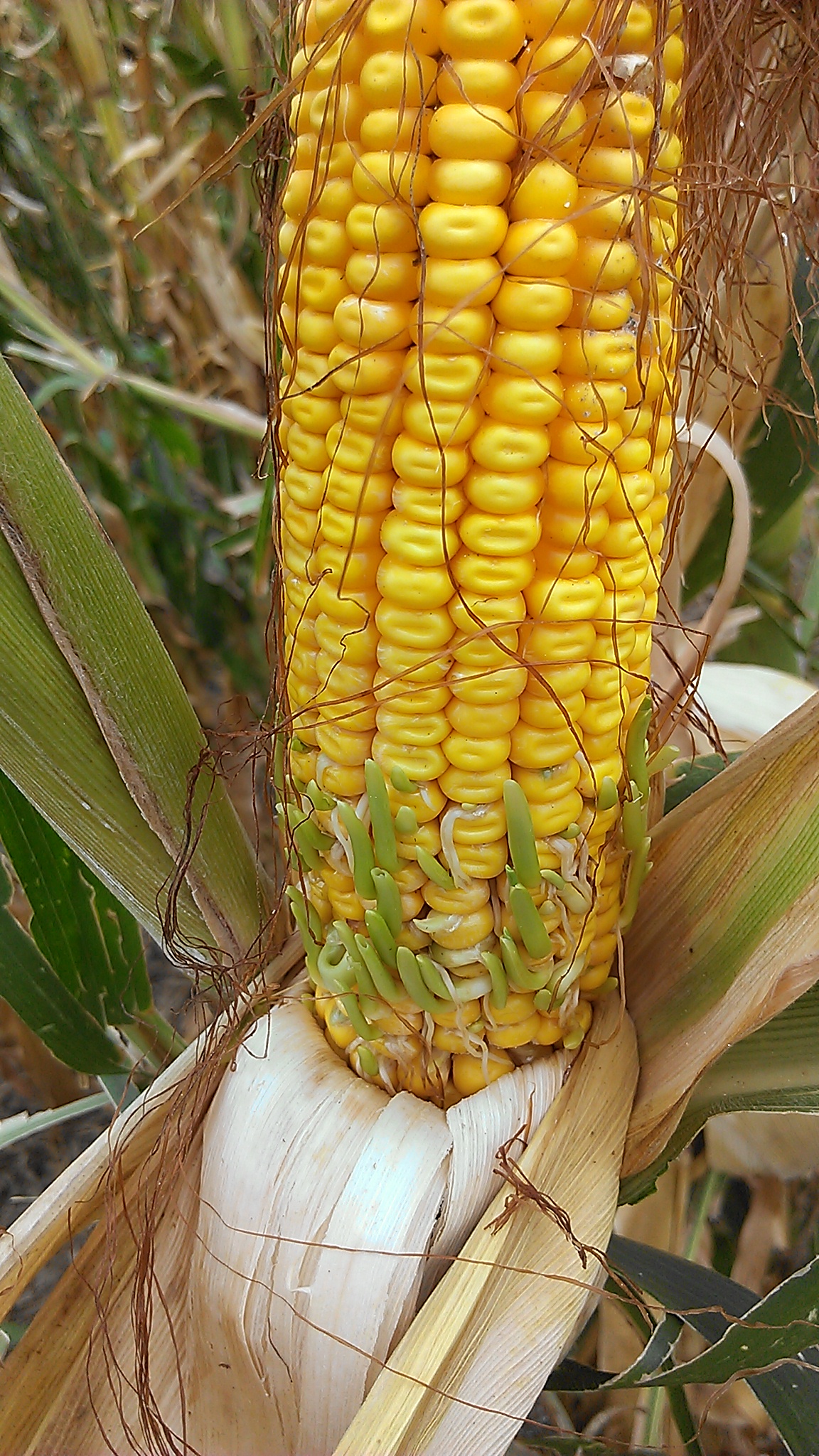
giberellins) have allowed for some kernel sprouting on ears over the past month. Sprouting can occur anywhere on the ear, particularly at the base or places where hail and/or insect damage occurred. Upon reaching maturity, hormone levels within the kernels change allowing for higher levels of gibberellin compared to low/no abscisic acid. This gives kernels the ability to sprout. We just prefer not to see this in fields prior to harvest; thus, you may wish to alert your crop insurance adjuster of these situations. Be aware sprouted kernels lead to higher kernel damage and can increase fines in a load. These kernels may also be lighter and blown out the back of the combine. In case they’re not, drying to 14% will help kill the sprout and be sure to monitor stored grain closely for hot spots, mold, and additional sprouting grain.
Soybean and Freeze: Prior to the frost, I was receiving questions about yield loss to soybean at various growth stages, including, how to determine R7 (physiological maturity). Dr. Jim Specht took the lead on two CropWatch articles this week to address these questions. Ultimately, for each pod, physiological maturity occurs when the pod membrane no longer clings tightly to seeds in that pod. For pods still at R6 (green bean stage with membrane clinging to seed), yield loss can be significant, anywhere from 35-50% depending on if the plant is in early or late R6. At R7, 0-5% yield loss is expected.
Oct. 16 Ag Bankruptcy Webinar: Lower commodity prices, extreme weather, and ongoing trade tensions in world markets have contributed to widespread financial strain throughout American agriculture. The American Farm Bureau Federation recently reported that “the delinquency rates for commercial agricultural loans in both the real estate and non-real estate lending sectors are at a six-year high” and that Chapter 12 bankruptcies increased the previous year in all but one region of the country. Recently, the Bankruptcy Code was amended to ease eligibility requirements for family farmers considering filing for Chapter 12 bankruptcy. A webinar on October 16th from 11-Noon (CST) will provide a basic introduction to Chapter 12. It will discuss eligibility requirements, advantages of filing a Chapter 12 over other types of bankruptcy, and uses of a plan to make changes in the farming operation. For more information and to register, please go to: https://nationalaglawcenter.org/consortium/webinars/chapter12/.
Horticultural Plants and Frost: While many plants succumbed to the hard frosts, some protected plants did not. I’ve been asked when should perennial foliage be cut back in the fall. The answer is to wait until a hard freeze kills the foliage. This is because photosynthesis is still occurring on plants with green foliage, so carbohydrates and sugars are being moved to roots for winter storage, increasing plant vigor for next spring. You can also leave the foliage till early spring for winter interest.
Vegetables/Fruits and Frost: Rhubarb should not be harvested or eaten when leaves are wilted and limp and stalks become soft/mushy after a hard freeze. Otherwise, there’s no toxicity concerns with other vegetables/fruits after frost. The texture and storage potential of other vegetables are affected by freezing temperatures, such as lettuce, peppers, summer squash and sweet potatoes. Some vegetables may actually improve in flavor following freezing temperatures, including parsnip, Jerusalem artichoke and horseradish.


