Category Archives: Reflections
Sensitive Issues Training-Engage
Many of us have been there…we’ve been asked a question in which the answer can be deemed controversial because the topic is based on emotion and beliefs. How do we respond? Do we get caught up in the emotion and passion of the issue and try to force our beliefs on others? Do we shy away or try to avoid an answer altogether by remaining silent?
Last week’s Sensitive Issues Media and Communications Training was developed to help all of us through these situations. It was a remarkable experience working with an amazing group of ladies, all passionate about food, but looking at food from a variety of perspectives and taking an issues-based approach in developing our team. Our team was comprised of a livestock expert, a manure expert, two food and nutrition experts, a communication’s expert, and myself from a crop production perspective. Special thanks to Dr. Chuck Hibberd, Nebraska Extension Dean and Director, for providing us a New Audiences Innovation Grant to partially fund this training. You can catch the conversation on Twitter at #SIMCT15.
We invited the Center for Food Integrity to conduct their Engage training with us, which was sponsored by the United Soybean Board. This training uses “the power of shared values to highlight industry trends and teaches strategies for using values-based messaging in daily conversations, and public speaking and media opportunities.” There was discussion, role playing, and mock media interviews. The training challenged me to use something I also just learned from “7 Habits of Highly Effective People” training….Seek first to Understand, then to be Understood.
Essentially, ask questions. Understand why a consumer believes X, Y, or Z about food and agriculture. Universal values include:
- Compassion
- Responsibility
- Respect
- Fairness
- Truth
Seek to understand the other person’s values by listening and asking questions. Then share by communicating about common values telling your food and ag story. We can’t really script this. We can’t be so vague that we’re not credible. For example, the following is vague and perhaps over-used:
By doing X we help the environment.
Instead, we need to be willing to talk about the hard issues with authentic transparency…to share our own individual stories.
I also desire water that is safe for my family to drink and desire for there to be enough water for future generations. That’s why my colleagues and I work with farmers to use research-based irrigation scheduling tools. Doing so helps reduce over-irrigation which can reduce the nitrate levels reaching our groundwater and the amount of water being pumped from the aquifer.
There were a few surprises for me. The first being the progress in one year (based on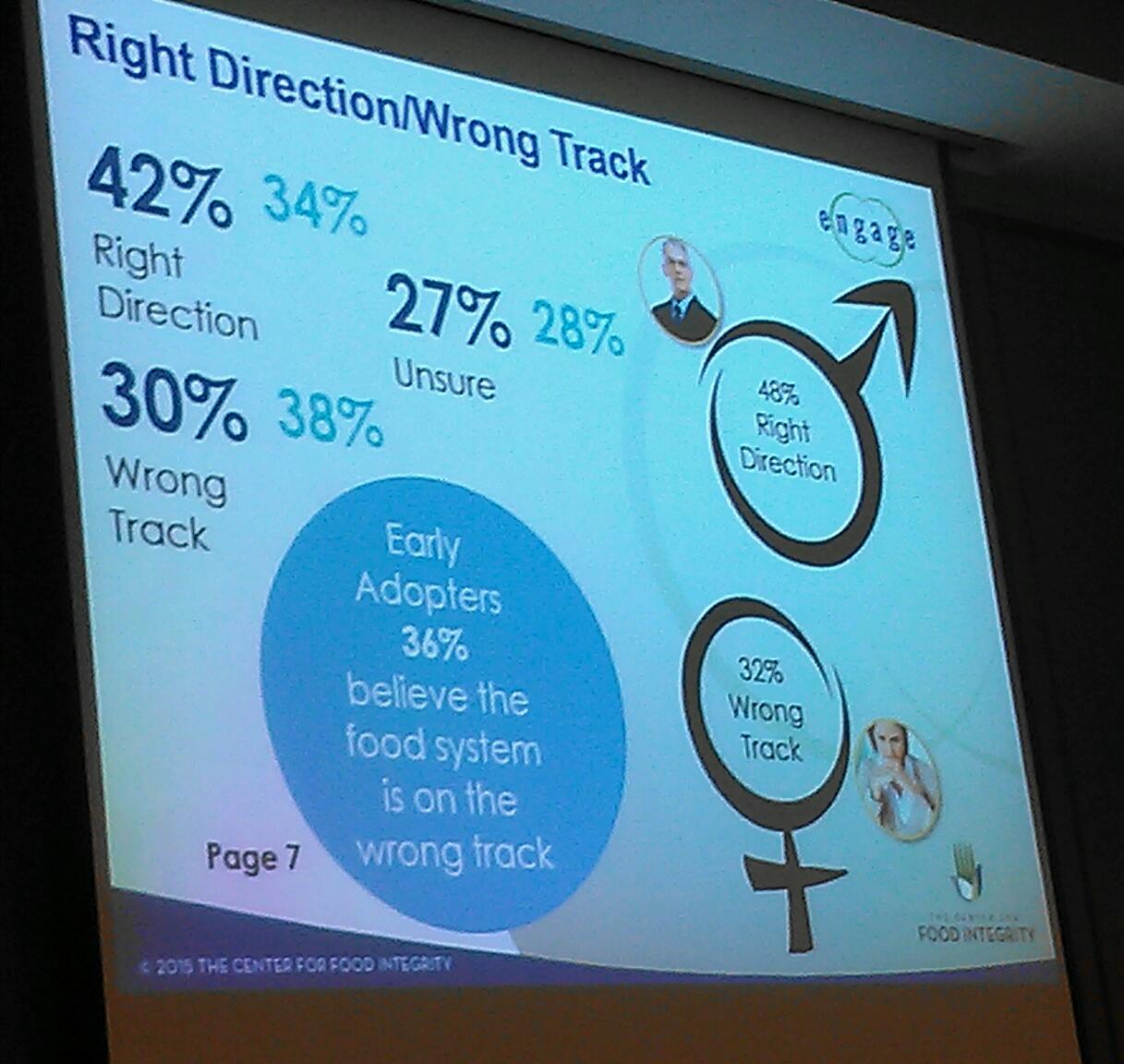 the Center for Food Integrity’s research) that we’ve made in consumer trust. This slide is essentially saying that 42% of consumers feel the food system is going the right direction (up from 34% last year). Men are more trusting of the food system at 48% believing the food system is on the right track. 32% of women feel the food system is on the wrong track.
Another surprising, yet encouraging piece of information for  me to see is which people are trusted the most on sensitive topics. On the topic of genetically modified foods, University Scientists topped the list, a Scientist that was a Mom was second, and Farmers were third. This is different than other research I’d seen, so I was excited about this. It was a survey of 2005 individuals conducted in 2014 and was encouraging from the standpoint that we do still have an opportunity to share our stories with those who truly desire to know more about where their food comes from. We will never change the activists, but we can reach the middle.
Finally, I loved the following quote which is so true:
A picture is worth 1000 words; a video is a library.
They showed the following video from Similac entitled, “The Mother ‘Hood“. Instantly, my mind went to how easy it would be for ag to do something similar. We tend to be so divided, but division is killing us. We are in the business of providing a safe, affordable, food supply to the world…but beyond that, our diversity provides consumer choice. If you watch the video, consider what is the common issue that could bring all of ag together. I have some ideas and my team members and I have discussed what a similar video with diverse agriculture groups would look like. What are your thoughts and ideas?
Ag Reflections from 2014
Happy New Year! Wishing all of you and your families a wonderful 2015! As I look back at 2014, there are several ag-related observations that I noted throughout the year.
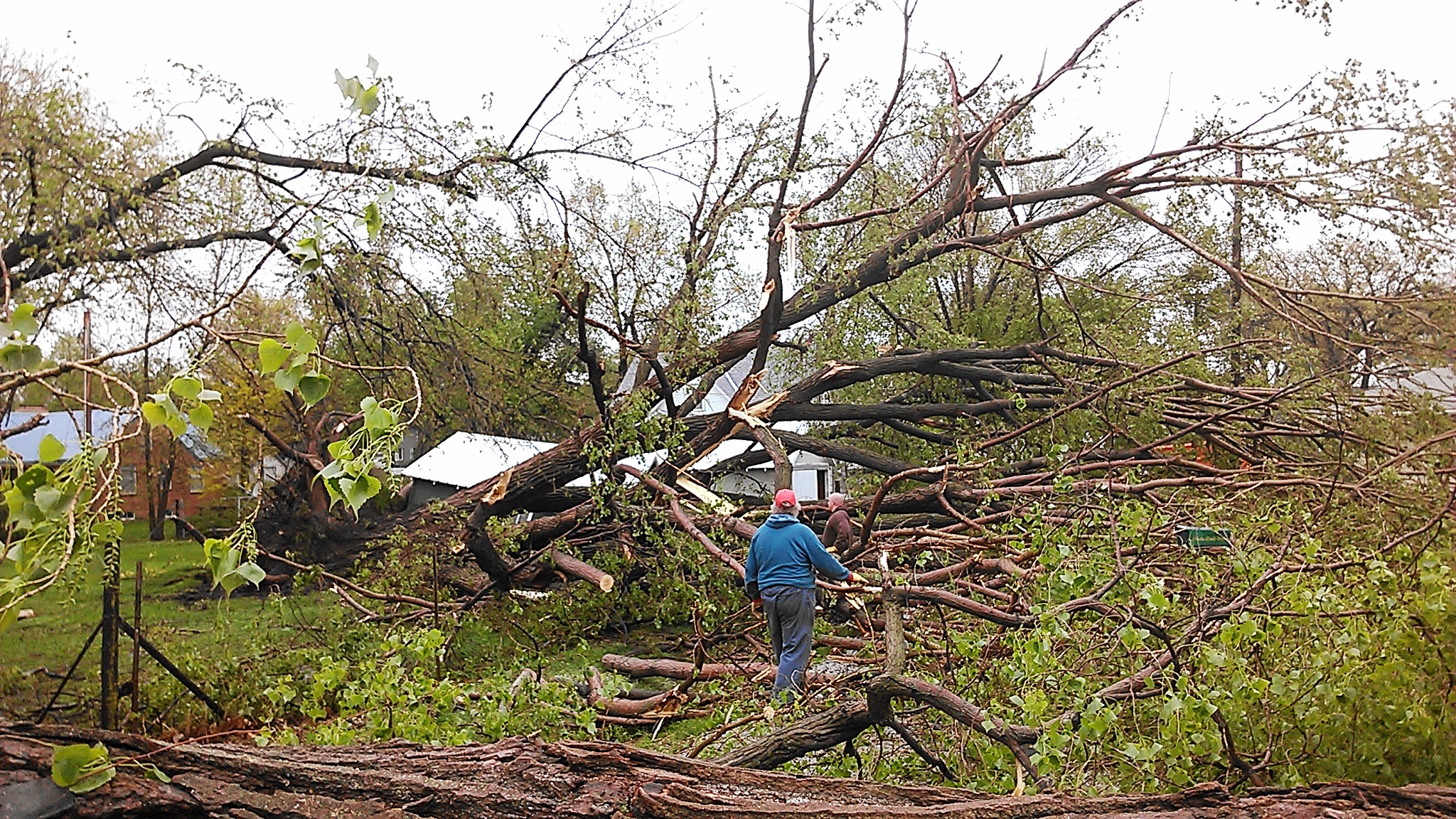
Cleanup after the tornado in Sutton on Mother’s Day 2014.
The first observation continues to be the way communities and people in this County/area pull together in difficult times. Whether after tornadoes/wind storms or helping other farm families who had an injured family member or had lost a family member, it’s just a blessing to see the way people pull together to help each other in time of need. It was also a blessing for many who were unable to harvest in 2013 due to the August 1st storm, to harvest fields in 2014, and for many in the area to experience really good irrigated and dryland yields this year.
The dry winter of 2013/14 allowed for very mellow ground during planting time. Often seeding depth ended up ½-1” deeper than intended. The dry winter also didn’t allow for good residue decomposition leading to problems during planting and ensuing stand emergence. Cutting off residue and high rains in May led to unintended consequences of replant situations when residue was moved off of farmers’ fields onto neighboring fields, suffocating emerged plants in portions of fields. I’m not sure what the solution is for the future other than it really needs to be something worked out with neighboring farmers, but perhaps mentioning it here opens an opportunity for future conversations.
Cover crops have been incorporated into more operations in recent years, yet the ultimate goal for using them remains important in determining what species/crops are used in the fields. We also realized the importance of determining amount grazed prior to turning cattle into fields (whether for grazing cover crops or crop residue), as high winds in winter 2013/14 in overgrazed fields led to soil blowing throughout the winter.
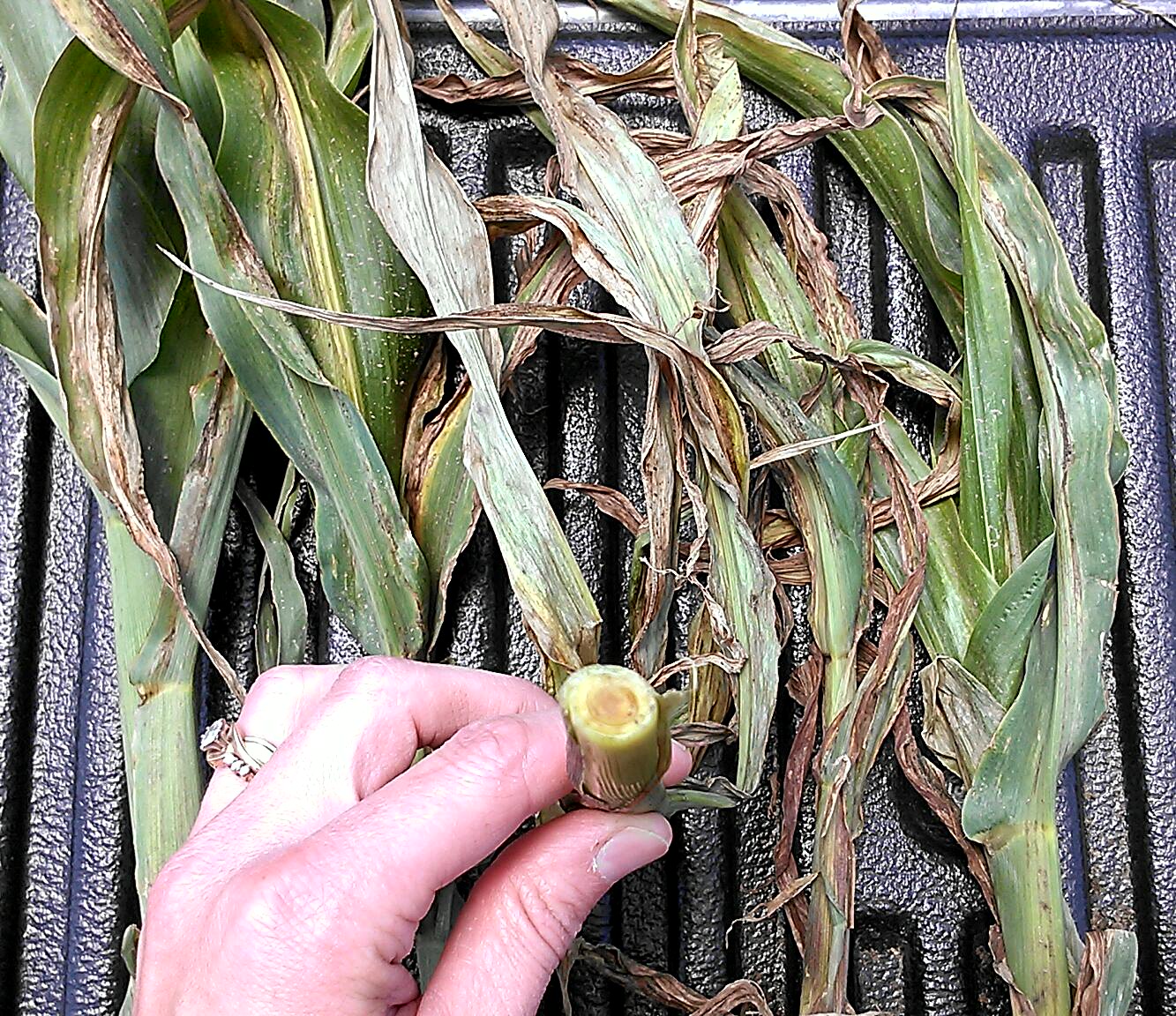
Systemic Goss’ wilt showed up in some fields that were hail and/or frost damaged by V6.
The May frost showed us emerged soybeans at the cotyledon stage held up well to the frost compared to the corn. We also again watched Goss’ wilt show up systemically by 6 leaf corn that was injured early by frost or hail in fields where Goss’ wilt had been a problem in the past. We need more research/understanding of this disease. Wheat continues to show us its resiliency as it winterkilled in portions of fields, withstood drought-stress, and then made up yield in the last 4-6 weeks.
Perfect pollination conditions coupled with high solar radiation, low night-time temperatures, and timely rain events were keys to the bountiful corn crop we experienced this year. Soybeans were more of a mixed bag. In walking fields and in conversations with farmers, I think the disappointment in some irrigated yields could be attributed to early/over-irrigation, disease problems, and planting date. UNL on-farm research showed on average a 3 bu/ac yield increase when soybeans were planted in late April to first week of May (regardless if growing season was warm/dry or cold/wet like it was this year) and those I’ve talked to who achieved 80+ bu/ac in the area this year planted in that time-frame. I’m curious if there’s something to planting a 2.4-2.5 maturity early vs. a 3.0+ maturity early as some area producers are seeing strong yields from a shorter season hybrid planted early the past few years. So if you’ve also seen this and/or are interested, that will be an on-farm research project to try next year. Please let me know if you’re interested!
Here’s wishing you a healthy and prosperous 2015!
Public Issues Leadership Development Experience
As President-elect of the Nebraska Agricultural Agents Association, I had the opportunity to participate in the Public Issues Leadership Development (PILD) Conference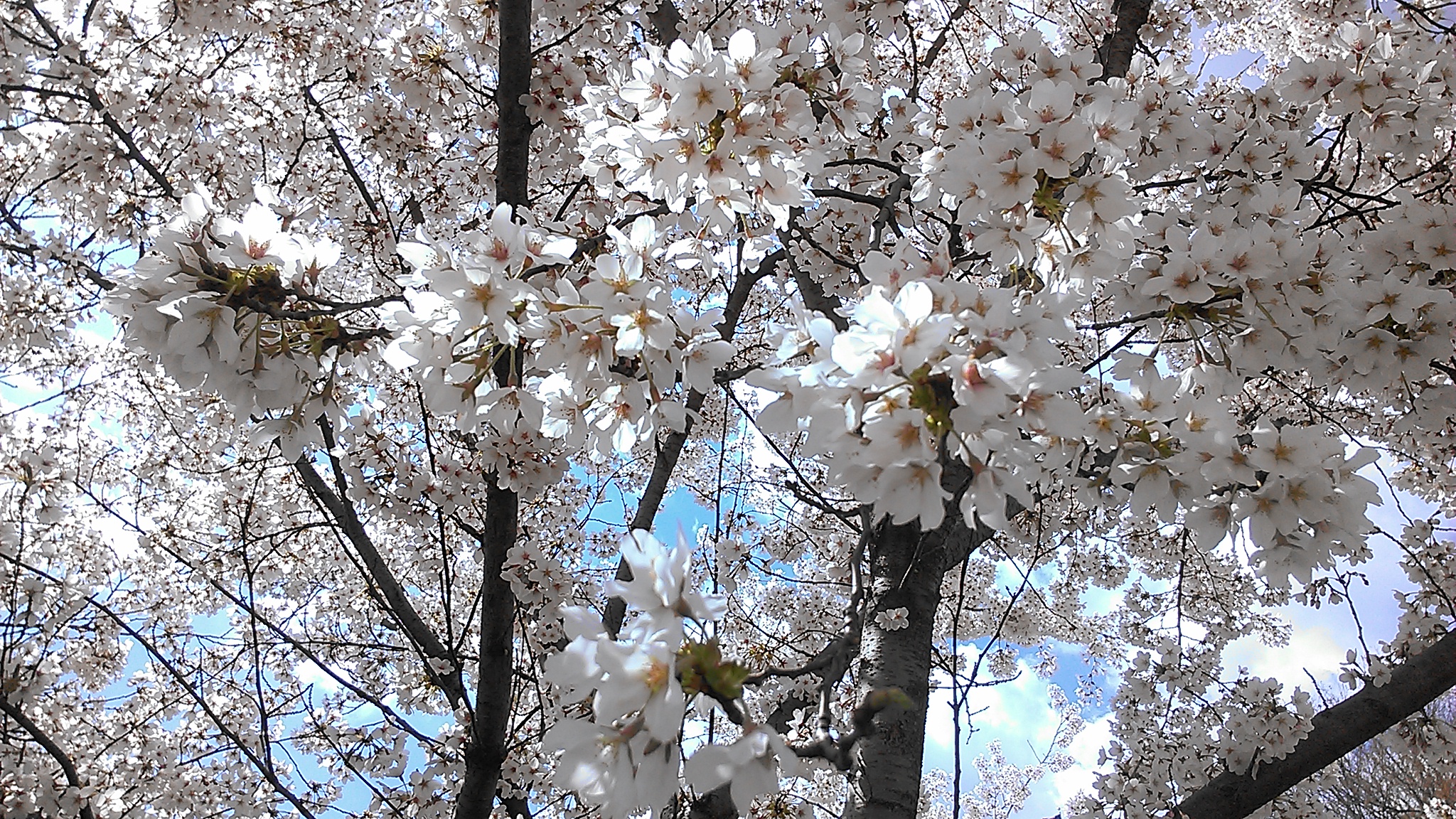 in April of 2014. The goal of PILD is professional development and public issues education. I never had the opportunity to visit D.C. that time of year before and the cherry blossoms were just opening when the group of us from Nebraska arrived. By the time we left they were in full bloom-just beautiful with an amazing fragrance! Our delegation was Monte Stauffer (representing 4-H), Patricia Jones (representing Food/Nutrition), Diane Vigna (representing community development), and myself along with our Dean and Director Dr. Chuck Hibberd.
For me, these conferences are about networking and people and I truly enjoyed seeing my Ag Extension colleagues from across the U.S. The conference was very much focused on celebrating 100 years of Cooperative Extension and the challenges/opportunities Extension faces in the next 100 years.
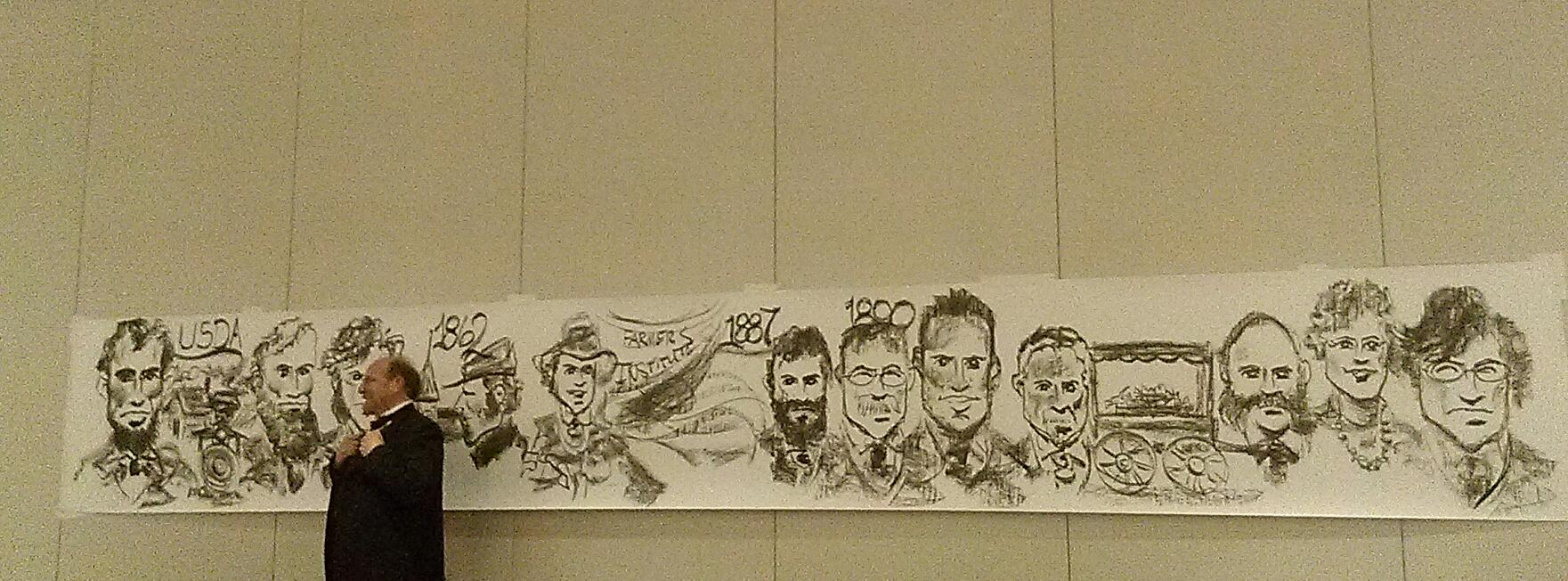
Presentation on the History of Cooperative Extension by a North Dakota State University alum where he does charcoal drawings as he speaks. I had seen this at an NACAA conference in the past; he is so talented!
Sessions included discussing how to determine public value of what we do and the debate continues to be how do we extrapolate information and who gets the credit. I think Nebraska is on track with much of what we do in this area as we’ve had many similar discussions here. There were also discussions about the relevance of Extension and the need to share information several ways; again, I think we have people in Nebraska leading the way in this effort. But it is critically important for ALL of Extension to be repackaging our information several ways to reach our customers where they view information.
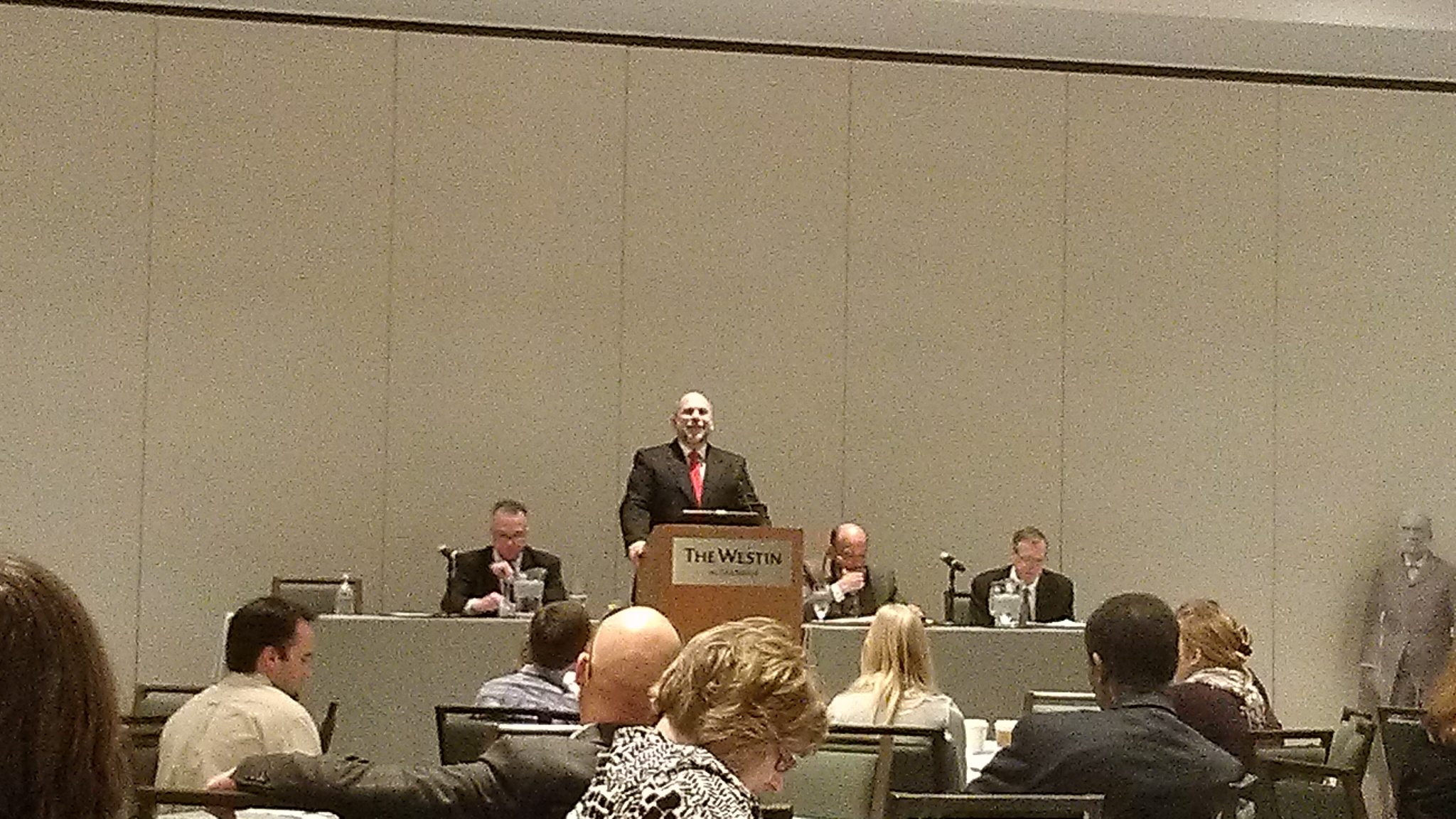
John Wilson presented on the Missouri River Flood in a panel discussion regarding controversial issues in Cooperative Extension. He did a great job as always! Additional controversial issues included fracking and the oil boom in other states.
We had the opportunity to interact with National Institute of Food and Agriculture program leaders to express the critical needs for the people we serve in hopes of influencing where research and extension initiatives should be focused in future grant releases. We also spent a large portion of time discussing different bills of importance to all of our States and determining the key messages we wished to share on the Hill with our Congressmen and Senators.

Wednesday was the highlight for me. On Wednesday, each State visits their Congressmen and Senators on the Hill. The Ag Section rep typically sets up the visits, so I was thankful for my experiences in organizing CWF trips! We began the morning at the Nebraska Breakfast and had the opportunity to visit with Senator Fischer immediately afterward. We had the amazing opportunity to meet with all of our representatives and/or their staffers that day: Congressman Smith, Senator Johanns, and then Monte and I split up so he visited Congressman Terry’s Office while I visited Congressman Fortenberry’s Office. In between we also had a Capitol tour and visited the Senate Gallery as Monte and Pat had never experienced that before. It was a wonderful day with great visits sharing the great things Extension has done and continues to do for the people of Nebraska! Our Senators and Congressmen also supported the Smith-Lever bill for recognizing 100 years of Cooperative Extension, so we were happy about that!
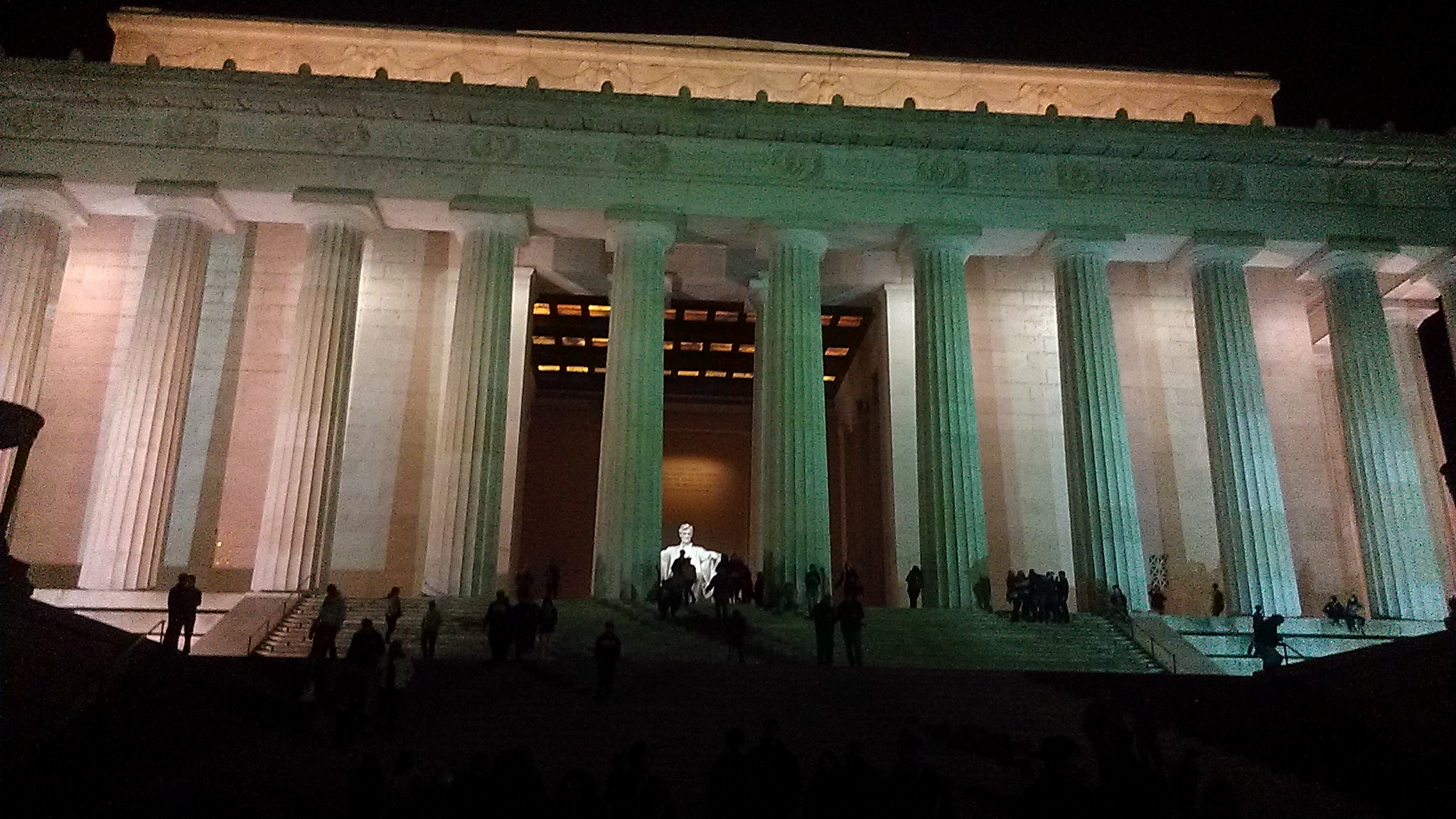
Lincoln Memorial during night tour of memorials and monuments the first evening-always neat to see.

We had an amazing seafood supper during one of the evenings with Dr. Hibberd who graciously paid for our meals.

It was an honor to represent the Nebraska Ag Agents at the 2014 PILD Conference and I thank our Ag Section and Dr. Hibberd for paying my expenses for this trip! This photo is of cherry blossoms with the Washington Monument in the background.
We Will Never Forget 9/11/01

In September 2013, I had the opportunity to visit the US Flight 93 Memorial in Pennsylvania. The Memorial is mostly a grassy field but also has a series of signs to explain the events on 9/11/2001.

This sign shares the heroic efforts of those who fought back against the terrorists on the flight that day.
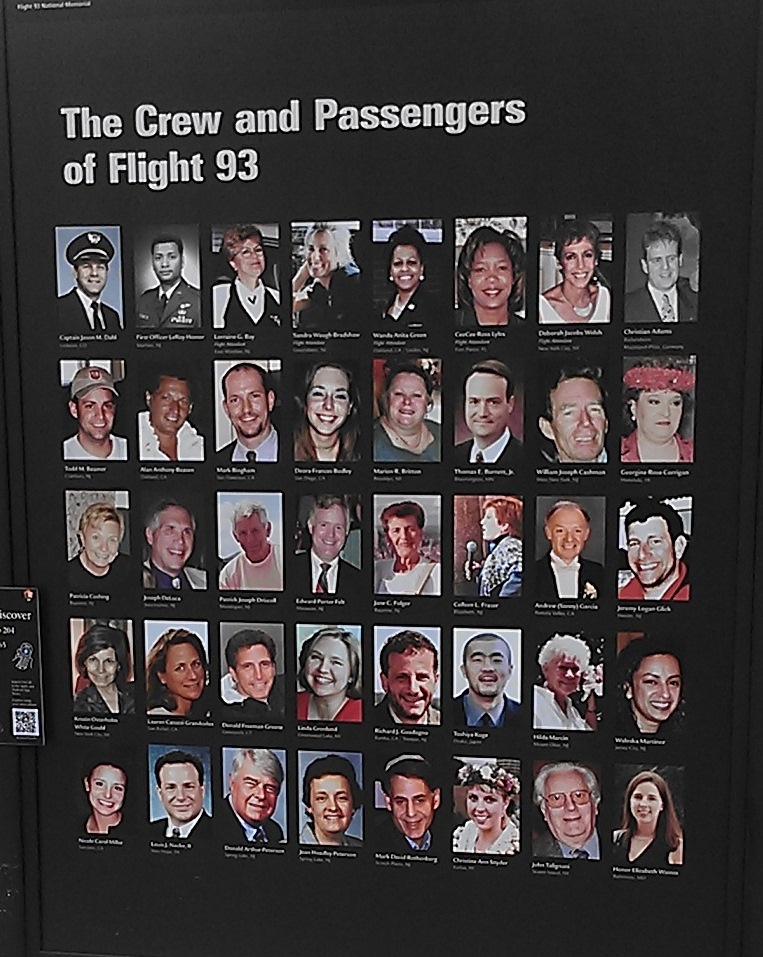
May we never forget the lives lost in these terrorist attacks.
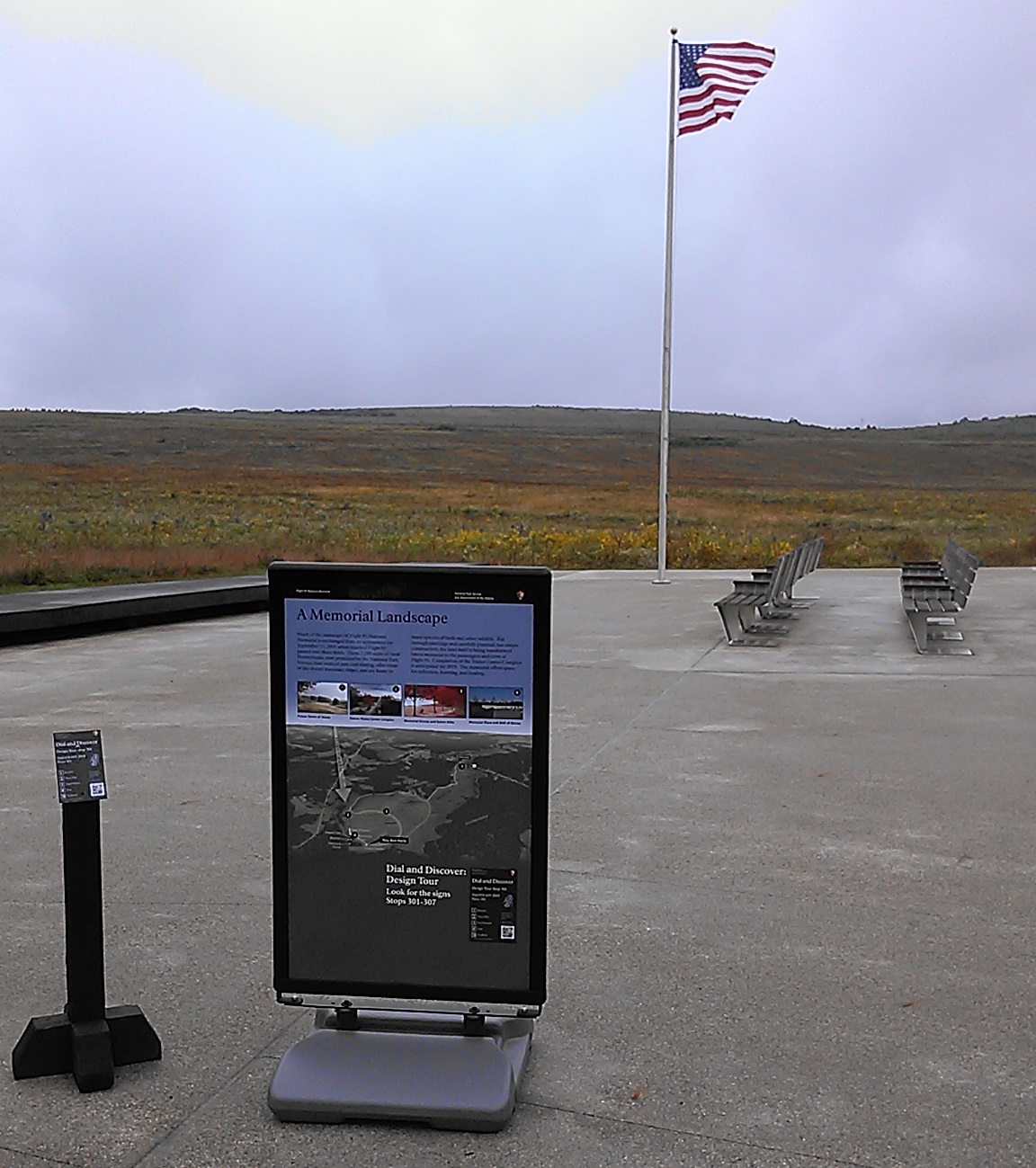
A quiet place to reflect. US 93 would have flown toward us as we view this photo on the left side of the photo.
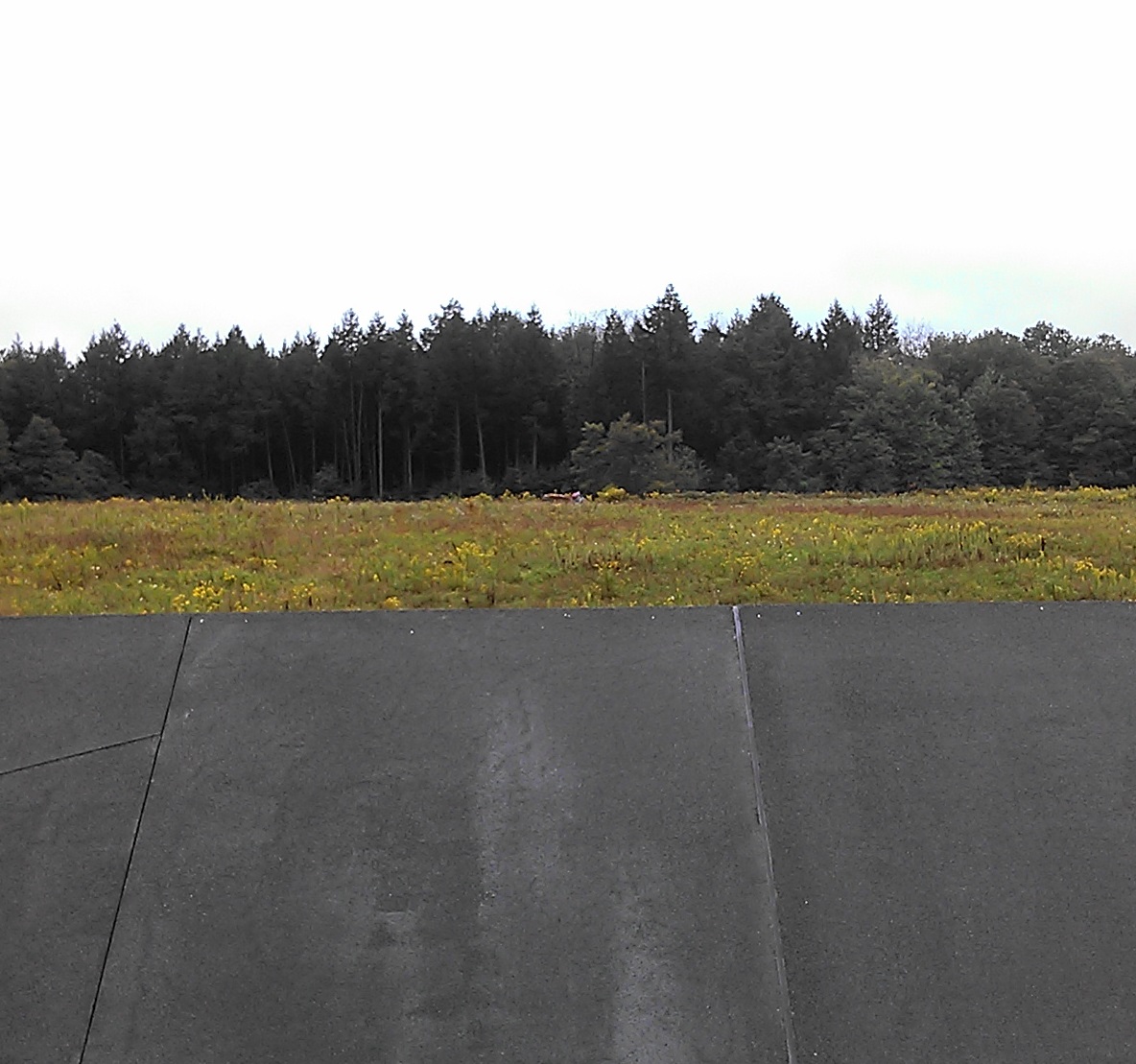
The grassy field where US Flight 93 went down. In the distance (center of photo), there is a memorial rock which marks the spot of the crash. Thirteen years later, we will never forget the innocent people, rescue workers, and all our men and women in uniform who lost their lives.
#Ag Tour Day 1
UNL Extension Ag Educators from throughout Nebraska gathered together in late October for an excellent professional development tour to Iowa and Minnesota!
Before the bus started moving we were working on plant identification for a client. Then we learned about the status of Emerald Ash Borer among other pests at the Douglas-Sarpy County Extension Office. By the end of the presentation we were considering getting a meat thermometer and recordable Hallmark card! (will explain later).
Along the way, John Wilson provided an update regarding the flood recovery efforts from the 2011 flood. He mentioned at Gavins Point Dam, the lake would have drained every 25 hrs. when releases were occurring for the flood. He was involved with an effort in putting together a webinar that involved 25-30 agencies and 14 speakers from 5 states. During the recovery there were 2″ to 25′ drifts of sand in fields. One piece of ground that was reclaimed cost $125-150K and needed 7 excavators for a month. One 300 acre piece of ground that wasn’t reclaimed was going to cost $10,000/ac. to reclaim it.
John Hay provided an update regarding wind energy. He pointed out the different types of towers along the way as we passed several wind farms. Facts included: a 1.5Megawatt wind turbine can run 1000 homes each and the gear box is turning 2000:1 compared to the blades. Iowa is #1 in percent of electricity produced from wind power (20%) and it costs $3-6 million each to install a wind turbine (essentially double the cost of how many megawatts). The life span of a turbine is 20 years with a maintenance cost about $0.05/kwh. When considering efficiency, wind turbines are 40-50% efficient vs. coal power (35%), nuclear (35%), cars (25%); so they’re more efficient at converting free energy into electricity but they are less cost 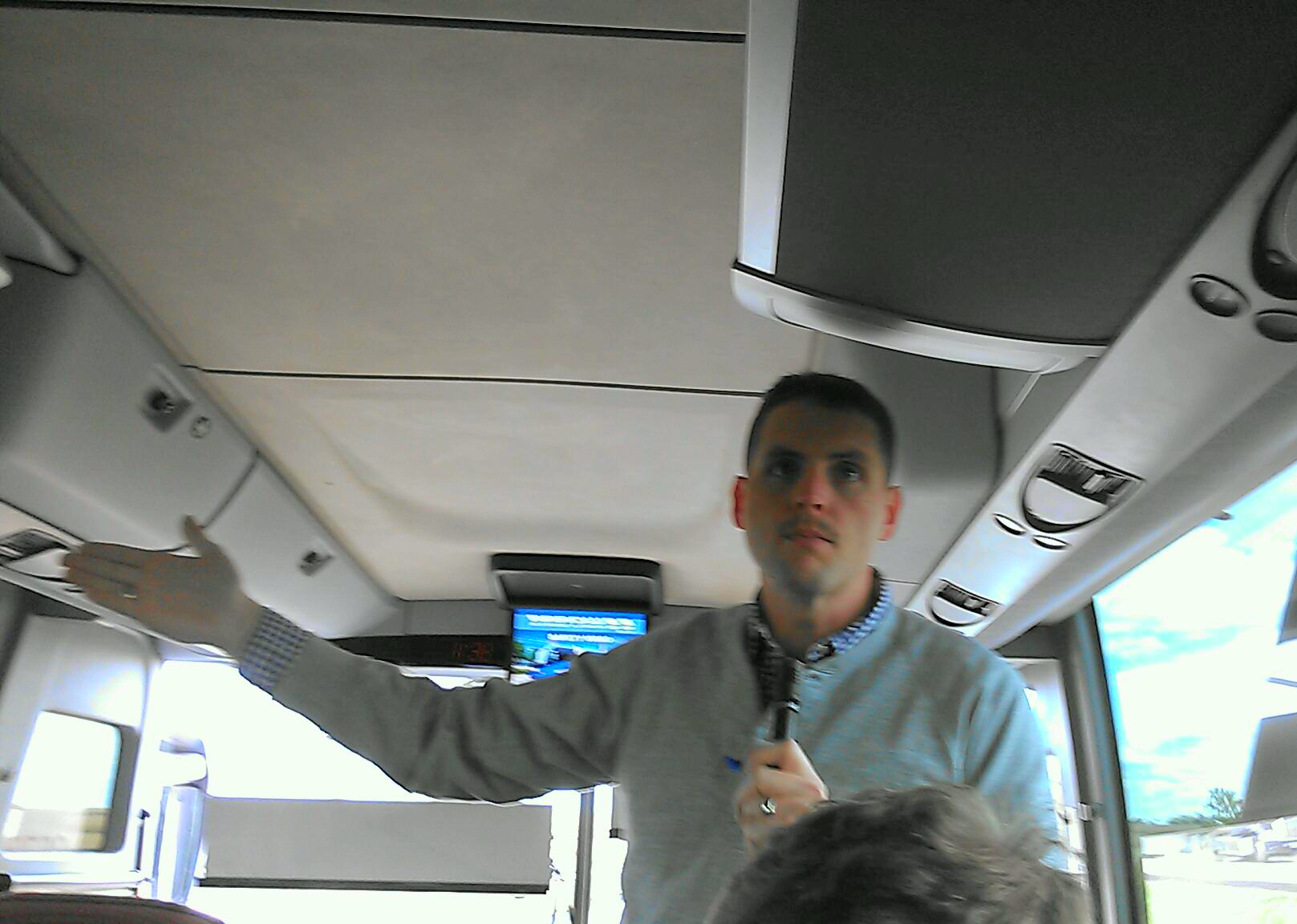 efficient than those other energy sources. Windfarms also typically pay for themselves in 5-10 years.
Our first stop was at Hawkeye Breeders where we saw their semen storage facility that essentially had enough semen to fertilize every cow in the U.S. They ship all over the world and their primary customer is the dairy industry. We also toured their semen collection facility and got the coolest pen from there.
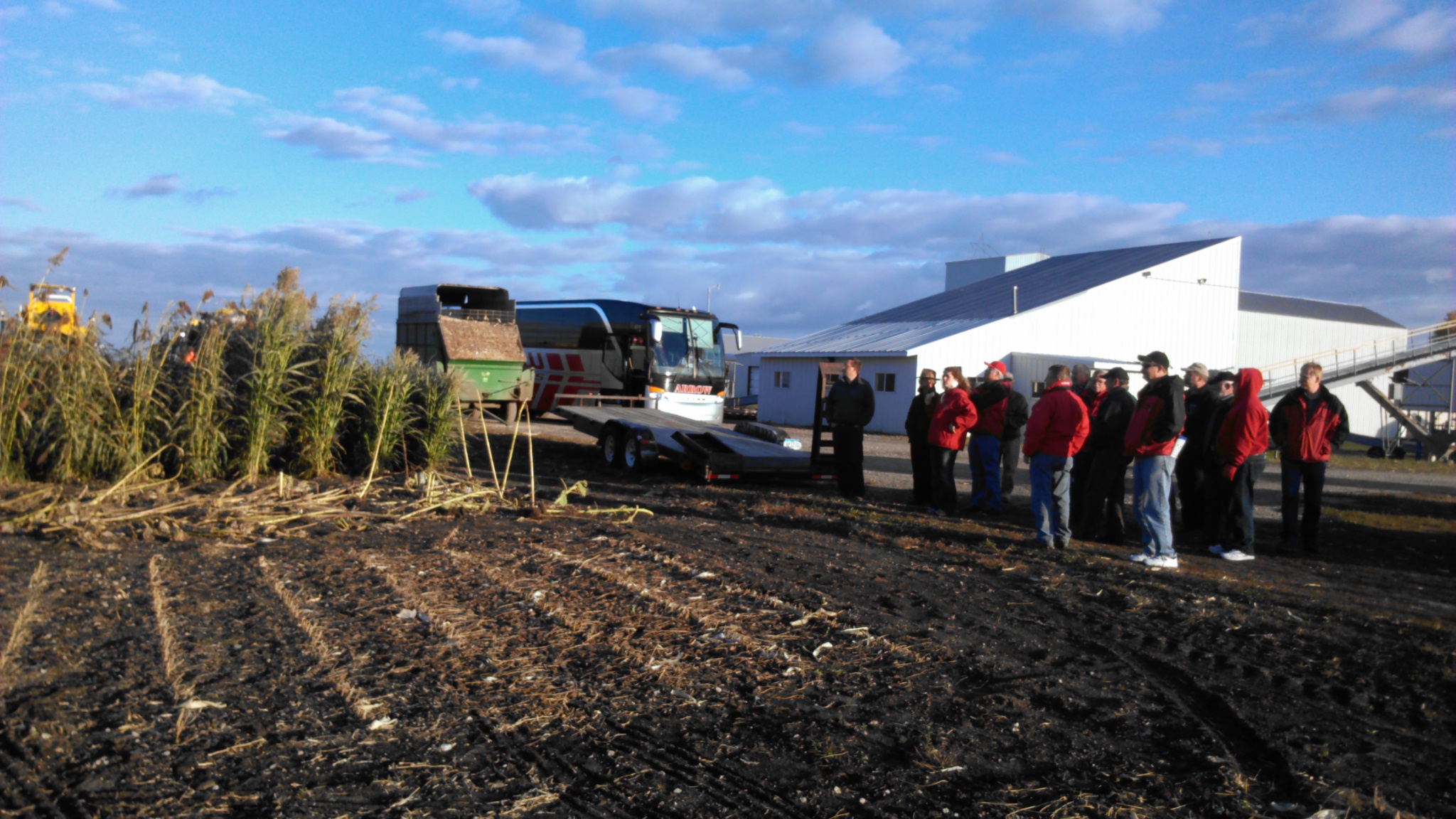
From there we stopped at Blue River Organic Seeds and were surprised to learn that all their organic seed research is done conventionally. They provide organic seed for corn, alfalfa, soybean, and various forages and are looking for more growers. We also learned about PuraMaize which was developed by Dr. Tom Hoegemeyer to essentially block pollen from outside sources to maintain purity.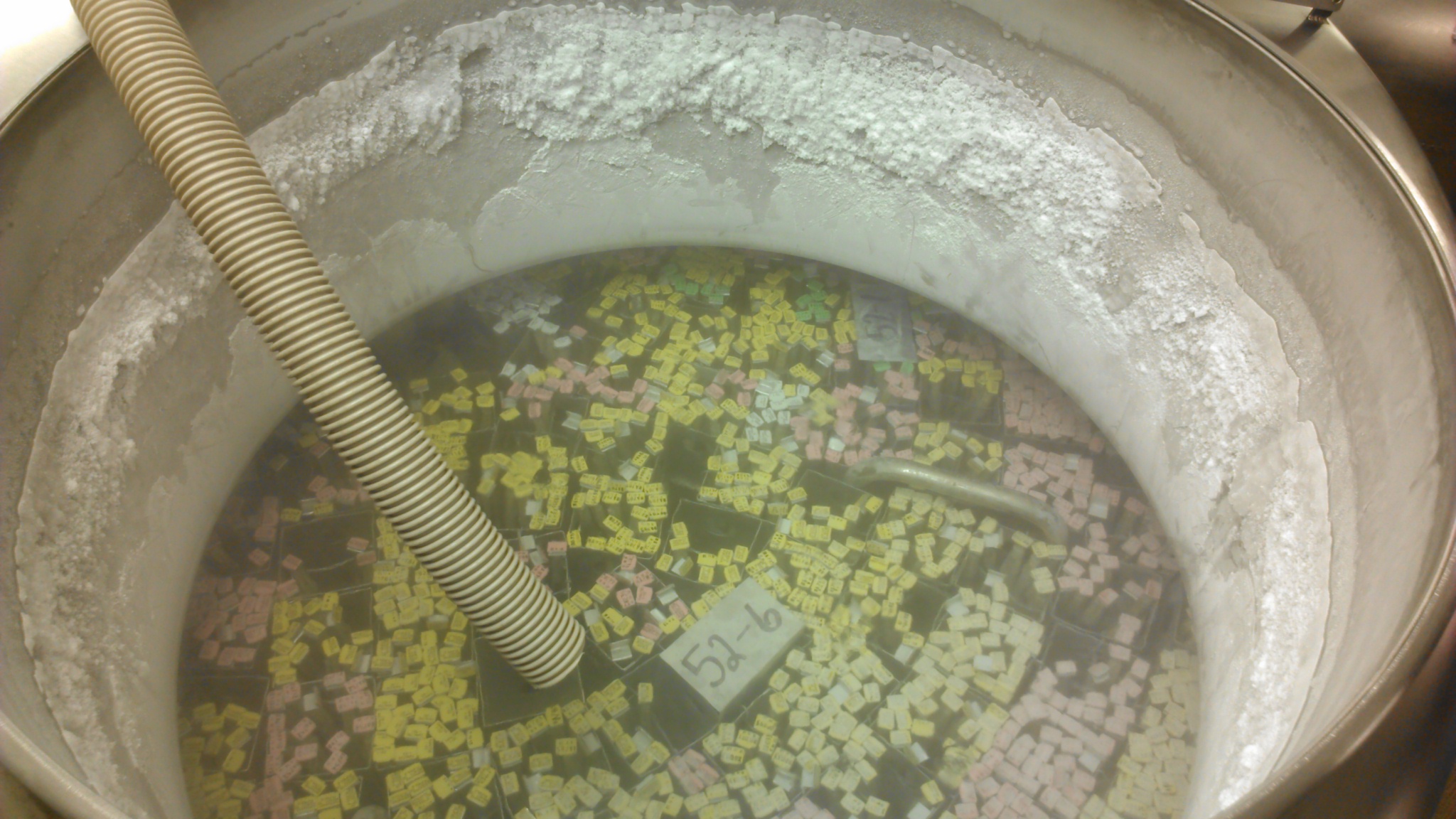
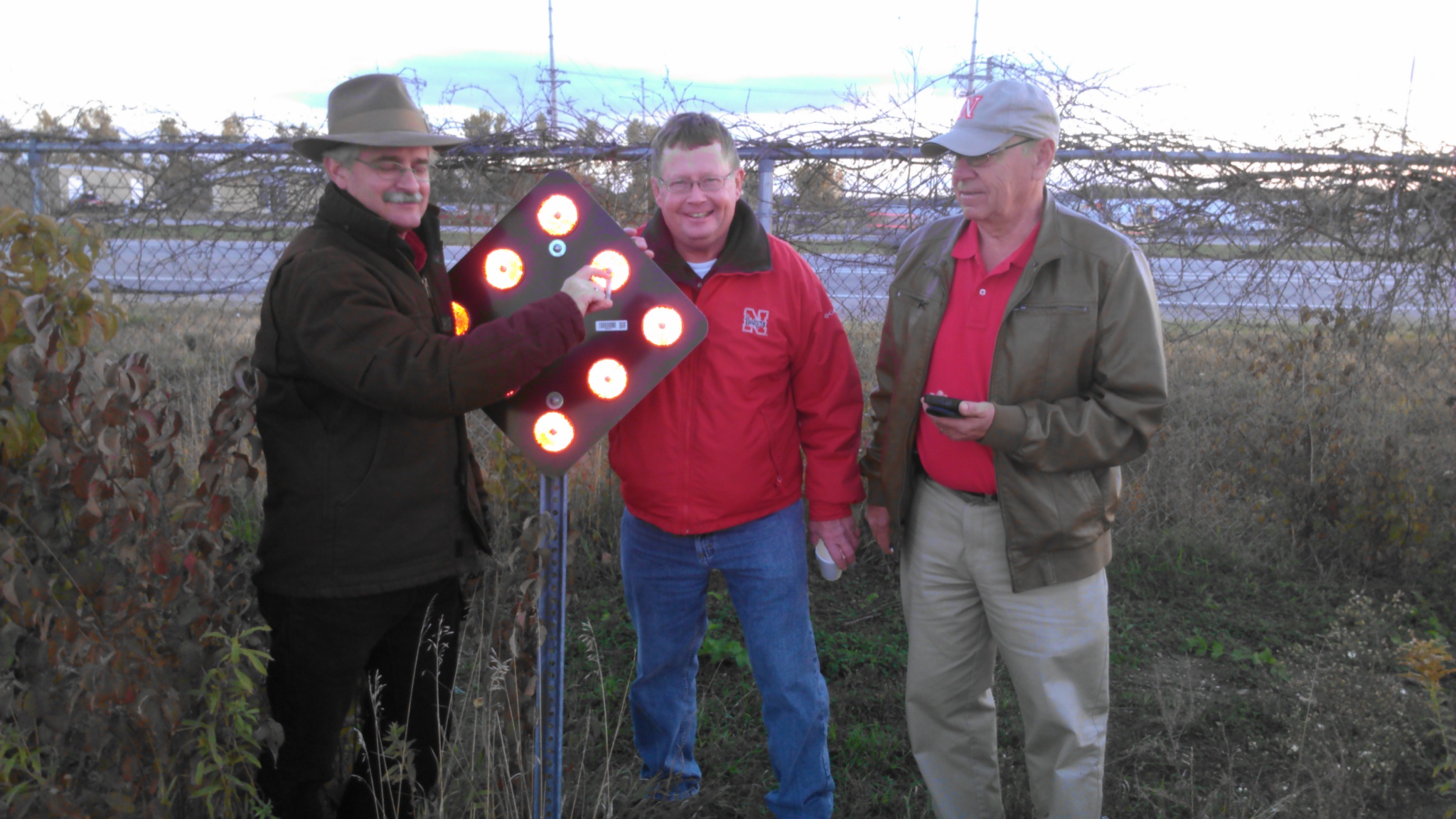
That night we had supper with faculty from Iowa State University talking about programming efforts there, including their manure programming, ag economics, and Roger Elmore spoke of the corn programming there. But before that, a few of us took advantage of the 45 min. of time to get a few geocaches in the area 🙂
Reflections: After the Storm
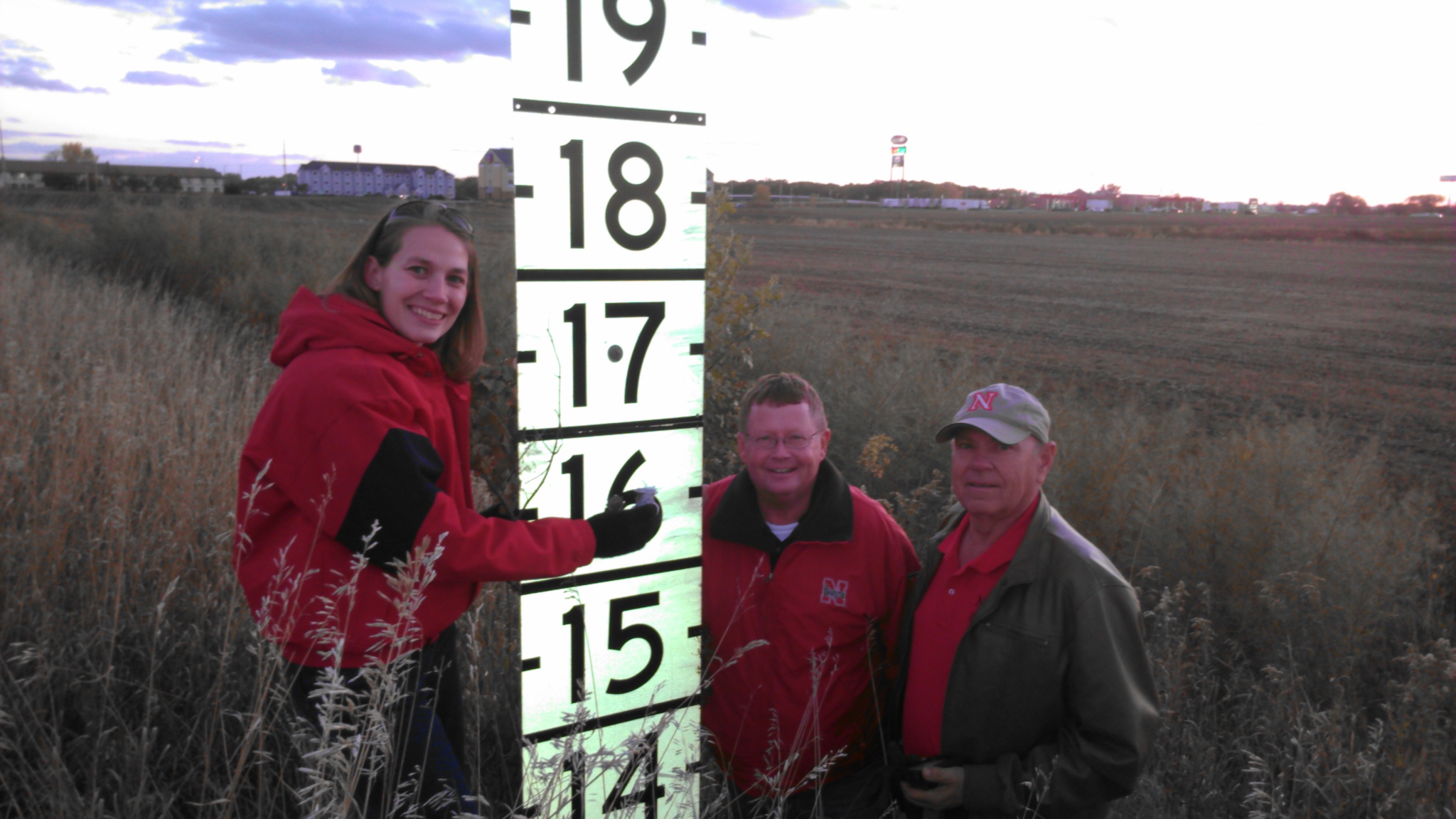
It’s been an interesting few weeks. Last week I was continuing to receive calls about considerations for drought damaged corn. Then southern rust arrived in the area earlier last week. Followed by the tremendous August 1 storm that affected so much of our County.
Numb…..
is how I’ve felt these past few days-and I can’t imagine how difficult it is for you whose crops were affected! It’s just a sickening feeling walking into field after field and driving around the County seeing the storm damage every day. I’m so sorry for those of you who have lost your crops! As I look at the crops, though, I’m a little puzzled at the way things are laying, the twisted plants….things aren’t all adding up for “straight-line winds”.
In spite of how difficult things look right now, I can’t help but wonder if we were spared from something much greater?
The follow passage in the Bible has been my go-to during times of drought and difficult times in farming. I was going to share this in a drought post…but I feel it still applies with as many partial and total crop losses we’ve experienced in the area.
Though the fig tree should not blossom and there be no fruit on the vines,
Though the yield of the olive should fail and the fields produce no food,
Though the flock should be cut off from the fold and there be no cattle in the stalls,
Yet I will exult in the Lord, I will rejoice in the God of my salvation! Habukkuk 3:17-18
In the midst of trying to provide advice, it’s nice to know that God has everything already figured out and that He’s always in control. Even in the midst of this, He is always good!
County Fair Time!
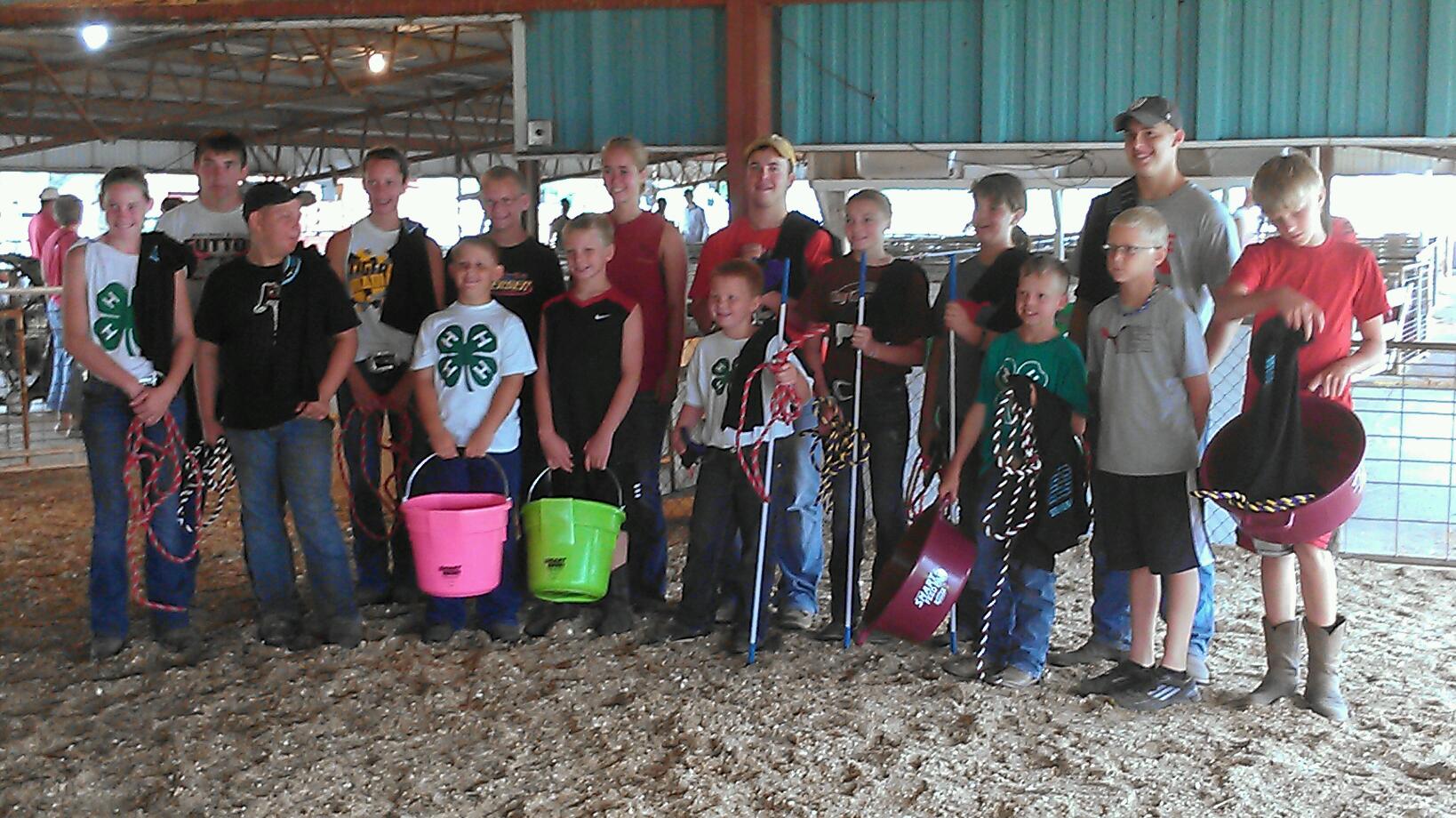
This year marked my 10th Clay County Fair. It was bitter-sweet in a way as I have watched this group of youth from their pre-4-H 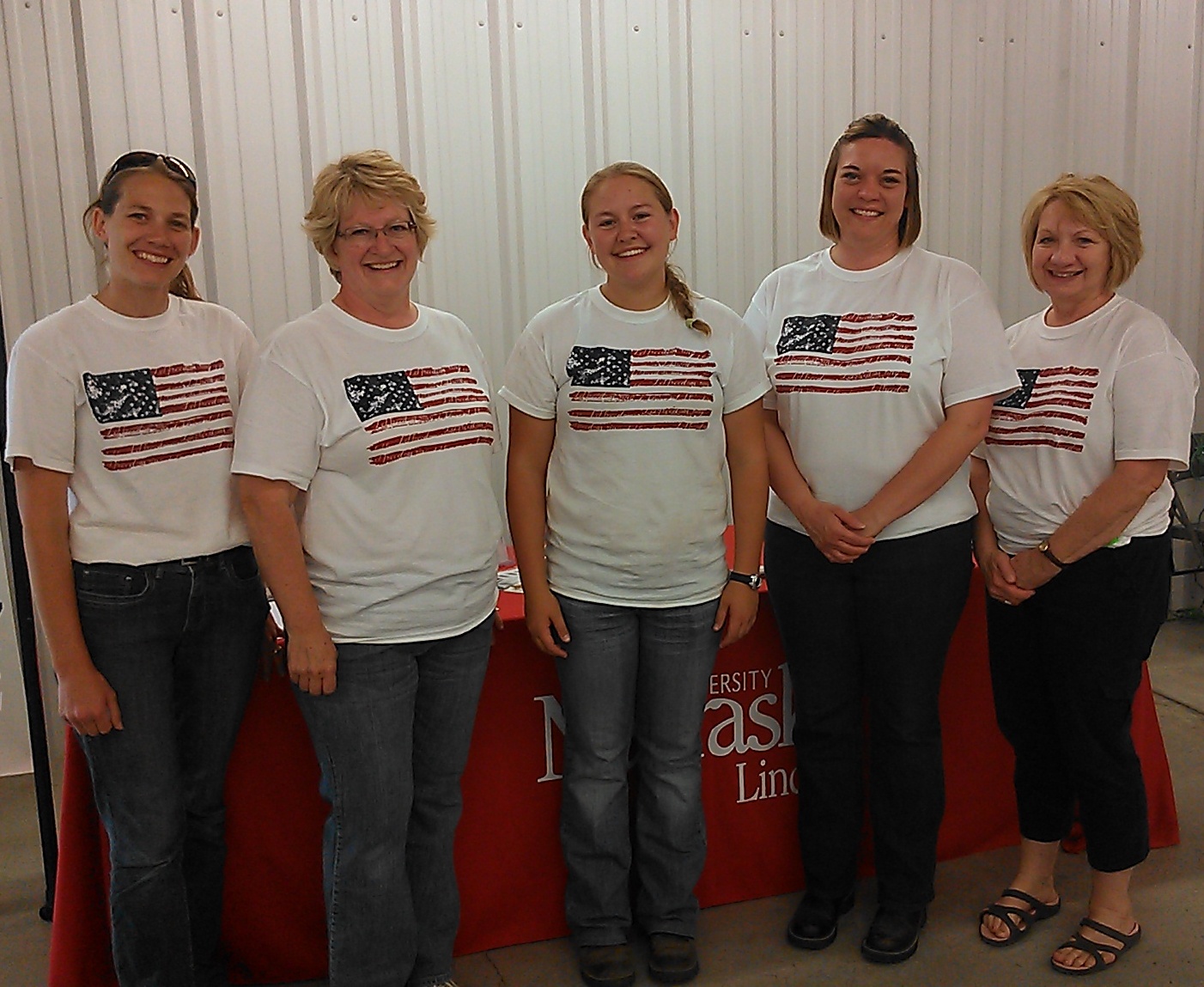 years through graduation this year. It’s neat seeing the young men and women they’ve become, ready to take that next step in life towards college and careers! Rachel and Kristen, our interns, helped us greatly in different ways which was a blessing; it was another smooth fair overall!
Also bittersweet is the fact that this was Cindy Strasheim’s last Clay County Fair as a UNL Extension Educator as she plans to retire in December. We will miss her and if you see her around, please thank her for her 29 years of dedication to the Clay County Fair and serving our constituents here!
I realize I say this every year, but we wouldn’t have fair if it wasn’t for all of our 4-H and FFA leaders, families, and youth-so thank you all for your hard work and efforts with your projects and the many ways you volunteer at fair! Thank you to our awesome fair board who we greatly enjoy working with and who kee p our fairgrounds looking great! Thank you to Deanna, Holli, and Cindy for the long
  hours of preparation and also during fair in ensuring everything ran smoothly! Thank you to our 4-H Council and all our Superintendents for working so hard in various capacities during fair and throughout the year! Thank you to Tory, Kris, Teri, Karla, and Megan with the Clay County News for sticking out all the shows in the heat to cover the fair for us; we truly appreciate your support! Thank you to Lonnie Stripe for auctioneering, all our auction buyers, plaque and award sponsors, and donors for supporting our 4-H and FFA youth! Thank you to everyone who made the 2013 Clay County Fair a success!


Keeping Your Farm in the Family for the Next Generation
I would encourage any farmers, spouses, and adult children to consider attending this Farmers and Ranchers Program! Communication and fair transition plans are keys to keeping family ties and the family farm strong. I’ve watched too often where communication doesn’t occur-even most recently with my extended family-and the heartache caused as a result. Work on the communication and transition plan now before it’s too late!

The final Farmers & Ranchers College program for the 2012-13 programming year will be held on March 14, 2013 starting at 6:00 p.m. with a meal and the program to follow. It will be held at Evening with Friends Restaurant in Milligan and will feature Dr. Ron Hanson, Neal E. Harlan Professor of Agribusiness, Ag Economics Dept., UNL. A description of Hanson’s program is provided below.
The entire process for mapping out a succession plan to transfer the eventual ownership of a family farm from one generation (parents) to the next generation (their adult children) can be an overwhelming task for many families. Where does this process even begin? Who makes the final decisions? Can you be fair to everyone involved? What if there is not good communications within the family? How do you keep emotions and personal jealousies from taking over and preventing good decision making? These…
View original post 348 more words
Great comments from Chris Chinn regarding the Paul Harvey Poem “So God Made A Farmer” and how it applies to the Modern Farm!!! I am a football fan, though, and can relate to everyone who got a little tear in their eye after watching this commercial. Please share the YouTube video as for every view, Dodge will make a donation, up to $1 million, for the Future Farmers of America (FFA)!

I’m not a big football fan but I do love spending time with my husband. My husband watches one football game a year on TV, and that’s the Super Bowl. Many of my friends tell me how lucky I am that Kevin doesn’t watch more sports on TV. I think I’m lucky because my sweet farmer fell in love with me! I am like a lot of other people, I watch the Super Bowl for the half time show and the commercials. This year though, I wanted to watch the game because the Ravens had Michael Oher playing for them. The movie the ‘Blind Side’ was based on his life. Michael was adopted by the Tuohy family in Tennessee and they helped Michael grow in many ways, mostly just by loving him and giving him a place to call home. (I love that movie because it reminds me there…
View original post 1,138 more words
County Fair-Special Time of Year
Fair time is a special time of year. It’s the one time in the year where people from all parts of the county come together for the youth. Yes, there’s healthy competition involved, but 4-H and FFA are building life skills in our youth. Families congratulate each other and are excited for a youth’s job well done. It’s the one time in the year where people from all parts of the county come together for the youth.
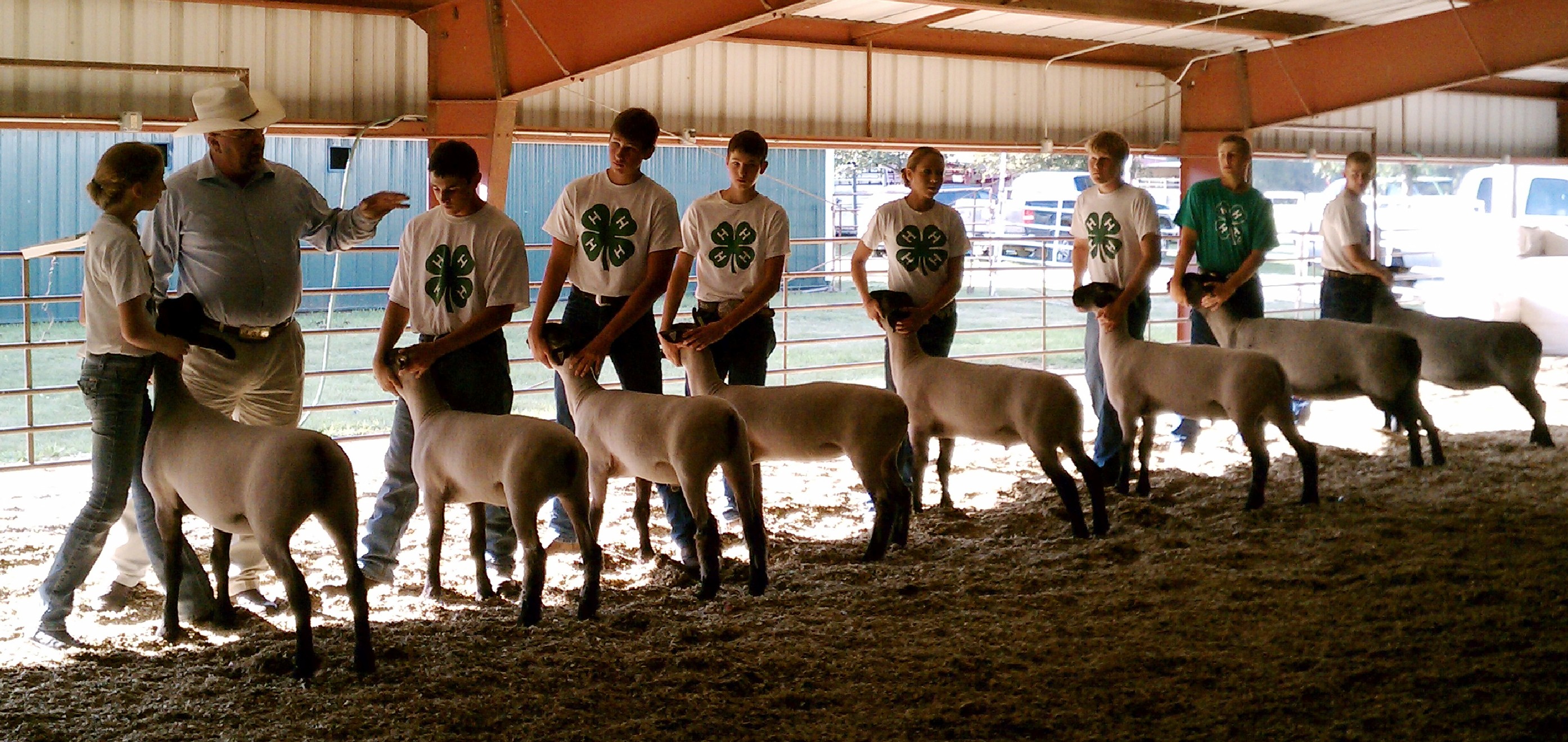
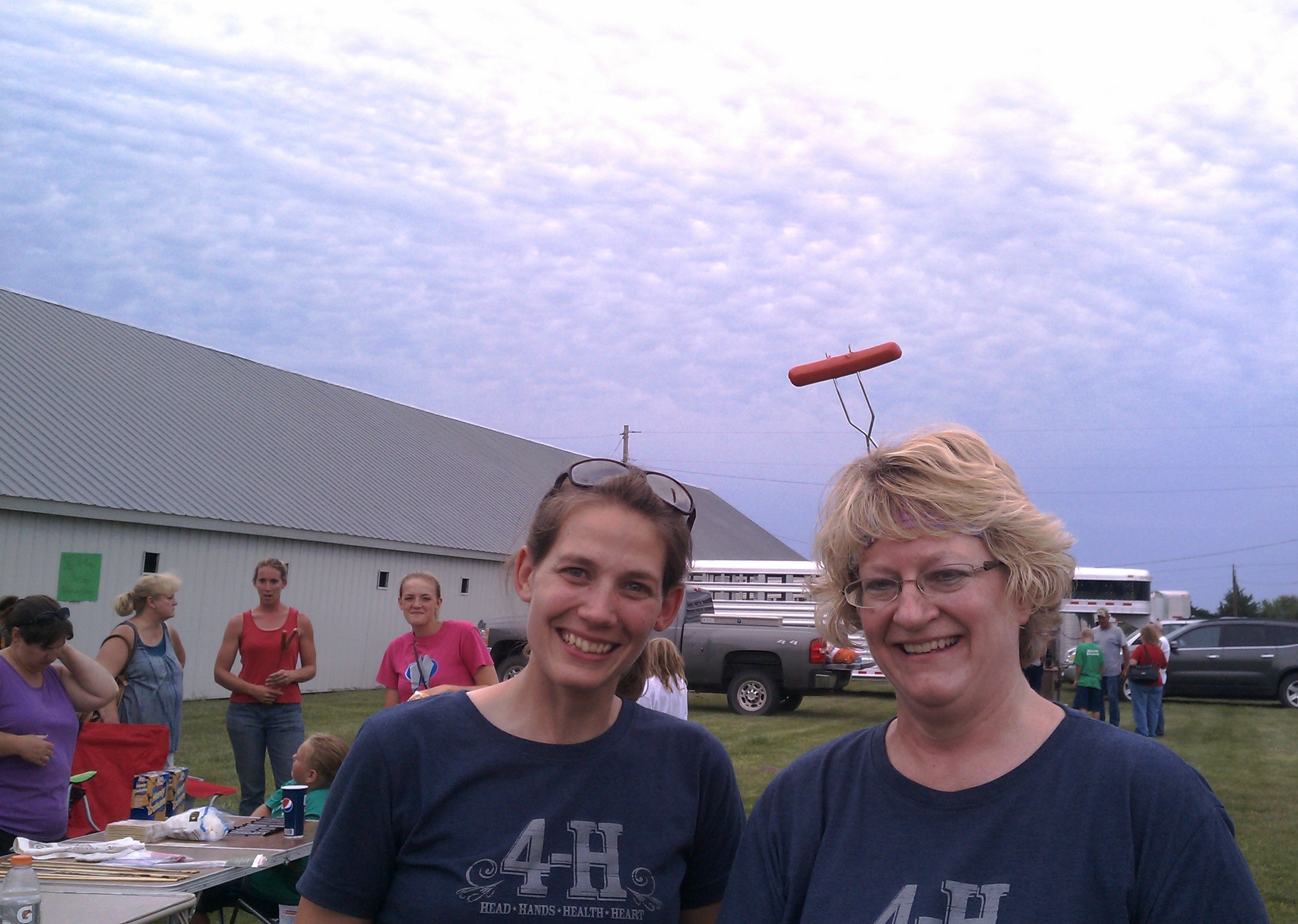
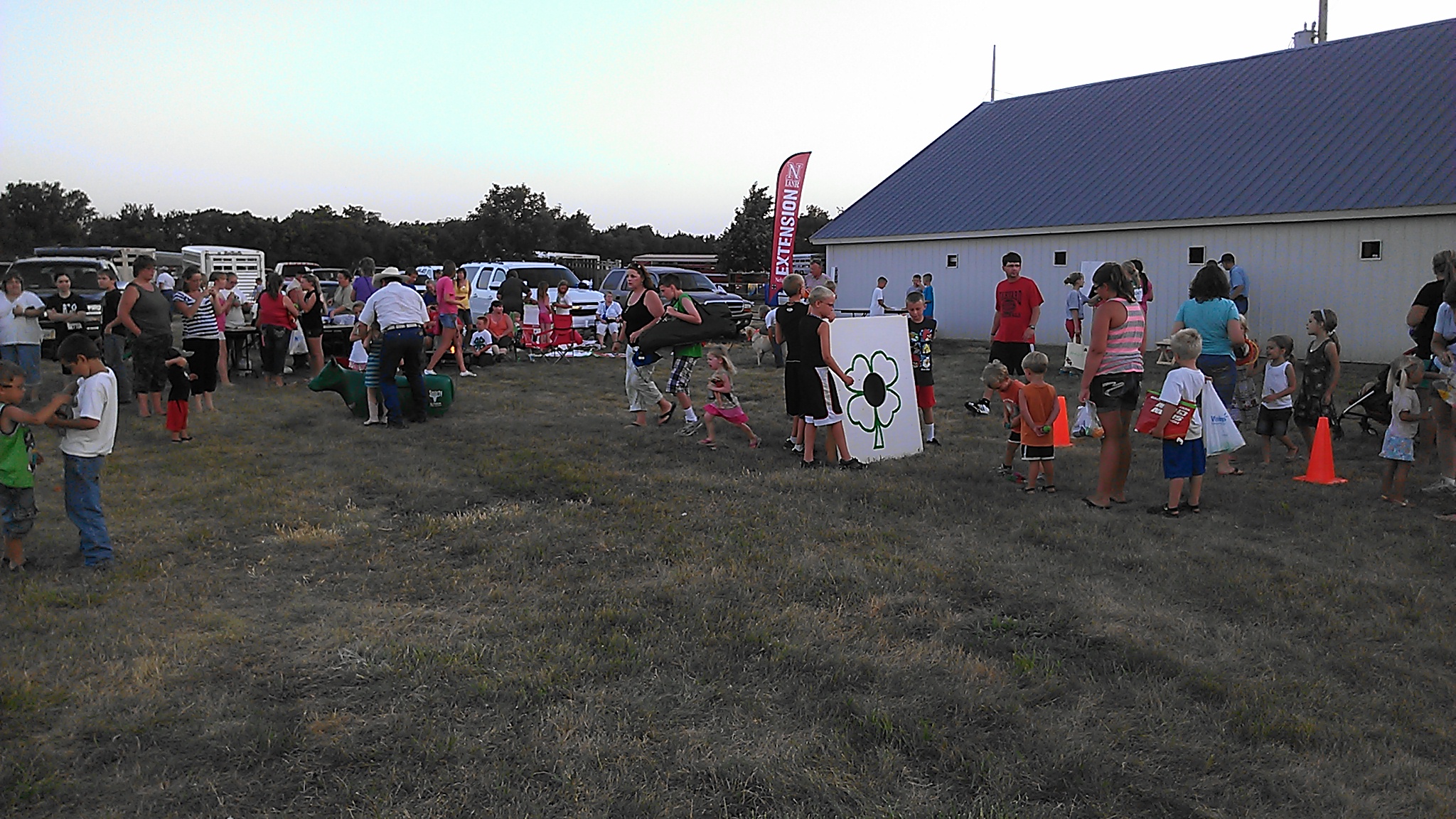
It’s always fun for me to watch the fairgrounds come alive Wednesday night as youth bring in their static exhibits and livestock entries. People are smiling and most youth-particularly the younger exhibitors-are excited. Many people, including me, checked the weather forecast throughout the fair in hopes of rain. This is the first fair in a long time that it didn’t rain Wednesday night or anytime during the fair. Thursday is a busy day with exhibits being judged, livestock being weighed in and the beginning of livestock shows. Something I always enjoy is family fun night on Thursday night. Clouds appeared and families enjoyed kiddie games, shelling popcorn, an obstacle course, and roasting hot dogs and marshmallows. Friday and Saturday continued with the remaining livestock shows and plenty of heat. Sunday brought a fun beef-fitting contest where youth of various ages and clubs worked together. It also brought smiles watching the young children tell their stories and show animals in the Rainbow Classic, watching all our top showmen compete in the Round Robin Showmanship Contest, and wonderful support from all our buyers at the Livestock Auction; we’re thankful for your support.
While probably most people are hot and tired by fair’s conclusion Sunday evening, it’s always a little saddening to me to watch the fairgrounds become empty so quickly again. Deanna and Holli in our office spend a great deal of time preparing for it as do all the youth, parents, grandparents, and 4-H leaders; thank you for all you do and the time you all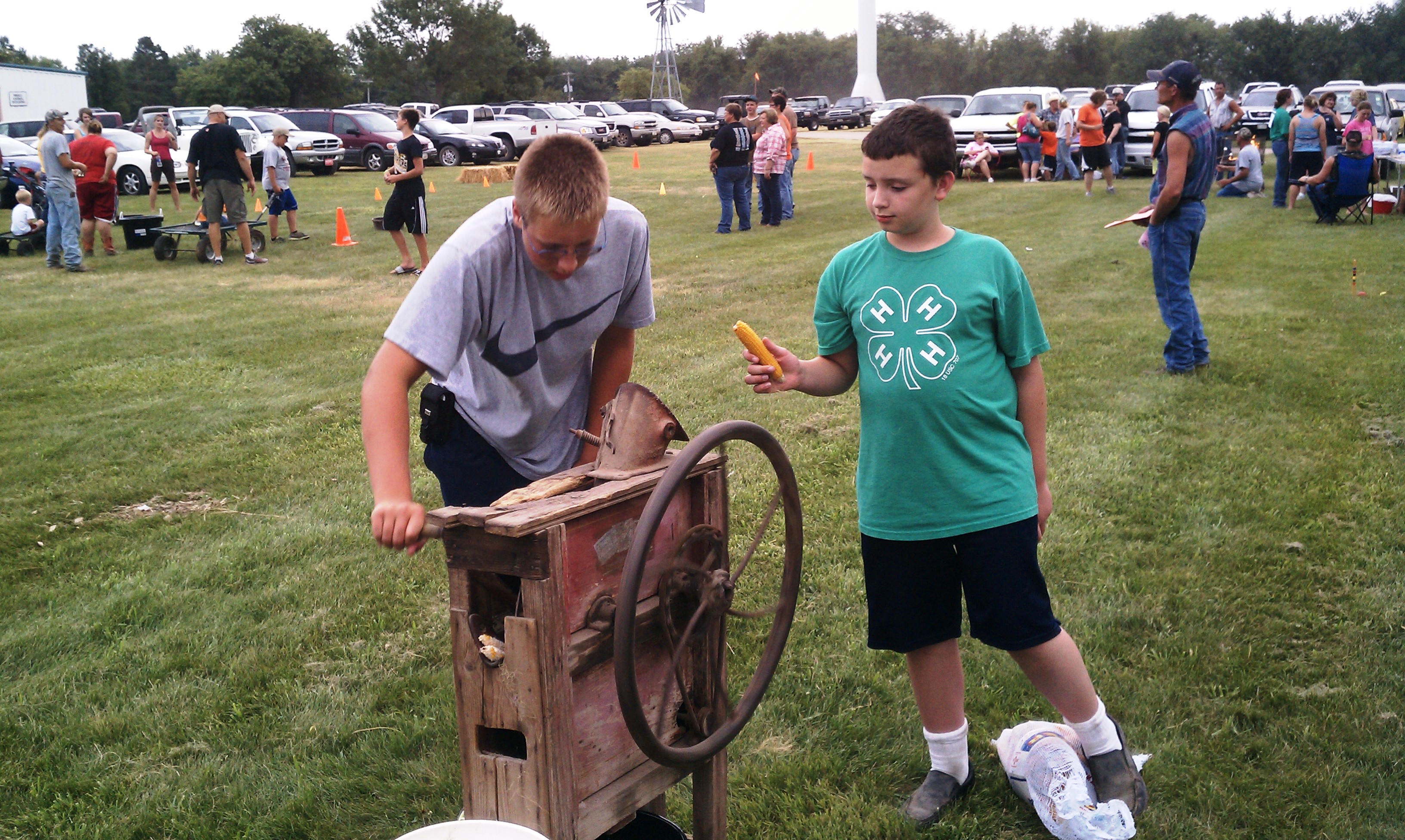 invest in our youth! Thank you to the Fairboard members who spend countless hours preparing the Fairgrounds and always take care of things during fair with a smile-no matter how often they have to plunge the toilets! Thank you to 4-H Council for your help on various committees, your work with the food stand and BBQ, and for all you do. Thank you to all our superintendents and to all our volunteers; without you our 4-H program and fair wouldn’t be possible. Thank you to Tory and the Clay Co. News for all your support and coverage of our fair. We have something so special in our county and I truly feel blessed to work in Clay County! We may not have big-time entertainment at the fair, but I love our fair. I love how the focus is on our 4-H and FFA youth and families; many other counties would love to have that. Our numbers and entries are similar to counties much larger than us and I appreciate the quality brought to the fair each year from our youth. Thank you to everyone for making the 2012 Clay County Fair a success!