Category Archives: Storm Damage
Storm Damaged Crops
The rain was welcome on Thursday but the wind and hail damage that came were devastating to a good portion of the County. I’m so sorry to all of you affected….for some of you, this is two years in a row of severely hail damaged or totaled out crops. We are thankful the damage wasn’t worse. You can see more pictures here.
So the big question is what do you do now? Ultimately, each field will need to be assessed on a case by case basis. The following are our NebGuides for hail damage to corn and soybeans. For the most part we were in brown-silk to blister for corn and late pod-beginning seed in soybean (R4-R5). The concerns I have right now are stalk quality, disease, grain filling, and the amount of diseased grain we may have due to mushy areas on hail-damaged cobs right now. Several years ago, we watched how severely hail-damaged corn a little later in the season turned brown and died. We also know that southern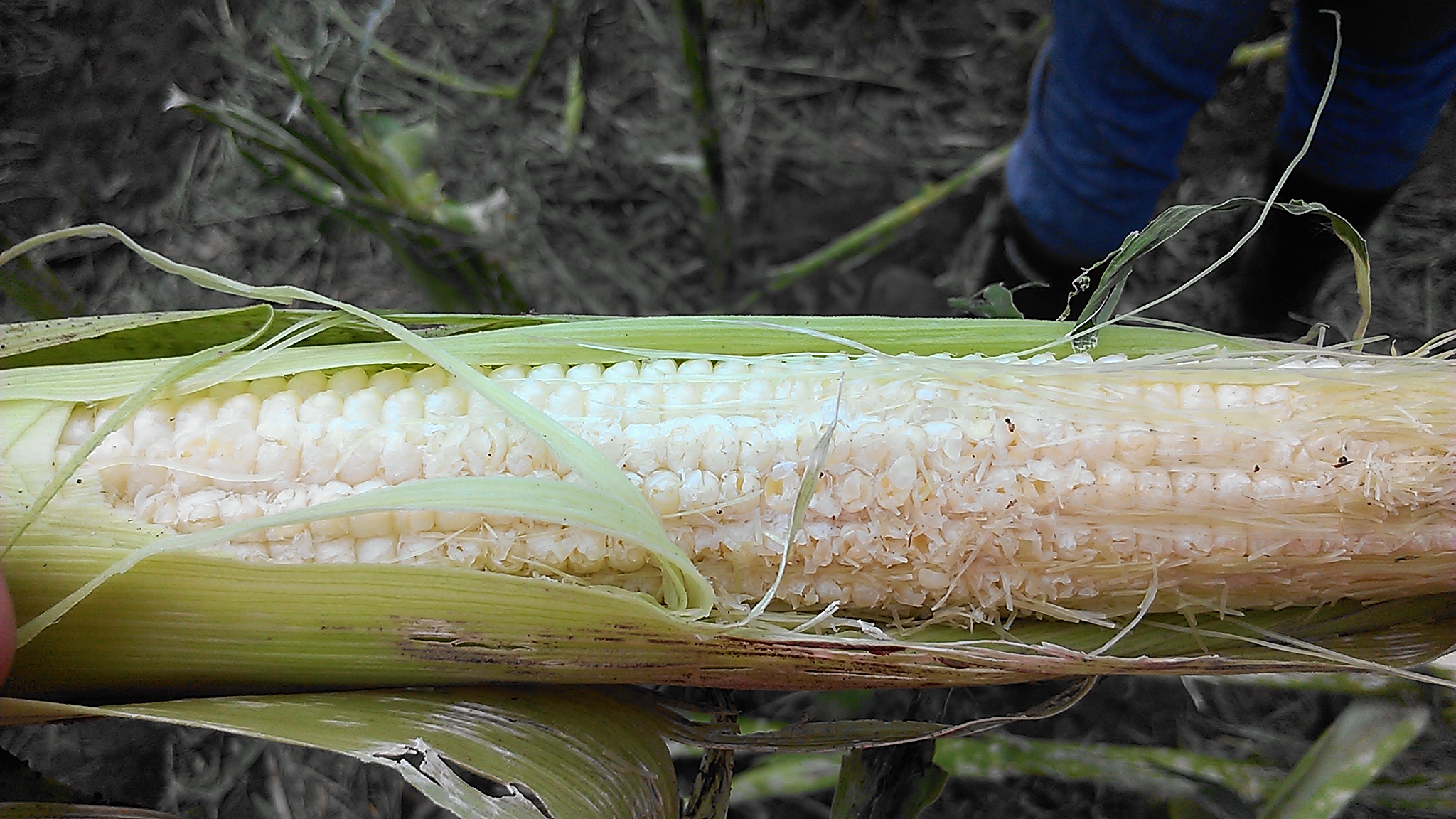 rust is in the area and while much of the leaf tissue in the County is damaged, it is still in the County in other fields and south of us. The Puccinia polysora fungus that causes southern rust, when severe enough, will infect and cause pustules on the stalks. With the wounding and low leaf area for photosynthesis, stalk strength is a concern and fungicides may be a consideration depending on potential yield loss-again need to assess on a field by field basis.
I talked with a number of people on Friday regarding thoughts on silage, green chop, haying/baling, planting cover crops, etc. Dr. Bruce Anderson, UNL Extension Forage Specialist, said the most common salvage operation for corn damaged by hail, wind, drought, or other calamities is to chop it for silage. Don’t be in a hurry, though. Standing corn currently could be over 80 percent moisture. The easiest way, and maybe the best way, to lower moisture content is simply wait until some stalks start to turn brown. Waiting also allows surviving corn to continue to add tonnage.
But in some of our damaged fields, I don’t think we can wait to make silage. Bruce also shared you can reduce moisture by windowing the crop and allow it to wilt one-half to one full day before chopping. You also could mix grain or chopped hay to freshly chopped corn to lower the moisture content. It takes quite a bit of material for mixing though – about 7 bushels of grain or 350 pounds of hay to lower each ton of silage down to 70 percent moisture from an original 80 percent moisture. That’s 7 bushels grain or 350 pounds of hay for each ton of silage.
Or, you can allow that windrowed corn to dry completely and bale it as hay. Be sure to test it for nitrates before feeding. Grazing might be the easiest way to use damaged corn, and this is a good way to extend your grazing season. You might even plant some corn grain or sorghum-sudangrass or oats and turnips between rows to grow more forage for grazing if you can wait until late fall before grazing. Be sure to introduce livestock slowly to this new forage by feeding them before turning in to reduce the chances of digestive problems. Also, strip graze the field to reduce trampling losses and get more grazing from the corn.
Storm Damage to Crops
Memorial Day storms hit us again this year, this time with the EF2 tornado in Edgar. I checked NE Rain, and for the month, Clay County  received between 5.9-9.7″ of rain with nearly 3/4 of that coming in the last 6 days !
Even with the saturated soils and localized flooding, there is still potential for drought. It was this way last year at the end of May before the rains shut off in early June.
I’ve received questions regarding potential storm damage to crops. Normally I’ve found that waiting a week helps with determining regrowth and decisions. Overall, we’re fortunate that crops were so small. Much of the corn was V1-V3 and the soybeans were anywhere from not planted to cotyledon stage. The majority of damage occurred where emerged plants were silted over with soil and/or residue, standing in water for periods of time, of left with stems due to high wind and/or hail.
Corn Decisions
According to Purdue University Agronomist, Bob Nielsen, it takes around 48 hours for oxygen to be completely depleted from saturated soils. Plants that are emerged above the water have a better chance of survival than those below it; however, it’s hard to tell exactly how long plants can survive in those conditions. We also have several areas where plants were standing in water for a few days, the water receded, and now they’re standing in water again. Only time will tell how those plants will fare.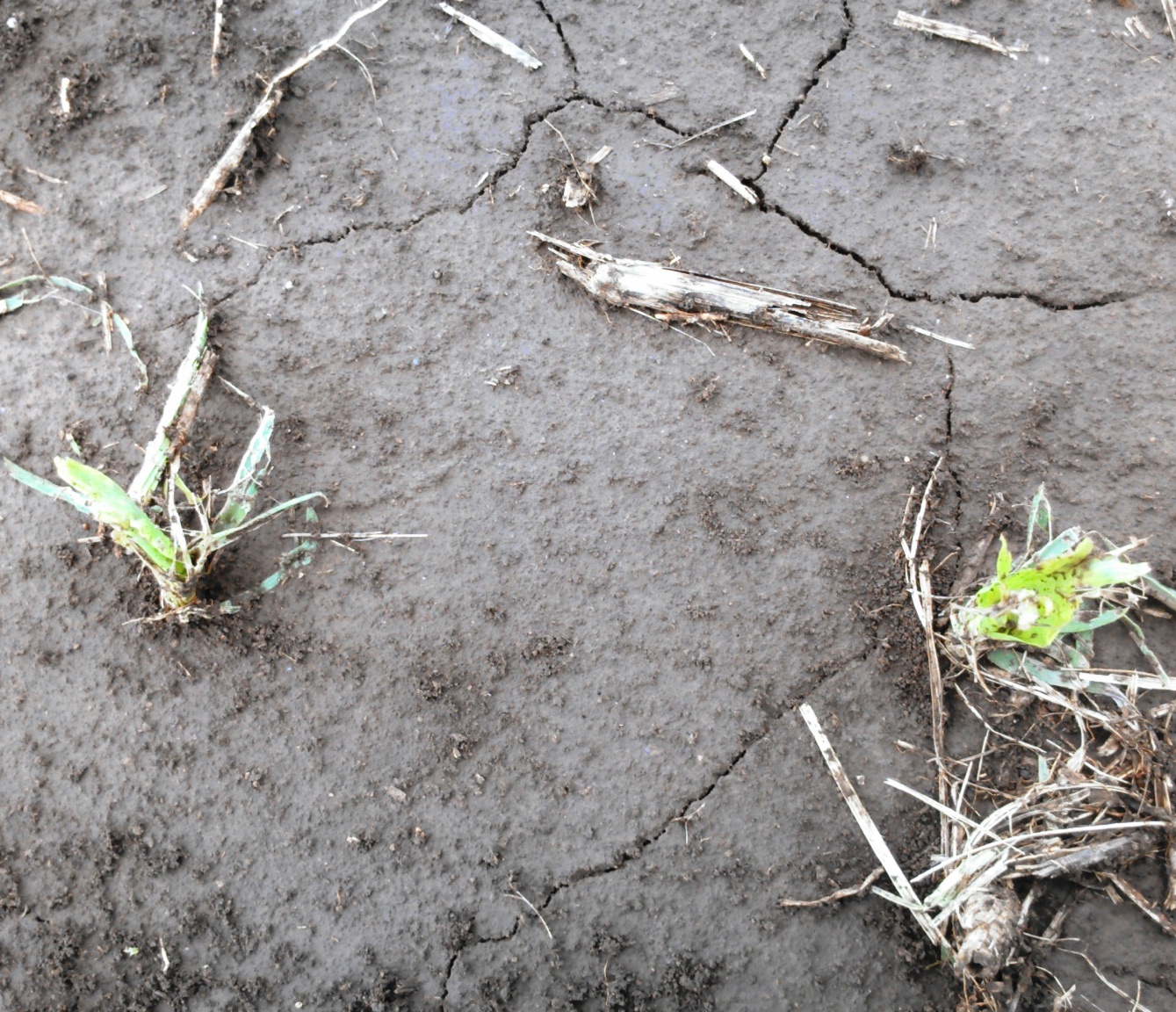
Because the growing point of affected corn plants is below ground, in many situations, plants should recover if the growing point remained healthy. Hopefully only small areas will need to be replanted. For crop insurance decisions and options, please check out the following CropWatch article.
Soybean Decisions
Some emerged soybeans that were at cotyledon stage have been reduced to stems leaving gaps between healthy plants. Soybean plants can compensate for reduced populations; however length of gaps and final stands do need to be assessed for replant decisions. UNL on-farm research has shown less than 1.4-2.0 bu/ac yield difference between planting 90,000 and 180,000 seeds/acre. (See report.) In our research, 90% of the planted stand was achieved at both seeding rates in irrigated 30-inch rows in no-till and ridge-till fields.
Consider what was found in 2006 in one dryland field in Nuckolls County where seeding rates of 100,000, 130,000, and 160,000 seeds/acre were planted. This  field was at the cotyledon stage when it was hailed. Some plant stands dropped to 67,000 plants/ac. Yield was 4 bu/ac less than in the 160,000 seed/acre planting that had a final stand of nearly 98,000 plants/ac. The average yield in the field was 40 bu/ac. While this is only one field and one year of research, it is an example of how soybean plants can compensate for reduced populations by branching and how August rains in dryland can still allow reasonable yields to be produced. Based on our on-farm research, leaving dryland stands of at least 65,000 plants/acre and irrigated stands of 90,000 plants/acre is likely a better choice than replanting, in the event that the gaps between plants are not large and are fairly even.
Many of the soybeans worst affected were reduced to stems. Last year we watched as soybeans continued to develop plumules after the hail events and soil crusting in our area. The plumule, which is the seedling stem tip and its undeveloped leaves above the cotyledonary node, may remain, but without the cotyledons to serve as a carbon and nitrogen source, development of new seedlings with small leaflets will be slow. These plants may not become competitive with surrounding plants in terms of pod and seed production. Therefore, when counting seedlings to determine plant stand, count only the seedlings that have at least one cotyledon. You can count seedlings missing cotyledons if they have large unifoliolate leaves that will soon unroll as in this picture.

In summary,
we will monitor damage early next week to help with replant decisions. Overall, I feel we are fortunate that the crops were so small and crop damage does not appear to be severe other than all the pivots that need to be replaced. We will also need to watch for potential disease damage in weakened plants. For crop insurance decisions and options, please check out the following CropWatch article.


