Blog Archives
Japanese Beetle and Food Safety Update
Japanese Beetle Control: This week I had an increasing number of calls about Japanese beetles. In crops, watch silk clipping in corn. Tasseled corn threshold: three or more Japanese beetles per ear, silks have been clipped to less than ½ inch, and pollination is less than 50% complete. Soybean threshold is 20% defoliation once flowering occurs. It’s been interesting seeing beetles defoliating palmer, waterhemp, smartweed, etc. Too bad we couldn’t train them to just eat the weeds!
For homeowners, it’s best to avoid the beetle traps as they actually attract beetles to your location. There’s a number of organic and conventional control products sold in local farm stores, lawn/garden centers, Wal-Mart, and Ace locally.
First, Please Read the Label on any product before you purchase it to make sure:
1: the product says it controls Japanese beetle adults
2: the product is labeled for where you wish to apply it (vegetables, trees, ornamentals, fruit trees, berries, etc.). For example, there are two types of “Sevin” with different active ingredients. One says you can apply it to Virginia creeper and Boston ivy and the other does not. Because of this, using the wrong insecticide has caused damage and even death to plants when they weren’t labeled. Also, applying an insecticide to vegetables when it’s not labeled for vegetables can result in you not being able to safely eat produce from your garden.
3: follow all pre-harvest intervals (PHI) for when you can safely harvest vegetables, fruits, and berries after a product is applied.
4: seek to apply pesticides when there’s lower risk to pollinators such as
I reposted the blog that I wrote a few years ago regarding the local products I found that help with Japanese beetle control. It’s not an exclusive list, but hopefully it’s a start to help. It can be found at: https://jenreesources.com/2022/07/05/japanese-beetle-organic-and-conventional-products-found-locally/. Know that many products applied to flowering plants to kill Japanese beetles can also impact pollinators. Beetles are also effectively controlled by knocking them off into buckets of soapy water, particularly around dusk or dawn.
Even after applying pesticides, beetles will continue to emerge and fly in from grassy areas (ditches, lawns, pastures) for a good 4-10 weeks. Plants that are being chewed on elicit responses signifying they’re in trouble. It’s those responses that signal other beetles to come. Even though linden, fruit, and other trees and plants are rapidly defoliated, they should not die.
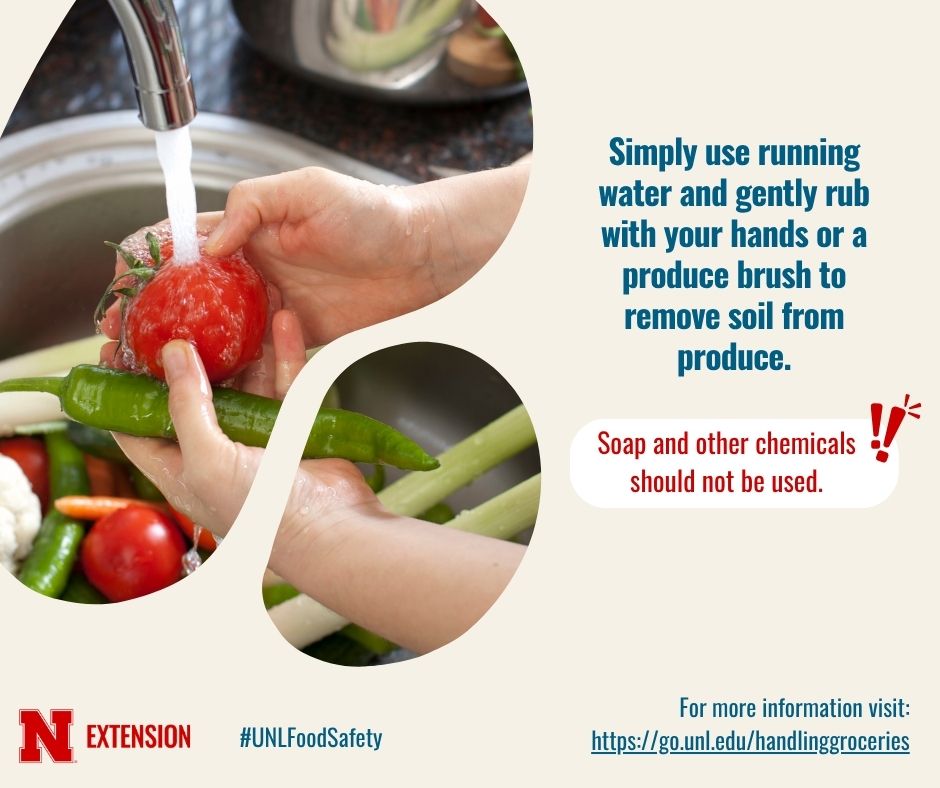
Safe Handling of Produce: This is from our UNL food safety team, “While concerns about contamination are understandable, we shouldn’t let fear keep fresh produce off our plates. Fruits and vegetables are vital to a healthy daily diet; instead of avoiding them, we simply need to practice safe handling and proper washing. Fresh produce may become contaminated with dirt and bacteria at any point during its journey from farm to table. Washing produce before preparing and eating can remove bacteria that may cause foodborne illness. Simply use running water and gently rub with your hands or a produce brush to remove soil from produce. Using soap, bleach and other non-food grade chemicals may make you sick and is NOT recommended. For more information: https://go.unl.edu/handlinggroceries.