Blog Archives
Spring Cold Snaps: How to Handle Your Yard Before and After a Late Frost
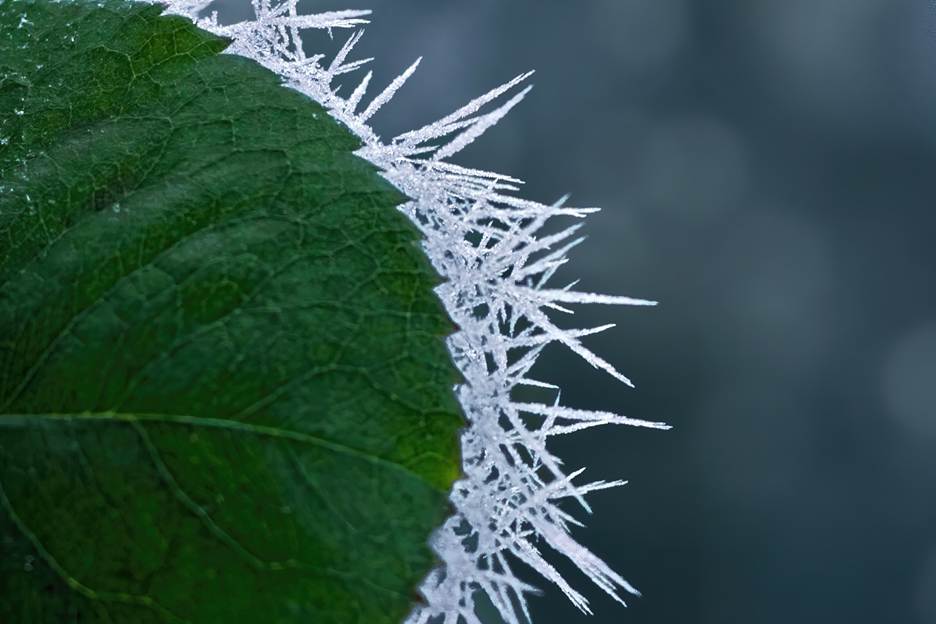
Frost can form as ice crystals on plant leaves when temperatures fall below 32-36 degrees Fahrenheit. Photo from Pixabay.com.
By Rachel Anderson, Extension Educator of Horticulture in Lancaster, Cass, Otoe, Seward, and York Counties
Often, the last frosts (32-36°F temperatures) and freezes (28-32°F temperatures and below) of spring pass through our landscapes without much notice or cause for concern. However, such events can affect yards, gardens, trees and lawns in undesirable ways. Follow these tips to minimize damage from cold snaps as winter recedes.
Don’t plant too early.
Check the weather forecast before the average last frost date of the year, which is mid- to late April in southeast Nebraska. As long as nightly low temperatures are set to stay above 32-36°F for the next ten days, you should be safe to plant outside. Exceptions are dormant trees and shrubs as well as many hardened-off cool-season vegetables and annuals, which can be planted earlier in April.
Check that what you plant is proven hardy for your area.
Flowers, grasses, shrubs, trees and other perennials must be adapted to our region’s climate to grow back year after year. Make sure plants are rated for USDA Hardiness Zone 5 or below for eastern Nebraska to ensure survivability through the cold months.
Locate fruit trees and other early blooming woodies in a protected place.
Fruit trees such as cherries, peaches, and plums can fail to produce a crop in years when their flower buds have been damaged by a spring frost or freeze. Help prevent this at planting time by selecting hardy, later-blooming varieties. Locate the plants on north and east facing slopes or sides of structures, which warm up slower in spring, to help delay budbreak until after frost season. This approach can also work for early-blooming, tender-flowered ornamentals like magnolia and forsythia.
Don’t walk or work on frosty lawns.
Avoid walking or driving on lawns with frost on them, as this can damage plant crowns and result in turf browning and dieback. Mowing or fertilizing is not recommended, either.
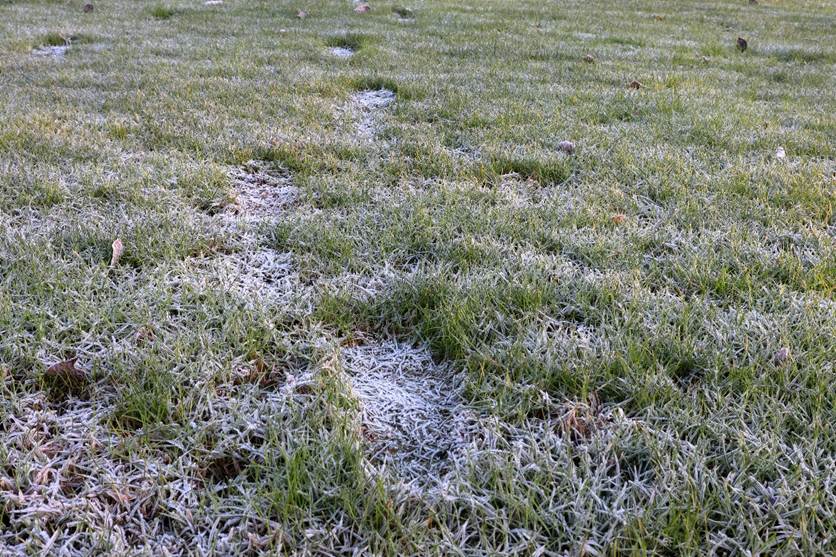
Walking on a lawn with frost can cause damage that shows up as footprint-shaped dead spots during spring green-up. Photo from Adobe Stock.
Wait to cut back old foliage.
Leaving last year’s stems standing on flowers, grasses, and other herbaceous perennials provides insulation from cold and wind over the winter while serving as habitat for beneficial insects. Don’t remove such material until after the last spring frost (especially with rose and berry canes) or leave at least 9 inches of clearance above plant crowns when cutting back to maintain some protection.
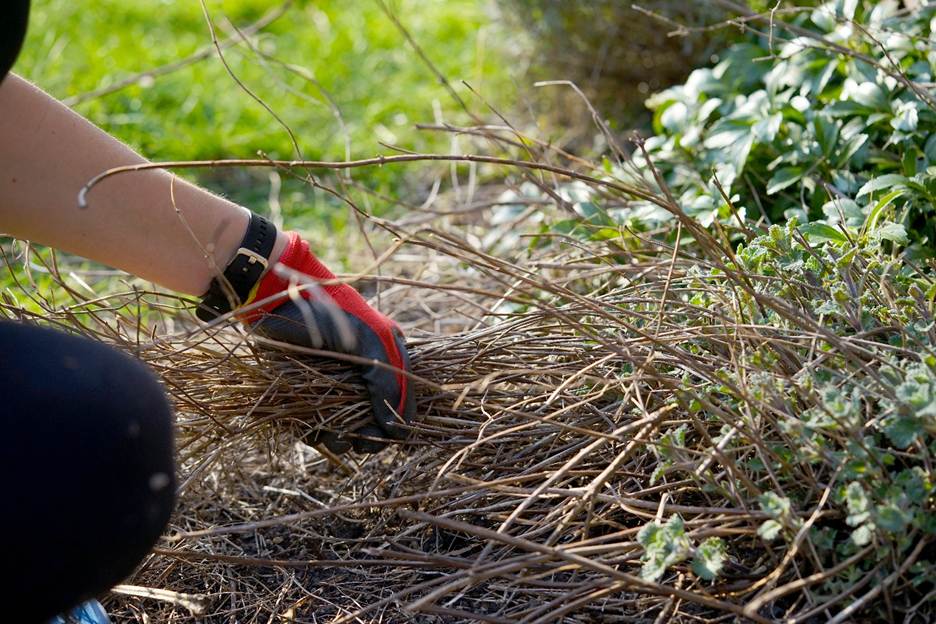
Last year’s stems can be left standing until after the last frost of spring or cut back to 9-12 inches to provide insulation to plant crowns and help prevent frost heaving. Photo from Pixabay.com.
Remove winter mulch and plastic trunk guards.
If you applied extra mulch last fall to protect vulnerable plants over the winter (such as strawberries), make sure to remove it as soon as green growth starts again this spring. Keep in mind that you will need to temporarily reapply such mulch ahead of any forecasted frost or freeze to prevent plant damage.
Plastic trunk collars (typically made of white PVC) put around tree trunks to safeguard against frost cracking over the winter also need to be removed for the growing season. Do this as soon as the risk of frost has passed so that moisture doesn’t get stuck behind the wrap, bringing pest insects or disease.
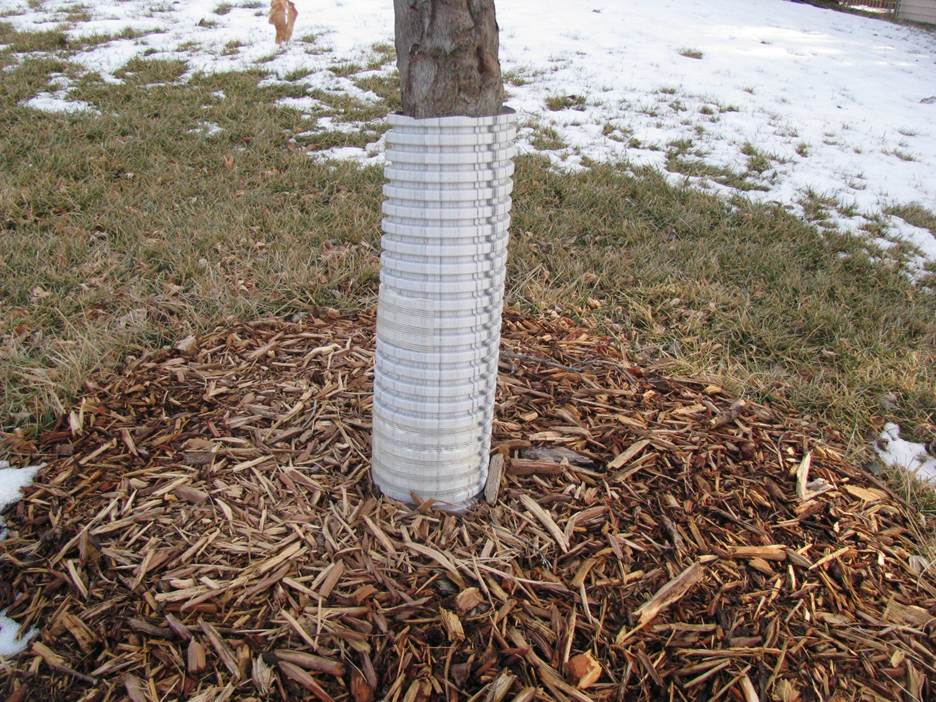
Remove plastic trunk collars for the growing season as soon as the risk of frost has passed to prevent moisture and pests from collecting behind the wrap. Photo from John Fech.
Signs of Frost Damage and Next Steps
Watch for the following symptoms of plant injury after a late frost or freeze and practice good plant health care to help with recovery. This means keeping plants and trees mulched well past the edge of their leaf canopy with 2-4 inches of shredded wood or leaves, straw, or pine needles (not rubber or rock) and providing deep, infrequent watering so the soil is moist, not soggy or dry. Do not apply fertilizer and refrain from spraying herbicides in the vicinity to minimize the chance of drift while the plant recovers.
Herbaceous Plants
Frost-damaged foliage of non-woody plants first develops a water-soaked appearance, then wilts and collapses, finally turning white, brown or black. For hardy perennials, cut off the foliage after it dies. New shoots will appear on their own in a few weeks. Tender plants such as annuals, tropicals and vegetables, however, typically don’t survive such injury and will need to be replaced.
Frost Heaving
Poorly-rooted perennials can be pushed up out of the ground as the soil freezes and thaws over winter, which can be fatal. Unfortunately, by springtime the damage has been done and you’ll likely have to replace the plants.
Lawns
Damage to lawns from frost alone is rare in Nebraska; however, you may see grass that fails to green up where it was subjected to vehicle or foot traffic over the winter. This often shows up as dead spots in the shape of tire marks or footprints. To help your lawn recover, give it extra time before mowing and cut at a higher height. If the damage turns out to be severe, take steps to mitigate the soil compaction before replacing the grass.
Trees and Shrubs
Trees and shrubs native to the northern Great Plains are well-suited to weather extremes and rarely suffer damage from spring frosts, even if they occur later than usual. However, frost injury to trees and shrubs is possible, especially for less hardy species as well as recently planted woodies that haven’t had time to heel in. In any case, facilitate plant recovery by practicing regular watering and mulching and control pests as needed during the summer to avoid additional stress.
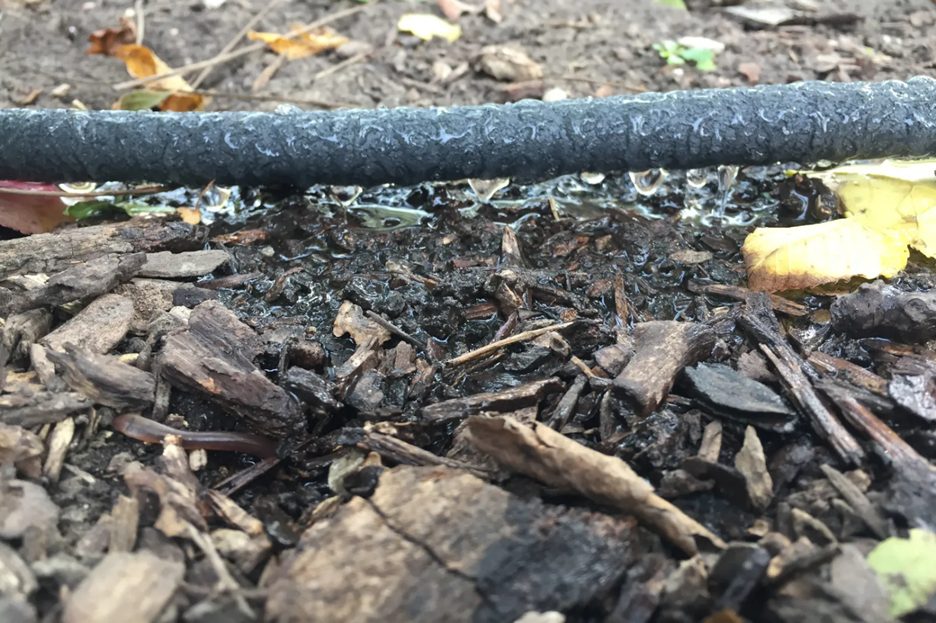
Mulching with shredded hardwood and using a soaker hose to provide deep, infrequent watering are standard care practices that can help trees and shrubs recover from frost damage. Photo from John Fech.
LEAVES: Frost-damaged leaves that have already emerged from their buds at first appear water-soaked and may be darker green in color even as they dry up, sometimes turning black or brown. Frost-damaged leaves that haven’t emerged yet will exhibit browning or leaf tatter later when they eventually grow, which should not be mistaken for insect or disease problems. Do not prune out damaged leaves—allow the plant a few weeks to re-leaf on its own.
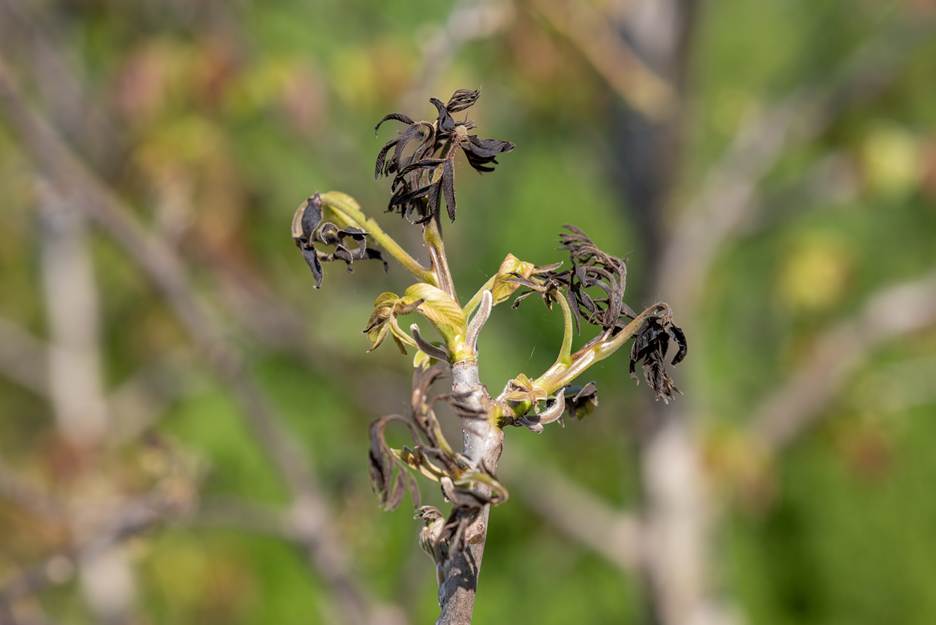
Frost damage exhibited by the blackened, curled new shoots of a young walnut tree. Photo from Adobe Stock.
FLOWERS: Frost-damaged flower buds turn dark brown, shriveled or dry, while open flowers go brown, limp and mushy. Woody plants do not regrow new flower buds if the original set is damaged. In the case of fruit trees, such damage provides an entry point for serious diseases like fire blight, so plan to treat accordingly. Otherwise, a loss of flower buds has little negative impact on overall tree and shrub health and doesn’t require intervention.
TWIGS: Frost-damaged twigs and branch tips typically turn darker in color and develop a sunken and wrinkly, ribbed surface. Woody stems exhibiting such symptoms will likely not recover and should be pruned out in late spring after the plant has had time to recoup. To check the extent of the damage, gently scratch a small area of bark away with your fingernail. If you see green tissue, the branch is alive and should be left on. If underneath the bark is brown, the branch is dead and should be pruned back to the closest live bud or side branch.
Frost Cracking on Tree Trunks
Frost cracks that separate a trunk’s bark from its inner wood can appear over winter on some trees. While healthy specimens can close cracks in time with callus tissue, such a wound on a tree already struggling may mean it will never thrive. To increase chances of recovery, follow good care practices related to watering and mulching and do not apply paint or wound dressing. Remove any ragged edges or loose hanging bark from the crack with a clean cut using a sharp, sterilized knife.
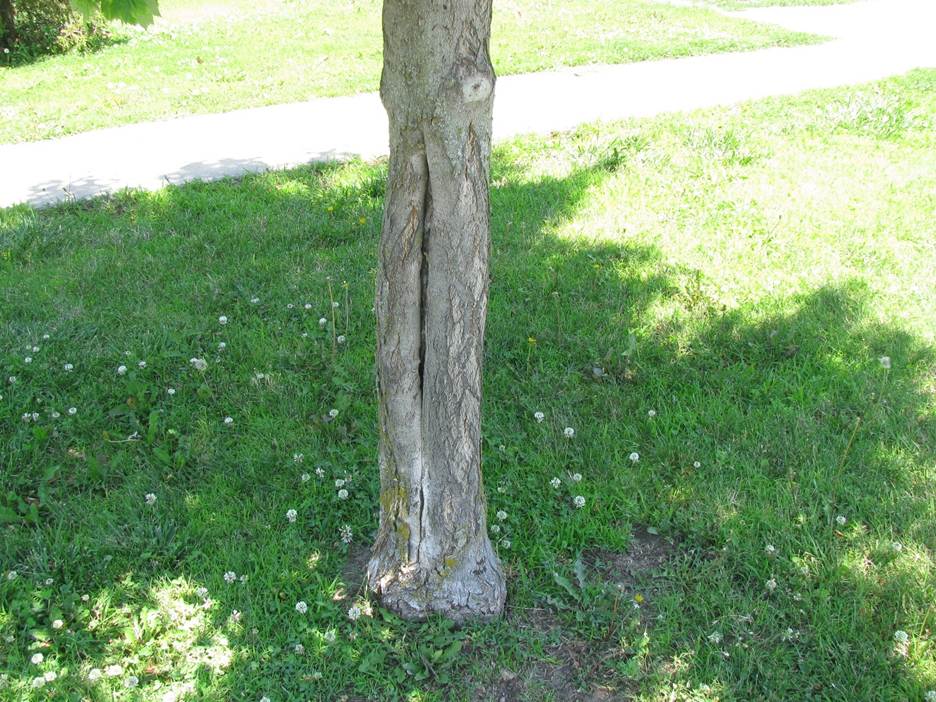
Damage from frost cracking, shown here as a split along the trunk, can severely impair a tree’s long-term health. Photo from John Fech.
Evergreens
Symptoms of frost damage to evergreens can appear right away as dying and curling shoot tips, sometimes occurring only on the windward side of the plant. Or it can show up later as wilting and browning of new growth that is often mistaken for herbicide damage. Streaks of white sap on branches can also indicate freeze injury. As correction, prune any curled tips and dead twigs back to a live bud or side branch and provide regular watering and mulch.
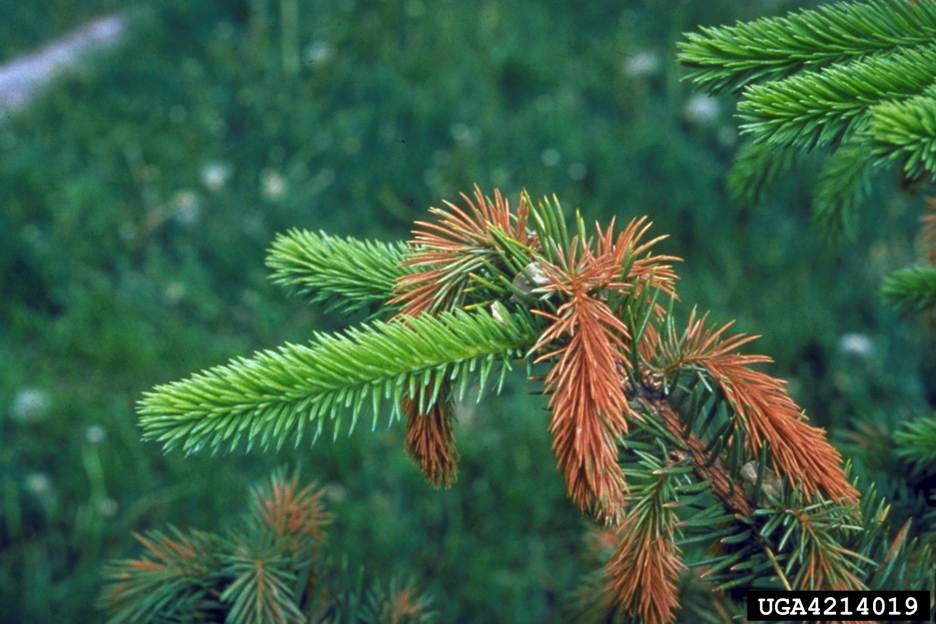
Browning and curling of new shoot tips can be a sign of frost injury on evergreens, as with this spruce tree. Photo from Minnesota Department of Natural Resources, Bugwood.org.


